

Gym Electrical Requirements California Guide
Gym electrical requirements California: the safety plan behind every safe workout
When owners plan a facility, they usually focus on treadmills, ventilation, and that one wall of motivational quotes. Then the electrical reality shows up. In many cases, gym and fitness center gym electrical requirements California standards and local upgrades decide whether a club runs smoothly or trips breakers the moment the busiest class starts. At Kord Electric, we help commercial and industrial buildings handle that reality with planning, testing, and clean installation work. Our approach is straightforward: we match the electrical design to real equipment loads, real operating hours, and real safety expectations. And yes, our technicians explain what they find, so the process feels less like guesswork and more like clarity. If the power system is the quiet coach, we make sure it stays on the floor, not in the parking lot.
Load planning for commercial fitness: lights, HVAC, and strength equipment
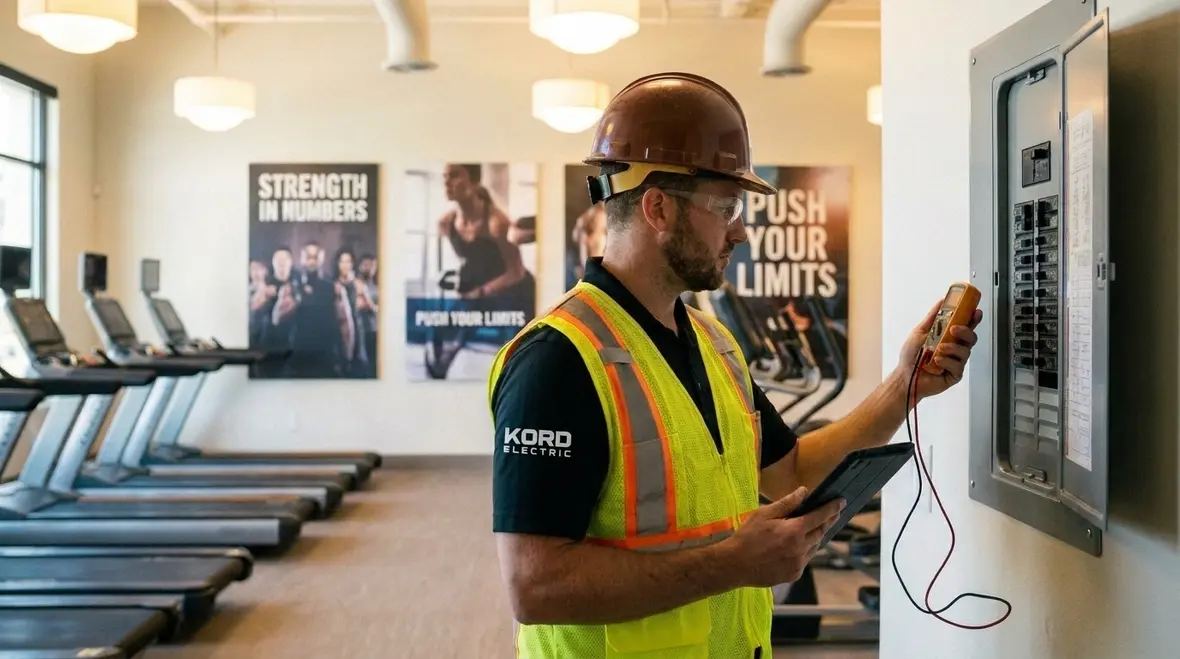
First, Kord Electric treats gym power like a system, not a bundle of parts. Lights, HVAC, water heaters, IT gear, security, and the big motors in cardio machines all pull current. Therefore, the electrical design must reflect the peak demand, not just the average day. In practice, we help property teams map loads by circuit, identify motor starting effects, and forecast growth. This matters because a facility that “seems fine” during soft hours can fail during peak sessions when multiple zones run at once.
Next, we look at voltage drop and conductor sizing, since long runs in larger buildings quietly drain performance. Furthermore, the electrical setup needs to support power factor needs and protect sensitive loads. After that, we coordinate with mechanical and low voltage teams so the electrical plan does not fight the ventilation plan. Our experts do not just install; they verify. In other words, we make sure the gym can run its daily schedule without turning the breaker panel into a drama stage.
For facility managers who want a deeper look at how distribution choices affect uptime, our article on upgrading commercial electrical service capacity walks through how rising demand, tighter safety margins, and aging equipment all shape real-world decisions in commercial spaces.

What code expects for fitness centers and public areas
Electrical work in California commercial spaces must align with safety rules, equipment ratings, and proper overcurrent protection. We guide owners through the practical parts of compliance, including grounding and bonding, panelboard requirements, and appropriate protection for each load class. Then we test systems so they behave as designed.
We also pay attention to how gyms use public spaces. When people move, gather, and wait in hallways, the electrical layout must keep circuits safe and accessible. Moreover, emergency power and life safety devices require careful coordination with building systems. If someone ever wonders why a facility does not dim during an emergency, that is usually good planning doing its job quietly.

Electrical distribution and panel design for busy clubs
In a fitness center, the distribution system carries the weight of everything. Therefore, we help teams choose panel locations and configuration so service stays manageable and maintenance does not shut down the whole building. For commercial and industrial facilities, we focus on clear labeling, proper circuit directories, and safe working space around gear.
Additionally, we plan for future equipment. Many gyms start with a certain set of machines and then expand with studios, new cardio, and extra training rooms. As a result, spare capacity and thoughtful panel scheduling prevent the “surgery week” feeling later. Our technicians also explain what they recommend in plain terms. They will tell you what to add, why it matters, and what the tradeoffs look like, because nobody wants to learn the hard way that “we can do it later” often means “we will do it under stress.”
When panel capacity becomes a constraint, upgrading service and distribution is often the safest path forward. Our guide on commercial and industrial electric panels explains how modern panel design, labeling, and overcurrent protection help facilities stay both code-compliant and easier to maintain.
Charging stations, security systems, and IT loads
Today, gyms rarely rely only on lights and HVAC. Many buildings add EV charging, WiFi for member apps, access control for doors, surveillance cameras, and even digital signage. Consequently, these low voltage systems still depend on proper electrical support. We coordinate power for network equipment, PoE devices, security cameras, and control systems so everything runs without nuisance trips or unstable operation.
In addition, we help facilities manage loads during the busiest hours. For example, a security system does not care if the gym is packed, but the electrical environment does. So we ensure stable power quality and correct grounding, and we verify loads during commissioning. Our service staff will walk the owner through results and explain any adjustments. In many cases, the owner receives a clear set of next steps rather than a vague promise that “it should be okay.”
Because many gyms now add EV charging to serve members and staff, our dedicated resource on supporting critical electrical systems under real-world conditions is useful for understanding how new high-demand loads interact with existing infrastructure, especially during peak hours or unplanned events.
Safety practices: grounding, emergency power, and inspection readiness
When a building operates daily, electrical safety needs repeatable discipline. That means we emphasize grounding and bonding practices, correct enclosure selection, and protection for areas exposed to moisture or heavy foot traffic. We also plan for emergency preparedness where it applies to the facility and building type, so life safety systems stay ready when conditions change.
Moreover, inspections run smoother when records and labeling are organized. Kord Electric helps commercial property teams keep documentation aligned with project needs. We support troubleshooting too, because a gym is not a lab. It is a living environment with real users, real schedules, and real time constraints. If an issue appears, we address it without dragging the facility into downtime. Our goal stays simple: safe operation with minimal disruption.
And if you are thinking, “Is all this really necessary?” We will say this gently: yes. Electricity does not negotiate, it just trips. Like a pop song that refuses to play until the settings are correct, your electrical system demands proper setup.
Dual column planning: quick checklist for gym electrical upgrades
Before work begins
- Review existing panel capacity and circuit usage
- Confirm equipment list and expected peak loads
- Check power quality needs for IT and security
- Verify coordination with HVAC and mechanical rooms
- Plan for labels, documentation, and inspection readiness
During and after installation
- Perform testing for correct operation and safety
- Validate grounding and bonding continuity
- Confirm emergency and life safety behavior where required
- Test circuits under realistic load conditions
- Provide owner-friendly explanations and recommendations
Many of these checklist items align with the structured steps outlined in our electrical preventive maintenance programs, where facilities receive planned testing, documentation, and corrective recommendations before issues turn into outages.
Los Angeles County electrical services for commercial builds
For commercial and industrial property teams across Los Angeles County, Kord Electric delivers electrical services that support real schedules and real compliance needs. As part of our work, our technicians and expert service staff explain findings and decisions as the project moves forward. We do not treat the gym like a mystery box. Instead, we evaluate the building, plan the work, and confirm performance.
Owners often ask about timelines and what can be done during business hours. We understand the challenge. Then we recommend practical scheduling that reduces downtime and keeps operations steady. You can see more details about our Los Angeles County electrical services on our site, where we focus on commercial and industrial facilities, major properties, and dependable field work.
And just to keep it human, yes, we know gyms get busy. We plan so your electrical system stays calm while the members do the cardio. The goal is simple: your facility should feel strong, not fragile.
FAQ
Ready to strengthen your gym’s electrical system?
If your gym is planning expansion, adding studios, or upgrading security and charging, Kord Electric can help you build a dependable electrical foundation. We serve commercial and industrial facilities and major properties, and we bring a disciplined approach to load planning, safety, and testing. Our technicians explain each step clearly, so you know what changes and why. Contact us today to schedule an assessment and get a practical upgrade plan that keeps your facility running smoothly, not like a circuit breaker comedy show.
Near the end of most projects, property teams often ask what comes next. For gyms and fitness centers, the answer usually combines ongoing preventive maintenance with a clear response plan for unplanned issues. Our dedicated electrical preventive maintenance services are built for that reality, helping commercial and industrial facilities keep their systems in shape long after the last breaker is labeled.


