
Theater Electrical Requirements California Guide
Kord Electric has spent years helping commercial and industrial facilities run with the kind of reliability that makes audiences feel like everything is effortless. That is why theater electrical requirements california matter to us, and why we plan for every lighting cue, audio peak, and stage power shift before the house opens. In performance venues, a single weak link can turn opening night into an improv show nobody auditioned for. We design, inspect, and service electrical systems so theaters and major properties in California can perform day after day without surprises. And yes, our technicians explain what they do in plain language, because mystery wiring is fun only for villains, not for venues.
Why performance venues in California demand stricter power planning
The first thing people notice in a theater is the show. Then, if power behaves badly, they notice the dark moments too. That is why we focus on stable supply, correct grounding, and power quality for lighting, sound, projection, and control systems. In California, venues often face harsh demand swings. A spotlight rail can spike during cues, audio racks can draw steady current that still matters, and HVAC cycles can add extra load. As a result, the electrical system needs capacity and protection that match the real world.
We also see how regulations and inspection practices shape the work. Others may treat theater power like typical commercial power. We treat it like mission critical. Our expert service staff helps owners and facility managers understand that the goal is not just compliance. The goal is performance, safety, and control. If you want the lights to land on time, you need power to arrive on time.
Service size, distribution layout, and panel coordination

When a venue asks for theater electrical requirements california support, we start with service sizing and how power moves through the building. A strong distribution plan prevents voltage drop and reduces nuisance trips. First, we review utility supply capacity, existing load history, and the stage equipment list. Then, we map circuits for lighting, outlets, booth systems, stage motors, and any emergency loads. After that, we coordinate panel schedules so future expansions do not turn into a wiring puzzle.
In practice, we often help organizations that have outgrown older layouts. Older venues may have panels that work during calm rehearsals, but they struggle under full show load. Therefore, we improve distribution by adding dedicated circuits, upgrading bus capacity when needed, and separating sensitive controls from heavy switching loads. Meanwhile, we keep labeling and documentation clean. Our team believes that good records save time later, and nobody wants to chase a mystery breaker during a strike.
For larger facilities that operate like small campuses, it can also be helpful to think beyond a single theater and consider how electrical service capacity supports the entire property. Kord Electric’s broader experience upgrading commercial electrical service capacity for business properties across Los Angeles means we bring lessons from warehouses, offices, and industrial sites back into performance venues, so your show lighting and building infrastructure work together instead of fighting for power.

Emergency power and life safety circuits that actually behave
In performance venues, emergency power is not a checkbox. It is a last line of defense that must operate when conditions get tense. We help theaters plan for life safety systems such as egress lighting, exit signs, fire alarm interfaces, and critical control equipment. Because timing and coordination matter, we verify transfer methods, check start and load behavior, and confirm that emergency circuits stay stable under real conditions.
We also pay attention to how emergency loads connect and how the system resets after an event. For example, certain stage and booth controls may need controlled restoration rather than a sudden power jump. Therefore, we coordinate sequence and protection settings. Our technicians walk facility teams through what the emergency system supports, what it does not, and how to keep it tested. If an emergency system cannot be tested safely, it is not ready for the real world. And real world is where theaters earn their reputations.
For theaters that share infrastructure with office towers, event centers, or multi-building campuses, we also draw on Kord Electric’s experience as an emergency electrician for Los Angeles business facilities. That experience helps us design emergency power systems that respect both life safety code requirements and the practical reality of getting a crowd out calmly and keeping critical control rooms, security systems, and backstage communications alive when the unexpected happens.

Grounding, bonding, and power quality for audio and control systems
Fans can forgive a lot, but they do not forgive audio dropouts or flicker during a dramatic monologue. That is why we focus on grounding, bonding, and power quality for performance and control gear. We evaluate equipment grounding paths, bonding points, and how currents travel through the building. When grounding is weak, sensitive electronics can see noise, and that noise can show up as hum, buzz, or unstable control behavior.
In addition, we look at harmonics and switching events. Stage dimmers, motor controls, and certain power supplies can create current distortion. When distortion builds up, it can stress transformers and reduce system efficiency. So we analyze loads and protection settings, then we recommend corrective steps that fit the venue’s equipment. In some cases, we adjust circuit design. In other cases, we add proper filtering or separate circuits for noisy and sensitive devices. We keep the conversation calm and clear, because the only thing that should be dramatic on stage is the acting.
For facility managers responsible for both performance spaces and other sensitive operations, such as recording studios, control rooms, or data-heavy back-of-house systems, this focus on power quality lines up with how we address voltage fluctuations and electrical troubleshooting in other commercial and industrial facilities. The same disciplined approach that protects servers and imaging equipment can keep digital consoles, show control computers, and networked audio systems running without a hiccup in the middle of a climactic line.
Lighting, dimming, and specialty loads for stage and back of house
Stage lighting is not like typical office lighting. Dimming systems, relay control, and driver equipment can behave differently during rehearsals and full shows. We support venues by designing and upgrading circuits for dimming loads, switching loads, and specialty equipment. We also plan for how stage expansions happen over time, because new fixtures usually show up when budgets and timelines say they should not.
We help teams manage load diversity and avoid overloading conduits, feeders, and panels. At the same time, we support safe access to cabling routes, back of house power drops, and equipment connections near the stage. As a result, electricians can install, maintain, and troubleshoot without cutting corners. Our expert service staff explains the “why” behind the choices, such as protection coordination and how cable ratings affect heat during long performances. Then, we document it so future work stays consistent, not chaotic.
Because California venues often balance performances with filming, corporate events, and broadcast work, we also think about how theatrical lighting infrastructure interacts with camera systems, temporary production power, and visiting crews. Clear labeling, properly sized company switches, and thoughtfully placed power drops help visiting designers plug in without mystery circuits or last minute improvisation that pushes systems beyond what they were designed to do.
Safety, code compliance, and inspection support for major properties
Commercial venues do not just need power. They need power that stays safe under stress and meets inspection needs. We support theaters and major propertie buildings with safe wiring practices, proper labeling, and clear documentation. We coordinate work so inspections can move forward without delays that disrupt rehearsals and ticketed events.
Safety also includes how we handle work near public areas. We plan around traffic flow, stage access, and schedule constraints. Therefore, we sequence installations and testing in a way that reduces downtime. We also verify protective devices operate as intended. When our technicians explain results, facility teams understand what was found, what we corrected, and what to monitor next. That approach keeps the process steady, like good stage direction. Also, it prevents that awkward moment when someone asks, “Why does this breaker trip?” and we have to think about it for the first time. We try to think about it before you do.
Because California commercial properties operate under strict inspection requirements, we align theater projects with broader electrical inspection and permit expectations for Los Angeles County. When a facility manager also oversees offices, restaurants, or retail space in the same building, our familiarity with local commercial electrical inspection practices helps keep the entire property in step with code, not just the stage area.
If you are comparing contractors, the same principles you might use when choosing a Los Angeles County electrician for other commercial projects apply to theater work: look for a licensed team that understands complex systems, communicates in clear language, and treats every inspection as an opportunity to prove that safety and performance are built into the design from the start.
Maintenance plans that reduce surprises during rehearsals and shows
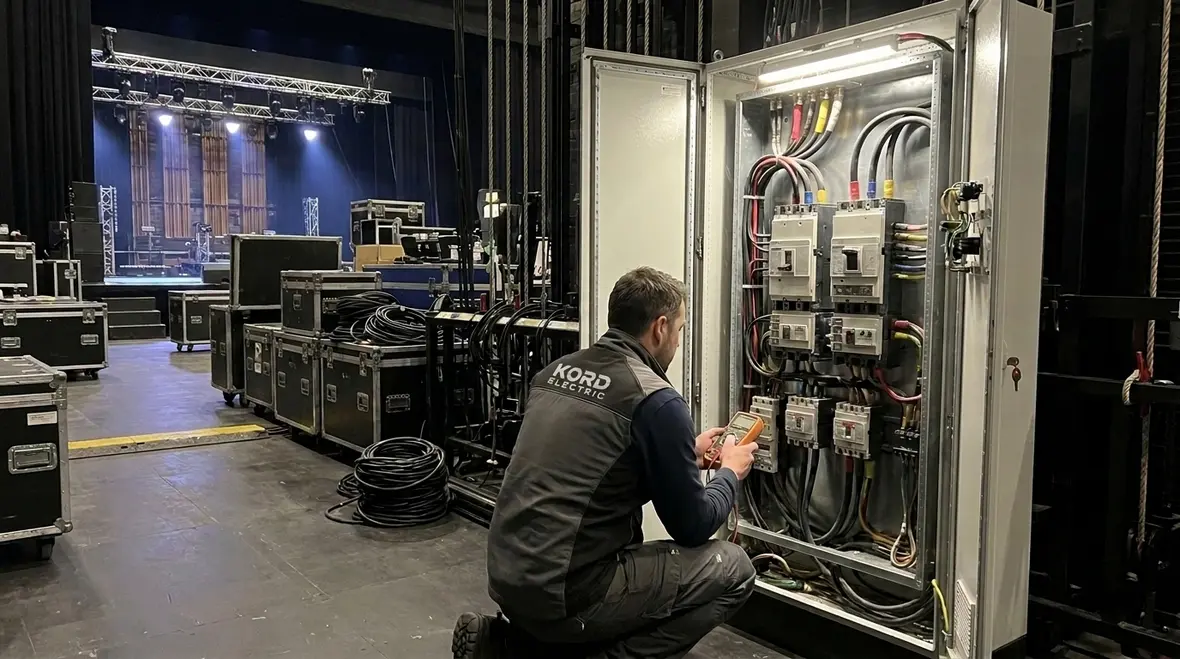
Even a well designed electrical system needs maintenance, especially in venues that run hard. We help facilities create practical maintenance plans that focus on aging components, connection health, and protective device performance. For example, we can schedule inspections of panels, verify torque on key connections where appropriate, and check that emergency systems meet testing intervals. We also review hotspots and abnormal load patterns that can develop over time.
When something is trending toward failure, we help our clients spot it early. Then, we suggest repairs that fit the venue schedule. This reduces the odds of a last minute outage that turns a dress rehearsal into a tech thriller. Most importantly, we keep maintenance focused on commercial and industrial facilities and major propertie buildings, because those are the settings where uptime and safety matter most. If you run a theater at scale, you need service that respects the stakes.
Our approach to maintenance for theaters borrows from the same structured preventive maintenance strategies we use in other large facilities. Instead of waiting for breakers to trip during a matinee, we build schedules for infrared inspections, cleaning, torque checks where applicable, and protection testing around your dark days and off hours. The goal is simple: find the issues during maintenance, not during intermission.
For multi-venue campuses and organizations that operate theaters alongside offices, studios, or classrooms, we can align show-focused maintenance with broader electrical preventive maintenance so everything from lobby lighting to backstage dimming racks benefits from a single, coherent plan instead of scattered repairs.
How California code and theater operations work together
Theater electrical requirements california are not just a list of rules. They are the framework that keeps audiences and staff safe while giving creative teams room to work. That means understanding how state codes, local amendments, and entertainment-specific standards intersect with real-life operations.
In practice, this might look like making sure egress paths stay illuminated even when all stage lights are out, verifying that rigging motors and moving scenery have properly protected circuits, or confirming that dimming control wiring is separated from higher-voltage conductors in accordance with code. It also means designing systems so that routine show changes—like adding a few more LED fixtures or rearranging floor pockets—do not quietly push circuits past comfortable margins.
Because our team works across many types of commercial and industrial projects in Los Angeles County, we stay close to current California electrical requirements and how authorities having jurisdiction interpret them in the field. That experience helps us guide theater owners and facility managers so upgrades, retrofits, and new builds pass inspection smoothly without sacrificing the creative flexibility that live performance demands.
If your theater is part of a broader campus or portfolio, it can be especially helpful to align your performance space upgrades with the wider support offered through Kord Electric’s Los Angeles County electrical services. This creates a single, coordinated strategy for panels, feeders, lighting, emergency power, and troubleshooting across the entire property.
Integrating theater systems with the rest of your property
Many California theaters are part of something bigger: mixed-use developments, entertainment districts, campuses, or municipal properties. In those settings, the theater shares electrical infrastructure with offices, restaurants, plazas, or recording spaces. That is where a commercial-and-industrial mindset really pays off.
We look at how the theater’s loads, especially peak show demands, interact with the rest of the site. That includes reviewing service size, transformer capacity, main distribution panels, and downstream branch circuits that may serve both show systems and everyday building needs. By treating the theater as one element in a larger electrical ecosystem, we help prevent scenarios where a sold-out concert competes with rooftop HVAC or kitchen equipment for the same capacity.
For properties across the region, exploring the broader Los Angeles County electrical services available from Kord Electric can help you coordinate upgrades, maintenance, and troubleshooting across every corner of the campus. That way, your theater benefits from the same steady reliability as your offices, parking structures, and support spaces.
FAQ
Ready to bring stable power to your next performance
If you are planning an upgrade, handling recurring trips, or building a new venue, Kord Electric is ready to help. We assess your load needs, emergency requirements, power quality, and safety details so your team can focus on the show. Our technicians explain each step and keep the process steady from design support through service and inspections. Contact us today and let us build a power plan that performs as well as your performers.
For theaters that are part of larger campuses or multi-building operations, pairing show-focused work with our wider commercial services makes it easier to keep everything aligned. When your stage rigging, lobby lighting, back-of-house panels, and nearby support buildings all fall under a single coordinated service plan, you spend less time chasing separate vendors and more time delivering great performances.
As you look ahead to the next season, consider how a dedicated commercial and industrial electrical partner can support both your creative ambitions and your practical realities. When the curtain rises, you should be thinking about your audience, not your amperage.
To explore how our broader service capabilities for Los Angeles County properties can support your theater, neighboring buildings, and future expansion, you can review our related commercial electrical services pages and coordinate your next steps under one umbrella instead of many disconnected projects.


