California Film Studio Fire Safety Requirements
Fire Safety Requirements for Film Studios in California can feel like a maze built by someone who enjoys paperwork more than daylight. Still, when a studio plans sets, sound stages, and power hungry production equipment, they must follow the rules that keep people safe and keep projects on schedule. In this guide, we address film studio fire safety requirements california in practical terms for commercial and industrial facilities and major property buildings. We also explain how our team at Kord Electric approaches prevention, testing, and documentation so studios can meet expectations without guessing. And yes, we will say it clearly: electricity and fire safety are not separate topics in a studio. They move together, like a scene that starts quiet and ends with smoke.
Fire safety planning starts with electrical risk, not luck
Third party inspectors and local authorities look for consistent hazard control, and electrical issues are a common starting point. In film studio fire safety requirements california, the emphasis often lands on how electrical systems support safe operation in spaces filled with temporary changes. Sets get built fast, cables get rerouted faster, and production crews add equipment as scenes shift. Therefore, studios need a plan that stays current, not one that sits in a binder like a forgotten prop.
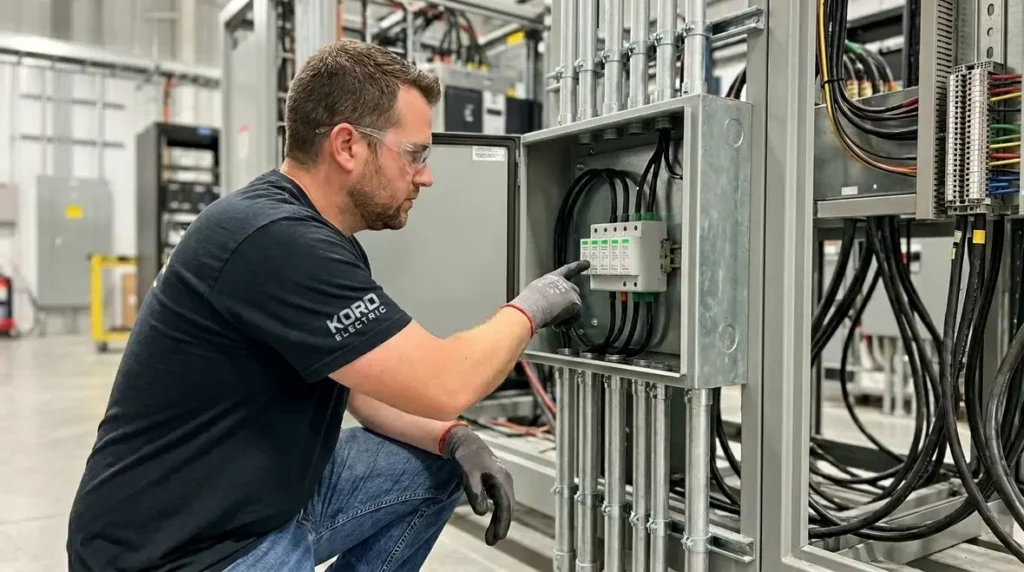
At Kord Electric, our technicians and expert service staff walk through the real risks we see in commercial and industrial environments: overloaded circuits, damaged cord sets, missing covers on panels, poorly managed cable runs, and lighting systems that operate near materials that should not be exposed to heat. As we work, our staff explains what we are checking and why, in plain language. That way, the team does not just “pass inspection.” They understand how the system behaves during normal work and during failures.
What California commercial studios must verify on systems
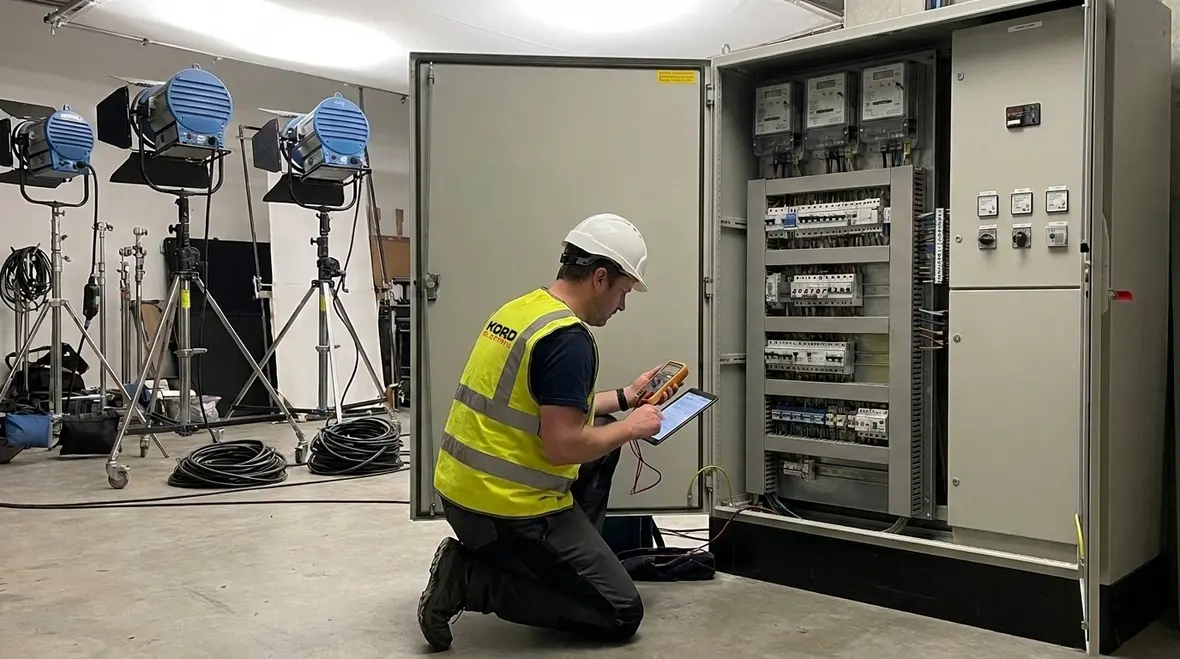
Studios operate across multiple zones: stage areas, production offices, costume storage, prop rooms, and sometimes special effects spaces. Because of that, a studio should verify fire related electrical readiness across the building, not just where cameras point. When our team reviews a facility, we typically align electrical prevention with the building’s broader fire safety plan. We also coordinate with the property team so the work does not disrupt production windows.
According to best practices discussed in our Kord Electric blog on electrical fire prevention for commercial buildings, studios benefit from methodical checks such as these:
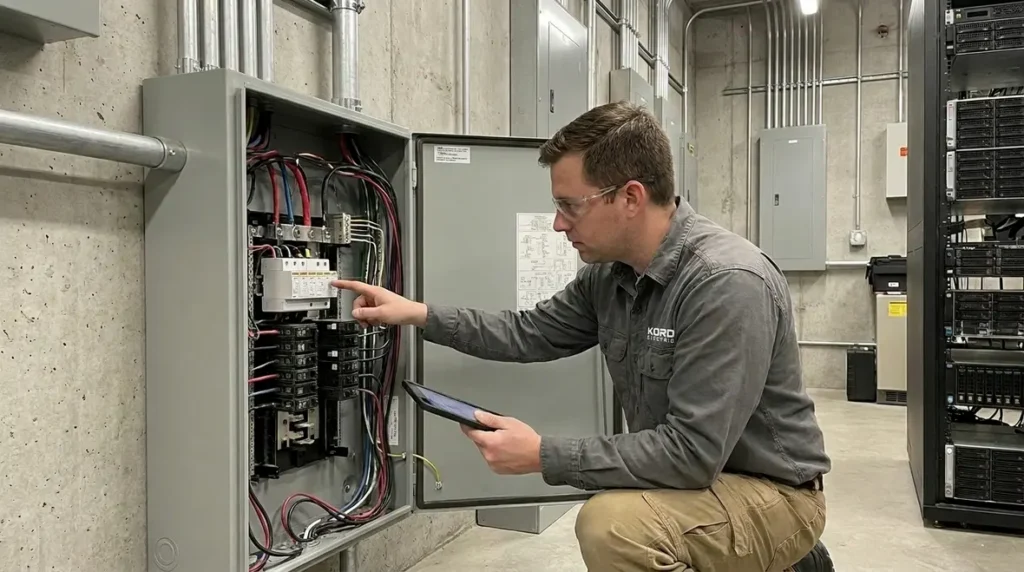
- Panel readiness: We confirm safe access, proper labeling, and that protective devices match the loads in the space.
- Branch circuit protection: We inspect for correct breakers, safe terminations, and signs of heat stress.
- Cable management: We verify that wiring methods avoid damage, allow cooling, and reduce contact with combustible materials.
- Grounding and bonding: We check paths that support safe fault clearing and stable operation.
- Monitoring and alarms: We verify proper function where electrical systems tie into fire detection and notification.
Next, we help teams document what they found, what we repaired, and what the system status is today. Then, when an inspector asks for evidence, the studio does not scramble. It hands over clear records, like handing over a call sheet, except this one helps prevent the fire department’s greatest hits.

How staging, temporary power, and set builds change fire risk
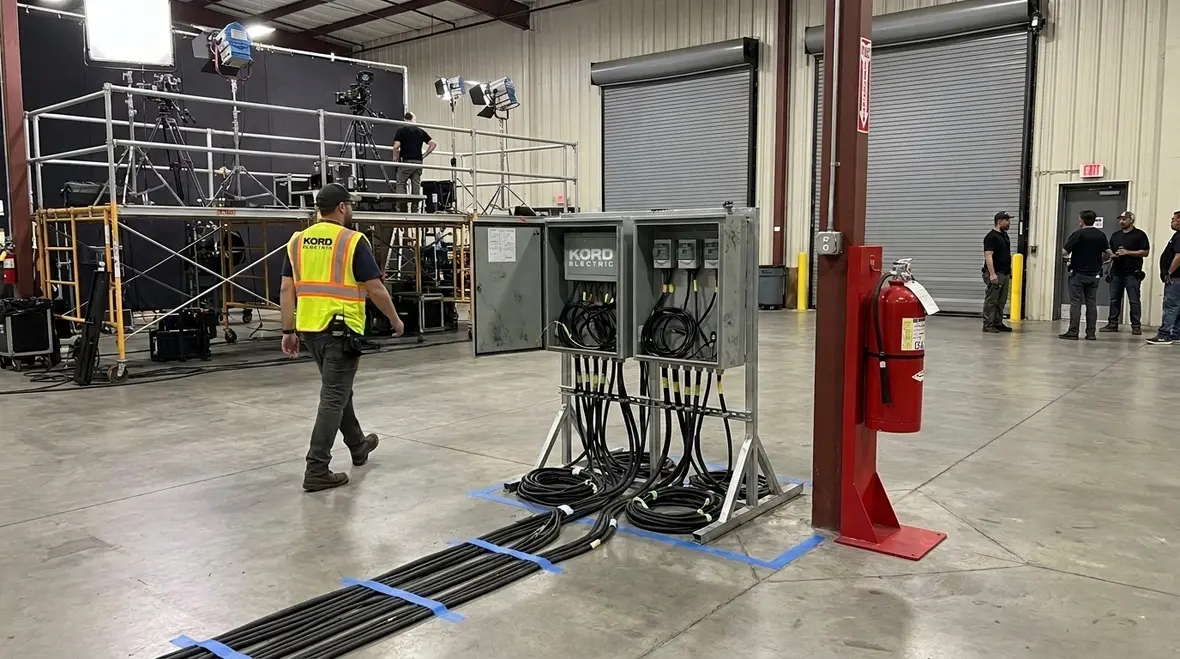
In a film studio, “temporary” can last weeks. Temporary lighting, power drops, distribution boxes, and extension cords can multiply during pre production and late rehearsals. Therefore, film studio fire safety requirements california usually expect studios to manage changes with controls that stay consistent as setups evolve. That includes how crews route cables, how they secure them, and how they prevent heat and sparks from reaching combustibles.
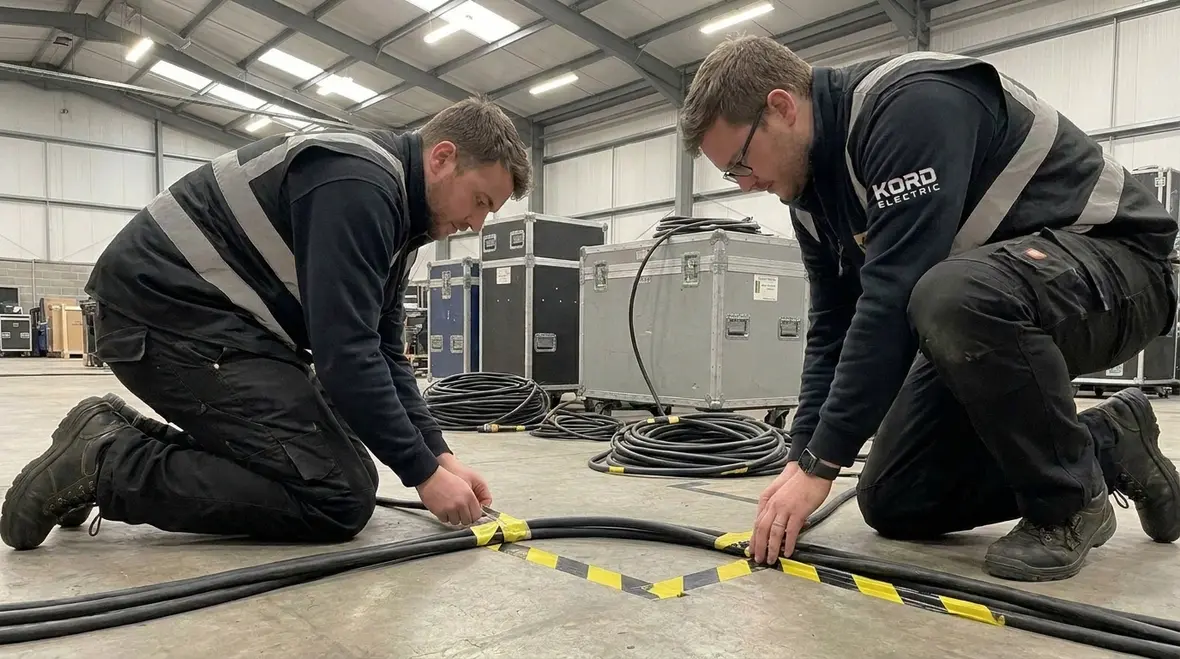
Our technicians at Kord Electric focus on practical controls that production teams can follow. For example, we support safe methods for temporary power distribution in commercial and industrial buildings, including:
- Using approved distribution for stages and set zones, instead of improvising with damaged devices.
- Maintaining clear cable pathways so wiring does not get crushed by equipment, doors, or walkways.
- Keeping spacing from combustibles for lighting and heating loads, especially near props and set dressing.
- Securing connections to prevent looseness that can arc under load.
And to be clear, we also educate. When our expert service staff explains the “why,” teams act faster. They stop treating wiring like invisible background music and start treating it like the lead actor that cannot be late to the set. That mindset reduces incident risk and improves day to day reliability.
Commercial fire alarms and emergency systems must integrate with electrical work
Fire alarm and emergency systems depend on electrical reliability. If power pathways fail, alarms and notification devices cannot do their job. Thus, studios should integrate electrical maintenance with the fire protection system schedule. We often see facilities where alarms get checked, but electrical conditions that support those systems lag behind. That is a bad deal for everyone, including the budget.
In our service approach, we confirm that electrical panels, power supplies, and relevant components support the fire alarm and emergency operations. We also check for conditions that increase risk, such as corrosion at terminations, evidence of heat at connections, and improper protection for devices that should stay energized for life safety.
Moreover, studios should plan for continuity. During production, shutdowns happen. As a result, our team coordinates work so life safety systems stay within the required operating behavior. We schedule testing and maintenance around production needs, while still meeting compliance expectations for commercial and industrial facilities and major property buildings.
Inspections, documentation, and training that hold up under pressure
Inspections do not reward vibes. They reward evidence. When studios follow film studio fire safety requirements california, they need records that show systems were maintained, tested, and repaired as required. That includes logs, test results, and corrective actions.
We help property managers and facility leads build a clean workflow. First, we identify what the system includes. Then, we set a maintenance and testing rhythm that matches real usage, not a mythical “average day.” Finally, we train staff so they can spot early warning signs.
Our technicians and expert service staff take training seriously. They can explain what overheating looks like, how to recognize a damaged cord or a loose connection, and why certain cable routing methods do not belong in production spaces. We also provide guidance that supports internal reporting, so problems do not hide until the last minute. Because if you wait until the final scene to notice a risk, you will likely also notice your stress level rising faster than a balloon with a leak.
Code minded preventive maintenance that reduces downtime
Fire safety is not only about preventing disasters. It is also about reducing unexpected failures that ruin schedules. Preventive maintenance keeps electrical systems stable, and that stability supports safer operation across a studio complex. Therefore, a studio should maintain key electrical components with a schedule that fits its production cycles.
Kord Electric focuses on commercial and industrial facilities and major property buildings. We bring a consistent process: inspection, targeted correction, and verification. Then, we help teams plan the next steps so production does not stall. We also address recurring issues that we see across studio environments, such as frequent temporary power changes, aging panels near high use areas, and poor cable discipline in high traffic zones.
When preventive maintenance runs smoothly, you get fewer emergency callouts. And fewer emergency callouts mean fewer interruptions. Honestly, nobody wants to pause a shoot because a breaker tripped again, like a plot twist that no one wrote.
For studios that want a structured approach beyond a single project, our team can align your program with broader commercial and industrial electrical maintenance plans, so film stages, production offices, and support spaces all benefit from the same disciplined schedule.
FAQ
Conclusion and call to action
Fire safety in a film studio is a systems job, not a last minute scramble. When you align electrical prevention with fire alarms, emergency readiness, and disciplined temporary power controls, you reduce risk and protect production time. At Kord Electric, our technicians and expert service staff support commercial and industrial facilities and major property buildings with clear inspections, targeted repairs, and documentation you can trust. If you want film studio fire safety requirements california handled with confidence, call Kord Electric today and let us review your facility.
If your stages, offices, or post production suites sit within the wider region, our team can also coordinate with your broader Los Angeles County commercial electrical services plan so studio fire safety, power reliability, and future upgrades all move in the same direction.
Whether you are updating an existing soundstage, planning new sets, or tightening your documentation before the next inspection cycle, Kord Electric can help align your electrical systems with the fire safety expectations that matter most for California studios.