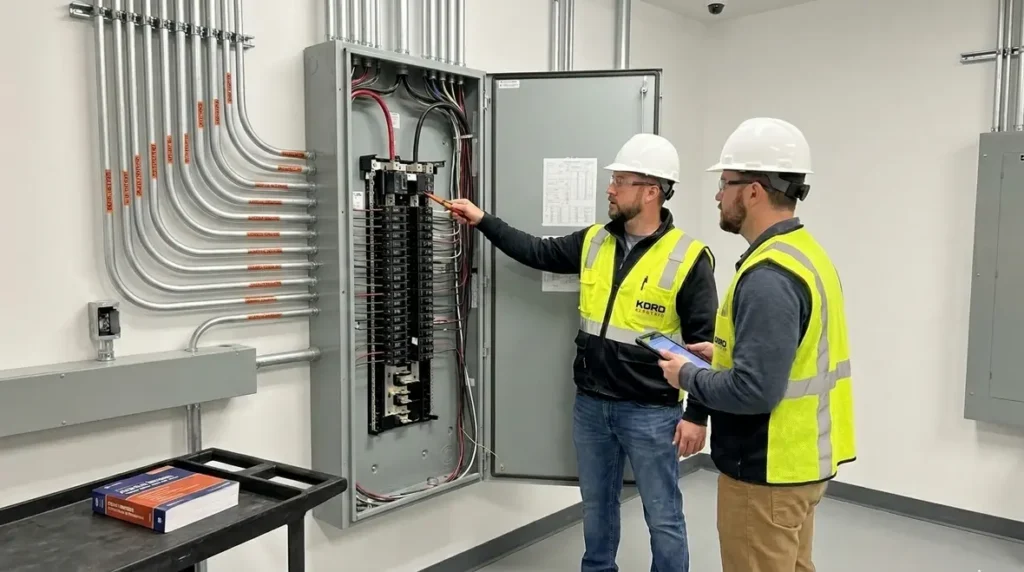
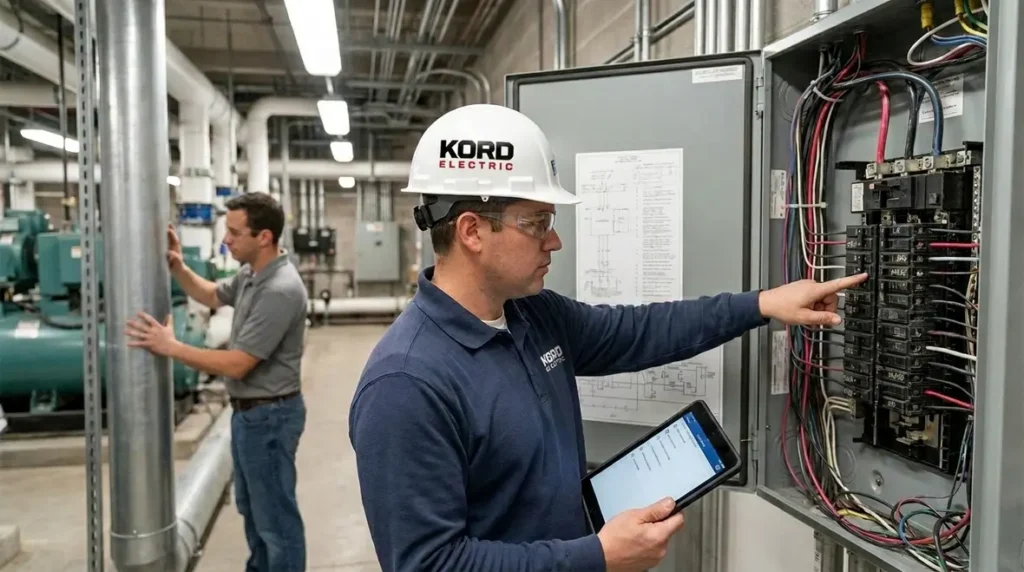
Hazardous Location Wiring Requirements Guide
Hazardous location wiring requirements for commercial buildings set the rules for where electricity can safely go, and they protect people when fumes, dust, or flammable vapors show up uninvited. At Kord Electric, we design and install wiring systems that follow recognized safety standards, so a site does not turn into a “why is there a fireball in the break room” story. We also make sure our technicians and expert service staff explain the why behind every decision, because safety plans that no one understands rarely get followed. In addition, we coordinate with facility teams, safety officers, and inspectors so the work fits the building, the process, and the risk level from day one.
Understanding hazardous areas in commercial and industrial sites
In commercial and industrial buildings, hazardous areas are not random zones. They are defined by what is in the air, how often it appears, and how long it stays. For example, a paint mixing room usually has different risk patterns than a natural gas line area. Therefore, electrical wiring cannot be treated like a one-size-fits-all job.
As we help property managers and industrial clients, our team starts by looking at the process map and the area classification. Then we connect that information to installation choices such as conduit type, cable routing, sealing practices, and termination methods. Most importantly, we follow the applicable wiring approach so the system stays safe under normal operation and during upset conditions.
Yes, people sometimes think “I don’t see fumes, so we are fine.” However, the air can still contain vapors during transfer, cleaning, or maintenance. So we treat the risk as real even when the building looks calm. Honestly, electricity does not care about your optimism.
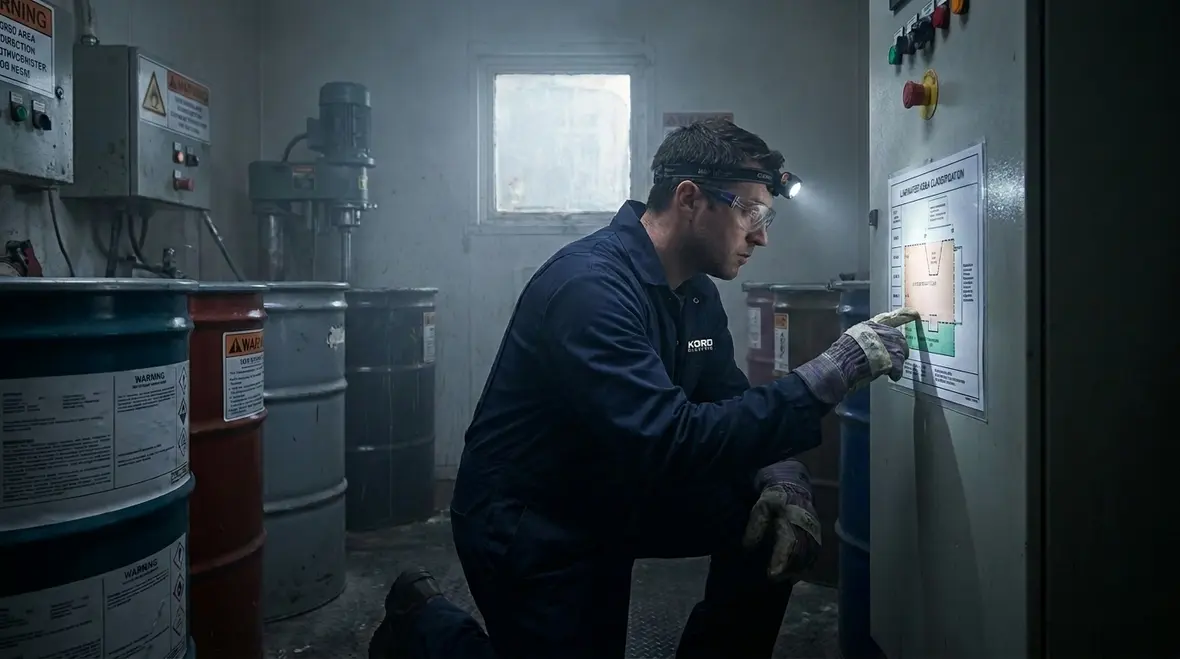
How Kord Electric meets wiring needs with correct installation
Once the hazardous locations are identified, the next step is wiring design that matches the environment. At Kord Electric, we work from the classification information to plan the wiring method. Then we select materials and installation practices that reduce ignition risk.
Our expert service staff explains the plan in plain language, and we keep it tied to what the facility actually does. For instance, we clarify why we route cables in specific ways, how we protect them from mechanical damage, and how we handle transitions between non hazardous and hazardous spaces. That explanation matters because the best installation in the world fails if someone later changes a route, removes a barrier, or shortcuts a sealing step.
We also avoid “install first, figure out later” behavior. Instead, we review drawings and field conditions early, so the wiring system matches the hazards in both location and behavior.

Conduit, cable, and sealing practices for safe power distribution
Hazardous location wiring requirements often come down to one theme: prevent flame paths and ignition sources. Therefore, conduit and cable selection becomes a safety tool, not just a code checkbox. We typically use robust containment methods suited to the site conditions, including corrosive environments, moisture exposure, and physical impact risks.
Sealing is another key point. When wiring passes through barriers or enters areas where vapors can travel, sealing helps stop the movement of hazardous gases through the conduit. Accordingly, we plan where seals go and how they get installed. Then we verify the work before cover, so the insulation integrity and connector fit stay correct.
In addition, we ensure proper fastening and support so cables do not sag or chafe. Then we confirm that terminations are handled the right way, with correct compression, torque, and labeling. If you have ever had a loose terminal turn into a “mystery” shutdown, you already understand why we treat connections like they matter. Because they do.

Equipment wiring rules that protect circuits and people
In hazardous areas, wiring rules also apply to how equipment gets connected, not just how the cable gets laid. As we coordinate commercial and industrial projects, we focus on the wiring details that can change safety outcomes. That includes motor connections, lighting circuits, control wiring, and any equipment that can operate near flammable atmospheres.
Our technicians review equipment markings and installation conditions, and we confirm compatibility between the equipment and the wiring method. Then we check bonding and grounding so fault currents have a controlled path. This matters because a fault without proper grounding can energize parts that should stay safe.
We also plan for maintenance access. So if an operator needs to service a device, the wiring path and termination design still support safe work practices. In other words, we build for the real world, not just for the day the inspection passes. Inspections are great, but operational safety stays even when inspectors go home.

Inspection readiness and documentation for major property buildings
For large commercial and industrial facilities, safety success depends on more than good workmanship. Therefore, we help teams stay inspection ready by organizing the information that inspectors expect to see. We produce clear documentation that supports the installation, and we keep it aligned with the project scope.
During construction or upgrades, our expert service staff verifies key steps before close in. Then we capture the details that show what was installed, where it was installed, and how it meets the hazardous location wiring requirements and related installation rules. This approach reduces last minute surprises. For facilities that want structured support beyond a single project, pairing this documentation approach with a broader commercial and industrial electrical maintenance plan can help keep systems ready for inspections year after year.
In addition, we support ongoing compliance. When facilities modify process equipment, expand floor plans, or add new ventilation layouts, the hazardous area picture can change. So we encourage coordinated reviews, because ignoring change is how you get the “we thought it was still the same” problem.
Hidden electrical risks can develop quietly inside panels and raceways over time. When teams connect hazardous location assessments with broader electrical risk reviews, they can catch overloaded circuits, loose connections, and improper modifications before they turn into unscheduled downtime. That kind of proactive approach keeps both everyday operations and classified areas safer.
Common wiring mistakes we prevent at the jobsite
Even well run sites can run into trouble when wiring habits get copied from one project to another. However, hazardous area wiring needs its own discipline. At Kord Electric, we actively prevent common mistakes through planning, supervision, and quality checks.
One frequent issue is improper transitions. People sometimes treat a boundary like it is just another doorway, but it is a safety line. Therefore, we plan boundary crossings carefully and install the right sealing and containment components so hazards do not travel through wiring paths.
Another issue involves cable routing and protection. Some crews route cables where they get exposed to impact, chemical splash, or heat. Then, over time, insulation degrades and connections loosen. Accordingly, we route and protect wiring so the system stays intact through routine operations.
We also watch for mismatched equipment and wiring methods. If a device expects a specific installation approach and someone substitutes “something close,” that is a silent failure waiting to happen. So we verify markings and the approved wiring approach before we energize anything.
FAQ: Hazardous location wiring requirements in commercial buildings
Next step with Kord Electric for your commercial facility
When your facility operates around fuels, chemicals, or process materials, safety cannot be an afterthought. Kord Electric helps commercial and industrial customers plan, install, and verify wiring systems that match hazardous area risk, so operations stay steady and inspections stay calm. Our technicians and expert service staff explain the details, protect your equipment, and document the work so your team can move forward with confidence.
If your building also needs broader upgrades beyond hazardous location work, our team can integrate those improvements into a larger strategy. From commercial lighting installation for large-scale facilities to structured electrical preventive maintenance programs, we align everyday power distribution with the same discipline used in classified spaces. That way, critical areas, general production zones, and support spaces all benefit from a consistent approach to safety and reliability.
For sites that depend on continuous operations—data centers, manufacturing lines, commercial kitchens, and campus-style properties—tying hazardous location wiring requirements into system-wide planning helps reduce hidden electrical risks and surprise downtime. When inspections, maintenance, and project work all point in the same direction, your electrical system becomes an asset instead of a recurring question mark.
Call Kord Electric today and let us review your scope, wiring approach, and schedule for a safer outcome. Whether you are planning a new classified area, upgrading existing infrastructure, or building out lighting and distribution for a modern commercial facility, our licensed electricians and expert service staff are ready to help you move from uncertainty to a clear, code-aligned path forward.
To explore related support for your building’s electrical systems beyond hazardous locations, visit our dedicated service pages, including solutions like lighting installation services and electrical preventive maintenance built specifically for commercial and industrial properties. From there, you can see how a comprehensive plan keeps both hazardous and non-hazardous spaces safer, more reliable, and ready for what comes next.