Hazardous Location Electrical Requirements Guide
Hazardous Location Electrical Requirements Explained for Commercial Sites
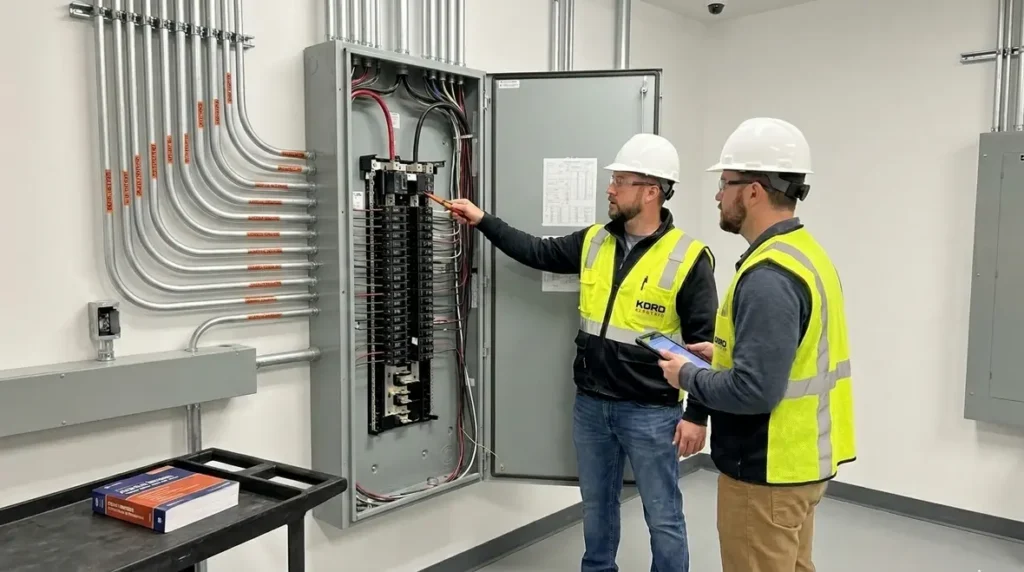
At Kord Electric, we see the same problem show up again and again on commercial and industrial projects. A facility gets built, operations start, and then someone notices the electrical system does not fully match the hazardous location electrical requirements. In the first 100 to 150 words, here is the core idea we teach: the wiring method, device selection, sealing, and inspection plan must match the space classification and the environment inside it. When the rules are followed, sparks and heat stay where they belong, and the site stays compliant. When they are ignored, the system becomes a liability, not an asset. And yes, we know, nobody wants to be the person who says, “We should have checked this earlier.” We also know how to help you avoid that moment.
Why hazardous areas demand a different electrical plan
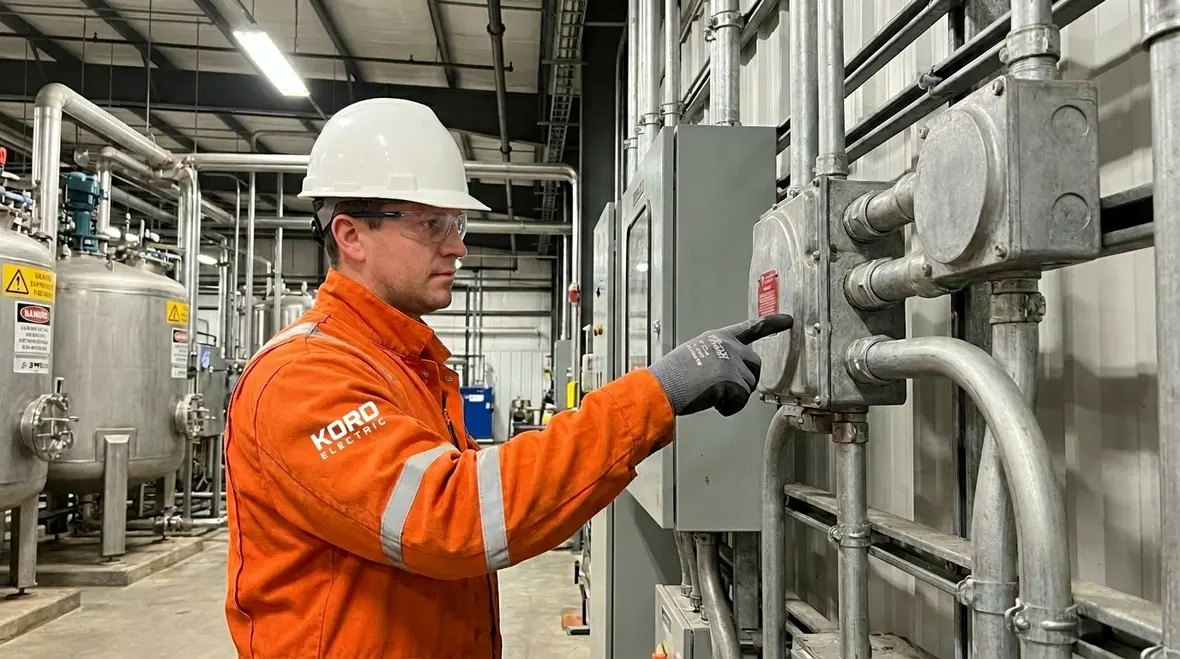
Third person or not, the physics does not care about anyone’s schedule. In hazardous areas, the risk comes from specific conditions such as flammable gases, vapors, liquids, or combustible dust. These materials can ignite when exposed to electrical energy, even when the equipment looks “normal” to the untrained eye. Therefore, we build our approach around one goal: controlling ignition sources.
As our technicians explain during site visits, it is not enough to install a standard switch and call it a day. Instead, the hazardous location electrical requirements push a design that accounts for ignition risk, expected operating modes, and how equipment releases heat, arcs, or sparks. Moreover, they require that the electrical system uses methods that prevent a flare up even if the surrounding atmosphere changes. In other words, the design must behave like a responsible adult at a party: it anticipates trouble and acts accordingly.
How classification and zoning guide safe equipment selection
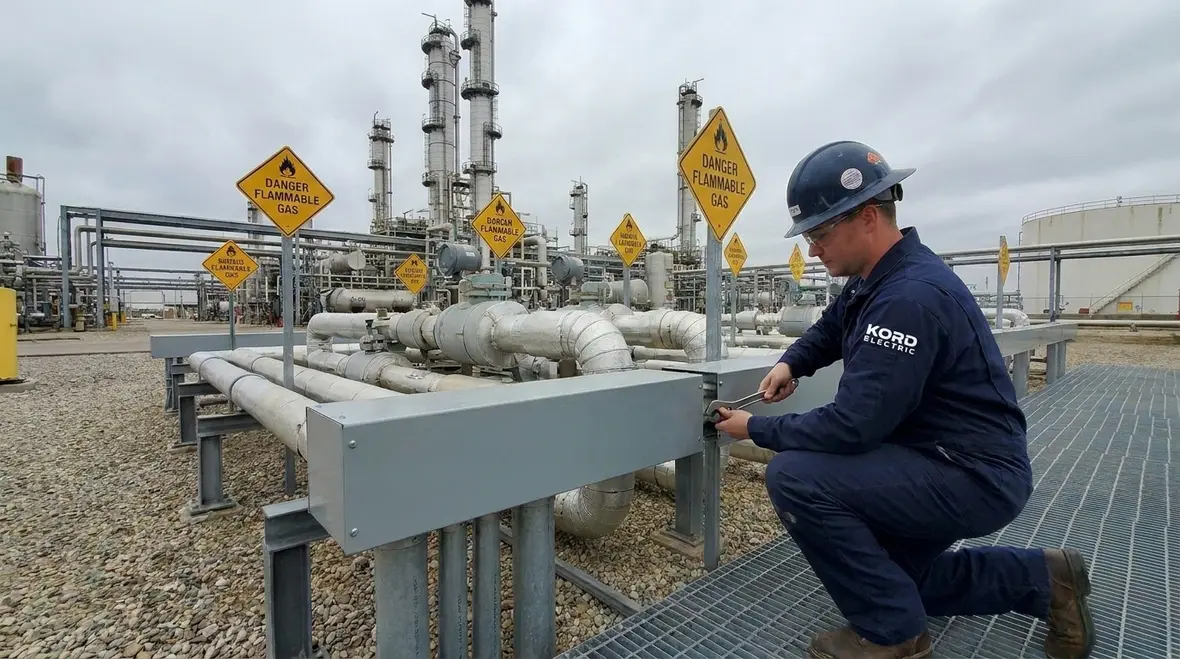
When we develop a plan for commercial and industrial facilities, we start with classification. The site owner might think of hazardous area mapping as paperwork, but our experienced service staff treats it as the foundation of safe design. First, they verify the classification for the area where electricity will run. Then they align electrical equipment with that classification.
In practice, a proper classification drives decisions on device rating, enclosure type, and whether devices must be explosion proof, intrinsically safe, or suitable for certain temperature limits. Additionally, the environment matters. A location that handles flammable vapors behaves differently than one that handles combustible dust. So, the equipment selection must match both the hazard type and the likelihood of presence.
We also remind facility managers that classification is not a one time event. As processes change, the classification can shift. For example, a new coating line or a different solvent can alter vapor release patterns. As a result, our team helps clients plan for updates instead of reacting after problems appear. For organizations that are already formalizing their long term strategy, pairing classification reviews with structured electrical maintenance plans can keep those maps accurate instead of letting them gather dust in a binder.
On related projects, we have seen how a proactive maintenance program makes classification updates easier instead of overwhelming. For example, in facilities that rely on commercial and industrial electrical maintenance plans, the same site data used to schedule inspections and testing can feed directly into hazardous area reassessments, so nothing gets missed just because production got busy.
Installation methods that reduce ignition risk
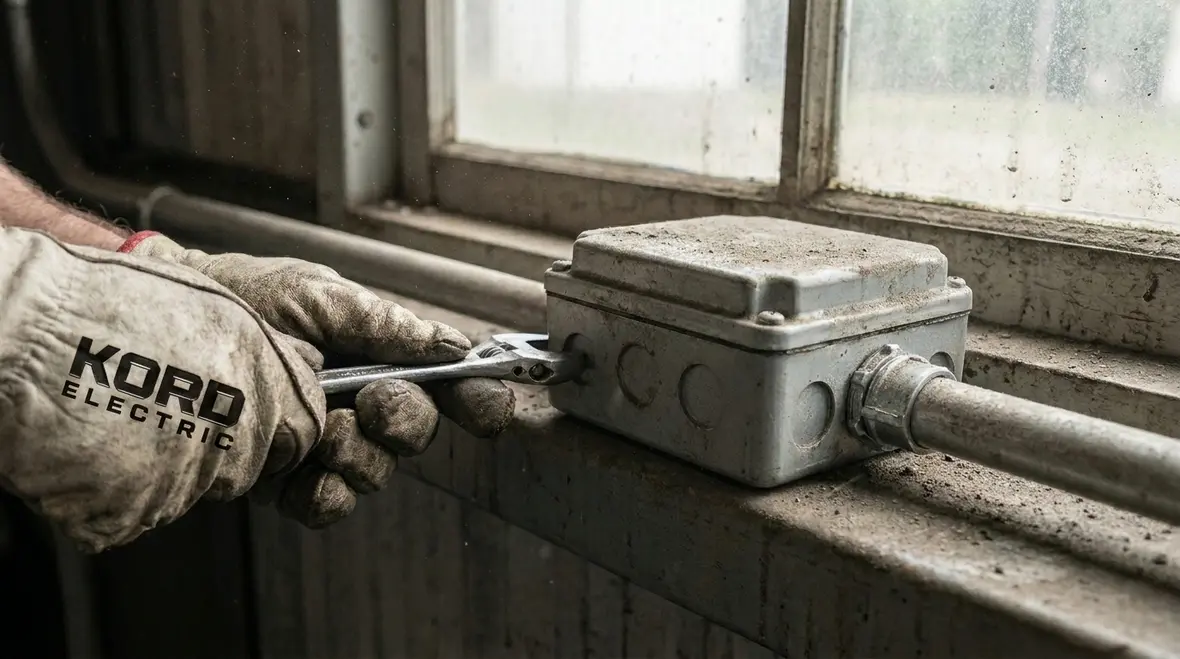
Once the classification is set, the installation method becomes the next critical step. Many failures happen at the “boring” parts: seals, fittings, terminations, and cable routing. So, we focus on the details that actually prevent ignition.
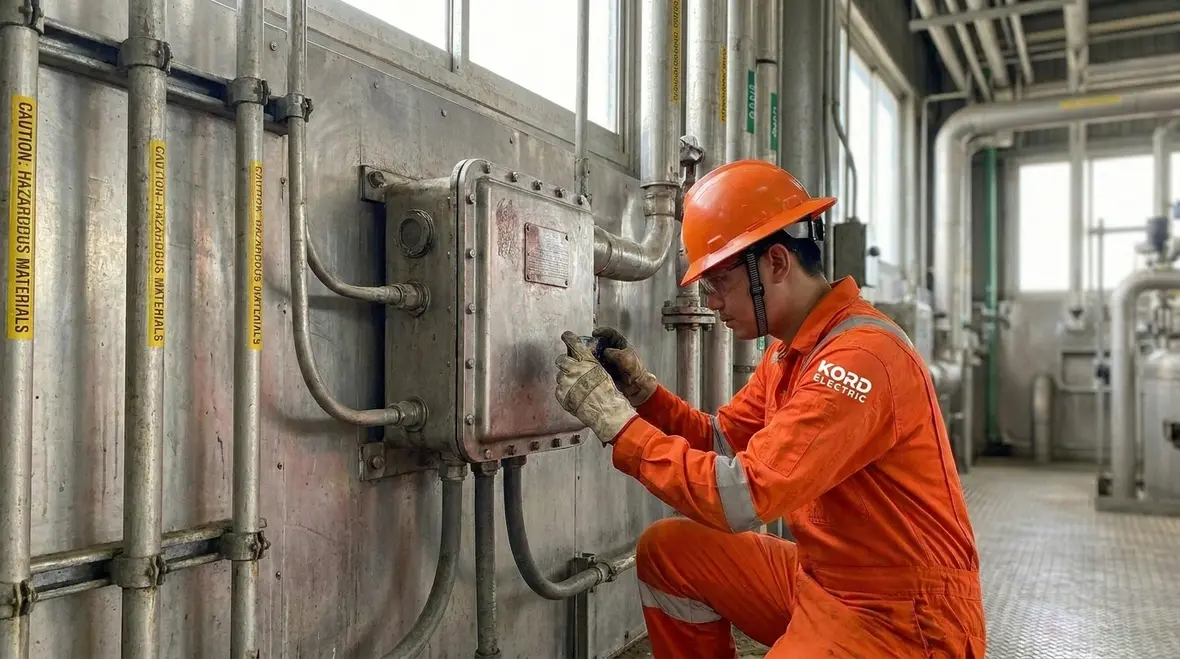
Our technicians typically check that wiring systems include the right sealing requirements where required, because gases and vapors do not politely stop at conduit seams. Also, they confirm that covers, bushings, and fittings match the rated construction so the system stays intact under conditions like vibration, temperature change, and moisture.
In addition, our approach addresses how equipment gets protected from damage. If a cable gets crushed, the protection level drops. Then the system can become less reliable than expected. Therefore, we select routing practices and supports that fit real operations, not just the drawing.
To keep the project moving, we coordinate with site stakeholders so installation stays aligned with safety goals and planned operations. In fact, our expert service staff often explains what they are doing while they are doing it, because clarity reduces rework and builds confidence. That is a business move, not just good customer service.
This attention to installation detail also ties in with broader code requirements. For example, when projects overlap with updates driven by NFPA 70 and local code changes, we help owners understand how hazardous location electrical requirements, general commercial electrical rules, and preventive maintenance expectations all intersect rather than compete for attention.
Conduit sealing, grounding, and bonding practices that stand up

Electrical safety in hazardous environments depends on more than the visible equipment. Grounding and bonding control how fault energy flows. Meanwhile, sealing keeps hazardous atmospheres where they belong. Our team stresses both because they support predictable behavior during faults and normal operation.
We work to ensure bonding paths stay continuous and that metal enclosures connect correctly. When bonding fails, fault currents may take unexpected routes. Then the system can trip incorrectly, overheat, or underperform when something actually goes wrong. Also, grounding practices help maintain the correct reference potential for protective devices.
On sealing, we help clients understand that seals are not decorative. They serve a purpose: to block the passage of flammable vapors or gases through wiring pathways. Our technicians verify proper seal placement and installation details, because an incorrectly installed seal can give a false sense of safety. And that is the kind of “trust me” that keeps investigators up at night, not the kind that should run a facility.
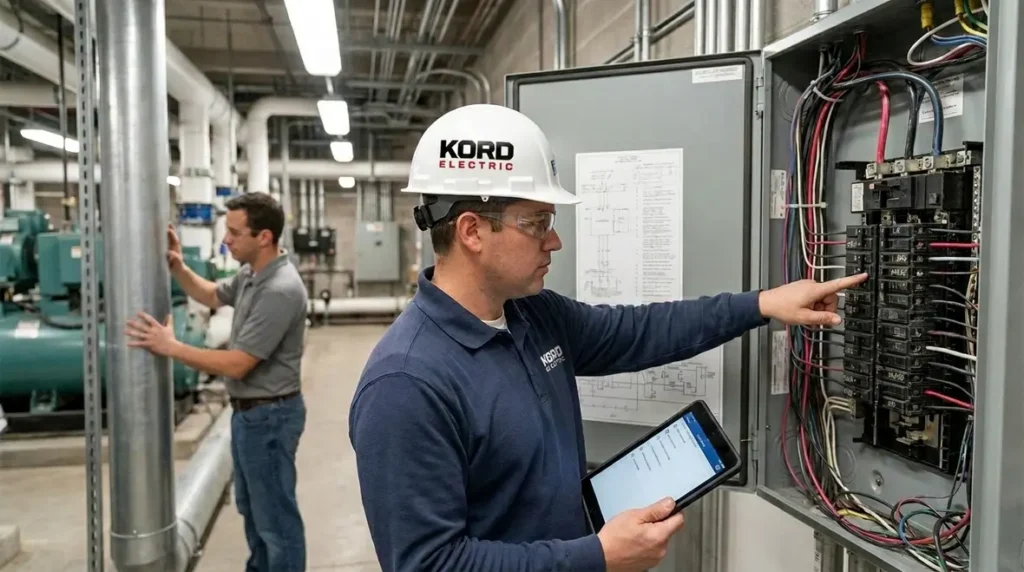
Furthermore, we ensure labeling and documentation remain part of the project deliverables. When maintenance teams later open a panel, clear information saves time and prevents missteps. In larger facilities, this documentation can also connect directly with broader electrical preventive maintenance efforts, making it simpler to schedule infrared scans, torque checks, or functional testing on the very gear that protects hazardous locations.
Maintenance, inspections, and training for long term compliance
Commercial and industrial facilities do not stay the same. Over time, components age, environments shift, and maintenance schedules change. So, compliance cannot be limited to installation day. Instead, we build an ongoing plan that supports the life of the facility.
Our technicians explain how routine inspections should look for damage, corrosion, missing seals, loose connections, and signs that equipment enclosures no longer protect the internal components. Also, we recommend that maintenance teams understand what changes require re evaluation. A “small” process tweak can alter the hazard environment, and then the original selections may no longer fit.
Training matters as much as parts. Our expert service staff provides practical guidance to help facility teams recognize common failure points. They also clarify which actions are safe and which actions should wait for qualified personnel. In short, we help clients avoid the classic scenario where a well meaning person tries to fix it fast, and accidentally breaks the safety design. That is less “heroic” and more “high cost.”
For many sites, the most effective way to keep hazardous location electrical requirements on track is to fold them into a larger preventive maintenance approach. Kord Electric’s electrical preventive maintenance services for commercial and industrial facilities are built around structured inspections, testing, and documentation. When hazardous locations are included in that scope, issues like aging seals, corroded enclosures, or damaged bonding jump out long before they become incidents.
In practice, that means hazardous area inspections do not show up as last minute emergencies. Instead, they become recurring tasks in a maintenance calendar, backed by clear reports, thermal images where appropriate, and prioritized recommendations. That kind of programmatic approach keeps compliance from depending on who happens to be on shift the day something looks suspicious.
Dual column guidance for common design checks
| Design check | Why it matters |
| Equipment suitability for the space classification | It prevents ignition sources from becoming exposed to flammable atmospheres. |
| Correct wiring method and enclosure ratings | It supports containment and protection during normal use and fault conditions. |
| Proper sealing and placement | It blocks the movement of hazardous gas or vapor through raceways. |
| Grounding and bonding continuity | It helps protective devices operate correctly and limits hazardous fault behavior. |
| Documentation, labeling, and maintenance access | It helps teams maintain compliance without guesswork later. |
Facility leaders who make these design checks part of every hazardous area project find that other upgrades get easier as well. When it comes time to add new lighting, expand a production line, or install advanced equipment, the existing documentation and classification work keeps crews from guessing, and keeps risks like voltage fluctuations, overloaded circuits, and hidden failures from creeping in behind the scenes.
FAQ about hazardous area electrical compliance
Need help aligning electrical systems with hazardous area safety rules?
Kord Electric helps commercial and industrial facilities build, upgrade, and maintain safe electrical systems for hazardous areas. Our technicians and expert service staff explain requirements in plain language, then support the details that keep compliance real. If your project involves flammable vapors, combustible dust, or process changes, we help you confirm classification, select suitable equipment, and verify installation practices.
For organizations that are already planning larger upgrades, hazardous area work often pairs well with broader commercial services like lighting installation, distribution improvements, and structured maintenance programs. When you align hazardous location electrical requirements with long term electrical preventive maintenance, you reduce surprises, protect uptime, and make every inspection easier to pass.
If you want to see how a structured maintenance approach supports hazardous area reliability, explore Kord Electric’s insights on commercial and industrial electrical maintenance plans. For teams focused on long term system health across the entire facility, you can also review their dedicated electrical preventive maintenance services and see how those programs can be tailored to your site.
Whether you need a one time hazardous area assessment, a full redesign of electrical systems in classified spaces, or an integrated program that covers everything from lighting and power to data center and industrial loads, our team is ready to help. Contact us today to review your site and develop a practical plan that reduces risk and protects uptime.
If your facility upgrades will also involve major lighting changes, be sure to review our dedicated lighting installation services for commercial and industrial properties. Coordinating hazardous location electrical requirements with a well planned lighting strategy keeps visibility high, risk low, and inspections straightforward from day one.