How to Manage Electrical Load in Industrial Facilities
Managing energy demand in a busy plant is not a “set it and forget it” situation. In this guide, we explain How to Manage Electrical Load in Industrial Facilities in a practical way that supports uptime, protects equipment, and keeps utility costs under control. And yes, it can feel like herding cats, but with transformers instead of cat toys. Kord Electric helps commercial and industrial facilities, plus major property buildings, handle load with clear planning, smart controls, and field tested design. To make it real, we lean on our experienced technicians and expert service team members, who walk through problems calmly and explain options in plain language.
How to Manage Electrical Load in Industrial Facilities: start with accurate demand visibility
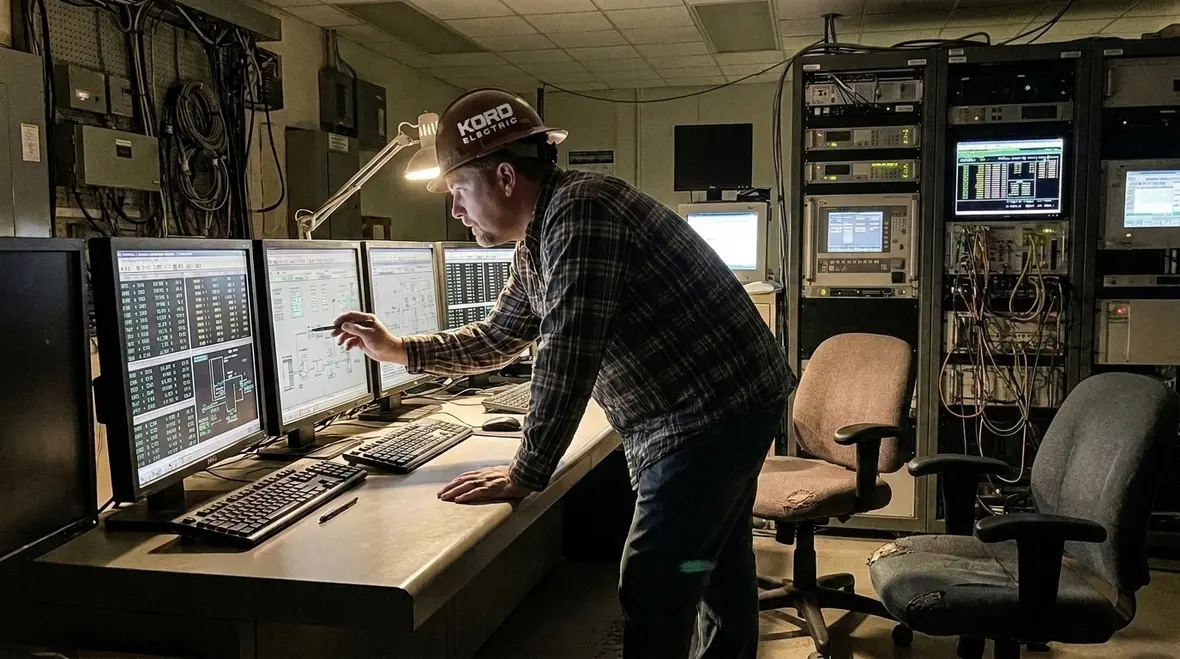
Before any equipment changes happen, we first make sure the facility understands what it is actually doing. Many load issues come from guesswork, and guesswork is the fastest route to surprise demand charges. So we help teams build a clear picture of energy use across shifts, days, and seasons. Then we connect that picture to the electrical system so decisions match reality.
In practice, we look at utility bills, meter data, and existing breaker and feeder information. Next, we verify key loads such as HVAC drives, compressed air systems, pumps, conveyors, welders, and process heating. When a facility reports, “Our demand spikes,” we ask which process, which time window, and which panel. Then we compare that with what the system shows.
At this stage, our technicians often find that “load” is not one thing. It is a mix of steady baseline power plus short bursts from motors starting, heaters cycling, and control equipment reacting. Therefore we prioritize monitoring that captures both average load and peak events.
If the facility already has meters, we still validate data quality and time sync. In addition, we recommend a review of existing harmonic and power factor behavior, because poor power quality can inflate effective demand even when kW looks stable. In other words, the meter may show one story while equipment stress tells another.
For facility teams that want to go even deeper on data and planning, Kord Electric’s article on data-driven electrical design for commercial and industrial facilities explains how real operating information and modeled behavior turn into better, safer decisions.
Balance load across feeders and panels without breaking operations
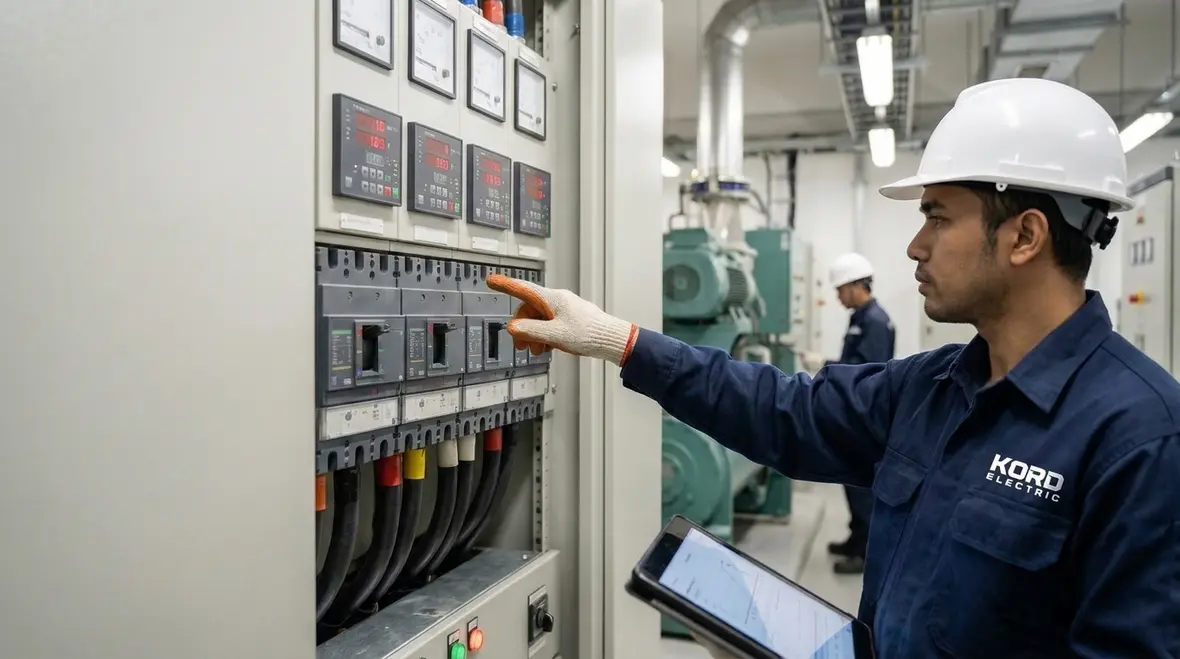
Once we see the demand pattern, we help facilities reduce stress by shifting load where it belongs. Many industrial electrical systems end up with uneven distribution, where one feeder carries most of the starting currents while another stays underused. Over time, that imbalance can degrade voltage quality and increase heating in conductors and switchgear.
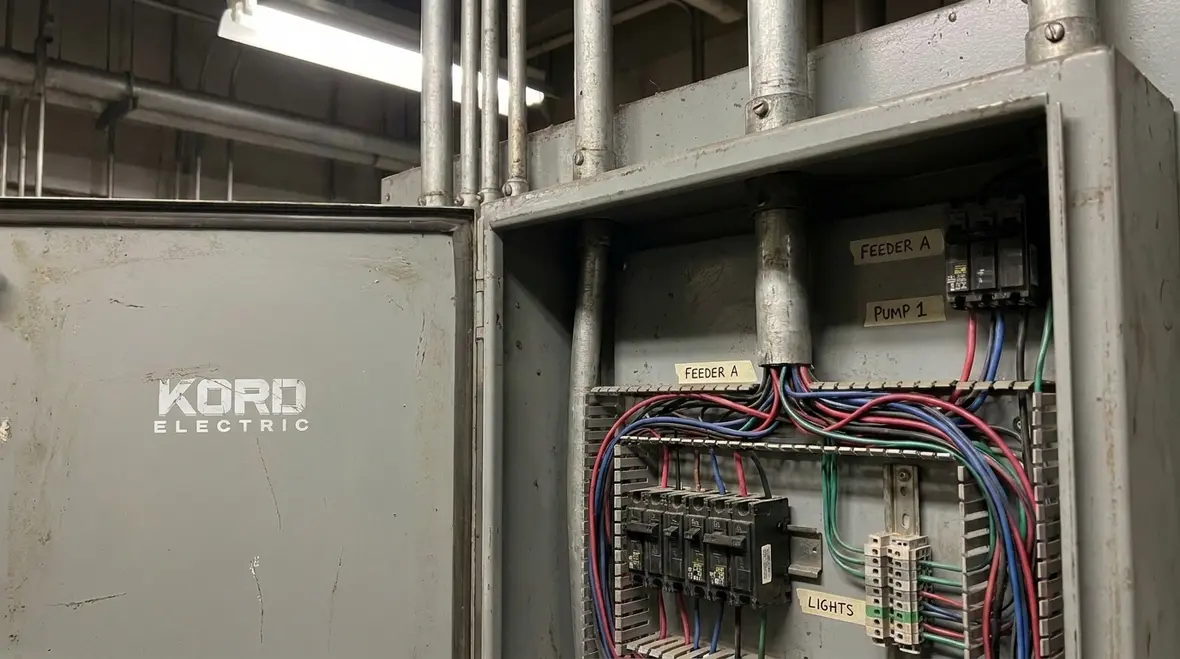
To fix this, we conduct a feeder level assessment. Then we map connected loads to panels, transformers, and bus bars. After that, we identify options for load balancing, such as reassigning certain motor circuits, adjusting control logic, or changing where new equipment ties in. Importantly, we coordinate changes with production schedules so downtime stays low.
Our expert service staff helps operators understand the “why” behind each change. For example, if a team wants to move a set of loads, we explain how inrush current and starting sequence affect upstream voltage. Next, we help them plan staged commissioning so operations continue while the electrical system adapts.
Also, we watch for the hidden culprit: oversizing. When loads get oversized or added over the years without a new electrical study, the system can become inefficient and expensive to maintain. So we review not only the capacity but also the utilization, because a system that is too large can still create headaches during peak periods.
For commercial and industrial sites where panels are already under pressure, Kord Electric’s guide on commercial building load management strategies offers additional context on how distribution, protection, and automation work together to keep the system stable.
Use motor starting strategies and controls to reduce peak demand
Motor loads often drive the biggest demand spikes in industrial environments. If several motors start together, the facility can see a demand jump that spikes the utility rate. And that is not just a cost issue, it is a stress issue. Voltage dips can cause nuisance trips, stall sensitive equipment, and shorten component life.
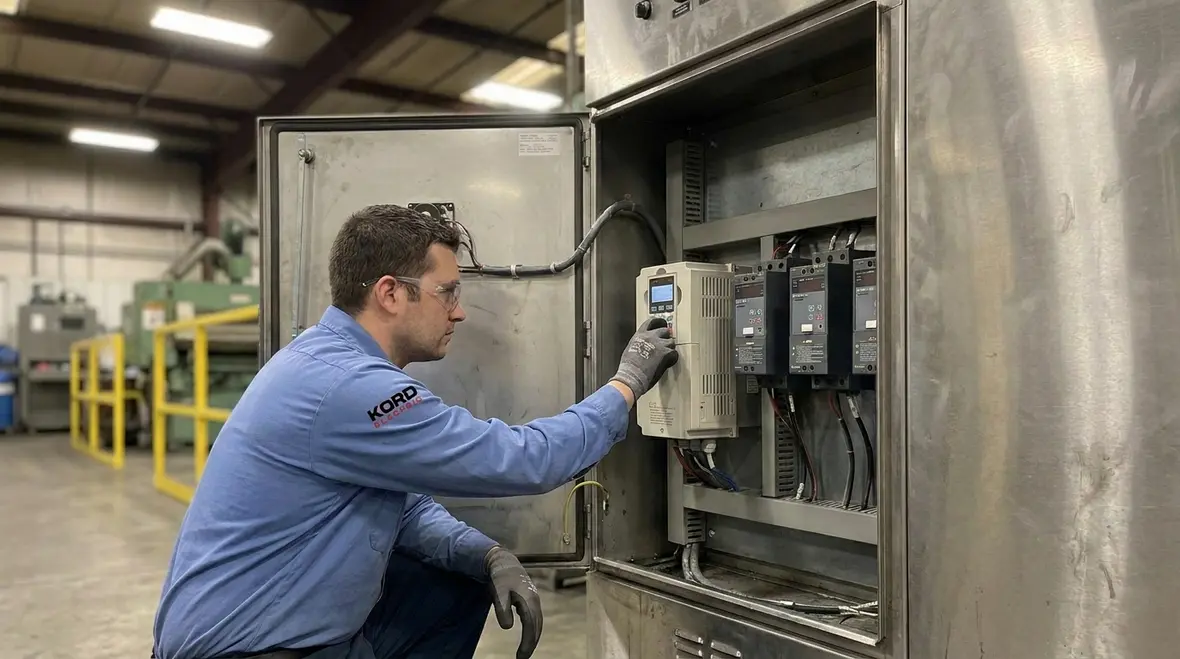
Therefore, we help clients apply proper motor starting approaches. That can include variable frequency drives where they fit, soft starters, staggered start sequences, and optimized acceleration settings. Yet we do not recommend upgrades blindly. We evaluate each motor’s duty cycle, torque needs, and process control requirements.
In many plants, there is also a control problem, not a hardware problem. So we review sequencing logic for HVAC fans, pumps, and air handling units. Then we adjust schedules so multiple subsystems do not ramp at the same time. When controls align with actual process needs, peak demand drops and stability rises.
Our technicians explain these changes step by step, because operators deserve to understand what the electrical system will do in the real world. We also help facilities document settings so maintenance staff can keep performance consistent after routine service.
To keep the mood light, we tell teams this: electrical load management is like a sitcom. If every character hits their mark at the same time, it is chaos. But if they start their scene in order, the whole show runs smoother. That is how we approach starting sequences.
Coordinate HVAC, process loads, and standby power with smart scheduling
Industrial facilities usually have a mix of predictable loads and “surprise” loads. HVAC is predictable enough to schedule, but process equipment can shift based on production demand. Meanwhile, generators, UPS systems, and critical loads create another layer of complexity. So we coordinate these systems so they support one another instead of competing.
First, we examine load profiles by area and by shift. Next, we identify which equipment can run at slightly different times without harming product quality. Then we use control strategies to schedule operations and manage ramp rates. As a result, the facility reduces the chance of hitting peak demand at the exact wrong moment.
For example, we may recommend adjusting chilled water plant staging, controlling economizer behavior, or modifying setpoints temporarily during peak windows. We also look at compressor staging and airflow modulation, since those can reduce motor starts. If a facility operates multiple air handling units, we help prevent simultaneous ramp events.
For major property buildings that have industrial style loads, we also consider integrated electrical distribution. Load behavior can change when tenants bring in new equipment. Therefore, we plan updates so the building and industrial operations share capacity fairly.
When standby power is involved, we check transfer schemes, generator sizing logic, and priority load lists. Then we make sure critical loads receive power while noncritical loads shed or delay. This prevents the “everything trips when the lights go out” scenario, which is funny for nobody.
Smart scheduling does not live in isolation. For facilities where lighting also drives a big share of the bill, Kord Electric’s article on commercial lighting control that saves energy with automation shows how coordinated controls keep comfort high while trimming unnecessary demand.
Plan for growth with capacity studies and staged upgrades
Load management works best when it supports a roadmap. Industrial facilities expand. New lines launch. Facilities add equipment, and they do it fast. Without planning, each addition becomes a guess that the system can handle tomorrow. Instead, we build a capacity plan that shows how the system will perform now and after growth.
Kord Electric supports commercial and industrial facilities with engineering and field coordination focused on practical results. We analyze existing transformer capacity, bus loading, switchgear ratings, cable ampacity, and voltage regulation. We also review the impact of harmonics and power factor on usable capacity.
Then we create a staged upgrade path. This means the facility does not need to do everything at once. We can prioritize the highest impact areas, such as upgrading bus sections, addressing constrained feeders, or adding controls that reduce peaks immediately. Later, we plan deeper work like transformer replacement or switchgear modernization when timing fits production.
Just as importantly, we help teams keep the documentation current. That includes panel schedules, one line diagrams, and control settings. When staff can find accurate information quickly, troubleshooting becomes shorter and calmer. Our expert service staff emphasizes this because real maintenance work happens under pressure, and clarity is a safety tool.
For facilities thinking ahead to larger initiatives like EV fleets or campus expansions, articles such as Kord Electric’s commercial EV fleet infrastructure for scalable growth show how capacity planning and staged upgrades keep new projects aligned with the electrical backbone.
Cut costs while protecting equipment using power quality and data driven decisions
Demand costs do not come only from peak kW. They also show up through power quality penalties, poor power factor, and equipment wear. So, we treat load management like a full system effort, not a single fix. We look at voltage stability, harmonics, and reactive power behavior.
When harmonics run high, they can overheat equipment and reduce transformer efficiency. Then the facility may experience nuisance trips or reduced motor performance. Additionally, a weak power factor can increase current and increase stress on conductors.
Therefore, we coordinate actions that improve quality. That might involve tuning drives, reviewing filtering needs, or applying correction strategies for reactive power. We also evaluate utility communication options and meter settings where available.
Then we use the data again. After changes, we verify results by comparing before and after demand profiles. We watch peak intervals, ramp rates, and power quality metrics. In other words, we do not just install solutions. We measure their effect and refine them.
This is where our technicians and expert service staff add real value. They walk clients through what changed, what stayed stable, and what to monitor next. That way, the facility gains control rather than luck.
Dual column overview: practical actions our team often recommends
| Goal | What Kord Electric helps implement |
| Reduce peak demand spikes | Stagger motor starts, adjust sequencing controls, align scheduling for HVAC and process loads |
| Improve system stability | Validate feeder distribution, check voltage regulation and ramp impacts during commissioning |
| Protect equipment and extend life | Assess harmonics and power factor, recommend targeted power quality upgrades |
| Plan growth without surprises | Run capacity studies, build staged upgrade roadmaps, keep documentation accurate |
These actions show up repeatedly when we talk about How to Manage Electrical Load in Industrial Facilities. They connect monitoring, controls, design, and maintenance into a single story instead of scattered one-off fixes.
FAQ: load management for industrial and major property buildings
Call Kord Electric for a clear load management plan
Industrial and major property buildings deserve electrical systems that perform under real pressure, not just on paper. Kord Electric helps commercial and industrial facilities manage load with accurate monitoring, thoughtful motor and control strategies, and staged upgrades that fit production. Our technicians and expert service staff explain every step, so your team knows what changes, why they work, and how to maintain results. If your facility sees demand spikes, unstable voltage, or costly surprises, contact us to build a plan that protects uptime and controls cost.
When you are ready to turn How to Manage Electrical Load in Industrial Facilities into a concrete project, Kord Electric’s Los Angeles County electrical services team can help you move from planning to implementation with designs, installations, and service tailored to your facility.
For facilities that want ongoing support across distribution, controls, and future upgrades, our broader service offerings and regional teams are set up to keep projects moving calmly, from first walk-through to final commissioning and beyond.