
Improve Data Center Power Reliability and Uptime
In the data center world, downtime does not whisper. It knocks, it interrupts, and it costs real money. That is why we focus on improving data center power reliability and uptime through practical electrical design, disciplined maintenance, and fast, informed response when something shifts. Others may promise “always on” with marketing poetry. We prefer something steadier: measurable reliability, tighter inspection routines, and technicians who understand how power behaves when the real world shows up. And yes, even when the UPS batteries feel like they are auditioning for a drama series, our team handles it with calm precision.
How power reliability protects your uptime and operations
When a facility runs critical loads, power quality and power delivery become a system, not a series of guesses. We help others by looking at the whole path: utility feed, transformers, switchgear, UPS systems, battery health, transfer mechanisms, generators, and distribution panels. When each link stays healthy, uptime stays predictable.
To improve data center power reliability, we treat common failure points as a checklist, not a surprise. Aging busbars, loose terminations, weak breaker mechanisms, drifting voltage regulation, and failing batteries all create the same outcome: interruptions or reduced performance. Therefore, our approach uses targeted inspections and tests so issues show up early, while you still have time to plan work around your schedule.
And if you are thinking, “We already do preventive maintenance,” good. Then you already know the next step: doing it with the right depth. Preventive maintenance without proper testing is like rebooting a router while ignoring the cable. It might feel productive, but it does not always fix the root cause.
For facilities that want a structured, long-term strategy instead of one-time fixes, it helps to connect this work to a broader electrical preventive maintenance plan that keeps critical systems on a disciplined inspection and testing cycle.
What data centers should monitor first for reliability
In our experience with commercial and industrial facilities, the biggest gains come from monitoring that connects electrical health to operational risk. So we recommend focusing on parameters that directly influence stability and transfer performance. Specifically, we look at:
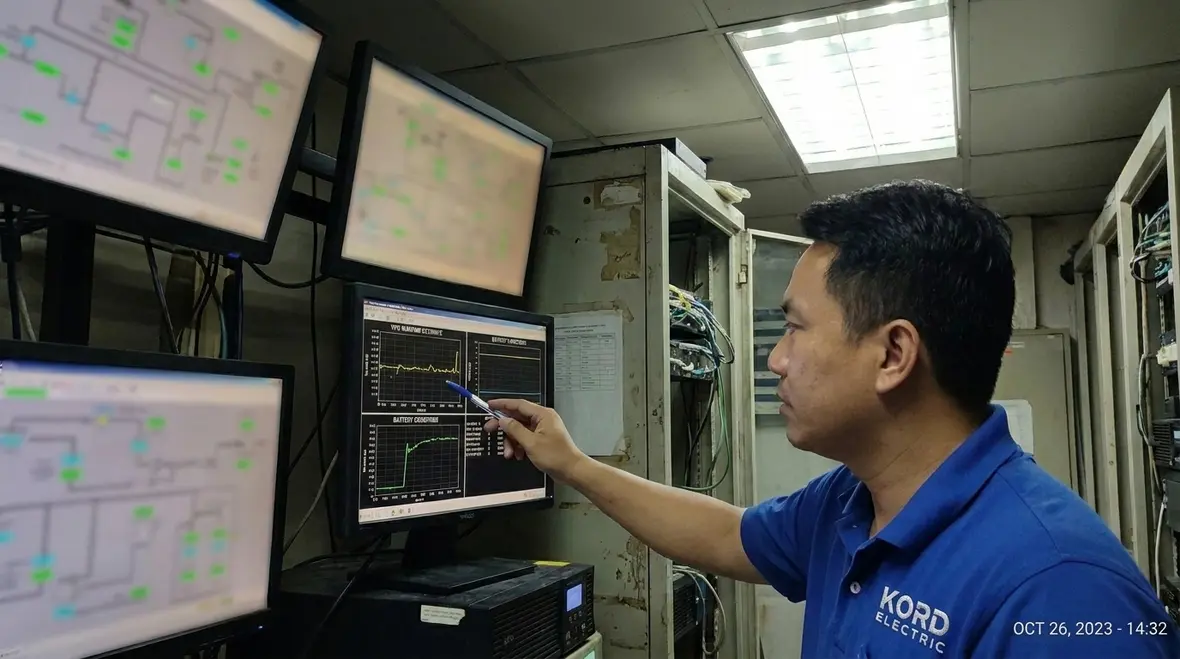
- UPS runtime and load profile to confirm batteries and inverters support the real demand
- Battery condition trends to avoid sudden capacity loss
- Transfer switch performance so load movement stays smooth during events
- Voltage stability and harmonics because power distortion can stress equipment
- Breaker timing and contact wear so protective devices operate when they must
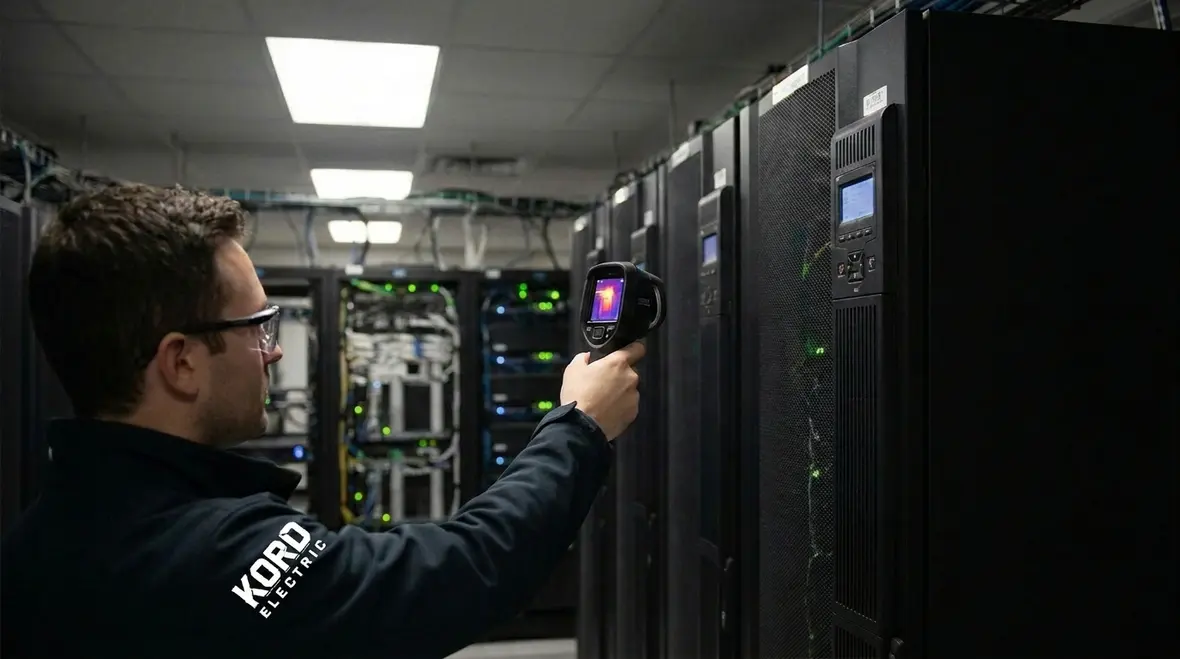
- Thermal signatures at terminations and bus connections to catch loose or failing interfaces
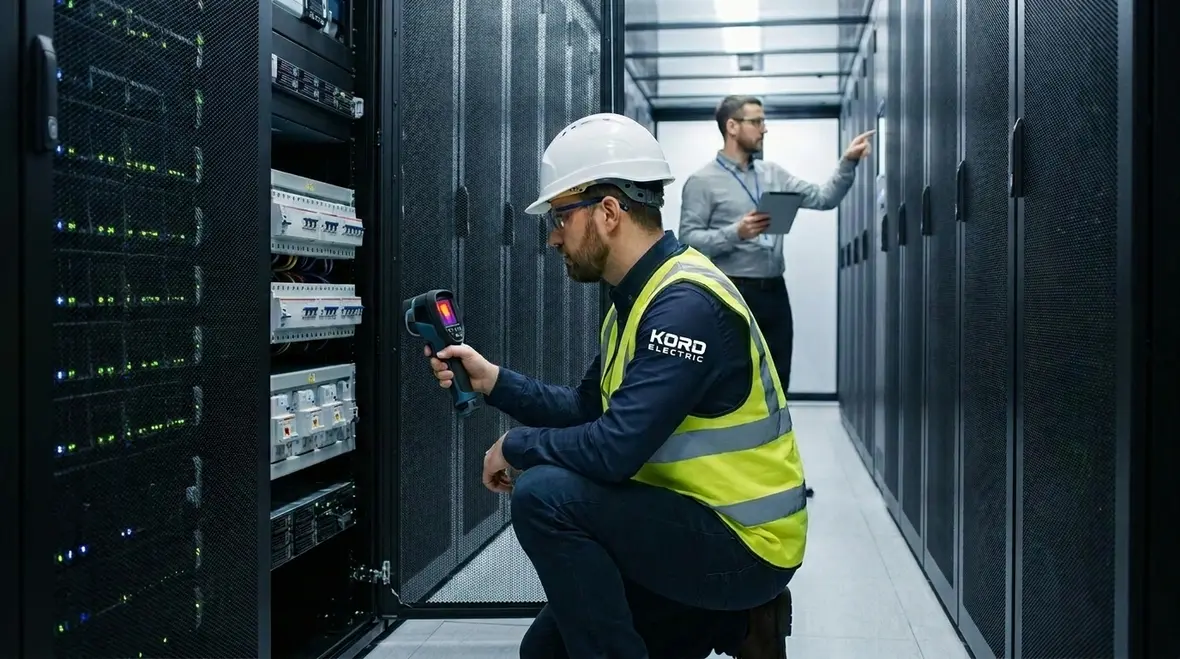
As technicians from Kord Electric review your site, they explain what they see in plain language. For example, when thermal images show a hotspot, we do not just label it. We trace it to the most likely cause, then propose a work plan that keeps your critical loads protected. Our team communicates like service partners, not like they are reading from a manual that nobody asked for.
How preventive maintenance creates fewer power events
We know preventive maintenance only works when it is structured, documented, and aligned with how your facility actually runs. That is why our program follows the mindset explained in our electrical preventive maintenance approach. We do not treat it as a once a year checkbox. Instead, we build schedules that match risk levels, equipment age, and operational load. Then we test, verify, and report so decisions are based on evidence.
Now let us get specific. Reliability rises when maintenance targets the parts that cause interruptions during transitions. That means switchgear checks, UPS inspections, generator readiness reviews, and verification of protective coordination. Furthermore, we confirm that all interlocks and control functions perform correctly so operations during utility loss do not become a surprise performance.
When our technicians find wear or drift, we help others understand impact in business terms. Think of it like this. A small issue in a breaker mechanism can feel harmless today. Yet under stress, that same weakness can delay switching. And when you delay switching, uptime pays the price.
For many facility teams, connecting this work with an organized electrical preventive maintenance program turns “we should really look at that panel” into a repeatable, auditable plan that keeps the entire power path ready for events instead of merely hoping they do not happen.
Step by step: from inspection to uptime improvements
To strengthen data center power reliability and uptime, we work in a clear sequence. Others may jump straight to repairs, but we prefer order because it reduces guesswork and prevents repeat issues. Our process generally follows these steps:
- Site review: We confirm one line flow, equipment ratings, and operating patterns for critical systems
- Baseline testing: We measure key electrical conditions so we can track real change over time
- Visual and thermal checks: We look for abnormal heat, wear, and signs of moisture or contamination
- Controls and protection verification: We validate that relays, logic, and breaker operation meet expectations
- Battery and UPS assessment: We check capacity health and charging performance based on measured results
- Report and plan: We present findings, risk levels, and next actions in clear language
- Execution and follow up: We correct issues and confirm improvements with repeat verification
Throughout this sequence, our expert service staff explains the “why” behind each task. That matters because teams manage budgets, schedules, and risk. So we help leadership see how a reliability investment reduces emergency calls and prevents the kind of outages that turn a normal Tuesday into a full season finale. Spoiler: you do not want to watch your UPS system struggle like a sitcom character when the power event hits.
Reliability engineering: redundancy that actually behaves
Many facilities have redundancy on paper. Yet redundancy without proper testing can fail in real conditions. We work with commercial and industrial owners to validate that redundant systems switch and operate as intended, including the timing and control logic that protect your load.
To improve data center power reliability, we evaluate how redundancy behaves during transitions. That includes utility loss scenarios, load transfers, generator start and synchronization, and UPS ride through timing. Additionally, we check that protective devices coordinate correctly so a fault clears at the right level instead of escalating.
Also, we look at distribution design. For example, balanced loading helps prevent nuisance stress on specific feeders and reduces the chance of localized overheating. When teams ignore loading behavior, they end up with equipment that works until it does not. Then the outage arrives, and suddenly everyone becomes an electrical engineer in a hurry. We would rather keep everyone calm.
How to build a reliable maintenance schedule that fits your site
A strong schedule depends on site reality. Load profiles vary, operating hours differ, and equipment age changes the risk level. Therefore, we help others build a plan that fits commercial and industrial environments, including major property buildings where reliability matters for tenants, operations, and compliance.
Our technicians also consider shutdown constraints. If you cannot take equipment offline, we propose methods that still verify performance without creating unnecessary exposure. We plan around seasonal peaks and maintenance windows so work happens when it should, not when it would be convenient for nobody.
And to reduce surprises, we align maintenance events with trending results. For instance, if UPS battery capacity trends down, we adjust the timing of deeper checks and replacement planning. That turns reliability work into an organized program, not a reaction.
In-house teams versus outsourcing: what actually helps
We often talk with facility managers who run their own maintenance team and still bring in outside expertise. That makes sense. In a complex power system, small skills gaps can become big risks under pressure. Outsourcing also helps when workloads spike or when specialized testing is required.
Kord Electric supports commercial and industrial facilities with expert service staff who can explain findings clearly and apply corrective actions quickly. In addition, we document results so your internal team can keep continuity across service cycles. Instead of a “mystery contractor” experience, we operate like a trusted partner who helps others understand what changed and why it matters.
Here is where we stay practical. Your team may know how to run the building. We help ensure the power system keeps performing like it should. And yes, that includes the parts everyone wishes never needed attention. Like the battery health that looks fine right up until it does not.
Dual control for clearer decisions
To support reliability planning, we use a two-track review that teams can act on immediately.
| Reliability track | Operational track |
|
|
Aligning data center power reliability with broader facility strategy
In many organizations, the data hall is just one piece of a much larger property. Office space, production areas, and support systems all depend on the same electrical backbone. Building a power strategy that protects your racks while ignoring the rest of the site only shifts the risk somewhere else.
We look at how data center power ties into the main service, distribution equipment, and parallel loads. That includes how voltage fluctuations, motor starts, and large transient loads might affect sensitive IT systems. When needed, we coordinate with broader solutions for voltage stability, load balancing, and protective settings so the entire facility pulls in the same direction instead of fighting itself.
For facilities across the region, pairing a strong data center strategy with dedicated Los Angeles County electrical services ensures that improvements in the server room are backed up by field-proven support across the rest of the campus and its critical power assets.
FAQ
Conclusion
If your facility depends on uninterrupted power, then reliability must be managed, not hoped for. At Kord Electric, we help commercial and industrial owners strengthen data delivery by improving data center power reliability and uptime through structured inspections, real testing, and clear reporting. Our technicians bring calm expertise to complex electrical systems, and our team explains every finding so decisions stay grounded. If you want a maintenance plan that reduces surprises and supports steady operations, contact Kord Electric today to schedule a reliability review.
Whether you operate a single data hall or a portfolio of critical facilities, connecting your maintenance, testing, and upgrade plans under one coordinated program keeps your electrical infrastructure aligned with real business needs. That way, your data center power reliability is not just a marketing phrase. It is a measurable outcome your team can count on.


