Industrial Electrical Panel Safety Guide
Industrial electrical panel safety is not a “set it and forget it” kind of job, especially in commercial and industrial facilities where uptime matters more than anyone’s patience. At Kord Electric, we treat electrical panels like mission critical equipment, because they are. Our approach supports long term reliability, reduces unwanted downtime, and helps protect people who work around that equipment every day. As we walk through best practices, you will hear our technicians and expert service staff explain the “why” behind each step, not just the “what.” And yes, we still make sure the rules are followed, even if someone thinks electricity is like Wi Fi and works by vibes. It is not.
How we prevent industrial panel failures before they start
First, we look at the big picture: load, environment, and human habits. Then we move to the details that actually stop failures. We advise facilities to maintain Industrial electrical panel safety by planning inspections on a realistic schedule, not a hopeful one. Over time, vibration, heat, dust, and moisture loosen connections, degrade insulation, and increase resistance. That resistance turns into heat, and heat turns into problems that nobody enjoys explaining to management.
Next, we verify that the panel has enough capacity for current and future demand. When a facility adds motors, HVAC, production equipment, or even EV charging upgrades, the panel must handle the added load. In fact, our team often coordinates electrical planning for EV charger installation projects so the panel and feeder setup can support the new demand safely. Because if the design squeezes capacity, we can expect nuisance trips, overheating, or a shortened service life.
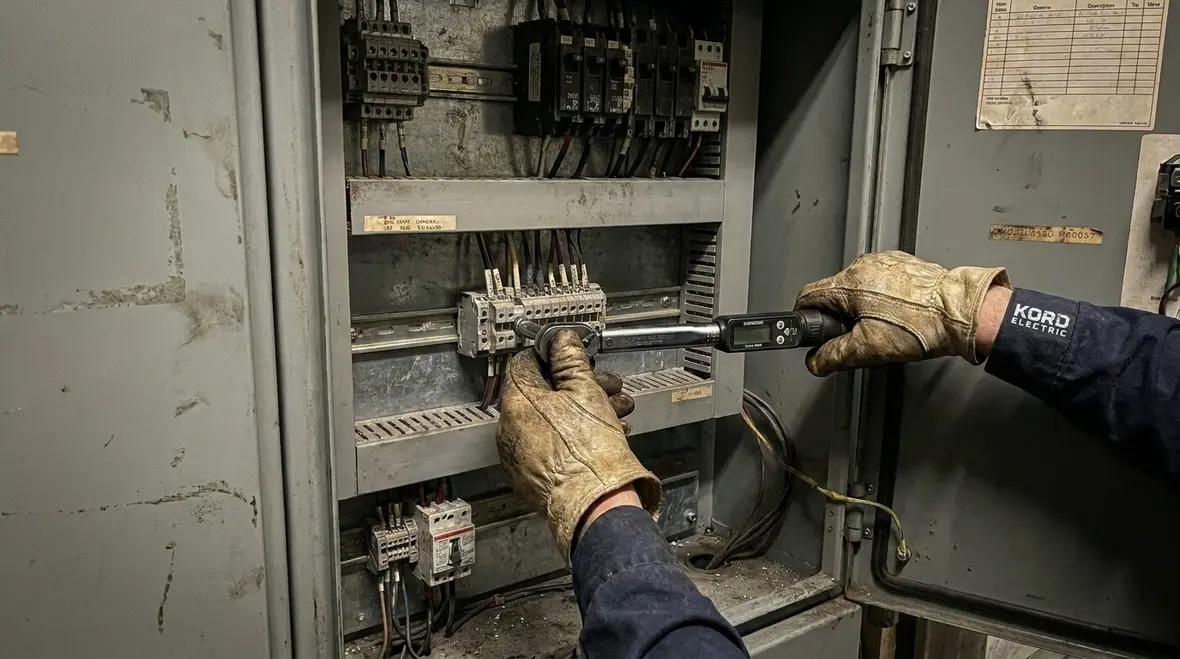
Finally, we document everything. That includes torque verification results, inspection notes, and any correction work. Therefore, when a maintenance lead asks, “What changed and when?” we can answer without guessing.
Thermal and visual checks that catch trouble early
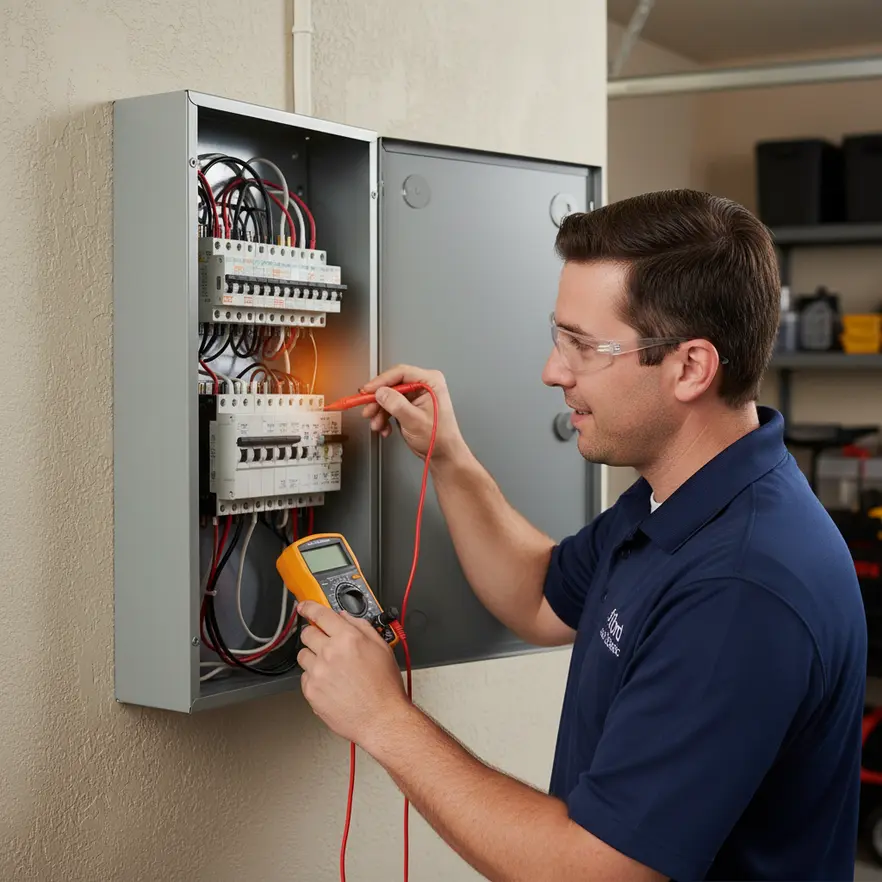
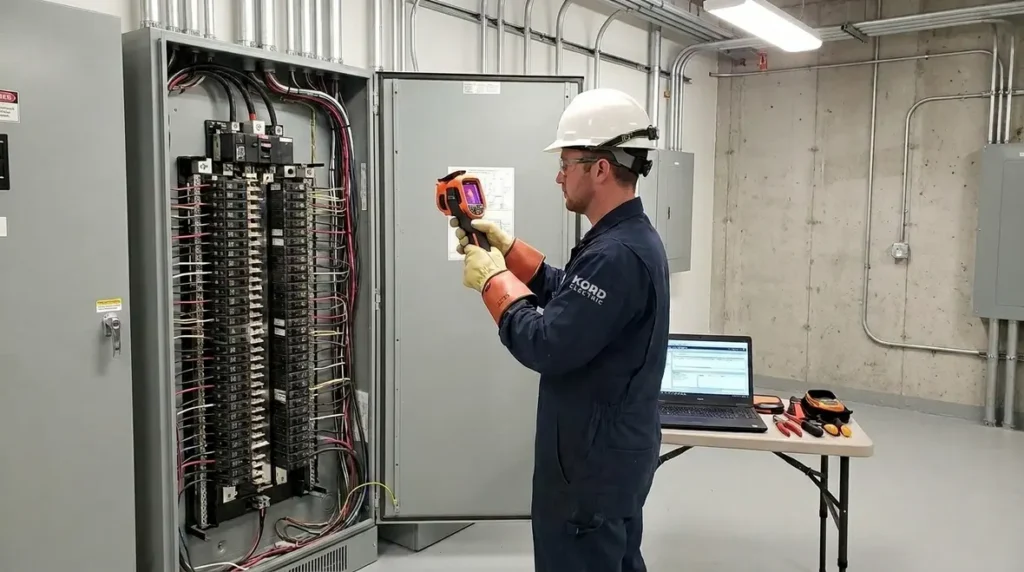
People often think panel work begins with opening the cabinet. In reality, it begins with observation. We use a combination of visual inspection and thermal awareness to identify early warning signs. For example, we watch for discoloration, scorched insulation, oxidation around terminations, and signs of moisture intrusion. We also look for dust patterns that suggest airflow restrictions or filter failures in the room.
Then we follow up with measurements that support decisions. Temperature and load patterns show where resistance is forming. Even small issues can create big outcomes, so we treat hot spots seriously. If a connection runs hotter than expected, it can fail quietly for a while. However, it rarely stays quiet forever.
Our technicians explain what they see in plain terms. They do not hide behind jargon. Instead, they connect symptoms to likely causes. And yes, they will remind teams that “it still works” is not the same as “it is healthy.” Electricity can behave like a cat: it might look calm, but something is always going on behind the scenes.
Torque, connections, and maintenance that extend panel life
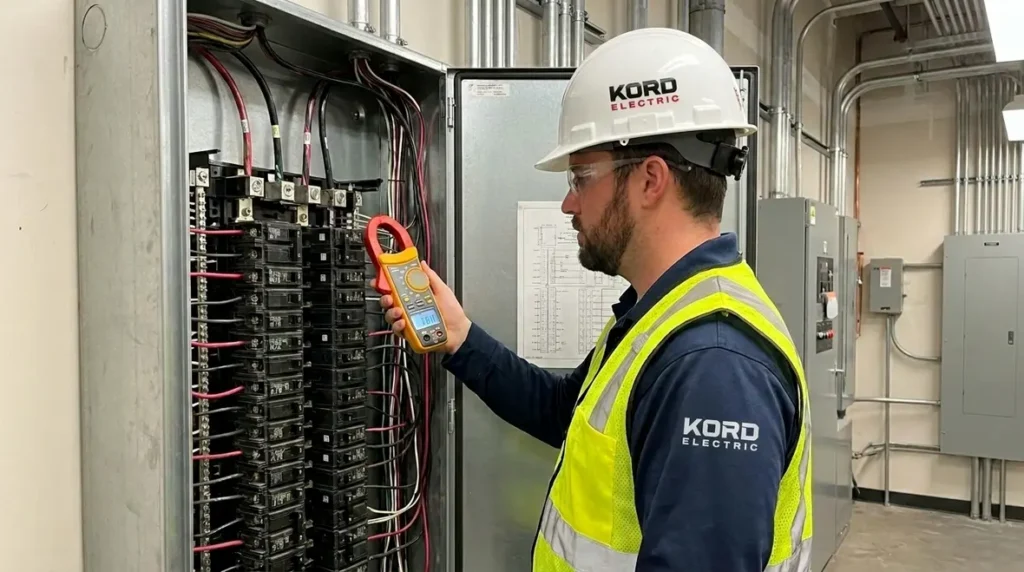
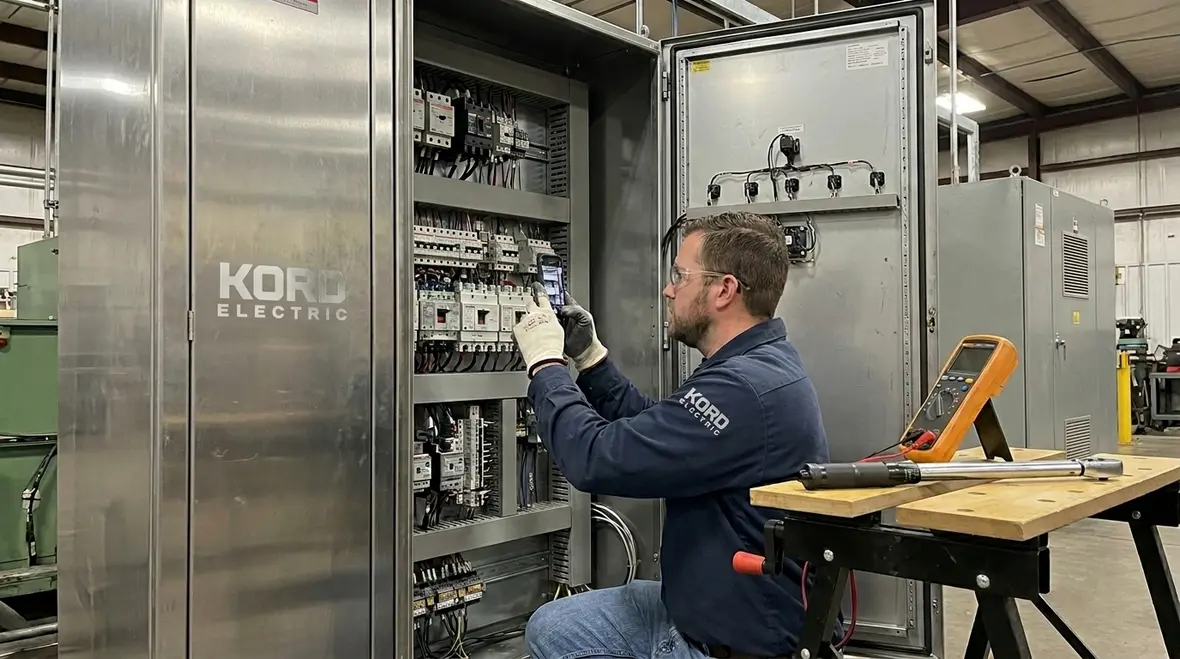
One of the most overlooked causes of panel degradation involves connections that lose clamping force. Therefore, even when a system appears intact, we check torque and contact integrity during scheduled service. Over time, thermal cycling causes expansion and contraction. That movement loosens components unless they are maintained properly.
Our expert service staff also focuses on correct conductor termination practices. We confirm conductor type and gauge match the equipment ratings, and we ensure terminations follow the manufacturer’s requirements. We do not improvise. We also avoid mixed metals where it creates corrosion risk.
In addition, we inspect bus bars and breakers for signs of wear or damage. If we find contamination or corrosion, we address it rather than “clean it and hope.” Because hope is great for movies, but it is not a maintenance plan.
For commercial and industrial facilities, we coordinate maintenance windows carefully so operations can continue. We plan, isolate if needed, and verify safe conditions before we re-energize. Then we keep records so you can track trends across months and years.
Electrical panel safety rules that our technicians insist on
Industrial electrical panel safety is a culture, not a checklist that gets tossed into a drawer. To keep people protected, we follow procedures that reduce shock risk, arc flash risk, and incorrect re-energization. First, we verify absence of voltage when required and use appropriate protective equipment. We control access to the panel area so untrained staff do not “lend a hand.”
Second, we ensure proper labeling and correct identification of circuits. When staff can quickly determine what they are working on, they make fewer mistakes. And mistakes in panels can be expensive, disruptive, or both.
Third, we verify that breakers and disconnects are used as designed. If a facility uses a disconnect for a task it was never meant to perform, the wear rate changes. That can create unsafe conditions later.
Our team also explains safety steps to facility leads. We walk them through what changes we will make and what checks we will perform afterward. When everyone understands the process, the work goes smoother, calmer, and safer. Also, training reduces the chance that someone will treat a breaker like a volume knob. It is not.
Enclosures, dust, moisture, and the environment around your panel
Even the best internal components struggle when enclosures fail to protect them. Therefore, we assess the installation environment. We check seals, observe gaps where moisture can enter, and confirm doors and latches close properly. We also look at nearby equipment that creates condensation or dust. In industrial spaces, air movement can carry fine particles into cabinets, and dust can hold heat.
If the panel sits in a harsh room, we recommend practical upgrades where needed. That might include ventilation strategies, improved sealing, or relocating equipment if the layout supports it. We focus on long term durability rather than quick fixes. Because replacing a panel early costs more than protecting it now.
Additionally, we verify that grounding and bonding meet expectations. A solid ground supports safe fault clearing and reduces the risk of stray voltage. We coordinate these checks with the rest of the facility so the electrical system behaves as one connected network, not a pile of parts.
Planning upgrades like EV charger installation without creating hidden risks
When facilities add new loads, panels can become overloaded if the planning stops at “we found a spot for it.” We take a more careful path. During EV charger installation planning, we review available space in the panel, verify feeder capacity, and evaluate whether existing components can handle increased demand. Then we consider how charging use patterns affect peak loads.
After that, we coordinate breaker sizing and protection settings so the system protects itself. We also check that the panel remains balanced across phases where applicable. If balancing is ignored, one side can carry more current, which increases heat and accelerates aging.
Our technicians also explain the real world outcomes of design choices. They show facility leads how load growth and operating cycles create stress on bus bars, breakers, and terminations. Therefore, we recommend upgrade schedules that match operational growth. This keeps Industrial electrical panel safety from becoming a last minute emergency.
Featured snippet FAQ
Related electrical maintenance resources for facility teams
If you are building a broader reliability plan around your panels, it helps to connect Industrial electrical panel safety with structured preventive work. Facility leaders often review dedicated electrical preventive maintenance programs to map inspections, testing, and reporting across their entire site. This kind of approach keeps panels, switchgear, and feeders aligned with long term uptime goals instead of one time fixes.
When you are planning panel upgrades specifically to support new loads such as fleet or workplace charging, it also helps to see how distribution design and charging strategy work together. Kord Electric’s focused EV charger installation services show how commercial and industrial properties can add charging capacity while protecting existing panels, avoiding overloads, and keeping future expansion in mind from day one.
For facilities that are already experiencing nuisance trips, flickering equipment, or unexplained shutdowns, a closer look at voltage fluctuations in commercial and industrial facilities can reveal how unstable power and panel loading patterns are connected. By pairing voltage stability work with Industrial electrical panel safety practices, properties can cut down on both downtime and equipment stress.
Conclusion: choose a partner who treats panels like critical assets
Industrial electrical panel safety does not happen by accident. We build long term reliability through planned inspections, careful connection work, and environment focused protection. At Kord Electric, our technicians and expert service staff explain each step so your facility team understands what we did and why it matters. If you manage a commercial or industrial facility, now is the time to schedule a panel safety and longevity review before small issues turn into downtime.
To go beyond one time fixes, many organizations also connect panel safety efforts with structured commercial and industrial electrical maintenance plans. This kind of roadmap ensures panels, feeders, and distribution equipment receive consistent attention over years, not just during emergencies.
Whether you are planning targeted panel upgrades, a broader reliability program, or new EV charging infrastructure, partnering with a team that understands Industrial electrical panel safety at a system level will keep your operations calmer, safer, and better prepared for growth.