Industrial Lighting Automation Benefits by Kord
Industrial lighting automation benefits: what Kord Electric delivers
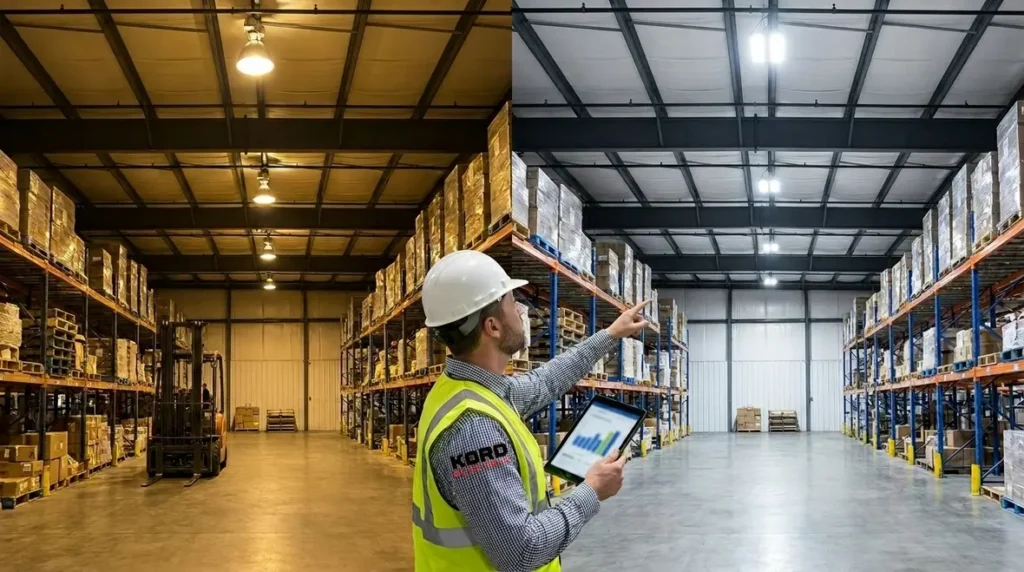
When Kord Electric installs industrial lighting automation, we help commercial and industrial facilities perform better, faster, and with less waste. We use controls and scheduling to cut unnecessary energy use, improve light quality, and keep systems stable even as occupancy and work patterns change. Industrial lighting automation benefits also include smoother maintenance planning because our teams can spot issues before they turn into late night surprises. And yes, we have all met the person who says, “The lights will probably be fine.” Then the lights flicker, and suddenly everyone becomes a lighting expert. We do things differently. Others can guess. We measure, program, and support.
How automation improves energy use in real facilities
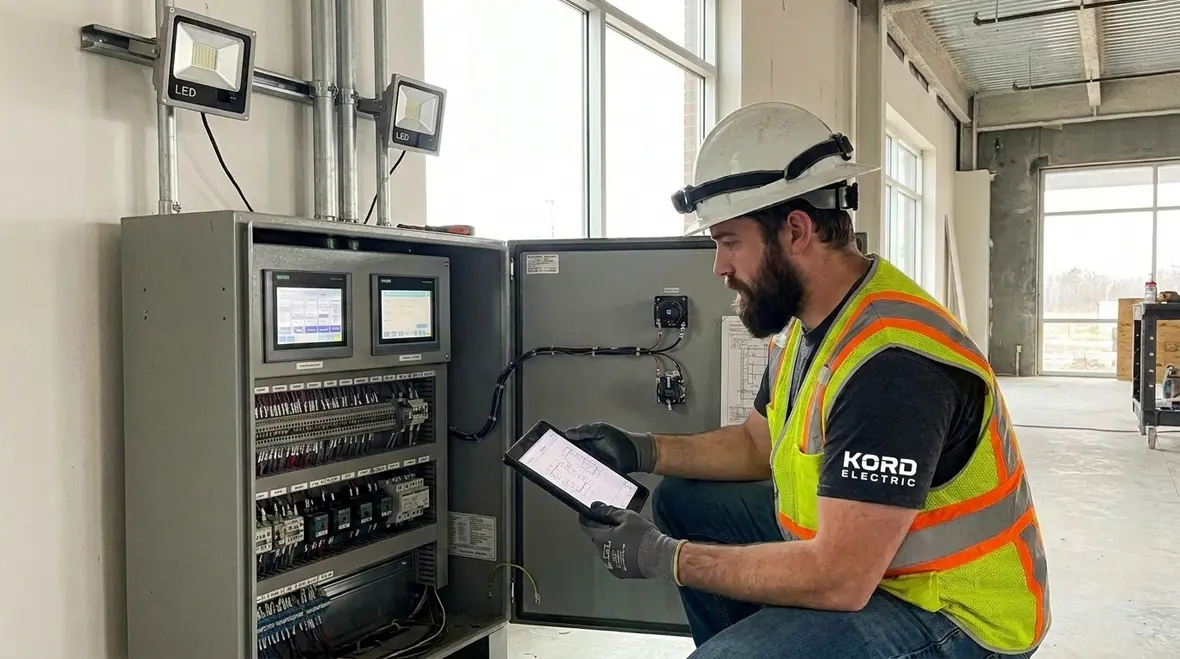
In commercial and industrial buildings, lighting often runs like it is stuck in yesterday’s routine. However, automation breaks that pattern. Kord Electric designs systems that respond to actual conditions, not just time clocks. For example, we configure occupancy sensing so fixtures shift from full output to reduced output when spaces sit empty. We also coordinate daylight harvesting, which means areas near windows get smart adjustments as natural light changes. For facilities planning broader upgrades, our lighting installation services help align fixtures, controls, and automation from the start.
Meanwhile, we reduce energy drift. Over time, lamp performance, voltage fluctuations, and control settings can shift. Our expert service staff tunes the system so dimming curves and set points remain consistent. As a result, facilities avoid the “why are our lights behaving weird” cycle. Additionally, we use grouping strategies that reflect how people work. So, a warehouse aisle does not control itself like an office hallway. And unlike a gym membership, the energy savings actually show up on the bill.
When we design automation around real operations, the industrial lighting automation benefits go beyond simple kilowatt cuts. We improve how light follows production zones, loading docks, and support areas. That way, teams see what they need when they need it, without paying for full-brightness lighting in empty corners of a building.
What smarter controls do for performance and comfort
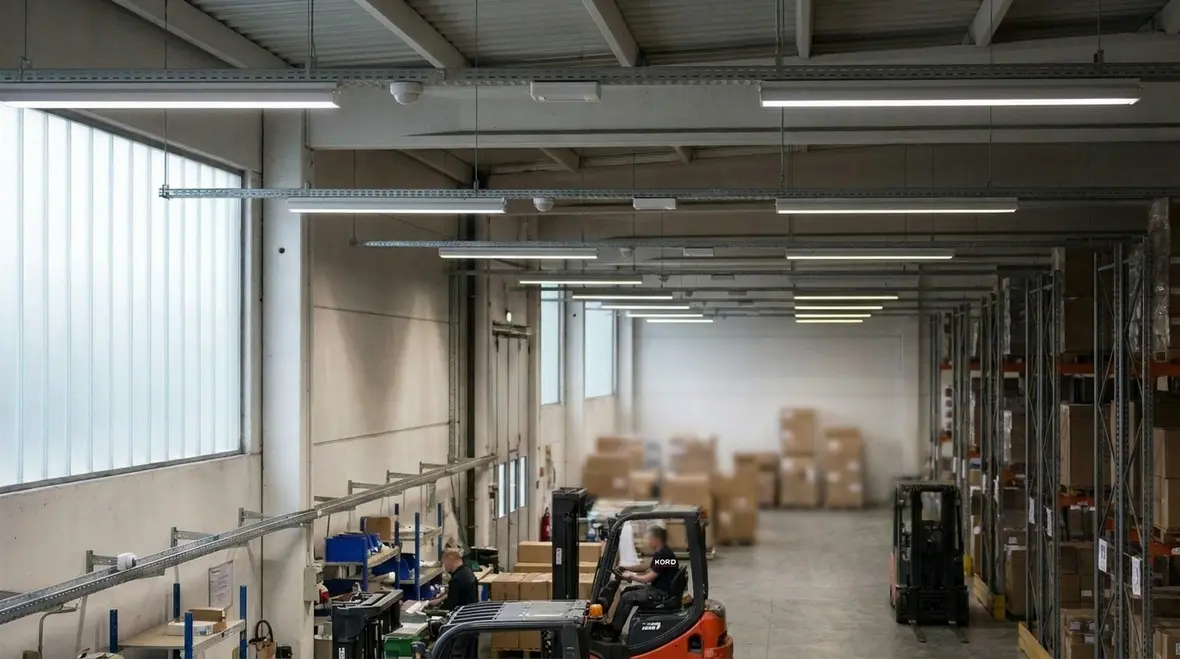
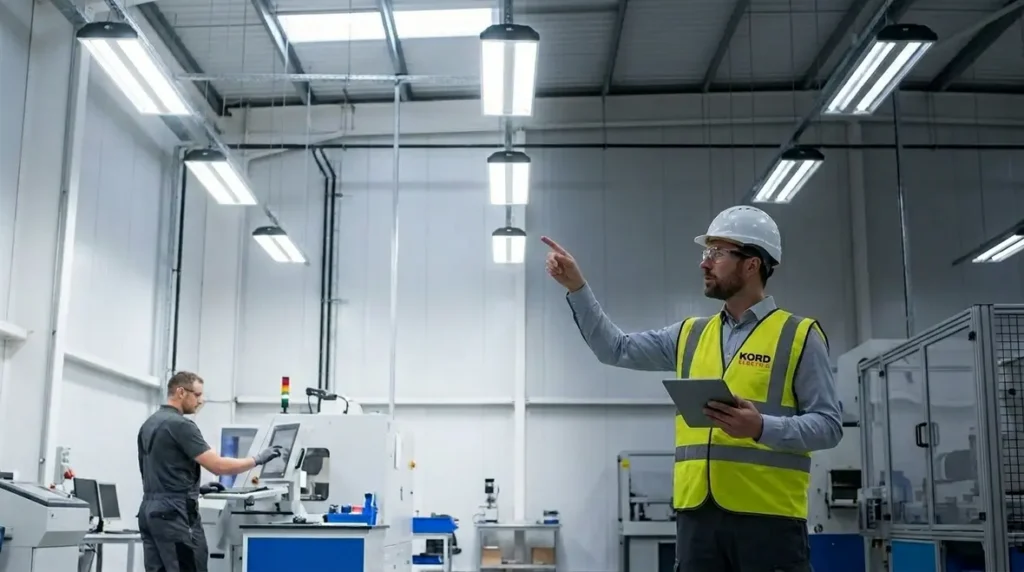
Lighting automation does not only save power. It also improves performance. Kord Electric builds lighting control schemes that maintain steady illumination levels, reduce glare, and support tasks that need reliable visibility. When the system reacts to occupancy and daylight, workers see consistent light where they need it, not a sudden drop because someone forgot to press a button.
We also handle sequences, which is where many simple setups fail. For instance, we define how lights ramp up when a zone becomes occupied, how they hold, and how they transition down when spaces stay vacant. Because the changes happen smoothly, people do not feel like the building is playing a slow, annoying game of “blink and you’ll miss it.” In industrial settings, that stability helps safety, productivity, and compliance with internal lighting standards.
In major property buildings, we coordinate multiple areas so control behaviors match the building’s needs. If a facility uses different schedules across floors or tenants, we configure logic that respects that structure rather than forcing everything into one blanket routine. When property managers are also planning fixture changes, pairing controls with projects like recessed lighting installation can multiply the comfort and efficiency gains.
The comfort side of industrial lighting automation benefits often gets overlooked. When light levels feel natural instead of harsh or inconsistent, teams experience less eye strain and fewer distractions. Over a long shift, that difference shows up in fewer mistakes and a calmer, more focused work environment.
How technicians keep systems reliable over time
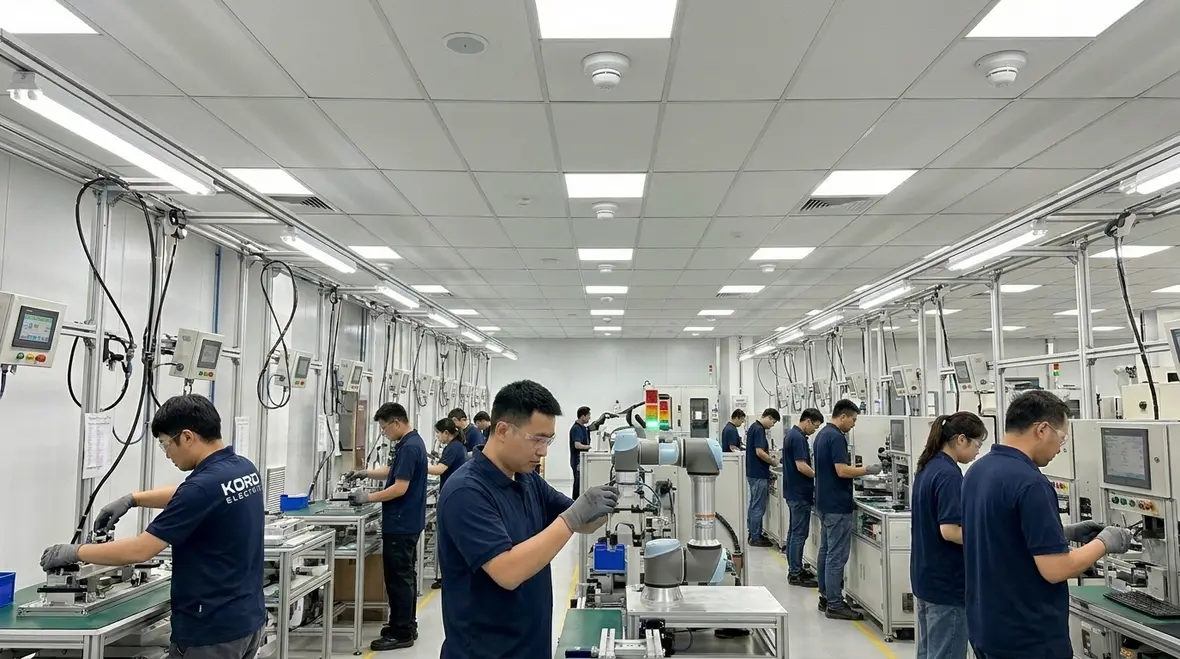
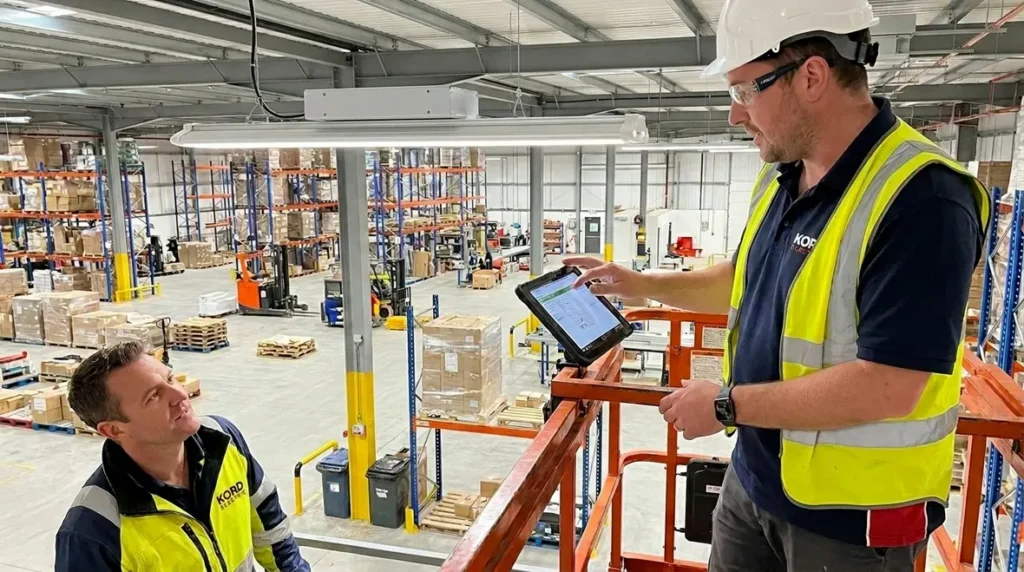
Automation systems can run for years, but only if they stay maintained. Kord Electric relies on experienced technicians who understand both hardware and control logic. When our team installs industrial lighting automation, we document the programming approach and label devices so future service stays efficient. That matters, because troubleshooting without clear records costs time and increases disruption.
Further, we train operators on what they should expect. Our technicians explain how schedules work, what each status light or dashboard indicator means, and how to adjust settings without breaking the system. We do not hand over a box of parts and hope for the best. Instead, we provide clear guidance for commercial and industrial facility managers who need the system to behave predictably.
Also, we plan for change. Buildings evolve: new equipment arrives, workstations relocate, and operating hours shift. When that happens, we help adjust control zones, dimming behavior, and sensor placements. So the system stays aligned with how the facility actually runs, not how it ran during installation day. For many industrial campuses, pairing automation with structured electrical preventive maintenance keeps controls, panels, and fixtures working together instead of drifting apart over time.
When you combine disciplined documentation, operator training, and planned updates, the long-term industrial lighting automation benefits include fewer emergency calls, cleaner audits, and a calmer maintenance calendar. Issues become scheduled work orders instead of late-night surprises.
Common automation designs we recommend for warehouses and campuses
Different facilities need different automation designs. Kord Electric approaches each site with an eye on layout, task needs, and maintenance access. Below are common patterns we deploy for commercial and industrial buildings.
Occupancy and vacancy zones
Strategic zoning for real-world traffic
We separate high activity and low activity areas into zones so lighting responds correctly.
We use time delays that match movement patterns, so lights do not fight with foot traffic.
Daylight-linked control
Using natural light without losing control
We pair sensors near exterior-facing areas with dimming logic.
We tune thresholds to avoid constant hunting when clouds roll in.
Scene control for controlled lighting states
Preset states for predictable operations
We set scenes for normal operations, shift change, and after-hours security levels.
We ensure transitions remain smooth to reduce driver and worker distraction.
Because each facility has its own rhythm, we also review how people use space. For example, a loading dock needs reliability and practical illumination. An office support floor needs consistent comfort and minimal glare. Meanwhile, shared corridors between departments must balance visibility with energy control. Our expert service staff helps map those needs into a clean automation plan that does not make operators feel like they are reading ancient code.
Well-planned zoning and scenes are a big part of industrial lighting automation benefits. They allow facilities to run different operating modes—production, cleaning, off-hours security—without walking around flipping individual switches or constantly reprogramming schedules.
Automation that supports smarter maintenance and fewer surprises
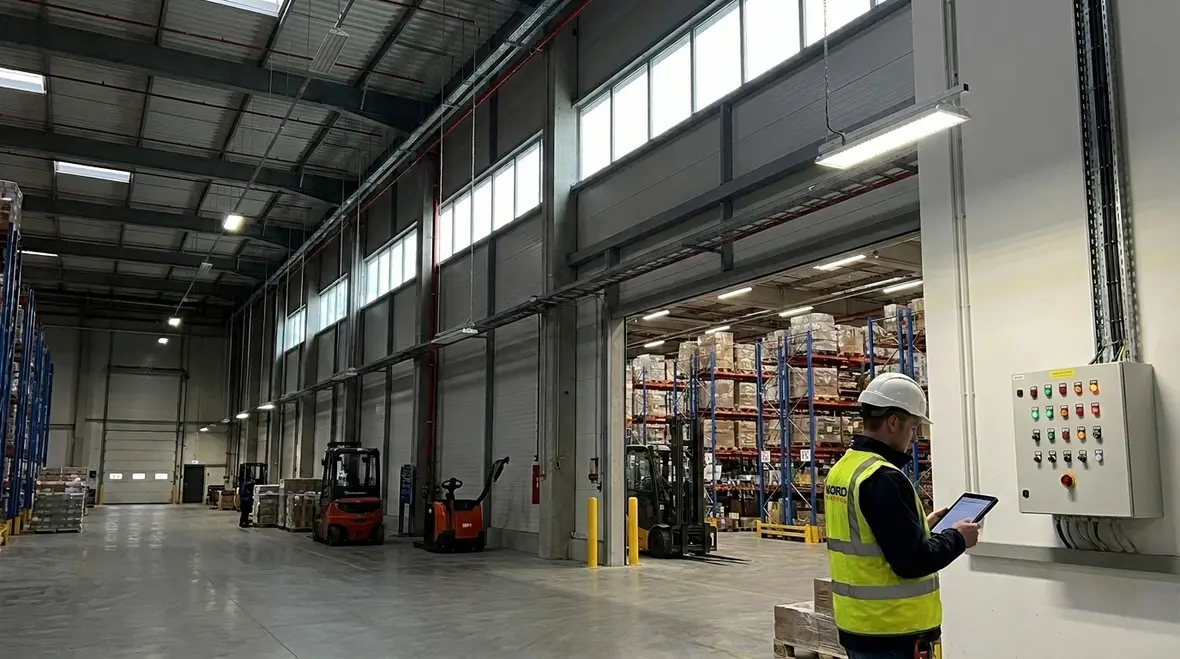
When lighting automation includes strong monitoring logic, facilities reduce downtime and stop issues early. Kord Electric focuses on clear performance baselines. Instead of waiting for a fixture to fail, we track operational signals and use alarms that point to the right area. That means our team can schedule service before problems become urgent.
Additionally, we reduce false alarms. Bad sensor placement or poorly tuned thresholds can create noise, and noise wastes maintenance time. To prevent that, we adjust settings during commissioning and validate outcomes on site. Then, we align the system behavior with the building’s operating patterns, so maintenance teams receive alerts that actually matter.
We also handle controller configuration responsibly. In industrial and major property buildings, multiple systems often share the same networks. Our technicians coordinate automation settings so the lighting control system stays stable, and it does not fight other building processes. It is like keeping a band in tune. If one instrument plays out of key, everyone feels it. We aim for harmony.
For multi-site portfolios across Los Angeles County and beyond, the maintenance side of industrial lighting automation benefits also includes cleaner reporting and easier planning. When alerts, run hours, and test logs are organized, facility leaders can prioritize upgrades instead of reacting to whichever circuit misbehaves next.
Integrated management: a clear path to building-wide control
Many facilities want consistent control across departments. Kord Electric supports that goal with structured integration strategies. We focus on repeatable zone naming, consistent scheduling logic, and operator-friendly control interfaces. As a result, facilities can manage lighting changes without hunting through confusing menus.
Moreover, we help teams keep control policies aligned with real operations. If security requirements change, we adjust after-hours levels. If a floor remodel increases daylight, we tune daylight response. If an industrial process expands into a new bay, we add zones and maintain the same control logic. This approach prevents “automation drift,” where systems gradually become inconsistent and less useful.
And yes, we know automation can feel like it has a personality. Sometimes it acts smart, and sometimes it acts like it went to a pop culture convention and refused to explain itself. Our job is to make it predictable, understandable, and reliable for the people who keep the building running.
At the campus or portfolio level, we often align automation upgrades with broader modernization efforts, like LED retrofits and code-compliant lighting improvements. When combined thoughtfully, industrial lighting automation benefits can include faster inspections, easier Title 24 compliance, and a smoother path to energy incentive programs.
FAQ
Bring calm, control, and consistency to your building
If your facility still runs lighting like it is stuck in autopilot, Kord Electric can help you modernize with industrial lighting automation. Our technicians design zoning, tune controls, and commission systems so they respond to real occupancy and daylight. Then our expert service staff explains how to operate and maintain the setup, so you avoid guesswork and downtime.
The industrial lighting automation benefits add up quickly: lower energy use, steadier visibility, fewer surprises for maintenance teams, and a calmer experience for everyone who relies on the building. Whether you manage a single warehouse or a portfolio of properties, our team can map out a phased plan that matches your budget, timelines, and compliance needs.
For property managers coordinating multiple upgrades across the region, our Los Angeles County electrical services bring together lighting, power, and preventive maintenance into a single, coordinated approach. That way, your automation project supports the rest of your electrical infrastructure instead of working in isolation.
Contact Kord Electric today for a site assessment and a clear plan built for commercial and industrial performance. Let’s make your lighting work as smoothly as your team deserves.