Scalable Commercial EV Charging Infrastructure Plan
How Kord Electric Plans a Scalable Commercial EV Charging Future
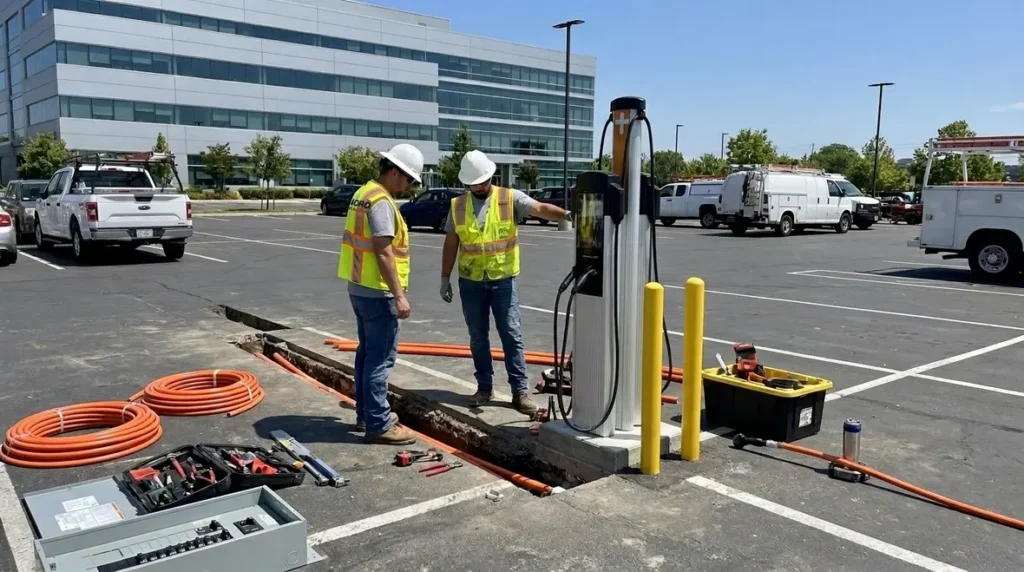
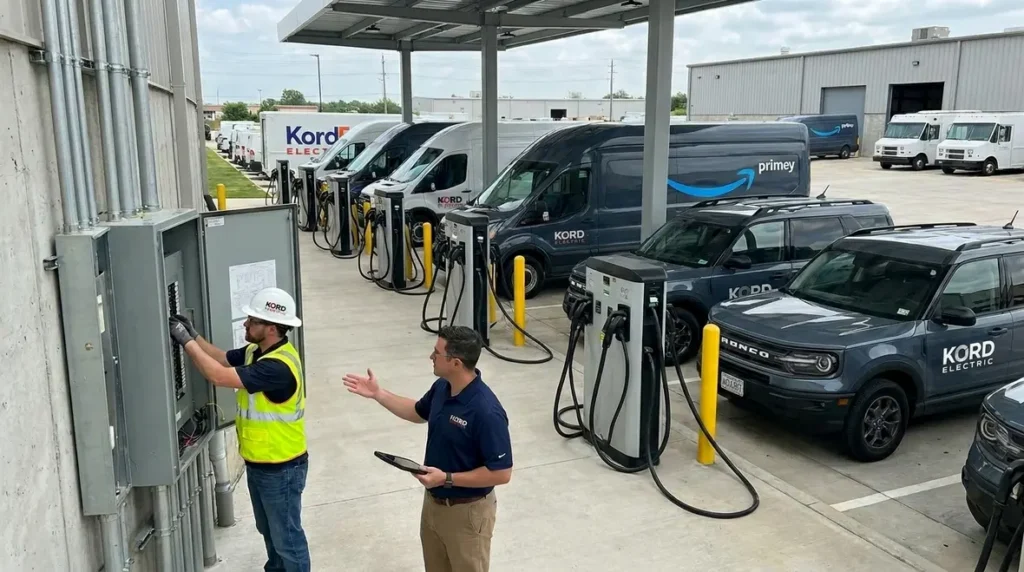
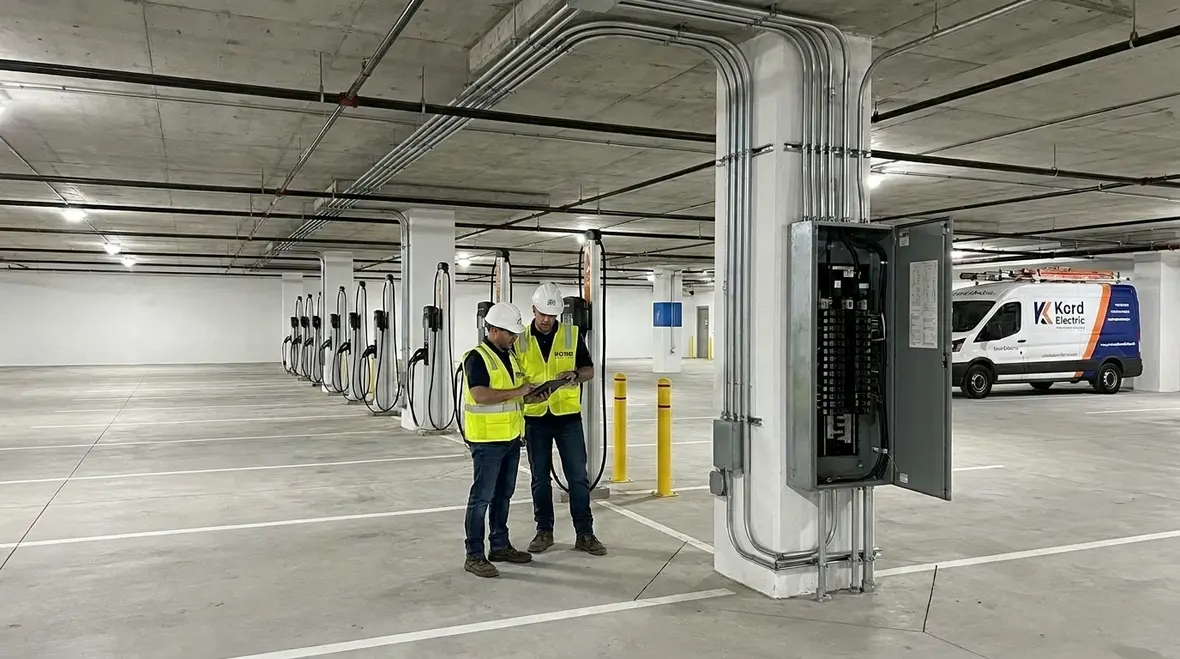
At Kord Electric, we use a commercial ev infrastructure roadmap from day one, so our commercial and industrial clients do not build themselves into a corner later. We map sites, capacity, and growth so the next phase does not feel like a surprise pop quiz. Because in real buildings, the electrical system does not “upgrade itself” just because you buy more chargers. It needs planning.
Before we touch equipment, our team builds a plan that scales. Then, as tenant demand, fleet needs, and charging behavior change, the design keeps working. In the sections below, we explain how our technicians and expert service staff think through power, safety, load, and real-world install details.
Start With Power, Not PowerPoint
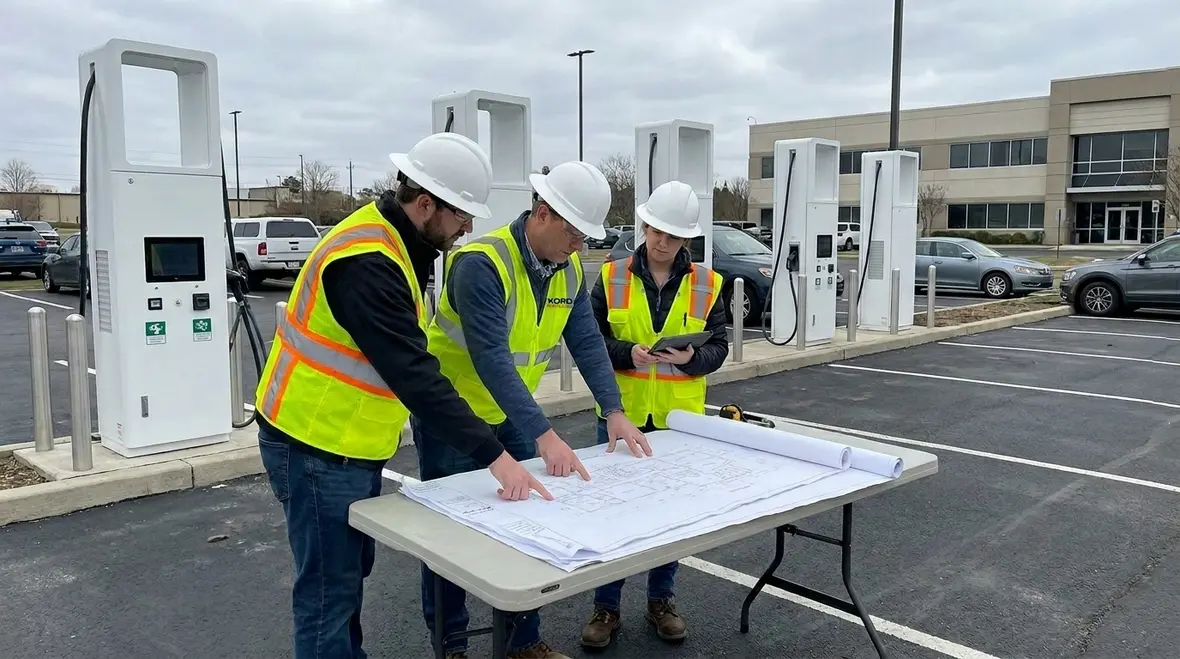
Many projects begin with charger count. We begin with electrical reality. First, we assess the building’s service size, distribution gear, panel schedules, and available spare capacity. Then we compare that to expected EV load and charging profiles.
Next, we plan for future expansion using a capacity approach that reduces the need for major rewiring. For example, we may design with modular feeders and spare conduit paths so adding ports does not turn into a demolition event. Also, we coordinate with property leadership and facilities teams so the charging plan matches real operations, not just ideal parking lot scenarios.
Our technicians explain the logic clearly on site. And if you have ever watched someone “wing it” with electrical changes, you already know why we take this seriously. Electricity does not care about good intentions.

Hidden Risks in Commercial Buildings That Affect EV Charging
When Kord Electric designs EV-ready systems, we also look beyond the chargers themselves. We review common electrical issues that can raise risk or limit performance in commercial and industrial environments.
To support this, we reference guidance from our own article on hidden electrical risks in commercial buildings. For instance, we focus on aging wiring, loose connections, inadequate grounding, and overloaded circuits. Even small weaknesses can grow under the steady demand of charging loads.
Moreover, we check for conditions that increase heat and voltage drop. Chargers may draw power at high rates, and that can expose weak points faster than normal loads. Therefore, a scalable commercial ev infrastructure roadmap includes risk reduction early, not after equipment installs.
Our expert service staff also walks facilities teams through what we find. They show what needs correction and why, using the building’s own electrical story. In our view, clarity is part of safety.
Design for Load Management and Real Demand
After power sizing, we design for how charging happens in the real world. A site rarely charges evenly all day. Instead, loads spike when fleets return, when events end, or when tenants plug in at the same time. So, load management becomes a key piece of scalability.
We plan charging behavior with smart controls that balance energy across multiple ports. As a result, the system can serve more vehicles without exceeding planned capacity. Also, we set priorities based on site rules, like giving higher availability to company fleets or offering staggered charging for visitors.
Then we plan how the control system will scale. If you expect more chargers later, you want controls that can grow with the network. Otherwise, you may end up upgrading the brains after you already bought the body. And nobody wants to pay twice, unless they are collecting limited edition sneakers. Buildings are less forgiving than fans of pop culture flexing.
Electrical Layout and Pathways That Reduce Future Disruption
Now we move from planning to the physical build. In commercial and industrial settings, the biggest cost surprises often come from installation disruption. Therefore, we design pathways and layouts to keep future phases cleaner and faster.
We evaluate existing conduit routes, cable tray space, and equipment locations. Then we choose routing that limits bends and long unsupported spans, because those details affect voltage drop, heat, and long-term reliability. Also, we plan access panels and service clearances so maintenance stays safe and predictable.
When we install, we keep the future in mind. For example, we can leave capacity-ready zones, install labeled pull strings, and set up installation rules that future electricians can follow without guessing. Transitioning from Phase One to Phase Two should feel like adding a new wing, not rebuilding the foundation.
Our technicians explain these “behind the scenes” choices in plain language. They show which areas we protect for expansion and how we avoid blocking critical access. In short, we build now with tomorrow in mind.
Phased Rollout That Protects Budgets and Schedules
Many property owners want a faster start. We help them move with a phased rollout plan while keeping the bigger system stable. First, we define Phase One based on immediate demand, then we reserve the electrical and layout groundwork for later.
Next, we align installation timing with building operations. We schedule work to reduce downtime for tenant areas, loading docks, and shared service corridors. Additionally, we coordinate permitting and inspections so the project avoids last-minute changes.
We also advise on measurement. By tracking utilization patterns after the initial install, the client can justify Phase Two with real data. That approach removes the guesswork that so often turns “future expansion” into an endless debate.
In our experience, phased planning keeps the project from feeling like a sequel that never gets released. It also helps the property team communicate timelines clearly to stakeholders.
Safety, Compliance, and Service Readiness
In commercial and industrial facilities, safety cannot be a feature you add later. So we build charging infrastructure with code requirements, equipment ratings, and installation best practices in mind from the start.
We confirm correct conductor sizing, breaker coordination, and grounding continuity. Then we verify proper labeling and documentation. Also, we plan for testing and commissioning so the system runs as intended.
Because EV charging systems run continuously, service readiness matters too. Our team prepares maintenance steps, replacement paths, and inspection schedules based on the site environment. For example, outdoor parking areas face weather, impacts, and dirt. Therefore, equipment selection and protective measures must match the real conditions.
Our expert service staff stays available after installation. They explain what to monitor and how to respond to faults quickly. Like a good sitcom rerun, you do not want surprises. You want repeatable comfort.
A Dual Plan for Growth and Reliability
Growth Plan
We allocate spare capacity where possible, reserve conduits and pathways, and select controls that can expand.
Reliability Plan
We reduce hidden electrical risks, verify grounding and connections, and commission the system so it holds up under continuous load.
If you manage a complex facility, it also helps to connect your EV planning to broader power reliability. Many teams explore topics like emergency power failures in commercial buildings or commercial and industrial electrical maintenance plans on our blog to keep the whole system stable while EV loads grow.
For facility leaders across the region, our Los Angeles County commercial and industrial electrical services team supports everything from preventive maintenance to EV charger installation, so your charging roadmap fits into a larger, reliable power strategy.
Frequently Asked Questions for Commercial Sites
Final Call From Kord Electric
When you plan commercial EV charging the right way, you avoid expensive surprises and keep operations stable. Kord Electric builds scalable systems using a commercial ev infrastructure roadmap, risk-aware electrical reviews, and phased designs that protect both budget and schedule. If you manage a commercial or industrial facility and you want chargers that grow with your demand, reach out to us. Our technicians and expert service staff will help you map the next steps with clear, site-specific guidance.
If you are also reviewing your broader electrical system, you can explore topics like our commercial EV charging installation cost guide or emergency power failures in commercial buildings to see how EV projects fit into the bigger reliability picture. Together, we design infrastructure that can handle today’s charging needs and tomorrow’s growth without starting from scratch every time.
For facilities in Los Angeles County and surrounding areas, our commercial EV and electrical teams are ready to help you align permits, power, and parking into one clear plan, so your EV rollout feels like a controlled upgrade, not a surprise construction marathon.