
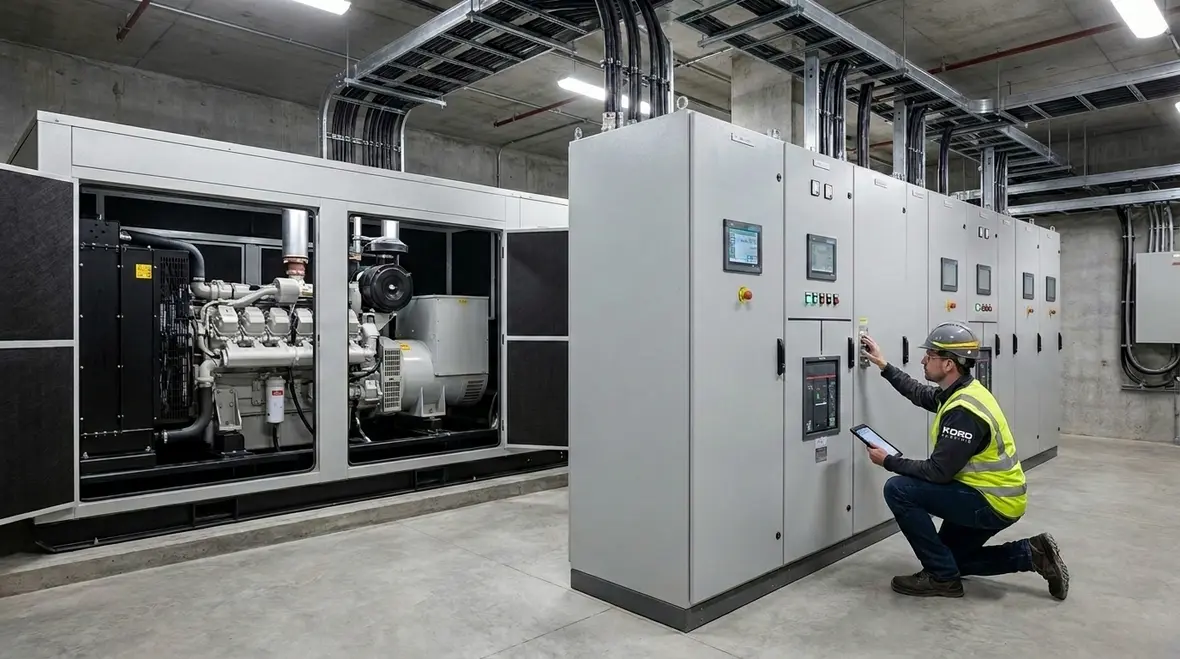
Redundant Power System Design for Critical Sites
Redundant Power Systems in Critical Infrastructure: How Kord Electric Builds for the “What If”
At Kord Electric, we plan for the moment the lights flicker, not the moment everything works perfectly. We design a redundant power system design for commercial and industrial facilities, and for major property buildings where downtime turns into lost money and annoyed tenants. In the first place, our approach treats power like traffic in a city: if one lane closes, traffic must keep moving. That means we use layered backup paths, smart switching, and protection that helps equipment survive short events and longer outages.
Now, nobody wakes up excited to talk about standby generators and transfer switches, but we make it calmer and clearer. Our technicians and expert service staff explain the “why” behind each choice, so your team knows what happens next when the grid stumbles. After all, the grid has a sense of humor. We just refuse to laugh without a plan.
Why Critical Buildings Need More Than a Single Backup
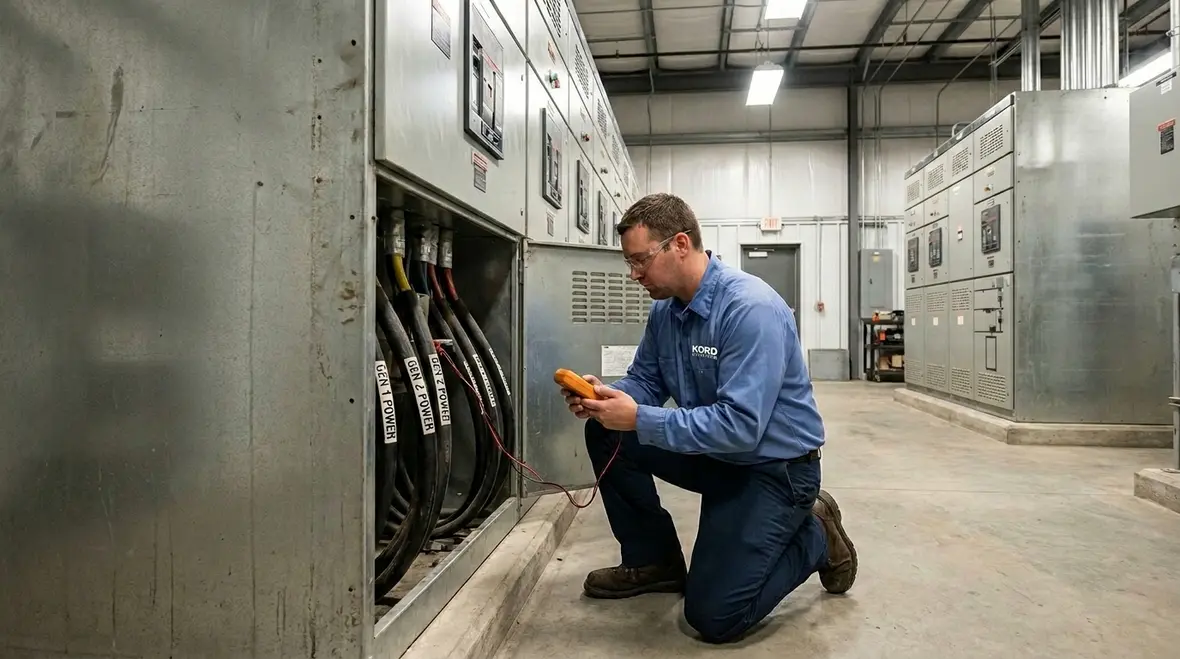
Critical infrastructure does not fail all at once. First, you see warning signs. Then you get a brief voltage sag. After that, you might face an overload, a breaker trip, or a partial utility problem. Therefore, a single backup source often cannot cover every scenario without added protection and coordination. Instead, we help clients choose redundancy that matches their risk, their loads, and the way their systems behave during abnormal events.
For many commercial and industrial sites, the real story starts with power quality. In our experience, voltage fluctuations rarely arrive as a dramatic blackout. They show up as dimming, control resets, nuisance alarms, and overheating. Consequently, your equipment may keep running while silently degrading. Meanwhile, servers, control systems, motor drives, conveyors, and medical or life safety connected systems can respond badly to unstable conditions.
Power Quality First: We Address Voltage Fluctuations Before They Turn Costly
We often begin with a practical review of voltage fluctuations, because that is where many facilities lose performance without realizing it. Our team uses a structured approach to understand how the utility supplies your site and how your building equipment reacts. In turn, we build redundancy that does not just replace power, it steadies it enough to protect sensitive loads.
In our service guidance, we explain how commercial and industrial facilities experience issues such as voltage dips, momentary outages, and instability that can disrupt operations. You can see this detail in our article: Voltage Fluctuations in Commercial & Industrial Facilities. We use those concepts as a baseline, then we tailor the solution to your loads, your equipment tolerances, and your operational needs.
At this point, it helps to understand the distinction between “backup power” and “power quality.” Backup power covers time when utility power disappears. Power quality tools cover time when utility power remains present but acts wrong. Therefore, smart system design often combines both ideas, so your facility keeps running and your equipment stays happy.
Common Redundancy Architectures We Recommend for Commercial and Industrial Sites
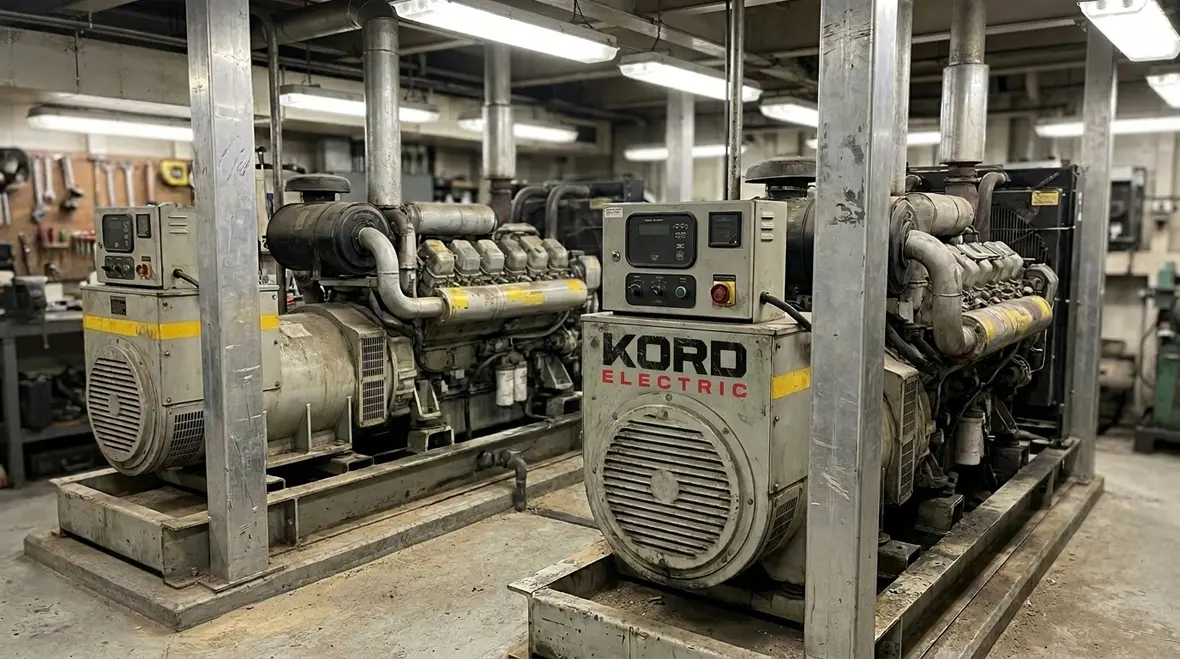
When we design redundant systems, we select an architecture that fits the building and the mission of the facility. Additionally, we keep the design realistic for maintenance, because an emergency system that cannot be tested safely is not truly redundant. Below are common paths our technicians and expert service staff evaluate.
N + 1 configuration: Additional capacity supports the critical load if one element fails. This option scales well and reduces the stress on the standby unit.
2N configuration: Two independent power paths serve loads. If one path fails, the other continues without interruption. Many high availability environments prefer this layout.
Segmented critical load approach: We separate loads by importance. Life safety and key controls get top priority while non critical loads shed automatically during an event.
Uninterruptible Power Supply support for sensitive equipment: We can protect control systems, network gear, and process controls against brief disturbances.
Also, we coordinate switching so it does not create new problems. For instance, a poorly timed transfer sequence can cause nuisance trips. Therefore, we build control logic that matches your equipment starting behavior and your power system response.
How Our Technicians Reduce Downtime During Switching and Failover
Redundancy design sounds impressive on paper, but the real test happens during transfer. During normal operation, systems must stay synchronized, stable, and monitored. Then when utility conditions change, the system must act fast and predictably. Here, our technicians and expert service staff handle the details people often skip.
First, we verify protective device settings and coordination. Next, we confirm control panel logic and interlocks. Then we test how the system behaves under simulated conditions. While some teams treat commissioning as a box to check, we treat it like a rehearsal for opening night.
One of our favorite truths, said with a grin, is this: switching is easy until it is real. That is why we plan for scenarios such as breaker failure, transfer bypass needs, generator start and stabilization time, and the proper sequence for load pickup. Additionally, we review alarms and event logs so your operations team sees what happened and when, not just that something happened.
Maintenance and Testing That Keep Redundancy Real
If a redundant power system design sits untouched, it becomes a rumor, not a system. Therefore, our approach includes service schedules that match your environment. Dust, humidity, temperature swings, and daily load cycles can all shift performance. Moreover, emergency systems often face long idle periods, which makes test strategy critical.
We help commercial and industrial clients keep systems ready through practical, repeatable steps. We also train the right people so they understand what “normal” looks like in monitoring dashboards and control panels.
Generator exercise plans: We follow run time targets, load bank strategies, and fuel system checks.
Battery and charger verification: We test alarm thresholds and confirm health metrics.
Switchgear inspection: We check contact wear, torque standards, and thermal signs.
Protection and relay checks: We validate coordination after changes and during service cycles.
Seasonal reviews: We adjust schedules when weather impacts performance.
To keep things simple, our expert service staff documents results in plain language. So instead of guessing, your team knows what improved, what needs attention, and what stays stable. That clarity reduces panic on the day your facility actually needs the redundancy.
Designing for Real Loads, Not Just Nameplate Numbers
Another place where redundancy plans can go wrong is the load side. People often size systems using nameplate data only. However, real equipment has starting surges, harmonics, inrush current, and control power needs. Then the facility adds variability. One shift runs different processes than another shift. Therefore, we design redundancy around load behavior you can measure or estimate responsibly.
We ask detailed questions, yes, but we keep our focus on the outcomes. For example, we evaluate which loads must ride through, which loads can tolerate brief interruptions, and which loads require clean power. In turn, we help clients select transfer schemes, capacity margins, and protective settings that reduce nuisance events.
Additionally, we plan for future changes. Commercial and industrial operations evolve. That could mean new production lines, expanded warehousing, additional HVAC demand, or new IT loads. So we build in room for growth and create pathways to add capacity without redoing the whole system like a full kitchen remodel after the sink arrives.
For facilities across Southern California that need a structured plan to keep critical systems ready, we often pair redundancy work with programs like electrical preventive maintenance and broader Los Angeles County electrical services so regular inspections, testing, and upgrades stay aligned with your long-term reliability goals.
Frequently Asked Questions
What to Expect When Kord Electric Designs Your Redundant System
When others promise redundancy, they often stop at equipment lists. We do not. We align design with your operating needs, your site constraints, and your tolerance for interruption. First, we review power quality and load behavior. Next, we propose an architecture and explain it in plain business language. Then our technicians and expert service staff handle commissioning and testing so your system performs under stress.
Along the way, we stay grounded in real-world scenarios instead of perfect conditions. We ask what happens if a breaker does not open correctly, if a generator needs extra time to synchronize, or if a tenant adds new equipment without warning. Our redundant power system design work is built to absorb those surprises with grace instead of chaos.
We also coordinate with your broader electrical strategy. That can include aligning redundancy with future data center build-outs, new EV charging infrastructure, or targeted upgrades such as panel labeling and selective rewiring so that each project strengthens the backbone of your facility instead of creating isolated islands of new equipment.
And if someone tells you the grid will be perfect forever, we gently remind them that the grid is not in charge of the calendar. It responds to real world physics, weather, and maintenance events. Your job is to stay ready. Ours is to help you do it calmly.
CTA: Call Kord Electric for a Redundancy Plan Built for Your Facility
If your commercial or industrial building depends on steady power, do not wait for the first real outage to discover what “critical” means. Kord Electric helps you plan, design, commission, and maintain systems that keep operations moving. Contact us today to schedule an assessment with our expert service staff. We will review your loads, discuss power quality risks, and recommend redundancy steps you can defend to leadership. Then we move forward with testing that proves the system works. Your uptime will thank you.
For facilities that need full service support across multiple locations, our team also delivers structured programs like emergency electrical services and long-range maintenance planning so that every upgrade, test, and repair pushes your site toward higher reliability instead of just checking a box after the latest outage.
Whether you manage a data center, manufacturing line, hospital campus, or multi-tenant property, a thoughtful redundant power system design is one of the most effective ways to protect your operations from the unexpected and keep your teams focused on their work instead of chasing power problems.
Next Steps for Your Redundant Power Strategy
Start by gathering recent outage history, known power quality issues, and any planned equipment changes. With that information in hand, our team can map out a phased approach that balances capital budgets with risk reduction. From the first walkthrough to final commissioning, you will know what we are doing, why it matters, and how each step strengthens your facility.
Then, when the next flicker or failure arrives, your systems will already be prepared. Power may stumble, but your operations do not have to.


