Industrial Lighting Control Automation for Facilities
At Kord Electric, we build advanced industrial lighting control automation for large facilities where uptime and energy savings both matter. We help owners and managers manage daylight, occupancy, task areas, and even shift schedules with smart controls that respond in real time. And because real buildings do not read manuals, our approach also includes practical testing, clear documentation, and steady support from our technicians and expert service staff. We explain what we install, why it works, and how it helps your team work safer and more efficiently. Think of it like giving your lighting system a calm brain, not a chaotic carnival. Meanwhile, the facility keeps running, costs stay down, and your staff stops chasing switches like it is a weekly scavenger hunt.
What makes large facility lighting controls different
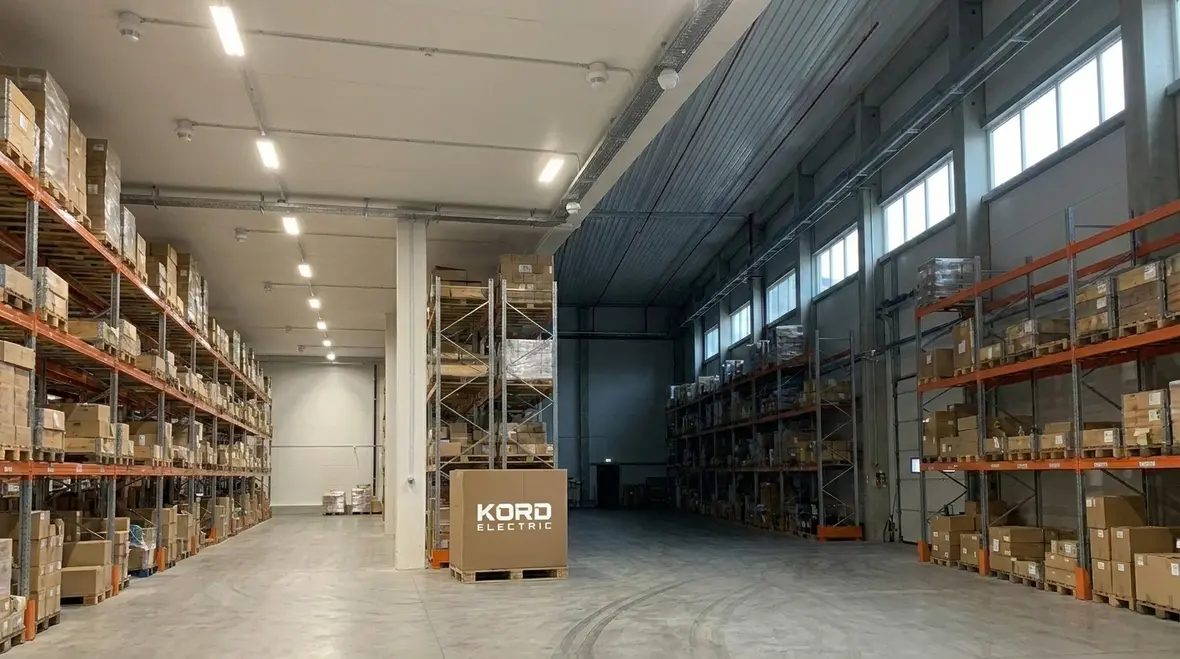
Large commercial and industrial buildings do not behave like small offices. They have changing occupancy patterns, multiple zones, long hallways, outdoor spill lighting, and areas that run on different shifts. As a result, the lighting needs to adapt without causing flicker, glare, or constant manual overrides. Furthermore, your building may include labs, warehouses, parking decks, and mechanical rooms, and each space needs a different control approach.
We design industrial lighting systems with layered logic so the lights follow the space, not the guesswork. For example, motion sensors alone can leave you with harsh on off cycles. So we pair occupancy data with time schedules, daylight readings, and setpoint rules. Then we tune behavior for each zone. In the end, your facility gets stable light levels that support productivity, safety, and compliance.
And yes, we also handle the boring parts that everyone avoids, like verifying sensor placement and confirming control wiring. That is where “smart” becomes reliable. If the system cannot hold a steady dimming curve during real operation, it is not advanced, it is just decorative.
Why automation improves energy use without harming comfort
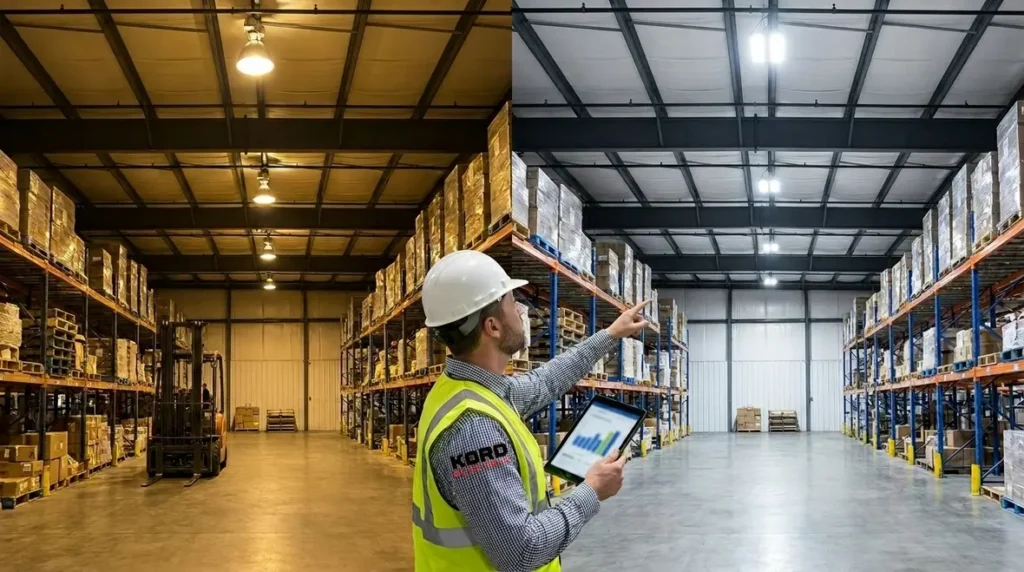
Most facilities want less energy, but they also want lighting that feels right to the people who work under it. Therefore, industrial lighting control automation must reduce waste while keeping illumination consistent. We accomplish this with demand responsive dimming and thoughtful zoning. Instead of turning an entire floor on or off, we control smaller lighting groups. Next, we apply daylight harvesting so the system uses natural light when it is available.
In practice, the difference is simple. During bright morning hours near windows, dimming takes over. In deep interior zones, occupancy and schedules carry more weight. Then, when the area sits empty, lights step down smoothly, not abruptly. Smooth transitions matter because they reduce distraction and prevent the “why did the lights just change” complaints that start at the worst possible time.
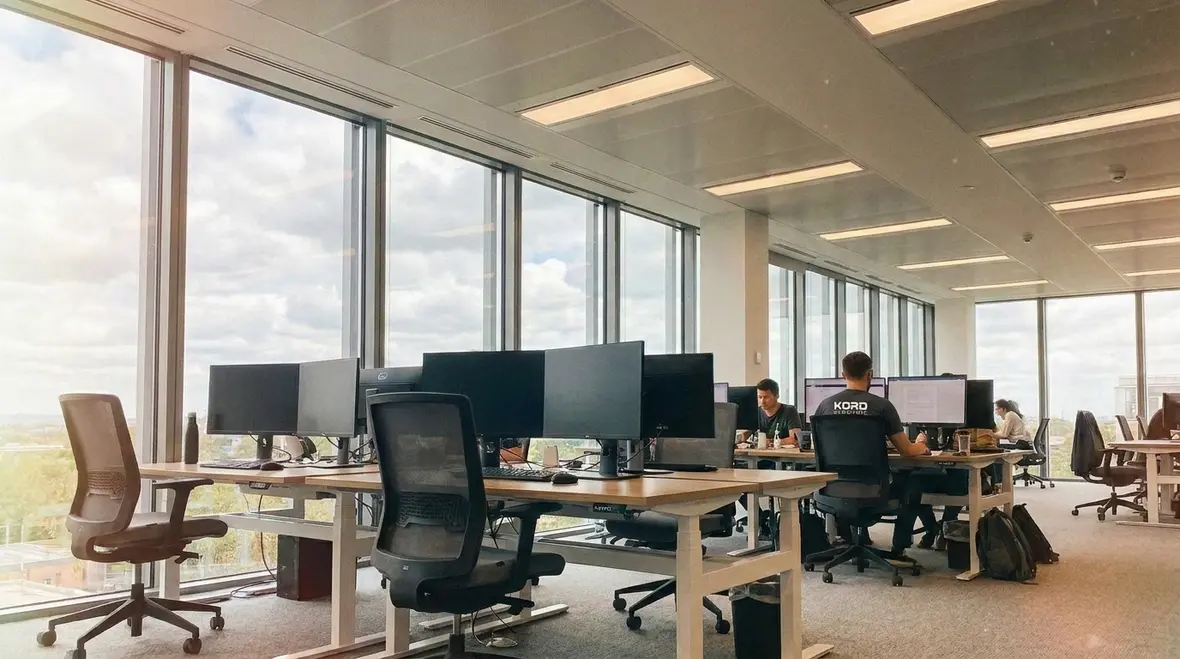
Our technicians also verify that control settings match real task needs. For a shipping dock, the priority is visibility and fast response. For an office area, the priority is comfort and uniformity. We tune the system so it supports how people actually work, not how a brochure says they should work.
How we reduce hidden electrical risks in commercial buildings
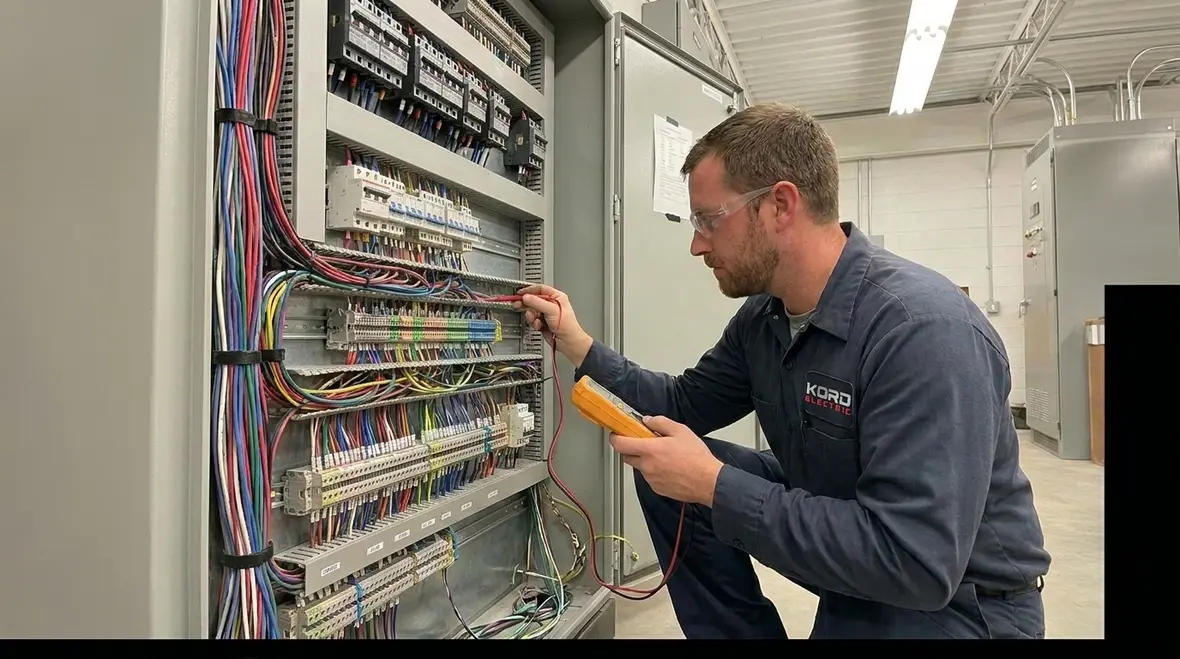
When owners plan upgrades, they often focus on lumens and savings. However, electrical risk hides in the parts that do not show up in a lighting plan. For example, loose terminations, aging wiring, incorrect protective device sizing, and poor labeling can create faults over time. In turn, these issues can cause nuisance tripping, unsafe heat buildup, and service interruptions that feel random until you trace the root cause.
In our blog, we highlight hidden electrical risks in commercial buildings, and we apply that mindset during lighting control automation projects. We review existing panels and branch circuits, confirm that device ratings match the load and control components, and ensure that all wiring paths meet code expectations. We also check that controls wiring does not share risky routes with power conductors when it should not. Then we test interfaces so the control system communicates cleanly with drivers, relays, and panel hardware.
Also, we pay attention to labeling and documentation. A future electrician should not need mind reading skills to understand what we did. Instead, our team produces clear schematics and identifies devices by zone and function. That way, if a technician returns years later, troubleshooting becomes a job, not a mystery novel.
Building zones, sensors, and networks that behave in the real world
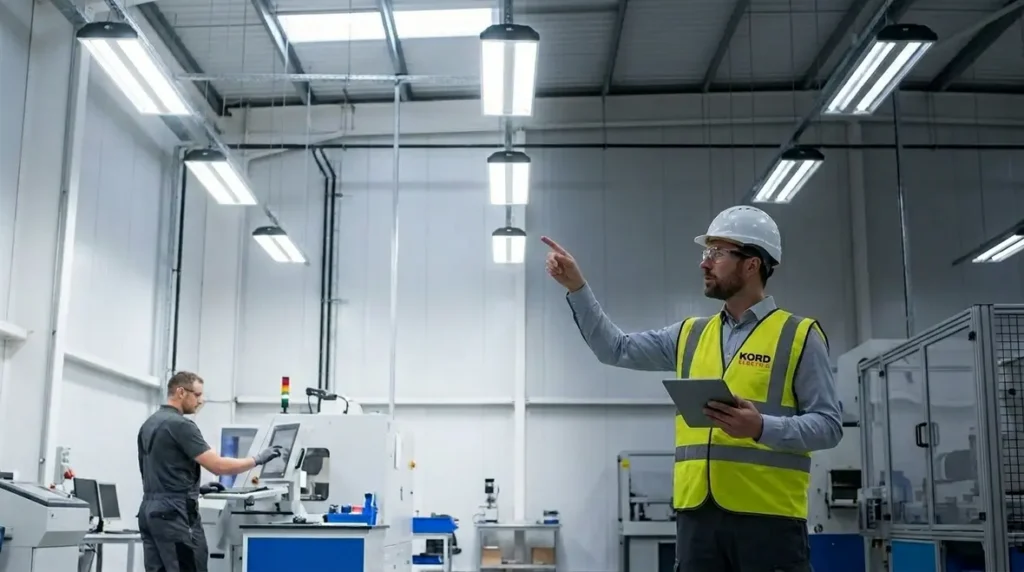
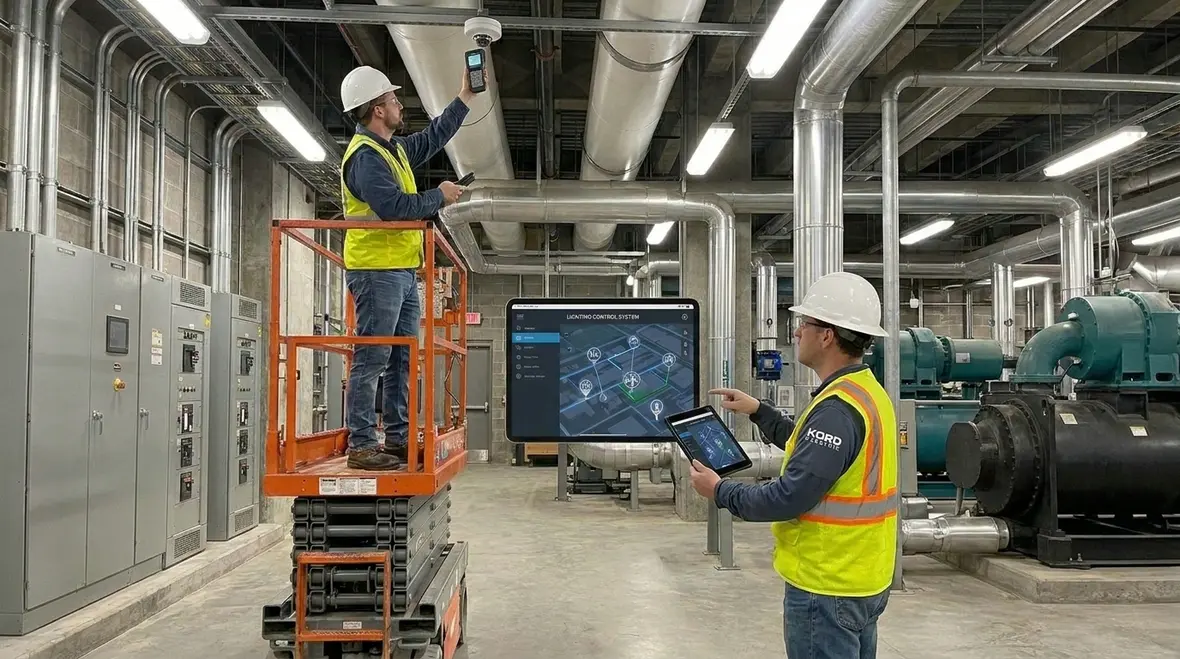
Advanced lighting systems fail when the design stays on paper. So we validate each stage: zone layout, sensor coverage, control sequence, and network reliability. First, we map lighting groups by function and occupancy pattern. Then we place sensors to avoid blind spots and to handle mounting height changes. We also consider how dust, humidity, and vibration can affect performance in industrial spaces.
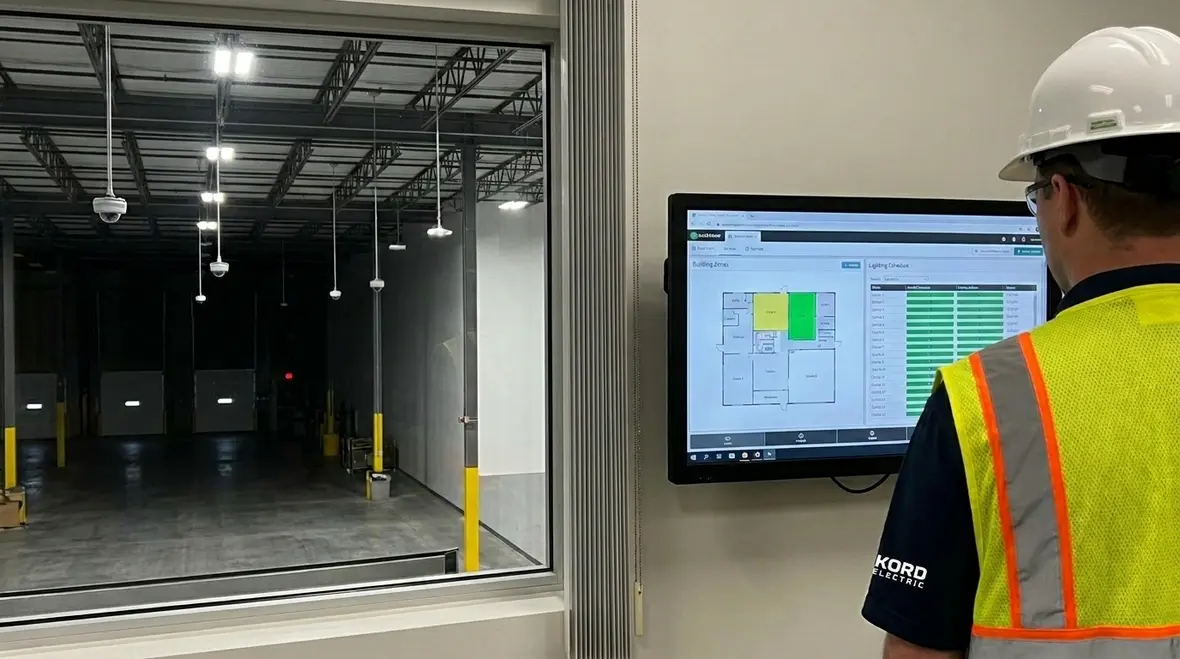
Next comes the control brain. Industrial lighting control automation often uses a mix of drivers, relays, gateways, and controllers, depending on the facility scale. We select equipment that supports stable dimming and predictable switching. Moreover, we ensure the building network, if used, can handle the traffic without causing delays. If the system communicates through the building network, we confirm that it does not compete with critical operations.
We also test for real behaviors. For instance, if a loading door opens frequently, the system should not flood power in a way that wastes energy or triggers alarms. If an area transitions from maintenance to regular operations, the lighting plan should adapt without a reboot. Our technicians run commissioning checks and capture results so the facility does not get a “trust us” moment.
One quick joke we tell our clients goes like this: automation should not act like a teen with a phone. It should not drop connection at the worst time and demand a restart. Instead, it should stay steady, like a reliable foreman who never forgets the schedule.
Commissioning and service that protect your investment
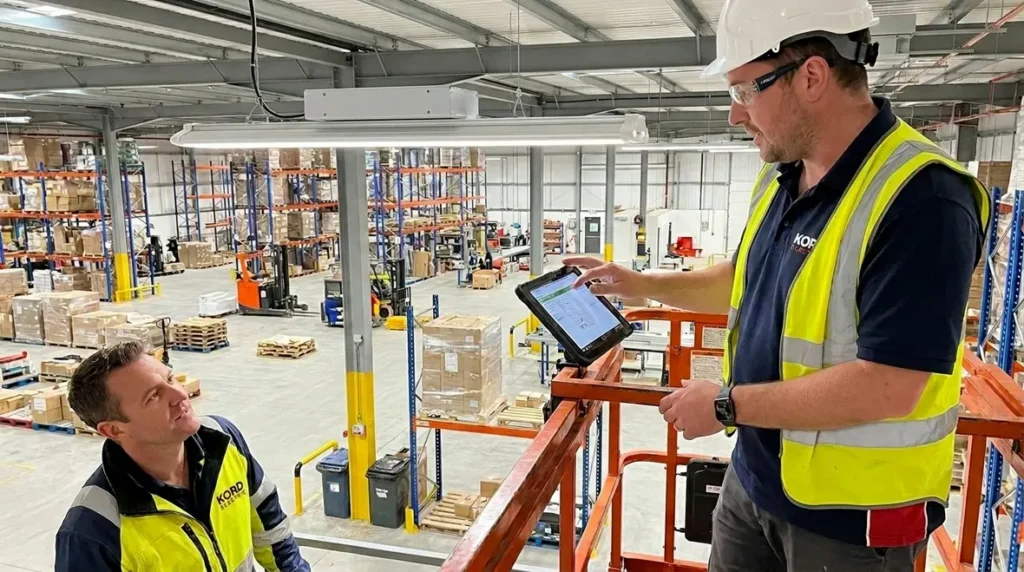
Once we install, we do not vanish. We support commissioning and we train the right people so the system stays tuned. During commissioning, we verify that each zone responds correctly to motion, daylight, and schedules. We also check for proper dimming range and confirm that the control logic matches the building’s operating plan. Then we test fail safe behavior, so if a sensor fails, the lighting moves to an approved safe state.
Our expert service staff helps facilities plan for long term upkeep. That matters because controls are like HVAC filters, they work best when they receive attention. Over time, sensors can drift, drivers can age, and schedules change. So we create a path for updates that does not interrupt operations.
Additionally, we align our service approach with the facility’s maintenance workflow. We schedule work windows, coordinate with electricians and operations teams, and document every adjustment. The goal is simple: you invest once, and you keep getting value without constant calls. We also explain what we change and why, in plain terms, so the team can manage the system confidently.
Compliance, safety, and smoother operations for major properties
Commercial and industrial facilities often carry safety obligations, operational requirements, and energy performance expectations. Advanced lighting control systems help you meet those goals when they support stable light levels and reduce hazardous conditions. Furthermore, proper zoning supports safe pathways in parking areas, warehouses, and corridors. When lighting levels drop appropriately during low occupancy, visibility still stays within acceptable ranges for normal operations.
We also design with maintenance access in mind. For example, controls should not depend on hard to reach devices or fragile wiring paths. Instead, we plan so technicians can service sensors and panels efficiently. That reduces downtime and shortens time to restore full lighting performance.
And let us be honest, the facility team wants fewer operational surprises. Lighting that behaves predictably helps reduce complaints and reduces the urge to override settings every day. When automation acts with purpose, staff spends time doing their jobs, not playing “guess the lighting logic” after a shift change.
FAQ
Ready to upgrade your facility lighting controls
If you manage a major commercial or industrial property, you need lighting that performs, not lighting that surprises you. Kord Electric helps you plan, install, and commission industrial lighting control automation that supports real occupancy, stable comfort, and safer operations. Our technicians and expert service staff explain the system clearly and back it with practical support. If you want, we can review your current zones, control wiring, and operating patterns, then propose an upgrade path that fits your facility schedule.
For facilities planning broader improvements across production floors and warehouses, pairing automation with industrial lighting layout optimization for efficiency can unlock even more value from every fixture and control point. When layout and controls work together, your lighting behaves like a unified system instead of a loose collection of switches.
If you are ready to move from reactive fixes to a purposeful lighting strategy, our team can align your controls, zoning, and maintenance plan with the rest of your electrical infrastructure. To explore a structured path that fits your property portfolio, visit our dedicated lighting installation services page or reach out directly to schedule a walkthrough.
Contact Kord Electric today and let us make your lighting run with purpose.