Industrial Lighting Control Systems for Efficiency
Kord Electric helps commercial and industrial facilities run their lighting smarter, not harder. In the first days of a project, our team installs and tunes industrial lighting control systems that reduce wasted energy and improve comfort across warehouses, office campuses, factories, and major property buildings. And yes, we also make sure the controls behave the way building teams expect, not like a gadget that needs a user manual longer than a forklift checklist.
In this article, we explain how we optimize efficiency with lighting controls, why service and commissioning matter, and how our technicians talk customers through the setup step by step. Then we share practical next steps so your facility gets results you can see on the utility bill.
Why industrial lighting control systems cut waste fast
When teams replace fixtures but keep the same lighting habits, energy waste still sneaks in. For example, lights stay on in unoccupied areas, glare pushes people to override settings, and schedules drift over time as shifts change. Industrial lighting control systems address these issues by matching light output to real use.
First, we separate “lighting is on” from “lighting is needed.” Sensors and scheduling tools decide when and where lighting should run. As a result, spaces stop burning power during nights, breaks, cleaning windows, and low traffic periods.
Next, we tune behavior at the room level. A loading dock has different patterns than a corridor, and a production line needs different timing than a staff lounge. Therefore, our approach builds control zones around how people and equipment actually move.
Finally, we reduce override habits. Nobody loves a dim room, and nobody loves fluorescent brightness that makes screens look like a reflection board. So we set smooth dimming curves, add time delays that match human schedules, and keep the system easy to use for maintenance staff.

As facilities modernize lighting across entire campuses or industrial sites, pairing these controls with a broader electrical strategy also matters. For larger upgrades that include panel changes or circuit reconfiguration, we often guide teams toward planning frameworks similar to those in comprehensive rewiring cost resources so control performance and electrical capacity stay aligned over time.
Occupancy, daylighting, and scheduling that match real shift work
We do not treat lighting controls like a single switch. Instead, we combine three strategies so performance stays stable even when your operation changes.
Occupancy control tracks movement and schedules lights to ramp up and down. In many facilities, motion patterns reflect shift timing better than a calendar. That means a third shift that starts early still gets the right light without manual adjustments.
Daylighting control uses natural light to reduce artificial output near windows or skylights. As the sun rises or clouds roll in, the system adjusts without making staff feel like they work under a moving spotlight.
Scheduling handles predictable cycles like shift change, lunch breaks, equipment warm up, and cleaning. However, schedules must adapt. If a schedule never changes, it becomes “set it and forget it,” which is a cute idea until your site manager has to explain it at a safety meeting.
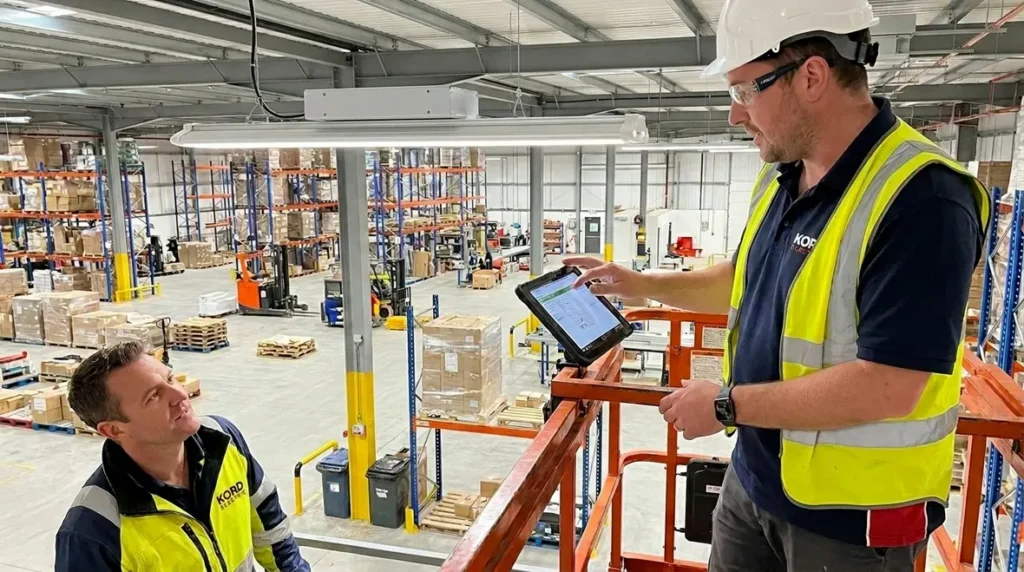
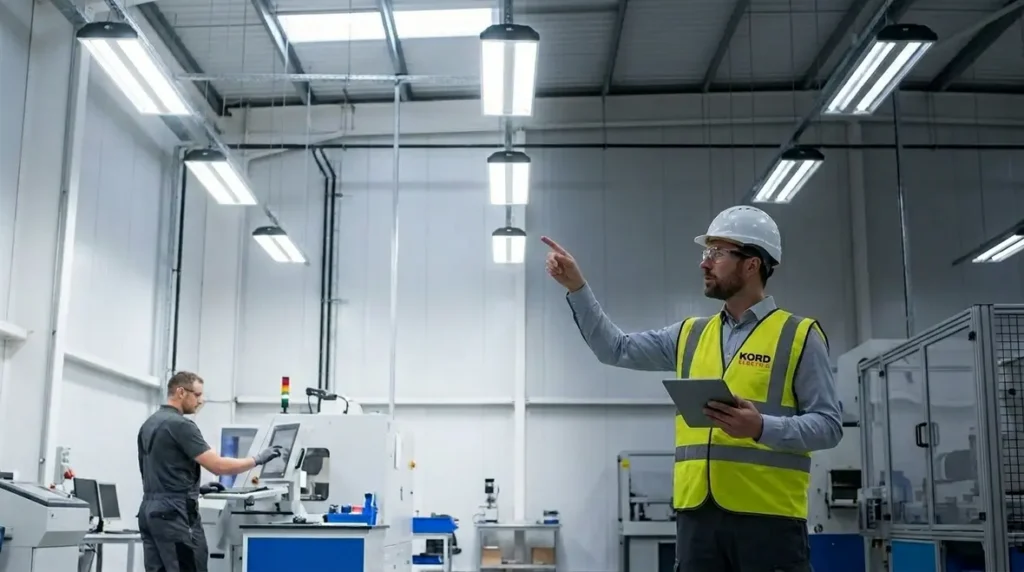
Our technicians build a control plan, then verify it during commissioning. They walk through floors and compare control response to actual use. Then they fine tune settings so the facility does not rely on guesswork.

In many large facilities, these three elements become the baseline for reliable industrial lighting control systems. From there, we add site-specific logic that respects how equipment actually runs, how people really move, and how your safety and compliance requirements evolve across seasons.
How we commission industrial lighting control systems for steady performance
Commissioning is where good plans become reliable results. If we skip it, sensors drift, timers conflict, and teams end up with a control system that “sort of works.” And that is how you get calls that start with, “It worked last week, I swear.”
We start by mapping devices to spaces. Then we review sequences: when lights should dim, when they should hold, and when they should fully shut off. After that, we check wiring and communication paths so the control signals stay stable.
Next, we run a behavior test under real operating conditions. We look at turn on speed, dimming smoothness, and response to movement. We also test daylight response during different times of day, because daylight control that looks perfect at noon may feel weak at dawn.
Then we train the staff who will live with the system. Our expert service team explains what the controls do, how override options work, and how to report issues. In practice, this means your team spends less time troubleshooting and more time managing production.
For facilities moving beyond just fixture replacement, we often recommend combining lighting control commissioning with broader system improvements. Resources like the Rewiring Cost Guide for Commercial Electrical Systems help teams understand how control upgrades, new circuits, and panel capacity planning can work together inside one clear roadmap.

During commissioning, we also document the final sequences, sensor locations, and critical settings. That documentation becomes the playbook your facility team can reference during audits, safety reviews, and future expansions.
Control strategies that protect comfort and reduce nuisance overrides
Efficiency matters, but comfort matters too. If lights change too often or dim too aggressively, people override settings. And when override is constant, energy savings shrink.
To prevent that, we focus on three details.
1) Set sensible hold times. We choose time delays that account for normal activity, not just quick movement. A warehouse associate walking past a sensor is not the same as someone stopping to inspect parts.
2) Use proper dimming steps. Smooth dimming reduces shock to the eye. Instead of snapping from bright to dim, the system steps down calmly.
3) Choose the right sensor placement. We place sensors where they see the people and equipment you care about, not where glare or shelves block view.
We also respect building rules and brand needs in major property buildings. If a lobby must feel welcoming at night, we design the control plan to support that experience while still reducing waste in back corridors and service areas.
If you are also budgeting for electrical work around controls, we point teams to our guide on commercial rewiring costs, since control upgrades often connect to panel updates and circuit planning. That kind of early clarity helps avoid surprise change orders later.
Rewiring Cost Guide for Commercial Electrical Systems details how costs can shift based on scope, site conditions, and what your facility needs to support the new controls.
Together, these strategies protect both comfort and compliance. Staff can still override when needed, but they do not feel like they must fight the system just to see their work clearly.
Why maintenance and updates keep savings alive
Lighting control systems do not “set and vanish.” Over time, sensors get dirty, schedules need changes, and occupancy patterns shift. Therefore, we treat control performance like a living system.
Our service staff helps customers protect savings with routine checks. They verify sensor health, confirm device communication, and inspect zones that show unusual behavior. If a motion sensor stops working well, the facility may see increased runtime. If that happens for months, it can quietly erase the savings that the controls were designed to create.
We also support updates when operations change. For example, if a warehouse adds new racks or changes traffic routes, sensor coverage may need adjustments. Likewise, if an office tenant remodels a floor, daylight control zones and occupancy settings should be revisited.
And because we serve commercial and industrial facilities, we plan around uptime. We coordinate changes so production rhythms stay intact. Nobody wants lights off in the middle of a critical shift, and nobody wants to hear, “We’ll test it tomorrow,” after the facility has already booked a weekend shutdown.
For many properties, pairing lighting control maintenance with broader electrical preventive maintenance makes the most sense. Structured programs like Electrical Preventive Maintenance for commercial and industrial facilities keep critical systems inspected, documented, and tuned so your industrial lighting control systems continue to deliver the savings and comfort they were designed for.
Designing a control plan that scales across large sites
Major property buildings rarely look the same floor to floor, and industrial sites rarely behave the same way week to week. So we design control plans that scale without becoming messy.
We start by grouping areas into zones based on function and use patterns. Then we define different sequences for different zones. A loading and staging area runs differently than a conference corridor. A mechanical room has different needs than a training space.
After that, we standardize the control logic where possible. Standard logic keeps service simple and training easier. Still, we customize the details that matter, like daylight sensor strategy near glass lines and occupancy response in high activity zones.
Lastly, we document the system clearly. Our technicians build a readable map of zones and device locations so future service stays fast. That documentation saves time during troubleshooting and helps your team plan changes without fear.
When control planning is tied into a full lighting strategy, you also get more value from services like Lighting Installation Services for commercial and industrial facilities. Coordinating fixtures, controls, and electrical capacity from the start turns what could be a patchwork of projects into one clear, scalable system across your property portfolio.
FAQ
Ready to optimize lighting efficiency for your facility?
If your commercial or industrial site wants lower energy costs without giving up comfort, we can help. Kord Electric designs, installs, and commissions industrial lighting control systems that match occupancy, daylight, and real shift schedules. Our technicians explain every step, then our expert service staff supports maintenance so savings stay steady. If you are planning a major property upgrade or a factory retrofit, contact us to discuss your zones, timelines, and expectations. Let’s turn lighting waste into lighting value, starting now.
To see how controls fit into your broader project plan, explore related resources like the Rewiring Cost Guide for Commercial Electrical Systems or connect directly with our team about Lighting Installation Services for large commercial and industrial facilities. Pairing smart controls with a strong electrical and lighting foundation helps you capture savings faster and keep them stable year after year.