Industrial Lighting Safety Compliance Guide
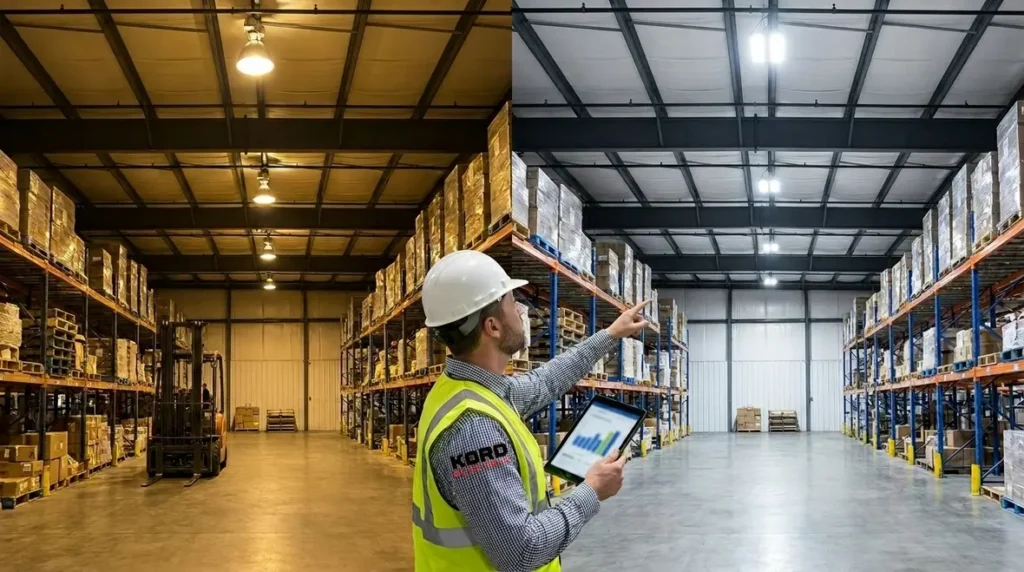
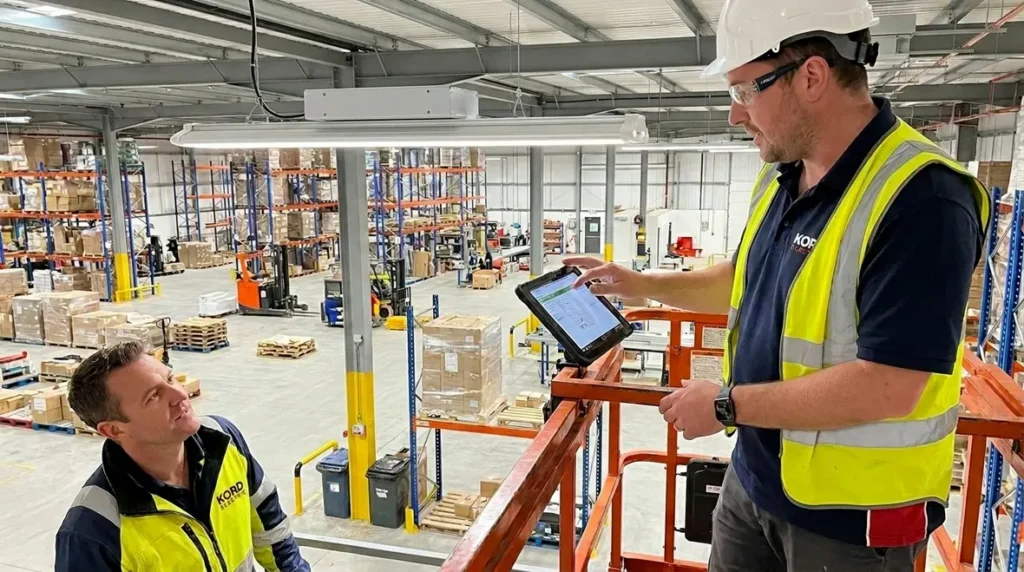
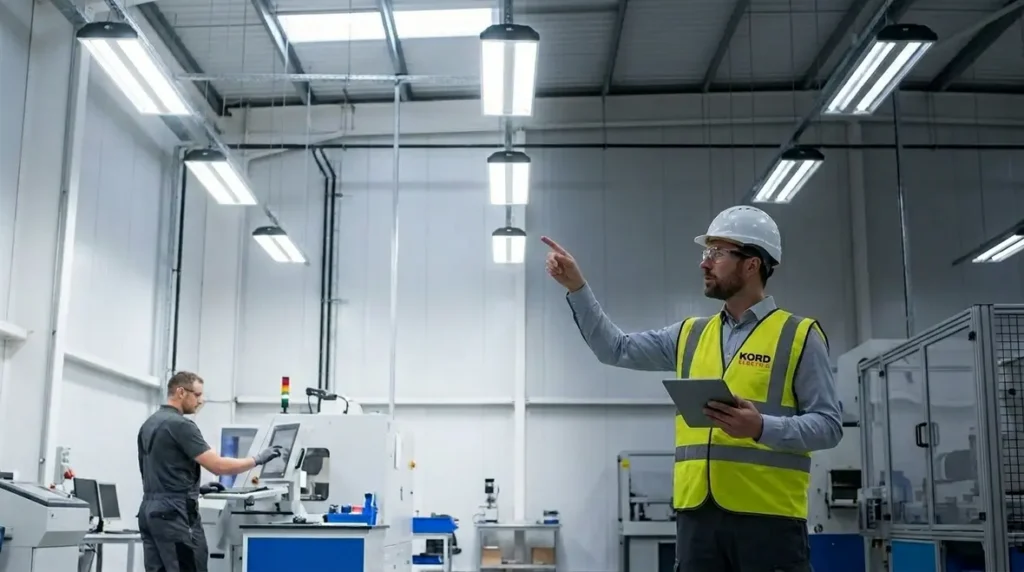
Kord Electric starts every Industrial lighting project with our Industrial lighting safety compliance guide, and we keep it close like a steady hand on a ladder. In our first walkthrough, we look at the site hazards, the lighting layout, the control systems, and the paperwork that keeps everyone protected. Then our technicians explain what we find in plain language, because nobody should need a translator to understand why a fixture is a safety risk. And yes, we hear it all: “It’s just lights.” That is what people say right before the lights become the reason an inspection turns into a very long meeting.
For commercial and industrial facilities and major property buildings, safety compliance is not a box to check. It is how we prevent shocks, reduce fire risk, keep wiring protected, and verify the installation meets the standards that inspectors expect.
Setting the baseline for compliance before any fixture gets installed
In the real world, safety starts before we touch a tool. First, our team reviews the building use, the operating environment, and any past electrical issues. Then we confirm the electrical service characteristics, grounding system design, and how the facility manages switching and dimming. This matters because Industrial lighting safety compliance guide requirements often connect to wiring method, circuit protection, and proper termination practices.
Next, we do a risk check that goes beyond “looks fine.” For example, we consider high traffic walkways, forklift routes, dock doors, and areas with frequent wet cleaning. We also note vibration sources in industrial zones and the heat around motors or process equipment. After that, our expert service staff walks stakeholders through the findings. We do not hide behind jargon. We map the safety risks to the fixture choices, mounting methods, and installation details.
Electrical rules that matter most in industrial spaces
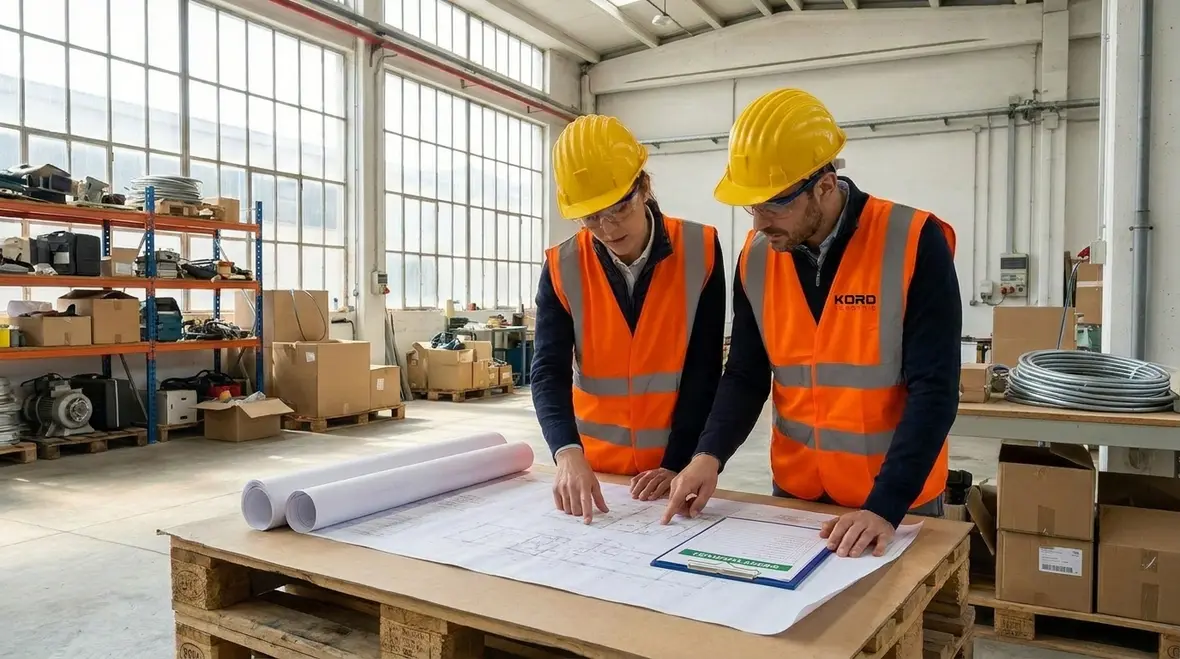
When compliance gets discussed, people often think only about the fixture. However, the electrical path matters as much as the light. We focus on circuit protection, correct conductor sizing, and proper disconnecting means so that maintenance workers can isolate lighting safely. We also verify bonding and grounding to reduce shock risk, especially in large facilities with metal structures.
Additionally, we check for correct wiring methods in locations where damage is likely. If a conduit run must resist impact or moisture, we do not improvise. We follow the design needs and select components that match the environment. This is where our technicians earn their reputation. They explain that “future repair” is a safety issue, too. If an installer creates a difficult access point, a future worker might bypass procedures just to move faster. We build access and labeling into the plan.
Finally, we coordinate with facility maintenance schedules. That reduces downtime and limits the chance that systems get modified later without documentation. In other words, we protect both people and operations.
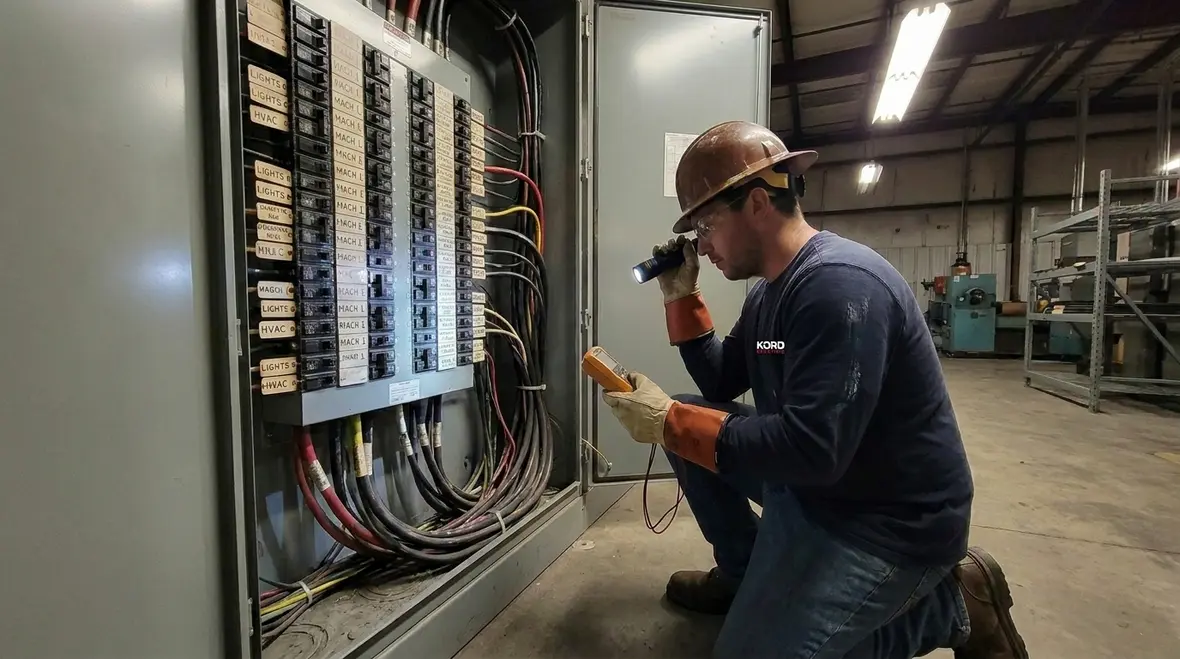
Hazard locations, moisture, and dust: choosing the right fixtures and ratings
Not every industrial area behaves the same. Some spaces are dusty, some are washdown environments, and some operate near flammable materials. Therefore, fixture selection must match the conditions. In facilities that experience moisture, we verify sealing, gaskets, cable entries, and how the unit drains. In dusty areas, we confirm the enclosure design and the thermal performance so the fixture stays reliable.
Where hazard ratings apply, our process gets more specific. We evaluate the zone or classification approach used by the facility and the equipment requirements that come from that assessment. Then we align the luminaire, controls, and installation method to reduce ignition risk. This is not guesswork, and we do not “wing it.” Our technicians keep the documentation organized so compliance teams can review it without digging through piles of unlabelled parts.
And yes, we have seen situations where someone installed a high powered light in a wet area without thinking about the cable route. That is like putting ice cream in a warm car and then acting surprised when it melts. We plan so surprises do not show up during inspection.
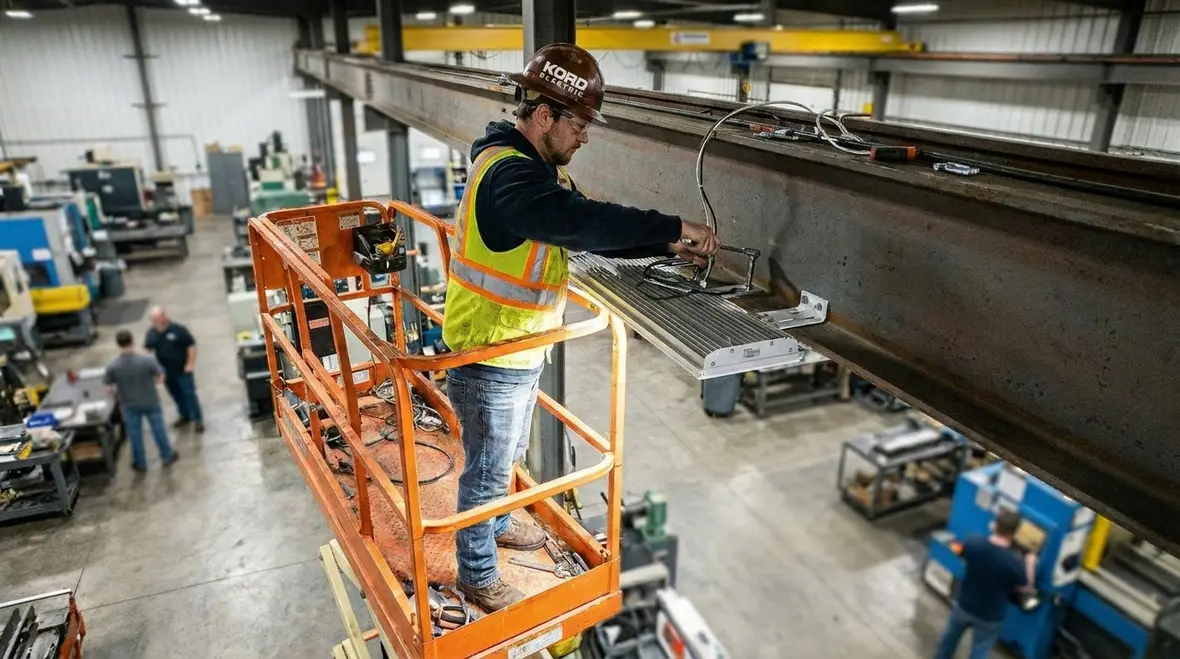
Wiring, mounting, and access: how we reduce maintenance risk
Safety compliance does not end at energizing the fixtures. After installation, the next risk shows up during maintenance. That is why we concentrate on mounting stability, correct support spacing, and safe access routes. For ceilings, we verify anchor strength and hardware compatibility with the building structure. For wall and surface mounts, we confirm the fixture alignment so cables do not get pinched and enclosures do not lose their weather resistance.
Next, we check how workers reach and service the lighting. If a fixture sits behind tight ductwork, we plan for safe access or use design adjustments that prevent unsafe reach. Our technicians also focus on strain relief and termination quality. Loose terminations can create heat and eventually lead to failures. Heat, in a commercial and industrial setting, is never just “an issue.” It is a safety signal.
Then we standardize labeling. We mark circuits, document control mapping, and help the facility’s maintenance crew understand what changes were made. So when someone troubleshoots later, they do not chase the wrong breaker or shut down the wrong system. That mistake is how small problems turn into big downtime.
In short, we treat maintenance like a safety operation, not an afterthought.
Inspection readiness and documentation that actually helps
Inspection day can feel like a pop quiz you forgot existed. Our approach makes it less stressful. We prepare documentation early, align it with the facility requirements, and keep it organized for the people who review it. We make sure installation records include the fixture types, electrical routing details, control setup information, and any relevant compliance check points from the Industrial lighting safety compliance guide.
Moreover, we coordinate with facility stakeholders so the right parties are present during key steps. That includes testing and verification activities, plus final walkthroughs that confirm the layout matches the safety plan. Our expert service staff explains what gets tested and why, so the facility team understands the results instead of only hearing a verbal thumbs up.
To support clarity, Kord Electric uses a structured handoff that can be shared with internal safety and facilities teams. Below is an example of how we present key items in one place.
| Documentation item | What it supports |
|---|---|
Fixture schedules and locations | Verifies layout, coverage, and proper selection for the environment |
Circuit and control mapping | Enables safe maintenance and correct isolation during troubleshooting |
Installation notes and verification | Confirms the installation method matches safety expectations |
Testing results and sign offs | Demonstrates compliance readiness and operational integrity |
This structure helps inspections move faster, and it helps maintenance move smarter after we leave the site. For facility teams who want to go deeper on statewide requirements, pairing this with resources like Kord Electric’s California Commercial Lighting Code Guide for 2026 and their broader commercial lighting compliance in California overview can make code conversations much easier to navigate.
When a property is also considering efficiency upgrades, resources such as the Commercial Lighting Upgrade Cost Guide and Industrial Lighting Layout Optimization for Efficiency help connect safety compliance with cost planning and real world performance improvements.
Controls, emergency lighting, and ongoing compliance after turnover
Controls can look simple until you realize they influence evacuation behavior, operational safety, and energy performance. Therefore, we verify that switching and dimming sequences work as intended and that any emergency lighting function stays aligned with the facility requirements. We also confirm that control wiring and components do not create unsafe conditions during normal operations or testing.
Then we consider how the facility will keep things compliant over time. Lighting systems change. Bulbs get replaced. Drivers get swapped. Access panels get reopened. So, we advise facilities on a practical maintenance plan, including inspection intervals and how to record changes. Our technicians share the “what to watch” list that reduces guesswork. This helps maintenance teams spot early warning signs such as abnormal flicker, water ingress, or loose connections.
And when a facility schedules upgrades later, we encourage them to keep the original documentation close. It is the difference between informed updates and chaotic rework. For many organizations, pairing our Industrial lighting safety compliance guide with an Electrical Preventive Maintenance program turns one successful project into a long term safety and reliability strategy.
How this Industrial lighting safety compliance guide fits into broader lighting projects
In practice, very few lighting projects exist in isolation. A facility that starts with safety compliance often discovers opportunities to improve visibility, reduce energy use, and modernize equipment at the same time. That is why our Industrial lighting safety compliance guide is designed to plug into larger Kord Electric services rather than sit on a shelf.
For example, when a distribution center is considering a major LED retrofit, we connect this guide to planning resources similar to Kord Electric’s Commercial Lighting Upgrade Cost Guide. That way, the budgeting conversation always includes the wiring methods, control strategies, and access planning that inspectors and insurers care about. Safety and cost planning move together instead of competing for attention.
On projects where layout and workflow matter, such as production lines and large warehouses, we align our compliance checks with the kind of observations highlighted in Kord Electric’s Industrial Lighting Layout Optimization for Efficiency content. That means our technicians do not simply verify that fixtures are rated correctly. They also verify that light falls where work actually happens, that glare is controlled, and that maintenance access does not require heroic ladder moves to change a driver.
When outdoor areas are involved, the same guide helps connect indoor wiring standards with placement and protection practices similar to those covered in the Commercial Landscape Lighting Safety Guide. In other words, the same disciplined approach to routing, labeling, and damage prevention carries from the loading dock to the parking lot and along every pedestrian path in between.
Planning, budgeting, and maintenance: using the guide over the full life cycle
A common misconception is that an Industrial lighting safety compliance guide is only useful during design or installation. In reality, it becomes even more valuable once the system is energized and the facility is operating under real workloads and schedules.
During planning, the guide helps property leaders ask the right questions: What codes apply today? Which zones carry the highest risk? How will maintenance staff safely access fixtures in twelve months, not just on day one? Tying these questions back to services like Kord Electric’s Lighting Installation Services page makes sure that every answer is grounded in a repeatable process, not a one off project anecdote.
When it is time to budget, the same framework clarifies which upgrades are “nice to have” and which ones are “must do” for safety and compliance. For instance, a facility might decide to phase work by zone: starting with high risk process areas, then moving to warehousing, then addressing exterior circulation paths. Because each step is documented, cost guides for lighting upgrades, rewiring, or broader electrical improvements all reference the same baseline conditions instead of guessing.
Over the long term, the guide supports maintenance teams directly. When paired with a structured Electrical Preventive Maintenance program, every inspection, infrared scan, or emergency lighting test feeds back into a single record of what was installed, when it was last verified, and what needs attention next. That is how small discoveries stay small instead of turning into costly downtime or urgent retrofits.
FAQ
Conclusion and next step with Kord Electric
If your facility needs lighting that meets safety requirements without slowing down operations, Kord Electric is ready to help. We bring technicians and expert service staff who explain the work clearly, plan for hazardous environments, and prepare documentation for inspection readiness. Then we install with care, test what matters, and leave your maintenance team with a handoff they can use. Contact us for a site review and a compliance focused lighting plan for your commercial and industrial spaces.
For multi site portfolios and complex properties, our dedicated Lighting Installation Services help align this Industrial lighting safety compliance guide with large scale design, construction, and upgrade work. From first walkthrough to final sign off, we keep safety, performance, and code compliance moving together.