EV Infrastructure Scaling for Commercial Facilities
Facility leaders often think EV charging is a single project, like installing a handful of chargers and calling it a day. We at Kord Electric know better. Our EV infrastructure scaling strategy helps teams plan, build, and expand commercial EV charging in a way that keeps pace with tenant growth, fleet expansion, and changing utility rules. In the early stage, we align power, site layout, and controls. Then we scale in phases so costs stay predictable and reliability stays high. And yes, we also make sure the system still works when the next wave of drivers arrives, not just when the ribbon gets cut. Because charging infrastructure should not behave like a sitcom with a cliffhanger every quarter.
Commercial facility planning starts with site reality
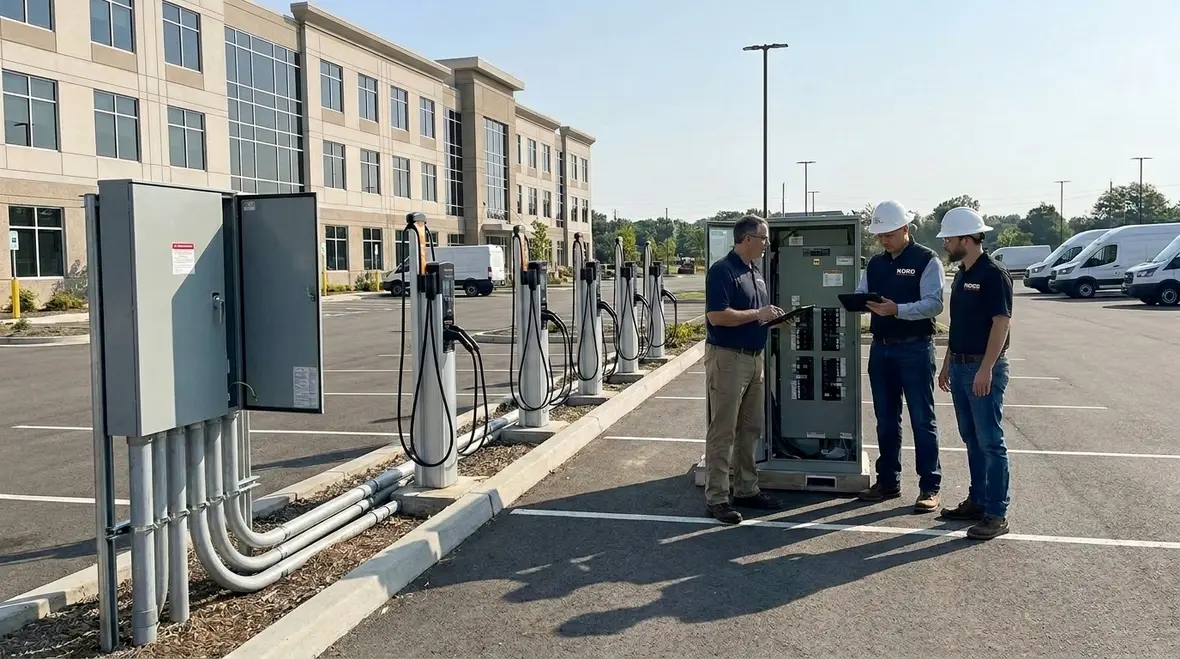
We begin by walking the facility manager through what exists today and what is likely to change next. That means we review electrical capacity, service entrances, load profiles, transformer limits, and the physical constraints that no one wants to talk about during the first meeting. Then, just like a good plot twist, we map those realities to a practical plan.
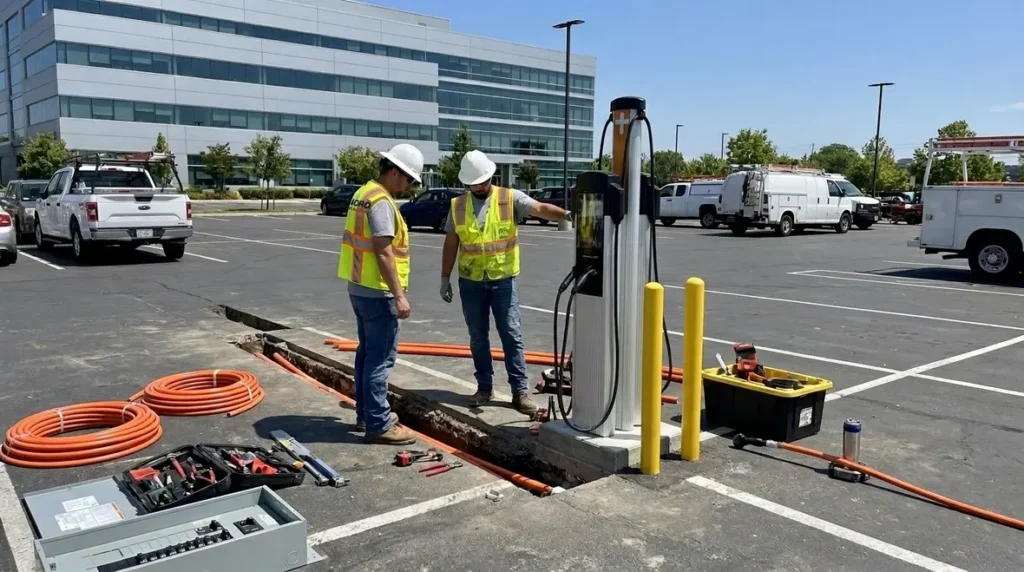
Our technicians and expert service staff explain the reasoning in plain language. They show how charging growth can strain demand charges, trip breakers, or overwhelm upstream equipment if a team guesses instead of measures. Additionally, they help teams confirm where vehicles park most often, where drivers wait longest, and how to route cables safely so maintenance crews can work without turning the site into an obstacle course.
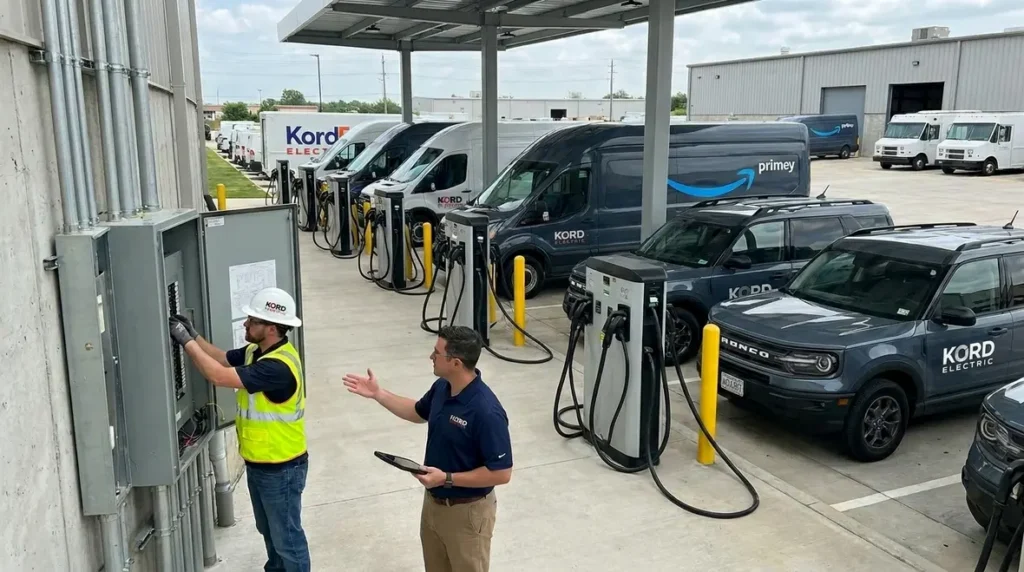
We also coach teams to think like operators, not like buyers. A commercial and industrial facility needs uptime, access control, clear billing, and an approach that works for fleets, employees, and visitors. Meanwhile, major property buildings need a plan that works across multiple tenants without creating chaos at the panel schedule level.
How we build an EV infrastructure scaling roadmap that does not stall
Next, we develop a staged roadmap. First, we identify a base load that the facility can support now, without forcing an emergency utility upgrade. Then we design expansion pathways so future chargers connect without rewriting the entire electrical foundation. In short, we choose a system architecture that can grow.
Our EV infrastructure scaling strategy also accounts for controls and monitoring. That is how a facility manages multiple chargers intelligently instead of letting every unit charge at once like a group of people grabbing popcorn at the same time. Smart load management helps protect the site from power spikes. It also reduces strain during peak hours, which matters for commercial budgets.
We handle the planning with care for billing and access. When charging serves multiple user groups, the system should support clear rules. We help facilities avoid the “everyone shares one account” problem that becomes an administrative nightmare later.
Finally, we set milestones. We define what gets installed in phase one, what gets prepared in the electrical room, and what data gets reviewed before phase two. As a result, the next purchase decision comes from facts, not wishful thinking.

Design choices that keep reliability high in industrial settings
Commercial and industrial facilities face tougher conditions than most people expect. Vibration, dust, temperature swings, heavy vehicle movement, and long cable runs can challenge even solid equipment. Therefore, our team selects components and installation practices built for real use, not ideal paperwork.
Our technicians focus on durability and serviceability. They route conductors with proper protection and maintain clear separation where needed. They also plan for future access so maintenance does not require dismantling half the parking area. Because if a charger fails, the facility needs a path to repair that does not shut down operations.
We also consider charging behavior. Fleet schedules tend to be predictable. Tenant demands can vary. Visitor charging spikes during events. So we select a configuration that matches those patterns and we plan for safe power handling throughout the site.
And just to keep things honest, we remind facility managers that “it will probably be fine” is not a design strategy. It is the kind of phrase that sounds confident until the first summer heat wave shows up.
Power, demand charges, and utility coordination for facility managers
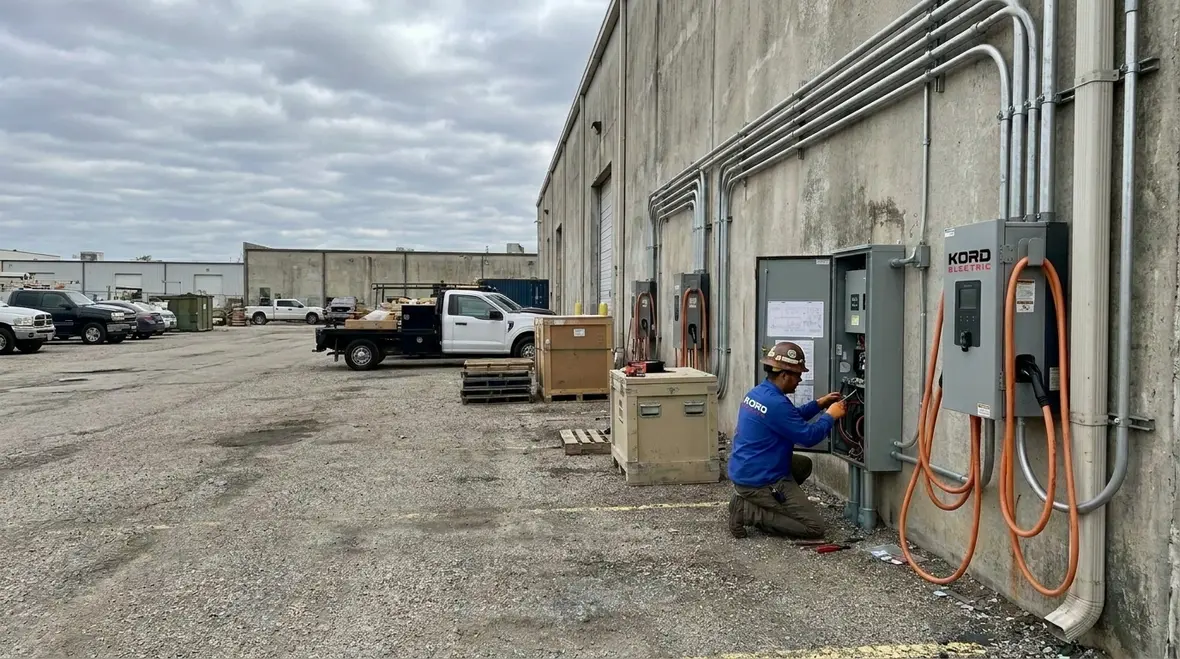
When a facility scales EV infrastructure, electrical capacity and utility rules often decide the timeline. We help teams coordinate early so they do not waste weeks waiting for answers after equipment selection. In many cases, the electrical upgrades can be planned in parallel with site preparation, which reduces downtime.
We review demand charge risk and load timing. Then we build a plan that limits peak strain. If the facility can charge during off-peak windows, it can protect budgets. If it cannot, we still focus on intelligent load sharing and capacity planning so expansion does not trigger constant costly adjustments.
Our approach also reduces surprises for procurement teams. We help confirm whether the site needs service upgrades, transformer changes, or panel additions. Additionally, we advise on realistic construction sequencing so electrical work and civil work happen in the right order.
Our expert service staff explains these steps thoroughly. They translate utility jargon into operational impact. That way, facility managers can approve a scope with confidence, not guesswork.
Installation and expansion without turning the parking lot into a construction zone
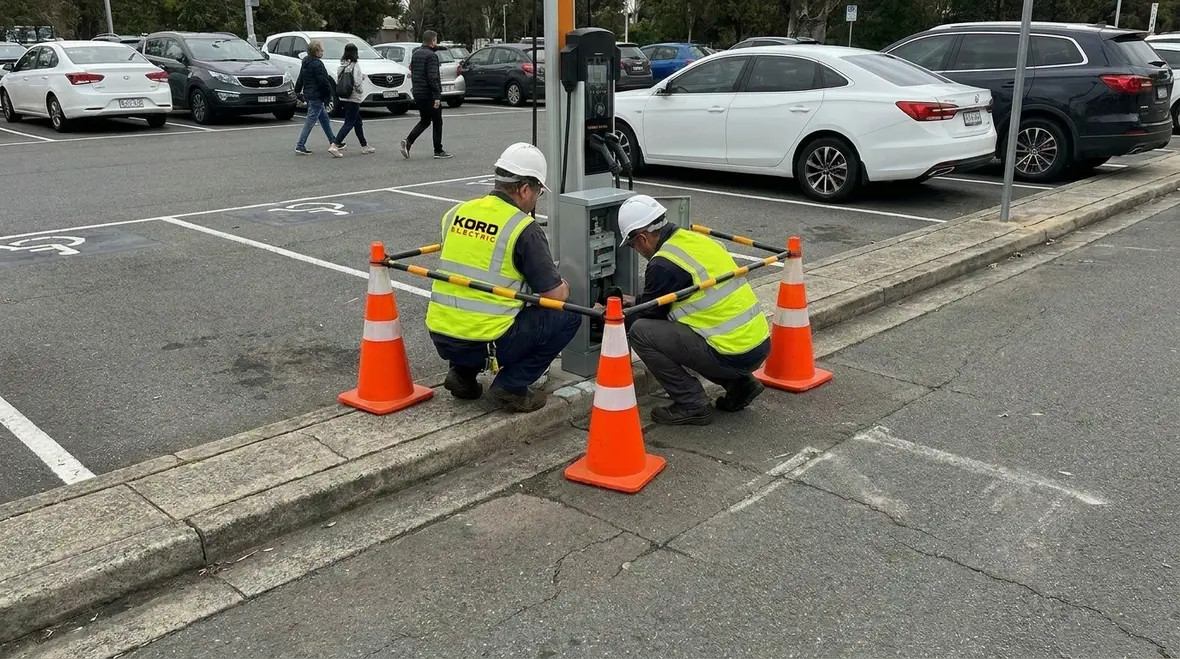
Facility teams care about one thing during rollout: operations must continue. So we plan installation to minimize disruption. Where possible, we phase work by parking sections and keep traffic and access clear for employees, fleets, and vendors.
We also coordinate downtime windows for electrical work. Instead of pushing a single heavy schedule, we stage tasks so the facility can keep running. Then, when the expansion phase arrives, the groundwork from phase one makes the next install smoother.
Our technicians keep the build consistent. They follow a process that supports quality and helps future technicians troubleshoot faster. In addition, we document as we go so the next service visit does not start with guess-the-wire.
And yes, we have heard the jokes. Someone always says, “Why can’t we just install it all at once?” We explain that doing everything immediately can cost more, create power bottlenecks, and increase the chance that the facility grows faster than its electrical plan. Besides, a good expansion plan is like a good playlist: it builds momentum instead of blasting everything at maximum volume from track one.
Management, monitoring, and service that keeps commercial charging dependable
After installation, the work continues. Commercial and industrial facilities need charging systems that stay online, report status clearly, and support real user needs. Therefore, we focus on monitoring, maintenance planning, and responsive service.
Our expert service staff helps facilities establish operating rules. That includes access settings, user permissions, and billing alignment with the facility’s policies. It also includes how the system responds when many vehicles charge at the same time.
We also support ongoing service so chargers do not drift into “it’s working, mostly” territory. Preventive checks reduce downtime, and quick response protects revenue and trust. When managers track performance, they can also validate whether utilization matches the original EV infrastructure scaling strategy. If demand changes, they can adjust the next phase without losing time.
Monitoring matters because it turns problems into early alerts, not late discoveries. In other words, the system should tell you something is wrong before drivers start treating your site like a haunted house.
How do you scale charging across multiple tenants and major property buildings?
Major property buildings add extra layers. Multiple tenants, shared amenities, and different parking preferences require a plan that stays fair and easy to manage. So we help property teams set up structured access, consistent rules, and clear reporting.
We coordinate charging across parking zones so you do not build a beautiful charging area that only one tenant uses. Instead, we align charger placement with actual demand patterns. Then we keep expansion ready so new tenants or new fleet partners can connect without major rewiring.
We also consider how management wants to handle payments and usage data. When the facility can track usage, it can support transparent billing and operational decisions. And because property teams often manage many vendors, we help keep documentation clean so service and audits stay organized.
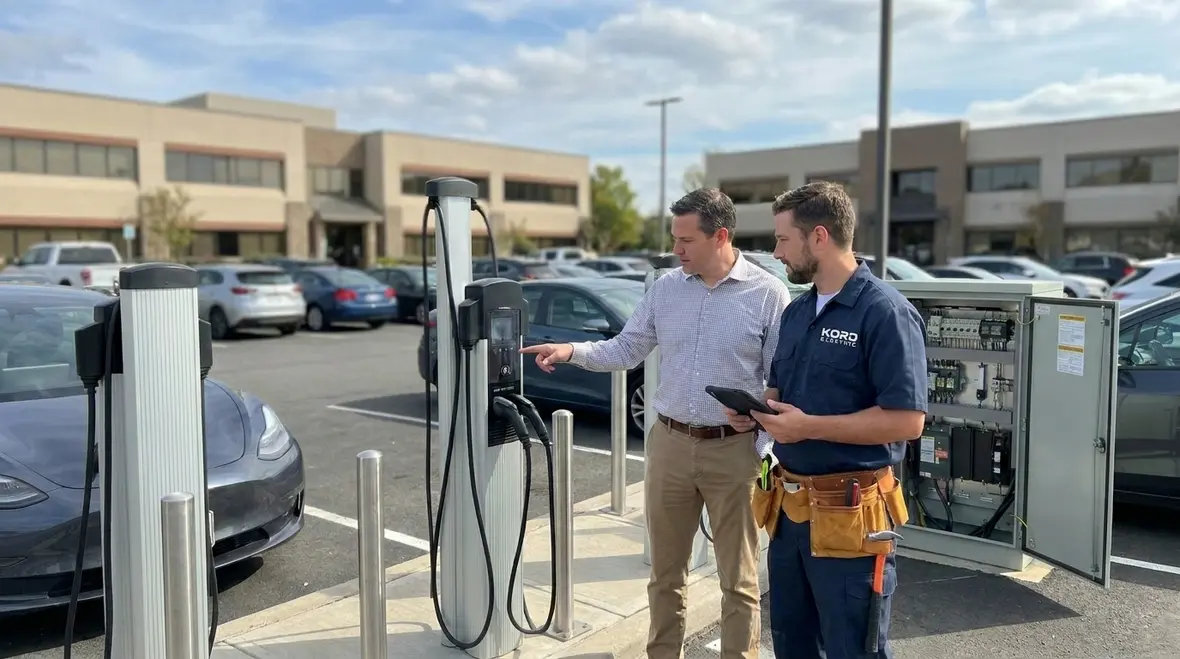
Finally, our technicians explain the system during and after commissioning. That matters because the best technology in the world does not help if no one can interpret a status alert.
FAQ
CTA: let’s plan the next phase, not the next surprise
Facility managers who succeed at EV charging do not guess, they plan. Kord Electric helps commercial and industrial facilities and major property buildings build a dependable system that grows in smart stages. If you want an EV infrastructure scaling roadmap that protects power capacity, supports uptime, and stays manageable for your team, explore our commercial EV charger installation services and see how we approach future-ready infrastructure. Our technicians and expert service staff will review your site, explain options clearly, and outline a practical path from phase one to expansion. Reach out today and get your project moving calmly, not chaotically.
For properties where EV charging is part of a broader reliability strategy, it can also help to understand how electrical behavior affects the rest of your systems. You can review how we handle voltage fluctuations in commercial and industrial facilities or how our electrical preventive maintenance services support long-term system stability as loads grow and shift across your site.
If you are ready to align your EV infrastructure scaling strategy with a full commercial electrical plan, you can also start at the Kord Electric home page to see how our commercial, industrial, and emergency electrical services work together to support major properties.
When you are prepared to move from ideas to a real, scalable build, our dedicated EV charger installation service page is the best next step to begin designing a tailored solution for your facility and your tenants.
From the first load calculation to the final commissioning report, our team focuses on clear communication, code-compliant design, and a scaling approach that respects your operations. Whether you manage a single commercial facility, a campus, or a portfolio of major property buildings, your EV plan deserves the same care as the rest of your electrical infrastructure.