Industrial Lighting Upgrade Guide for Manufacturers
At Kord Electric, we treat an industrial lighting upgrade guide like a practical roadmap, not a brochure fantasy. We explain what to change, why to change it, and how to keep your shop running while the work gets done. In this comprehensive guide, the reader will learn how manufacturers can modernize warehouse, production, and facility lighting in a way that supports safety, output, and cost control. And yes, we will also talk about the parts that most people try to skip, because poor planning turns a lighting project into a long, dim episode. Our technicians and expert service staff walk through each decision with calm patience, so others at the facility know exactly what happens next and when.
How manufacturers benefit from an industrial lighting upgrade guide
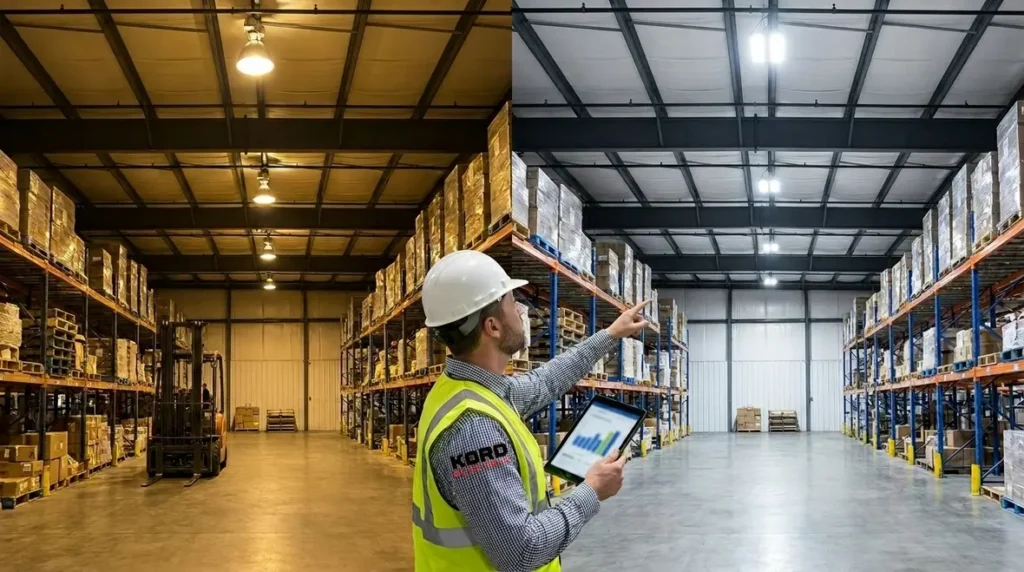
In many facilities, lighting impacts more than visibility. It affects quality checks, safety routes, forklift movement, and even how quickly employees can spot issues on equipment. When a plant runs with older fixtures and fading controls, the site often pays in three ways: higher energy use, more maintenance calls, and uneven light that makes work harder. However, a well planned industrial lighting upgrade guide helps others avoid those common traps.
First, improved light levels support inspection tasks and reduce eye strain. Next, better controls lower energy use during breaks, shift changes, and low activity periods. Finally, reliable components cut down on failed lamps and rushed repairs that disrupt production. Kord Electric focuses on commercial and industrial facilities and major property buildings, so our team plans upgrades around real site traffic, real safety needs, and real downtime constraints.
And because we are being honest here, old lighting can act like the “slow drip” joke in a sitcom. It might not look dramatic at first, but it steadily creates problems until someone finally changes it.
Start with a lighting audit that matches your process, not a template
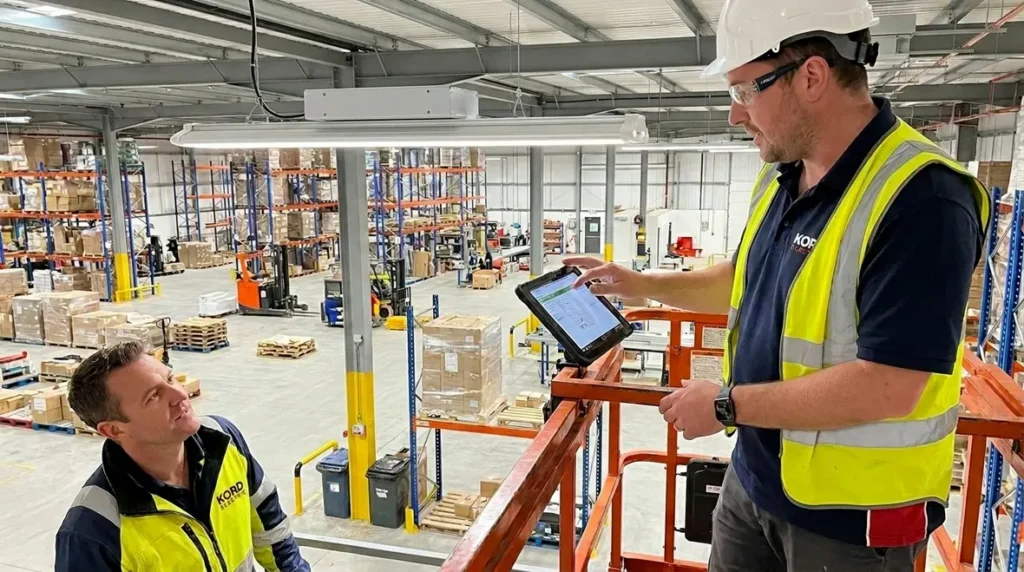
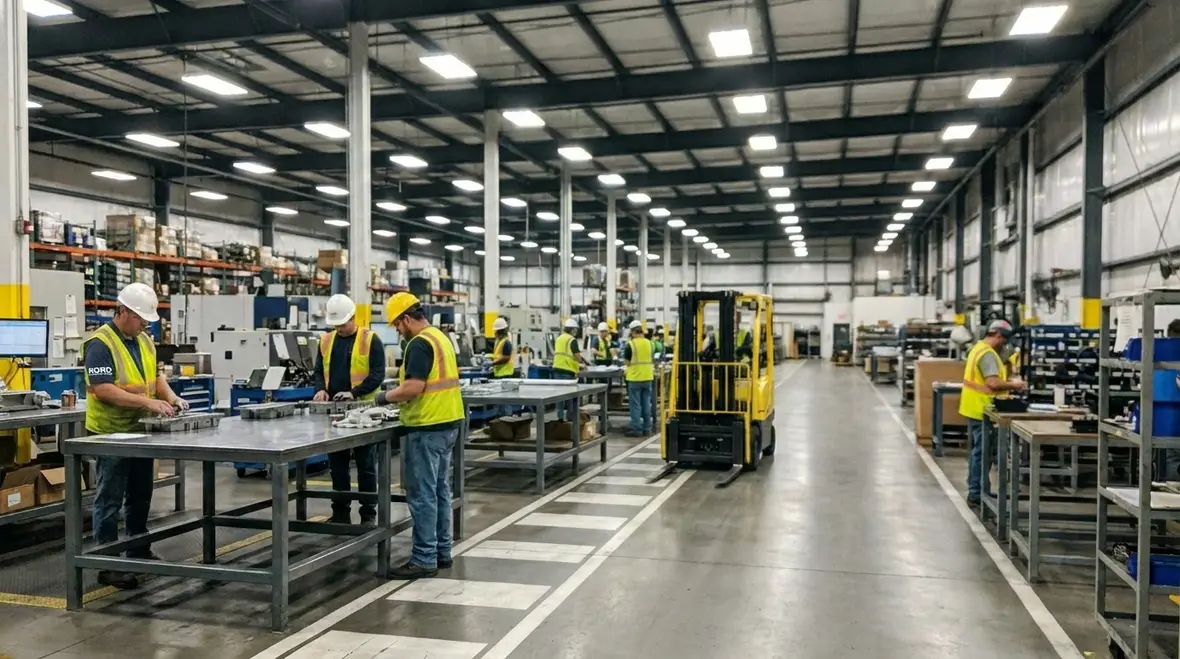
Others often ask for “brighter lights,” yet brightness alone rarely solves the real problem. Our process begins with a lighting audit that reflects how your space works. We look at work zones, traffic paths, loading docks, and areas with special tasks. Then we compare those needs to current fixture performance, spacing, mounting heights, and glare risks.
During this phase, our technicians and expert service staff explain what they find in plain language. They show where light levels drop, where reflections cause confusion, and where controls do not match occupancy patterns. Additionally, we review how the electrical system supports the lighting, because a new fixture does not help if the wiring or controls cannot deliver stable power.
From there, we build a plan with clear priorities. For example, we may target high-visibility zones first, then expand to less critical areas once downtime windows are confirmed. This step-by-step approach keeps the industrial lighting upgrade guide grounded in the actual facility schedule.

Pick the right fixtures for safety, longevity, and real output
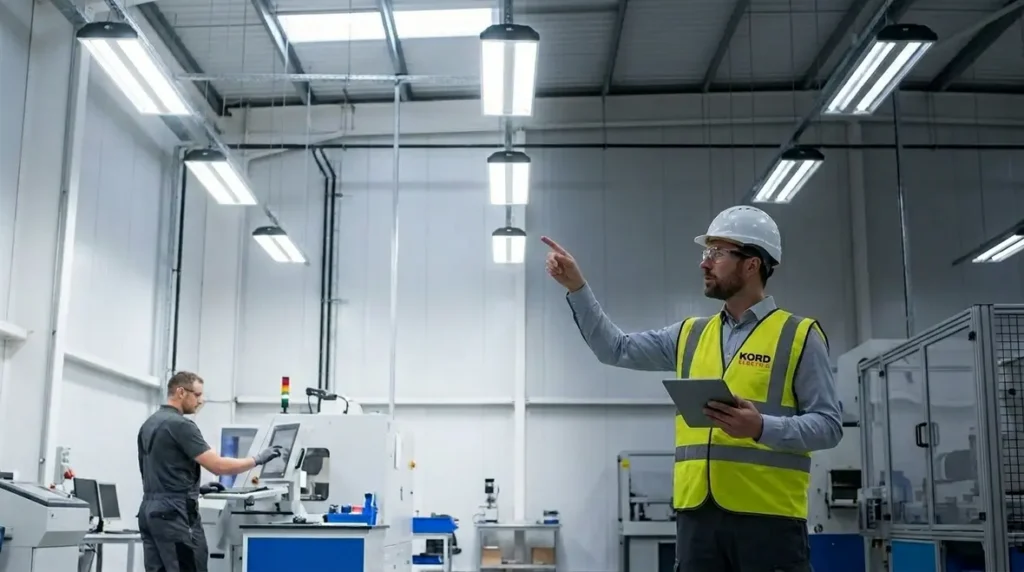
When facilities upgrade lighting, they usually face a key choice: which fixture type fits each zone. In manufacturing areas, others need consistent illumination, strong color consistency for inspection tasks, and glare control for eye comfort. In warehouses, they need performance at distance, good beam spread, and resilient housings for dusty, high traffic environments.
Kord Electric helps others select equipment that suits commercial and industrial duty cycles. We also pay attention to thermal design, optics, and ease of service. If a fixture is hard to maintain, a plant pays later through labor time and longer outages. Therefore, we aim for solutions that keep service efficient, especially in facilities where every hour counts.
Also, we do not treat every building the same. Major property buildings often include shared corridors, parking areas, and multi-tenant spaces where uniform lighting and predictable maintenance schedules matter. Our technicians account for those realities during fixture selection.

Upgrade controls so lighting follows occupancy, not habit
Lighting upgrades that only change fixtures leave money on the table. Controls decide whether a facility uses energy wisely after the lights get installed. For example, occupancy sensors can reduce light use in offices and break rooms, while time schedules can support predictable shift patterns. In production areas, motion and daylight logic can help without creating frustration for staff.
Still, controls must work with your environment. If a sensor placement misses the true activity zones, it will fail to respond when people actually need light. If the system timing ignores real shift durations, it will snap lights off too soon, and that becomes a “who turned the lights out” meme inside your own building.
Our expert service staff explains control layouts clearly during the planning phase. Then, during installation, we verify coverage and response times. As a result, others in the facility experience stable lighting behavior that supports work, safety, and energy goals.
Plan electrical upgrades and wiring updates to protect your schedule
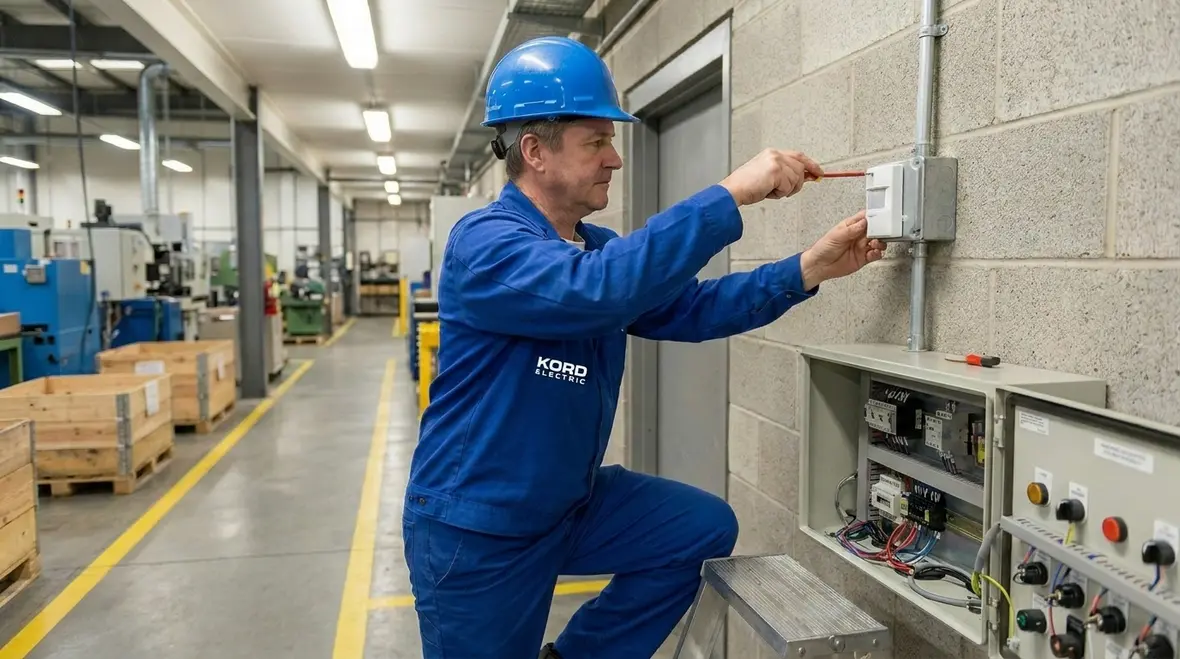
Once others choose fixtures and controls, the electrical side becomes the make-or-break factor. Old wiring, mismatched circuits, and weak panel capacity can cause nuisance outages and late-stage surprises. Therefore, an industrial lighting upgrade guide must include electrical planning, not just fixture selection.
Kord Electric evaluates the existing circuit arrangement and checks whether the system can support new loads and control devices. When we discover needs, we plan the changes around shutdown windows and production flow. We also coordinate with site leadership so the work stays safe and efficient.
We also reference our maintenance planning approach, because upgrades and upkeep must work together. If the facility has a maintenance plan, it helps keep lamp output stable and prevents small issues from turning into major failures. As our blog discusses in the context of commercial and industrial electrical maintenance plans, consistent maintenance reduces risk and helps others budget with more confidence.
Use maintenance plans to keep lighting performance steady
After an upgrade, the goal is not just to install equipment. The goal is to keep lighting performance consistent over time. Dust, vibration, and normal aging can shift light output. Even when fixtures still “work,” they can lose efficiency or create hot spots and uneven coverage.
That is why we recommend maintenance planning tied to how a facility operates. In the source provided, our company outlines how electrical maintenance plans support stability through scheduled inspections and practical service. We bring that thinking into lighting upgrades by making sure others know what to check, when to check it, and how to catch issues early.
Our technicians follow a clear routine that includes verifying connections, checking control response, and reviewing fixture performance. Additionally, we keep documentation so managers and maintenance teams can track what changed and what to watch next. Over time, this approach helps a facility avoid the “set it and forget it” myth. Lighting can be dependable, but it still needs attention.
Best-fit upgrade steps for facilities with tight downtime
- We map lighting zones to shift schedules and safety routes so critical areas get handled first.
- We stage installation so production teams do not lose access for long periods.
- We test controls and lighting response before full rollout so the site avoids daily surprises.
- We coordinate electrical updates with planned shutdown windows to protect uptime.
Yes, we plan around downtime. We do not expect your plant to run like a movie scene with no interruptions.
FAQ
Connecting lighting upgrades with broader facility planning
For many manufacturers, an industrial lighting upgrade guide is just one part of a broader reliability strategy. When a site plans lighting modernization alongside electrical maintenance and troubleshooting, the facility gains a clearer picture of panel capacity, breaker performance, and overall system health. That alignment keeps lighting from becoming an isolated project and instead turns it into one more layer of a stable electrical backbone.
If your team is also reviewing code compliance, fault risk, or power quality, consider pairing your lighting work with the same structured thinking used in other parts of your electrical system. That way, when the new fixtures switch on, they rest on wiring, protection, and procedures that are already ready for the next decade of production.
Industrial lighting upgrades as part of a bigger service strategy
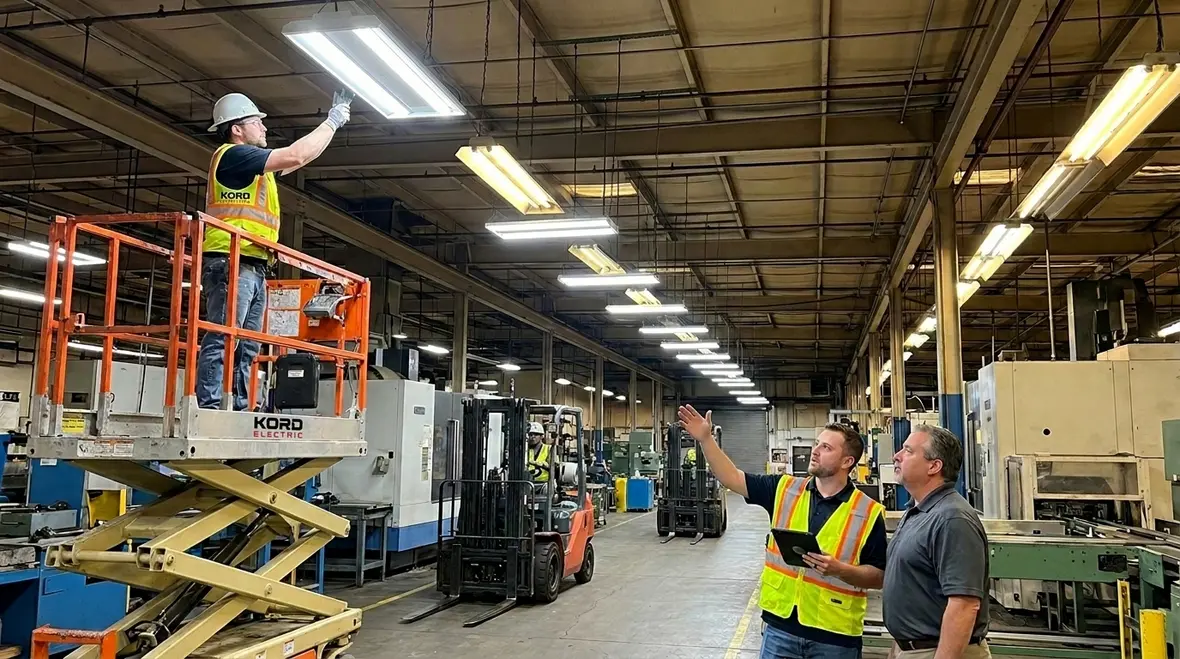
Manufacturers rarely change just one thing. A facility that is ready for a lighting retrofit is often also thinking about new machinery, EV charging for fleets, or updated troubleshooting and maintenance routines. Treating lighting as part of that larger picture helps control downtime and budget. When panel work, control upgrades, and fixture changes are all planned together, lifts, shutdowns, and inspections can be combined into fewer, better organized windows.
Kord Electric’s industrial and commercial lighting experience includes layout optimization, code-compliant installation, and long term service for plants, warehouses, campuses, and government properties. When needed, we coordinate lighting projects with other reliability work, so facilities do not face two or three separate rounds of disruption for changes that could have been bundled into one carefully managed sequence.
For facilities across the region that want one partner to handle planning and execution, our dedicated Los Angeles County electrical services support manufacturers, logistics hubs, and major properties with lighting, maintenance, troubleshooting, and upgrades that all speak the same language.
When it is time to move from reading an industrial lighting upgrade guide to actually walking the plant with a flashlight, a light meter, and a notebook, our technicians and expert service staff are ready to help. They focus on real-world constraints like shift changes, forklift routes, storage heights, and inspection requirements, not just fixture catalogs. That way, each recommendation reflects how your operation works on a busy Tuesday morning, not just how it looks on a clean drawing.
Next steps for manufacturers considering a lighting upgrade
If you are at the “we should probably fix the lighting soon” stage, start by listing your most critical zones, your tightest downtime windows, and any known trouble spots with glare, shadowing, or hard-to-reach fixtures. Those notes make an on site audit faster and more productive. From there, a structured plan can sequence work across departments so improvements roll out with minimal friction.
You can also review how similar topics are handled across other facility systems. For example, the same discipline that supports lighting installation services and preventive maintenance can guide decisions about when to replace older gear, when to retrofit controls, and when to redesign entire zones. The goal is simple: fewer surprises, steadier performance, and lighting that supports the work instead of fighting it.
Final call: Let Kord Electric upgrade your facility lighting with a real plan
If others in your organization want safer work zones, lower energy costs, and fewer maintenance interruptions, Kord Electric can help. We deliver an industrial lighting upgrade guide approach that starts with an on site audit, includes electrical planning, and ends with controls and maintenance that stay reliable. Reach out so our technicians and expert service staff can review your facility and propose next steps you can schedule. Do not wait for the lights to fail like a bad plot twist. Contact Kord Electric today.