
Commercial Electrical Load Balancing for Facilities
Better Facility Power Starts With Commercial Electrical Load Balancing
Kord Electric helps commercial and industrial facilities run cleaner, steadier power through commercial electrical load balancing. In plain terms, we make sure the electrical demand shared by different circuits stays even, so one panel does not overwork while another lounges like it owns the place. When loading is uneven, facilities see heat buildup, nuisance trips, voltage swings, and maintenance headaches that arrive right on schedule, like a sitcom rerun you did not ask for. Our approach focuses on measured loads, smart panel scheduling, and careful coordination across the building so the whole system works like a team, not like a bunch of office workers all trying to use one printer.
In addition, our experienced service staff explains what we find, why it matters, and what to change next. And yes, we will translate the electrical jargon into human language, because nobody should need a decoder ring to understand their own power.
Step One Is Knowing What Loads Are Actually Doing
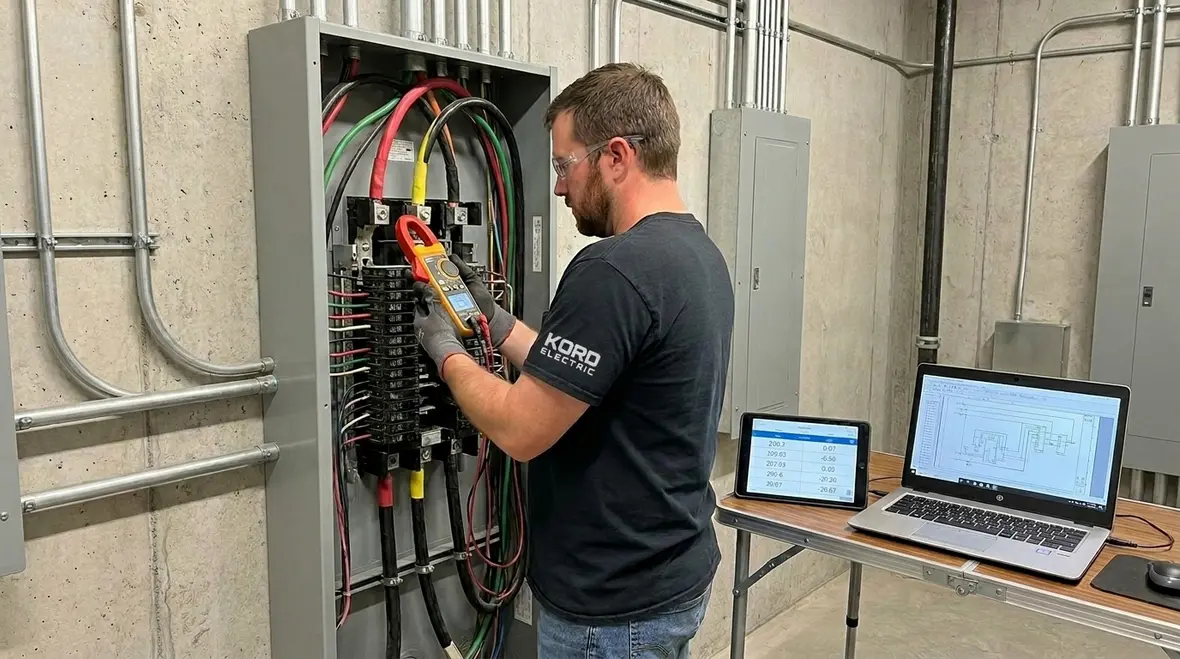
To optimize electrical performance, we start by confirming the real story of the facility. Many buildings guess based on namesplate ratings or past assumptions. However, your actual usage changes with HVAC cycles, production schedules, loading dock activity, lighting schedules, and even tenant behavior. Therefore, before any balancing work, we measure loads at the right time windows and at the right locations.
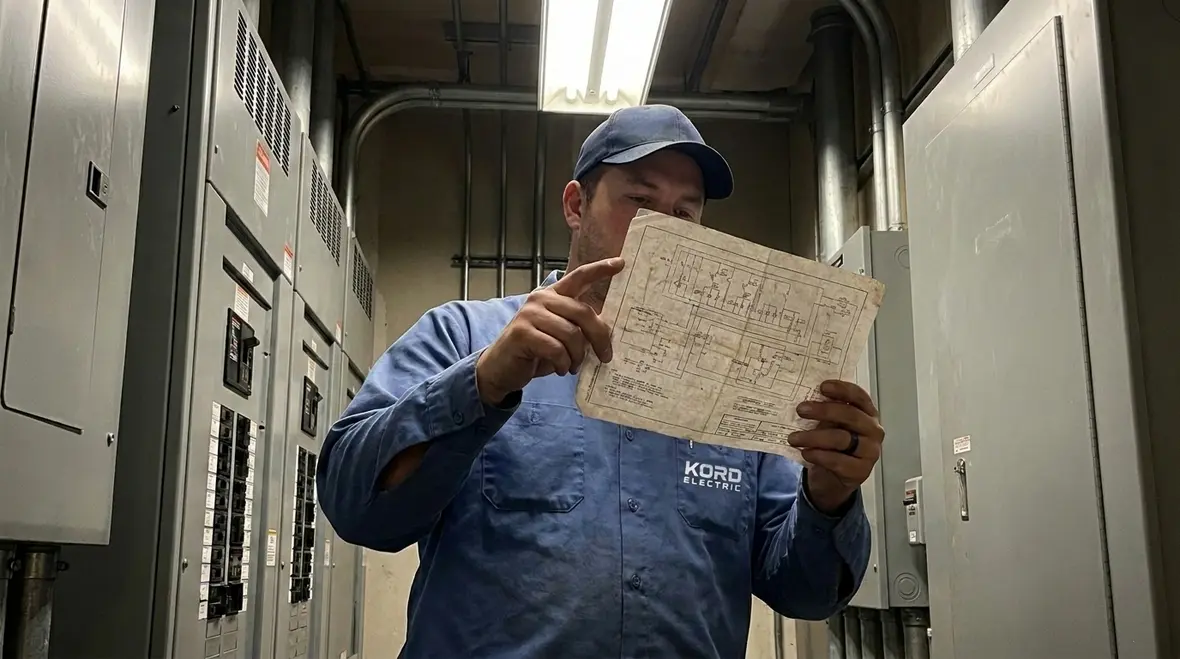
Our technicians use load data to identify patterns such as one phase carrying most of the demand during peak hours. Next, we compare panel schedules and branch circuit mapping to determine which circuits can move without creating new issues. We also look for harmonics and recurring trip events, because if a sensitive load keeps causing problems, balancing alone will not solve it. In many cases, the problem is not only how much power you use, but how consistently you use it.
Then we verify capacity and safety margins. In other words, we do not just “spread the load.” We spread it while respecting breaker ratings, conductor limits, and the service entrance capability. That is how commercial electrical load balancing turns from guesswork into an engineering plan.
Phase Balancing That Keeps the Building Comfortable and Stable
Many facility managers want stability, but stability requires phase balance in a way that matches real operating conditions. When one phase is heavier, the neutral can overheat and voltage can drift. As a result, motors run less efficiently, controls can behave oddly, and power quality issues become frequent.
At Kord Electric, we focus on balancing with a view toward performance. We identify which loads are best candidates for redistribution. For example, we often target receptacle circuits, smaller continuous loads, and non critical lighting circuits first, because they provide flexibility. At the same time, we protect critical circuits from disruption. If a building uses life safety systems, critical refrigeration, or process equipment, we treat those as fixed points in the design.
Next, we coordinate timing. Some loads spike together, such as morning start up with HVAC and lighting, while others ramp gradually. Therefore, a smart plan accounts for the building’s daily rhythm instead of only the busiest hour on paper. When the phases carry demand in closer proportion across the operating cycle, equipment runs cooler and trips become less common.
And if you are thinking, “This sounds like scheduling and not electrical,” you are absolutely right. Electrical load balancing is also operations planning, because a building behaves like a living machine. We simply give it better instructions.
Load Balancing Across Panels, Not Just at One Board
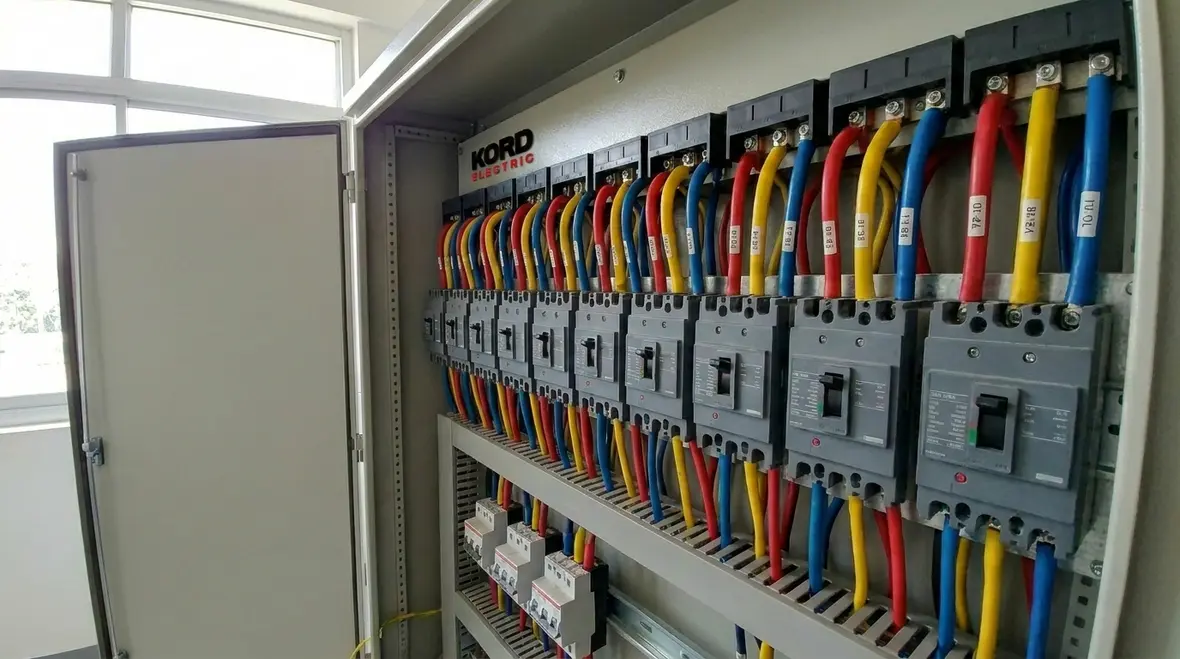
Facility efficiency does not stop at a single distribution panel. We optimize how demand flows across the building by looking at the service entrance, main distribution gear, and downstream panels. Even if one panel appears balanced, the overall system can still be strained if multiple panels concentrate load on the same phase at the same time.
That is why we map circuits and loads across the full electrical architecture. First, we confirm panel phase connections and the upstream distribution layout. Then we analyze what runs together during peak demand. After that, we plan moves that reduce phase inequality across the entire system.
In practice, we often handle three categories of improvements. One, we redistribute branch circuits where it is safe and permitted. Two, we address oversized neutrals and imbalanced multi wire branch circuits. Three, we coordinate controls and automation loads so that start up sequences do not create stacking spikes.
Moreover, we consider future changes. Many commercial and industrial buildings evolve through tenant expansion, equipment upgrades, and lighting retrofits. Therefore, we document the basis of balancing decisions so the facility team can maintain the strategy during future remodels. Nobody wants to rebalance every time a new forklift shows up. The goal is a system that stays healthy, not a one time fix.
Power Quality, Demand Charges, and Efficiency You Can Measure
Once the facility phases align more evenly, you usually see more than one benefit. We focus on outcomes that matter in commercial and industrial settings: reduced thermal stress, fewer interruptions, and improved power quality. In addition, facilities often benefit from lower energy waste because equipment operates closer to expected conditions.
However, efficiency also depends on billing and operational costs. If your utility tariff includes demand charges, then peak demand matters. Load balancing helps reduce the chance of one phase or one distribution path becoming a peak bottleneck. While the total kW still matters, managing how demand distributes can help stabilize the system and avoid unnecessary stress that triggers shutdowns or protective actions.
We also pay attention to power factor and harmonics. Some buildings add LED upgrades, variable frequency drives, or modern control systems. Those changes can alter harmonic behavior. Then even a well balanced phase can still suffer from waveform distortion. Therefore, our assessment connects load balancing with power quality evaluation so the facility does not trade one problem for another.
Here, our service staff explains the findings in a calm, clear way. We show what the measurements indicate, what we recommend, and how it ties to your daily operations. If the idea of “harmonic distortion” sounds like a villain from a sci fi movie, we will happily explain it like it is a normal part of electrical life. Because it is.
Scheduling, Safety, and Ongoing Maintenance That Does Not Disrupt Operations
In commercial and industrial facilities, you cannot simply pull power and hope for the best. So we schedule work to match production, occupancy, and critical service needs. For that reason, we plan circuit moves with careful sequencing, clear lockout and tagout steps, and proper testing before we restore operations.
Next, we verify labeling and documentation. When circuits change, technicians must preserve accurate panel schedules and wiring identification. That reduces future troubleshooting time and helps future contractors avoid guesswork. Additionally, we confirm that the equipment remains within its safe operating limits, including breaker sizing, conductor ratings, and neutral load paths. For facility teams interested in sharpening this side of operations further, Kord Electric’s electrical panel labeling best practices guide dives deeper into how clear markings support safer, faster decisions in the field.
Then we suggest an ongoing maintenance cadence. Some facilities operate with stable schedules and minor changes, while others run constant equipment turnover. So we tailor the monitoring plan based on how the building changes. In many cases, we recommend periodic checks during seasonal load shifts, equipment maintenance windows, or after major upgrades. When those reviews are folded into broader commercial and industrial electrical maintenance plans, facilities get a more complete reliability strategy instead of isolated fixes.
We also coach facility teams on what to watch. If a particular panel trips more often after certain work orders, or if HVAC sequencing changes, you might see phase imbalance return. Therefore, the facility team benefits from a simple checklist and an escalation path. We handle the technical work, and we make sure the rest of the building staff understands how to report issues early.
Using Our Solar Integration Guide Principles in Load Optimization
Facilities that add generation, such as commercial solar, need extra coordination. While solar does not automatically create imbalance, it can shift how and when power flows through the electrical system. That is why the principles from our commercial solar panel electrical integration guide matter when you plan electrical optimization.
When we evaluate integration, we pay attention to how inverter output connects to distribution, how interconnection requirements shape wiring layouts, and how controls coordinate with the grid and building loads. As a result, load balancing becomes part of the broader integration picture. We help facilities avoid surprises by considering how solar output affects load distribution during the day, especially when HVAC and industrial processes continue operating.
Furthermore, we align planning with code requirements and utility expectations. Solar projects can change short circuit behavior, grounding assumptions, and protective device coordination. Therefore, we treat the solar and the load balancing work as one system. That keeps commercial and industrial buildings efficient, reliable, and ready for growth.
FAQ
Call Kord Electric for a Smarter, Calmer Power System
If your facility experiences hot panels, nuisance trips, or inconsistent performance, it is not just “bad luck.” It usually points to uneven loading and electrical coordination issues. Kord Electric designs and implements commercial electrical load balancing for commercial and industrial buildings, then supports it with safe testing and clear documentation. Let our technicians review your panels, measure real usage, and recommend practical changes that protect your operations. For organizations across Southern California, Kord Electric’s dedicated Los Angeles County electrical services team brings this same disciplined approach to complex campuses, high rise properties, and industrial sites.
If you are planning broader upgrades that blend load balancing with solar, EV charging, or panel modernization, coordinating everything through one experienced commercial contractor helps keep the work aligned and the lights pleasantly uneventful. From field measurements to final documentation, our goal is simple: a power system that feels steady, predictable, and quietly capable every day.
Contact us today to schedule an evaluation and bring steadier power to your building. Our team will walk the site, listen to how your operation really runs, and build a plan that respects both your schedule and your infrastructure.


