

Industrial Power Capacity Planning for Growth
Kord Electric supports commercial and industrial facilities and major property buildings, and we start every planning conversation with one practical question: can your power handle what comes next? In the real world, industrial equipment power requirements rarely stay still. A new production line, an expanded data room, a renovated pump system, or more HVAC load can quietly push demand higher before anyone updates the electrical design. Meanwhile, building managers often plan around lease schedules, equipment lead times, and operating budgets, not electrical capacity. That is where our team steps in.
In this article, we explain how we assess future growth, how we forecast industrial power capacity needs, and how our technicians and expert service staff explain the process in plain language that actually sticks. And yes, we promise to keep the jargon in check. Even if your switchgear has other ideas.
Industrial Growth Forecasting for Real-World Power Demand
When customers ask us about planning for future growth, they usually mean one thing: they want reliable power without sudden downtime. We guide others through a structured review that connects business plans to electrical load. First, our expert service staff listens to what the facility plans to do, including production schedules, tenant changes, major equipment upgrades, and anticipated expansions for commercial and industrial properties.
Then we translate those plans into electrical terms. To do this well, we look at the difference between nameplate ratings and actual operating demand. Equipment rarely runs at full load all day, but it can run at peak during critical windows. Also, many sites introduce loads that behave differently than older systems, such as variable speed drives, high efficiency motors, process heaters, and modern control systems.
Because of these details, we forecast industrial equipment power requirements using load profiles, not just single point calculations. Consequently, the final result is a clearer view of future demand, which helps prevent the classic situation where the building is “almost fine” until it is not.
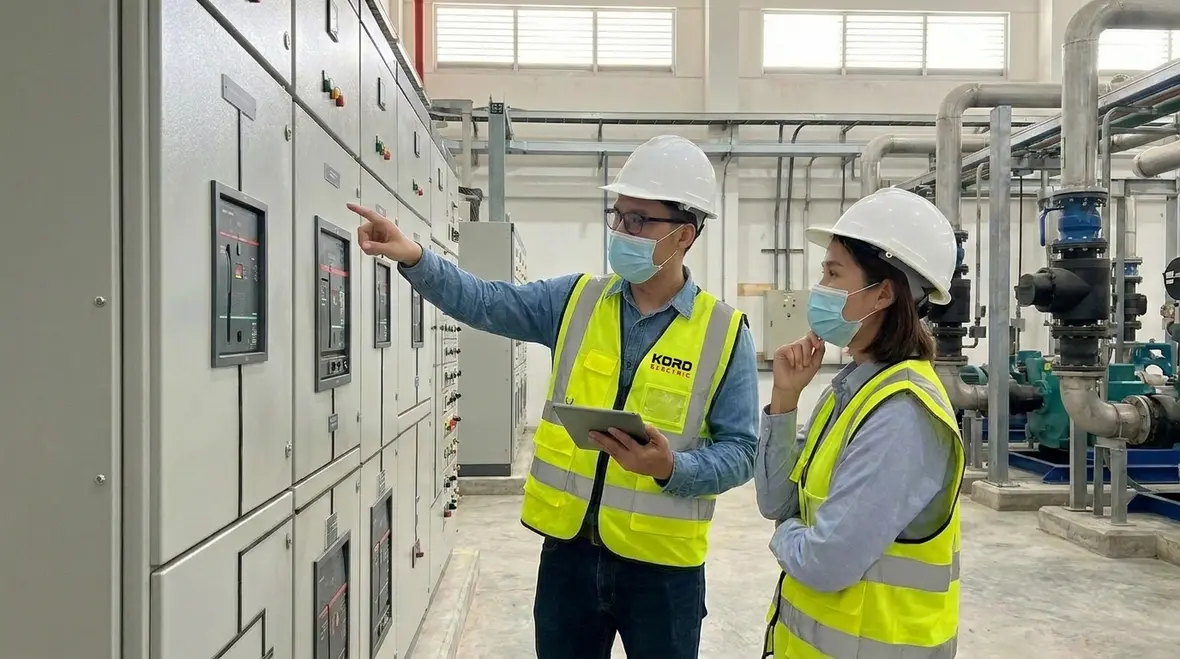
How We Assess Your Electrical Capacity Without Guesswork
Kord Electric uses a method that avoids guesswork and focuses on evidence. We start with your existing system data, including transformer ratings, feeder sizes, panel schedules, motor lists, and any measured load data. If the site has recent utility bills with demand charges, we incorporate that too. If not, our technicians can recommend targeted measurements that capture real peaks.
Next, we perform a capacity check across the distribution path. That means we examine upstream utility service limits, transformer capacity, bus ratings, protective device coordination, and voltage drop. In addition, we review power quality issues that often show up when growth begins, such as harmonics from drives and erratic loading from process changes.
At this stage, we explain findings in a calm, straightforward way. Our technicians do not just hand over a report and walk away like they were escaping an escape room. Instead, they show what constraints exist today and what limitations might appear later as load increases.
For sites that are already experiencing nuisance trips, unexplained shutdowns, or sagging voltage under load, we often pair capacity analysis with deeper diagnostics similar to what we use when investigating voltage fluctuations in commercial and industrial facilities. This combination gives a more accurate picture of how close a system really is to its practical limits.

Future Growth and Substation Planning That Actually Holds Up
Once we understand current performance, we plan for future growth at the infrastructure level. Many facilities focus on adding panels or swapping motors. However, if the utility interface, transformer bank, or distribution gear reaches its practical limit, smaller upgrades cannot solve the bigger issue.
Therefore, we evaluate options such as transformer additions, load balancing, primary or secondary rerouting, and selective upgrade of switchgear or bus systems. For major property buildings, we also consider how common area loads, elevators, life safety systems, and tenant improvements interact over time.
In this process, we keep a close eye on industrial power capacity needs. We look at both maximum demand and the typical operating range. Additionally, we plan for growth pacing, because you rarely add 100 percent load all at once. Instead, loads rise in phases, and each phase affects thermal limits, protective settings, and stability.
If a customer is asking whether a substation or service upgrade is “too early,” we help them decide based on timelines, electrical margins, and how quickly their load profile will change. We treat this like business strategy, not a random guess with a wrench.

Load Calculations and Industrial Equipment Power Requirements
Load calculation is where many plans go wrong. People rely on simplified assumptions, outdated schedules, or only the largest motor on the list. But Kord Electric builds calculations from the equipment that actually runs, and we apply appropriate diversity where it makes sense for your operation.
We also pay attention to industrial equipment power requirements that do not behave like simple resistive loads. For example, motors and drives may draw current differently at start, during ramp, and under load variations. Likewise, process equipment can introduce non linearity that affects current waveform, which then affects transformers and upstream infrastructure.
Then we check both steady state and short duration needs. Short duration needs can determine whether protective devices trip or whether bus bars overheat during repeated cycles. To keep things clear, our expert service staff explains how these impacts show up in real life, like why a facility can run smoothly for weeks and then fail during a specific production shift.
And if you are thinking, “We will just upgrade later,” we remind others that later usually costs more, because shutdown windows, coordination, and material availability never wait politely.
Phased Upgrades, Power Availability, and Downtime Control
Large commercial and industrial projects rarely allow long shutdown periods. So we design upgrades in phases that reduce risk while keeping the facility operational. That means we coordinate with your maintenance schedule, production windows, and critical systems like life safety and process continuity.
In practice, we might plan a temporary bypass, staged switching, or incremental addition of capacity. We also evaluate whether existing equipment can support the first phase with safe operating margins. As a result, the facility does not become a science experiment when the next expansion lands.
Here, our technicians play a key role. They help validate field conditions, confirm routing, inspect labeling accuracy, and confirm that equipment matches the drawings. Moreover, because our service staff understands how systems age in the real environment, we factor in wear, thermal history, and signs of stress.
That is how Kord Electric keeps growth plans on track, instead of turning a neat spreadsheet into a late night call to someone who answers with “we will see.” In power systems, “we will see” is not a strategy.
What an Industrial Electrical Capacity Review Looks Like
To make planning easier, we outline what you can expect when we start an electrical capacity review for a commercial or industrial facility. We run the process in a structured sequence so decision makers get usable answers, not vague promises.
Step we take
We review utility data, panel schedules, equipment lists, and past performance
We forecast future load growth using planned projects and realistic operating patterns
We assess distribution limits across transformers, switchgear, feeders, and protective devices
We evaluate power quality and coordination risks tied to new loads
We suggest phased upgrade paths aligned with uptime needs
What you get
A clear snapshot of how the facility behaves today
An estimate of future demand trends for your expansion timeline
Identified constraints and options to fix them
Better reliability and fewer surprises when equipment changes
A practical plan you can schedule with less disruption
Afterward, we discuss results with the people who must approve decisions. And we do it in plain language, because your operators and maintenance team deserve clarity, not a decoder ring.
For facility teams that want capacity planning to connect with long term reliability, this review can be aligned with ongoing programs like electrical preventive maintenance for commercial and industrial facilities. That way, the same system knowledge that supports daily operations also supports future growth decisions.
Common Mistakes During Power Capacity Planning
We see the same problems repeat across many major property buildings and industrial sites. First, facilities often focus on adding capacity at the panel level while ignoring upstream constraints. Second, teams sometimes update equipment lists but forget to adjust load profiles for operating changes. Third, they may overlook harmonics and power quality effects from drives and modern controllers.
Another frequent mistake is using a single maximum demand number instead of a range. Industrial environments rarely run at one level. Instead, they cycle between production, maintenance, startup, and shift changes. Consequently, the system experiences different stress patterns across time.
Finally, some organizations delay because the business side feels fine “for now.” Yet industrial power capacity needs do not wait until the next budget cycle. A power issue does not care about meeting minutes. It cares about voltage, thermal limits, and protective settings.
Our approach helps others avoid those pitfalls by connecting equipment plans to electrical infrastructure, and by using data plus careful analysis. The same disciplined mindset shows up in other areas of our work, from lighting installation services for large facilities to code-driven safety upgrades.
FAQ
Conclusion: Let’s Plan Your Next Expansion With Confidence
Kord Electric helps commercial and industrial facilities and major property buildings plan for power growth with real analysis, not guesswork. We connect your expansion goals to electrical system limits, and our technicians plus expert service staff explain the findings clearly so decisions move faster. If you are adding equipment, reconfiguring production, or upgrading tenant spaces, contact us for an electrical capacity review. We will map the path ahead and help you avoid the “too late to schedule” problem. Then everyone sleeps better, including the switchgear.
If your facility is already seeing signs of strain, or if you want capacity planning tied to an ongoing reliability strategy, our dedicated electrical preventive maintenance services are built specifically for commercial and industrial operations that cannot afford unplanned downtime.
And for properties where growth includes new infrastructure like EV charging, coordinating capacity planning with specialized offerings such as commercial and industrial EV charger installation helps ensure today’s decisions support tomorrow’s demand without surprises.


