Smart Lighting ROI Analysis for Commercial Upgrades
Smart lighting ROI analysis: how Kord Electric estimates return for commercial upgrades
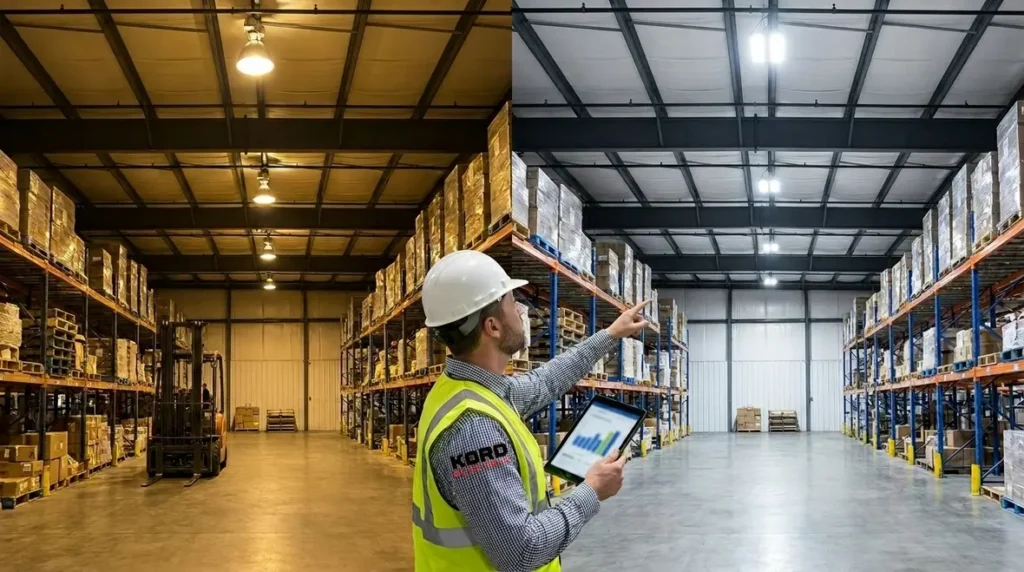
At Kord Electric, we start every smart commercial lighting project with a smart lighting ROI analysis that is clear enough for ownership, practical enough for facilities, and detailed enough for real life. We calculate the return using utility savings, maintenance reductions, and upgrade costs, then we map the payback timeline to your building schedule. Because in commercial and industrial settings, “we’ll see” is not a strategy. And honestly, you cannot run a warehouse or a multi tenant property on vibes, no matter how good the lighting looks. As our expert service staff explains during planning visits, the numbers come from what your site already does, not from generic estimates.
Step one: measure current lighting cost, not just current brightness

First, we gather facts on your existing system. We look at fixture type, wattage, operating hours, controls, and how the space actually gets used. Then we verify occupancy patterns, because a lobby that runs all night behaves differently than a manufacturing bay that runs in shifts. Next, we confirm your utility rates and any demand charges that apply to your facility. After that, we build a baseline energy model.
To keep it calm and accurate, our technicians also review maintenance records. Burnouts, re-lamps, and service calls often hide inside “scheduled” costs. However, smart lighting upgrades tend to lower those events by using longer life lamps and better control of run time. In other words, we do not just count kilowatt hours. We count the time your team spends chasing problems too.
And yes, we sometimes meet facilities managers who say the old system “feels” expensive. Feelings matter, but only after we put numbers in the ledger.
Step two: estimate savings from smarter controls and efficient fixtures
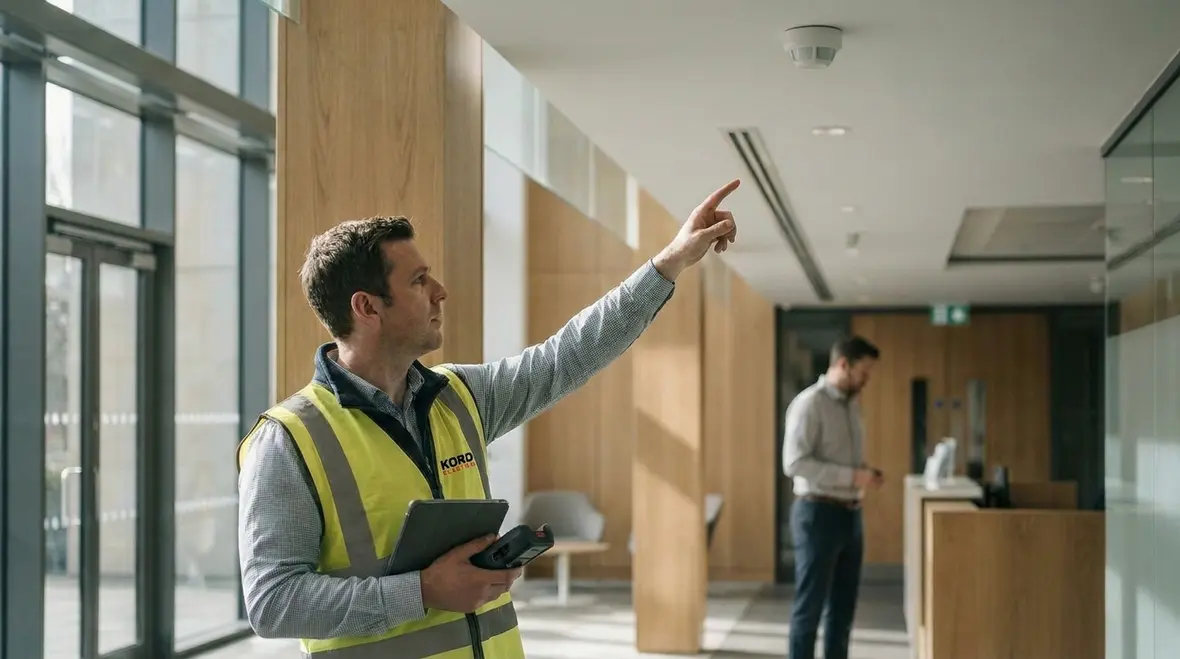
Then we move from baseline to future performance. Smart systems reduce energy use through dimming schedules, daylight harvesting, and occupancy or vacancy detection. Even when lights stay on for safety and compliance, they do not always run at full output. Because the goal is to provide the right light level, at the right time, in the right zone.
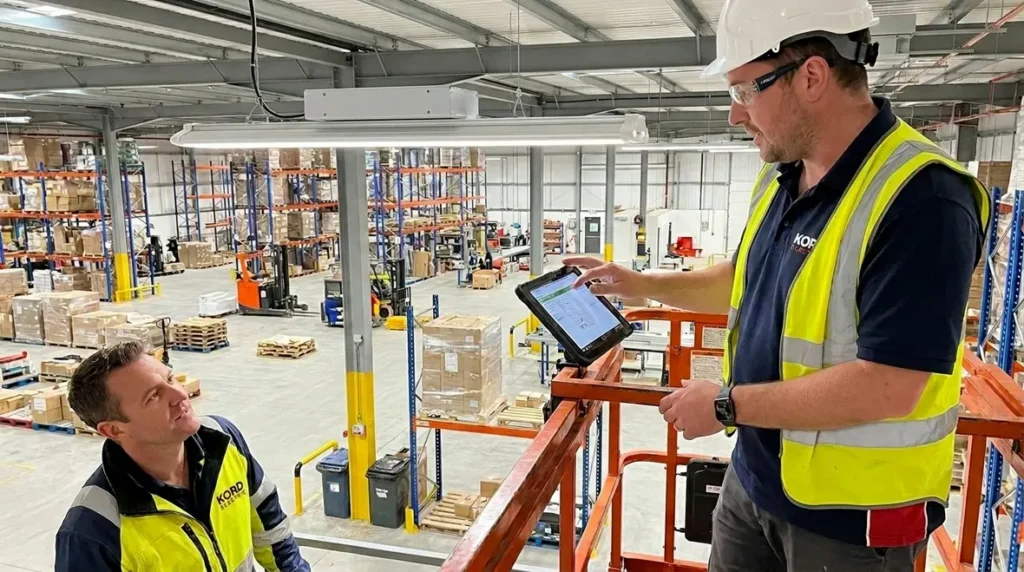
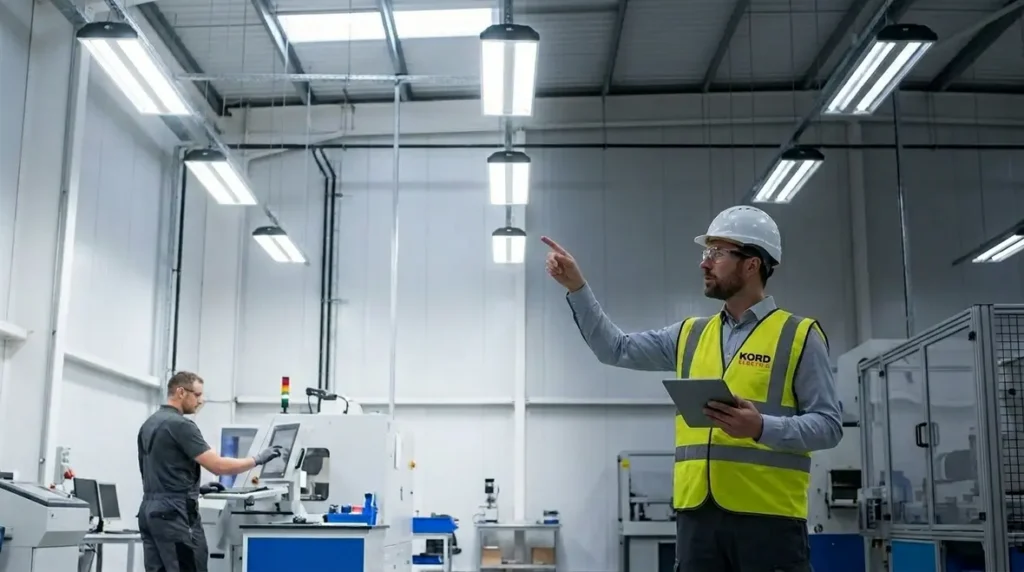
Our expert service staff explains the control approach in simple terms during site walkthroughs. For example, we help others understand how zoning works, and why sensor placement matters. If sensors sit where people do not walk, you get lights that behave like they have their own opinions. So we document mounting locations and test logic plans.
We also consider how a building’s use changes across seasons. Daylight harvesting can drive steady savings in offices and common areas, while motion based control often improves results in storage corridors and intermittently used rooms. As a result, our savings model reflects your actual operations, not a one size fits all curve.
Step three: calculate the upgrade cost for commercial and industrial realities
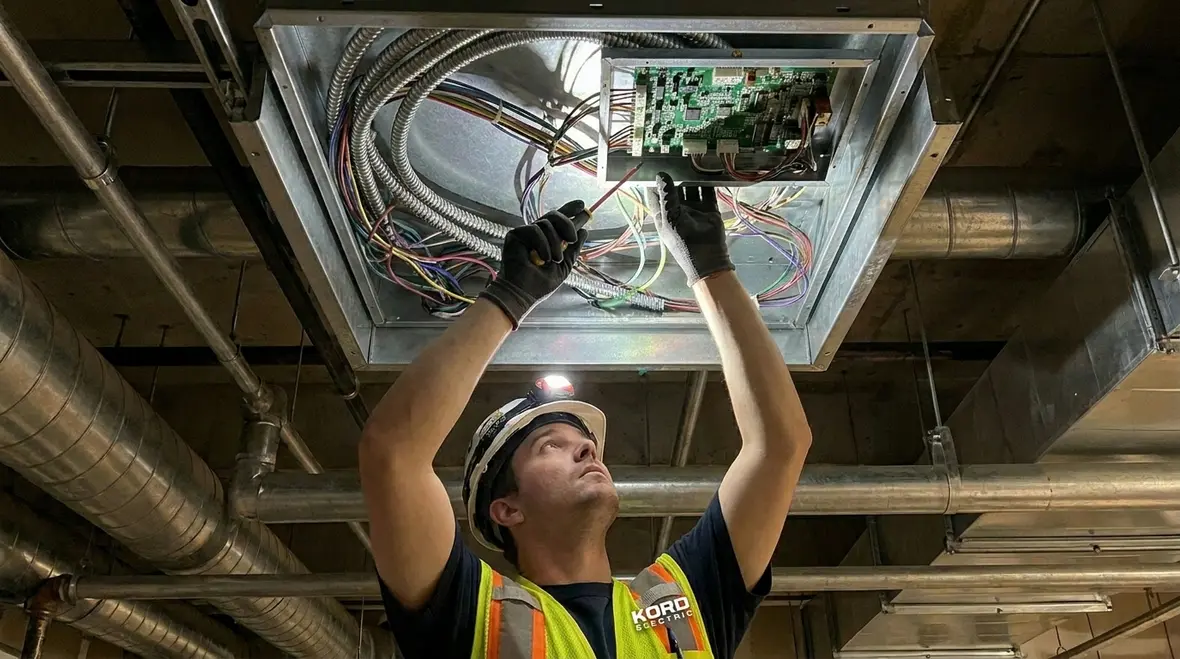
Now we estimate project costs that ownership and operations actually face. Fixture costs matter, but so do controls wiring, network components, installation labor, and commissioning. Additionally, we account for electrical upgrades that may be required when systems reach end of life or when panels and circuits need adjustments.
Since many facilities worry about electrical work, we reference practical guidance from our rewiring cost guide for commercial electrical systems. In that guide, we break down factors that influence rewiring scope such as existing wiring condition, conduit and access constraints, labor hours, and how many circuits must be updated. We explain that when a project touches older cabling or congested pathways, the cost can rise quickly, not because contractors are trying to inflate anything, but because access and labor are real variables on real sites.
Therefore, we do a scope check before we finalize the numbers. We confirm whether you need localized rewiring, new pathways, or control wiring updates. Then we build those into the total investment. This is how our smart lighting ROI analysis stays honest. No mystery line items. No “trust us” math.

Step four: run ROI with payback timing, incentives, and risk buffers
After we know both baseline cost and expected savings, we calculate ROI using a payback focused approach. We use the total investment amount and compare it to annual net savings. Then we derive payback months and a simple ROI percentage that makes decision making faster.
However, we do not stop there. We include risk buffers. For example, smart controls perform best when HVAC scheduling, occupancy habits, and maintenance access align. If a building manager plans to remodel a portion of the site mid year, we adapt the model. If facility staff expects different operating hours during peak demand periods, we reflect that too.
And yes, incentives can move the timeline. Some programs reward efficient fixtures and controls, and sometimes utilities offer rebates for qualifying projects. We review relevant options and we include a conservative range so that others can see both best case and realistic case outcomes.
In short, we treat ROI like a schedule, not like a fairy tale. We want the payback date to show up on time.
Step five: verify savings with commissioning, monitoring, and training
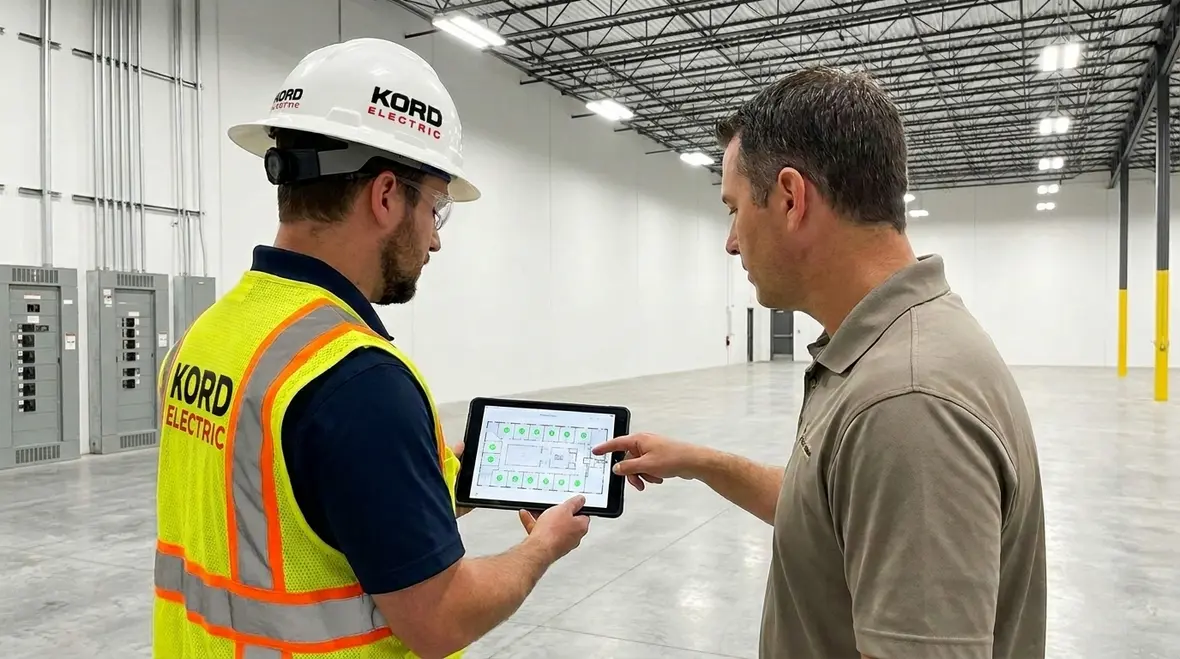
Once the hardware installs, the results depend on how the system gets set up and maintained. That is why our technicians and expert service staff run commissioning and validate control sequences. We test daylight sensors, occupancy behavior, dimming curves, and zone boundaries. Then we confirm that the lighting responds the way the plan promised.
Next, we support monitoring. Many smart systems allow reporting on usage patterns, faults, and controller health. Even when everything looks fine, monitoring helps us catch drift, dead sensors, or outdated schedules before they turn into wasted energy. As facilities evolve, we can adjust schedules without tearing down the system.
Finally, we train the right people. We explain what to watch for, how to update schedules, and how to handle service tickets. When operations understands the logic, the system stays efficient. When they do not, the system becomes another box that “someone else” manages. And in commercial and industrial environments, “someone else” has a way of disappearing.
ROI results that align with owners, managers, and tenants
We build ROI math for the people who sign, the people who run, and the people who live with the outcome. Owners care about payback, predictable operating cost, and asset value. Facility managers care about reliability and reduced call volume. Tenants care about comfort and consistency across spaces. So we map the project details to those priorities.
For example, a well planned upgrade can reduce maintenance labor by lowering relamp frequency and limiting unplanned outages. In offices and mixed use facilities, better control can improve comfort while reducing glare and hot spots. In industrial spaces, zone based control can cut energy during low occupancy while maintaining safety lighting patterns that meet standards.
And when a space has long corridors, stairwells, or multi bay layouts, smart zoning turns lighting into a system, not a set of switches. That is where many commercial teams see the strongest ROI because the building’s patterns finally match the equipment behavior.
FAQ for smart commercial lighting upgrades and ROI
Connect smart lighting ROI analysis to your broader electrical strategy
Smart lighting ROI analysis does not live in a vacuum. When a commercial or industrial facility schedules major lighting upgrades, it is often a perfect time to review the health of the underlying electrical system as well. That might include verifying panel capacity, assessing aging wiring, or planning targeted infrastructure improvements that support new controls and fixtures.
For properties considering deeper modernization work, our rewiring cost guide for commercial electrical systems walks through how building size, load requirements, accessibility, and code upgrades influence both schedule and investment. Aligning these insights with a smart lighting ROI analysis helps owners see where it makes sense to combine projects, limit downtime, and unlock stronger long term returns from every dollar they invest in electrical upgrades.
Many facility teams also pair lighting projects with structured electrical preventive maintenance so that panels, breakers, emergency systems, and lighting controls stay healthy long after the last fixture is installed. That combination turns a one time lighting project into a durable operations strategy.
Conclusion: start your smart lighting ROI analysis with Kord Electric
If you manage a commercial or industrial facility, you deserve lighting upgrades that pay back with real numbers, not guesswork. At Kord Electric, we send our technicians and expert service staff to evaluate your current system, define your upgrade scope, and deliver a smart lighting ROI analysis you can act on. Then we plan installation, commissioning, and training so savings hold after the project is complete. For facilities ready to move from analysis to action, our commercial and industrial lighting installation services provide code compliant, energy efficient solutions designed specifically for large properties.
Contact us today to schedule a site evaluation, align your smart lighting ROI analysis with your broader electrical plan, and lock in a timeline that works for your operations.