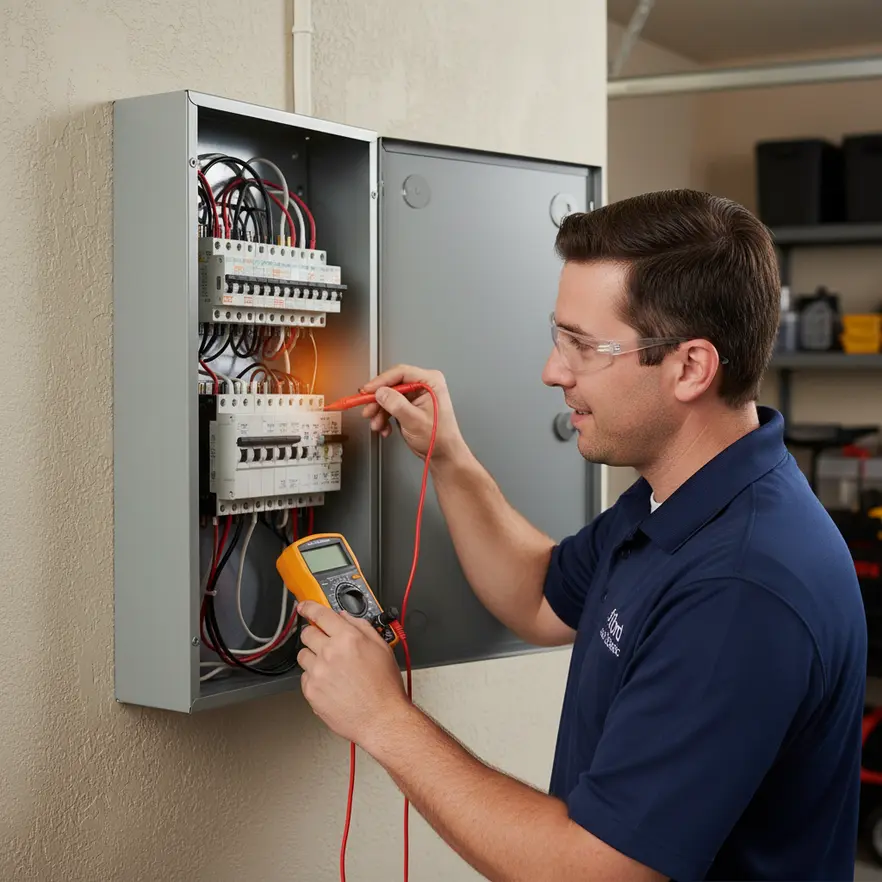
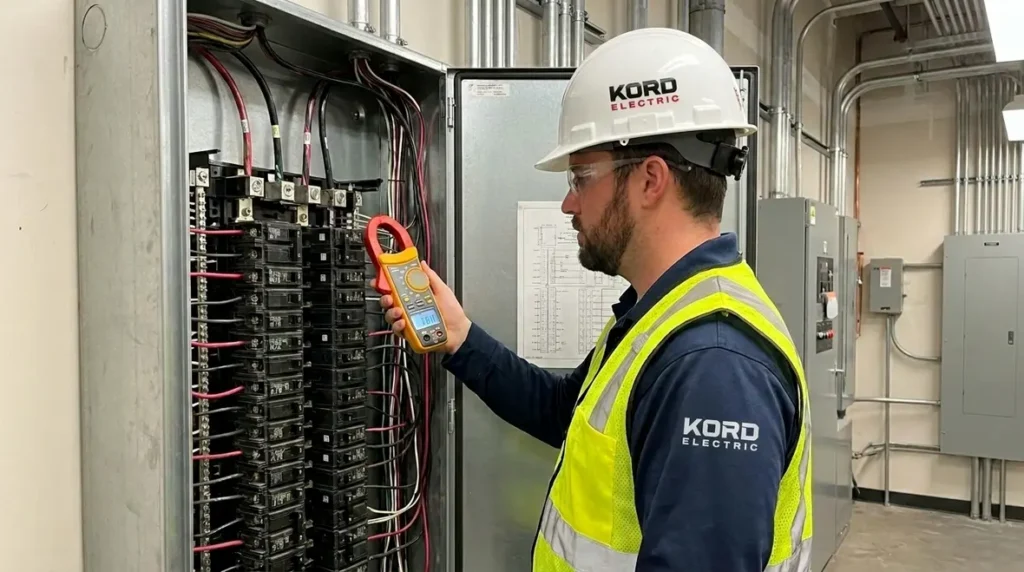
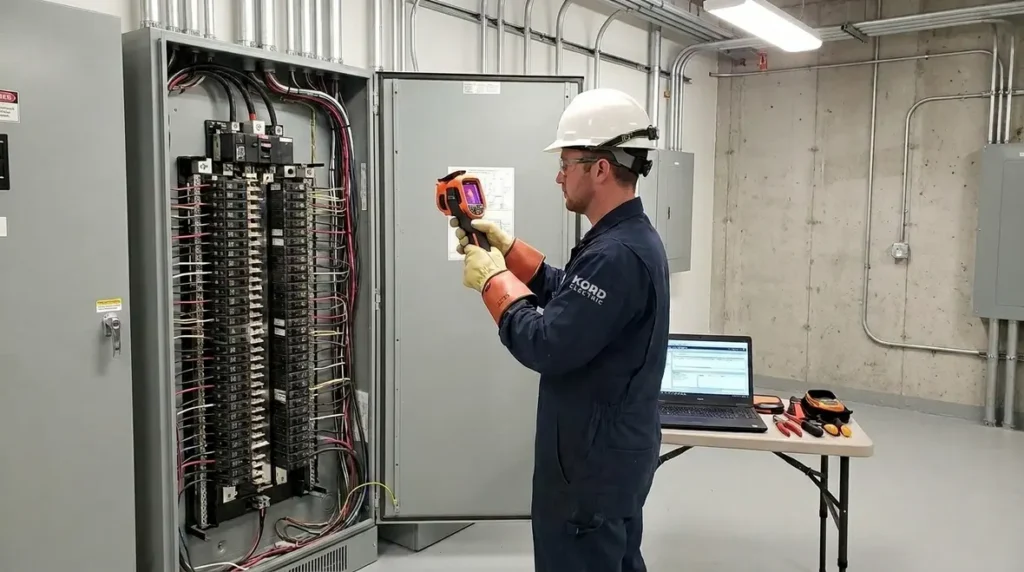
Industrial Electrical Panel Safety for Facilities
In commercial and industrial facilities, industrial electrical panel safety is not a suggestion, it is the starting point. When Kord Electric manages electrical panel systems, we treat every cabinet, breaker row, and wire path like it can either protect people and equipment or quietly fail. Therefore, our approach focuses on safe access, correct lockout steps, clear labeling, and disciplined inspection routines before anyone touches a single energized circuit. And yes, we have seen panels that look “fine” right up until the moment they do not. So we slow down, we verify, and we document. Others may rush. We do not, because safety does not care about deadlines.
What advanced industrial panel safety looks like in real jobs
Industrial electrical panel safety starts with how a site is set up before work begins. We begin by reviewing the facility map, the one line diagram, and the operating history. Then we confirm which panels feed which areas, because a mislabeled door is like a fake “exit” sign at a party. It feels helpful until you need it.
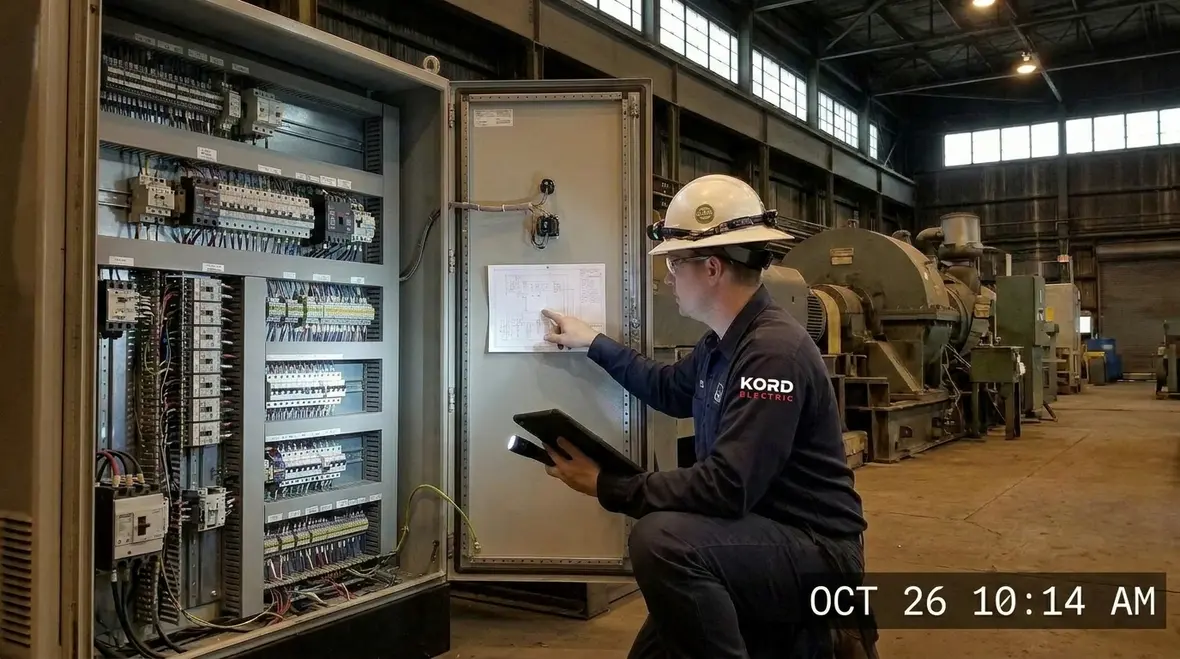
Next, our technicians build a safe work plan around the actual hazards present. For example, we look for stale torque on bus bars, signs of heat at terminations, dust buildup, and moisture exposure points. We also check whether the panel environment matches its rating, since an indoor cabinet shoved into a dusty corner can turn into a problem magnet.
At Kord Electric, we use methodical checks that reduce surprise. We verify protective device settings, inspect conductor condition, and confirm that the panel’s mechanical parts work as intended. In other words, we treat the panel like a system, not a pile of parts.
For facilities building out longer-term strategies, this disciplined panel work pairs naturally with structured programs such as Kord Electric’s commercial and industrial electrical maintenance plans, helping keep distribution equipment, protective devices, and documentation aligned over time.
How lockout and test steps prevent dangerous surprises
When people talk about electrical safety, they often focus on the “do not touch” part. However, the real control happens in the sequence. We follow a strict lockout and tag approach, and we do it in a way that matches the facility’s procedures. After that, we test to confirm the absence of voltage at the panel, not just in the mind of the person doing the work.
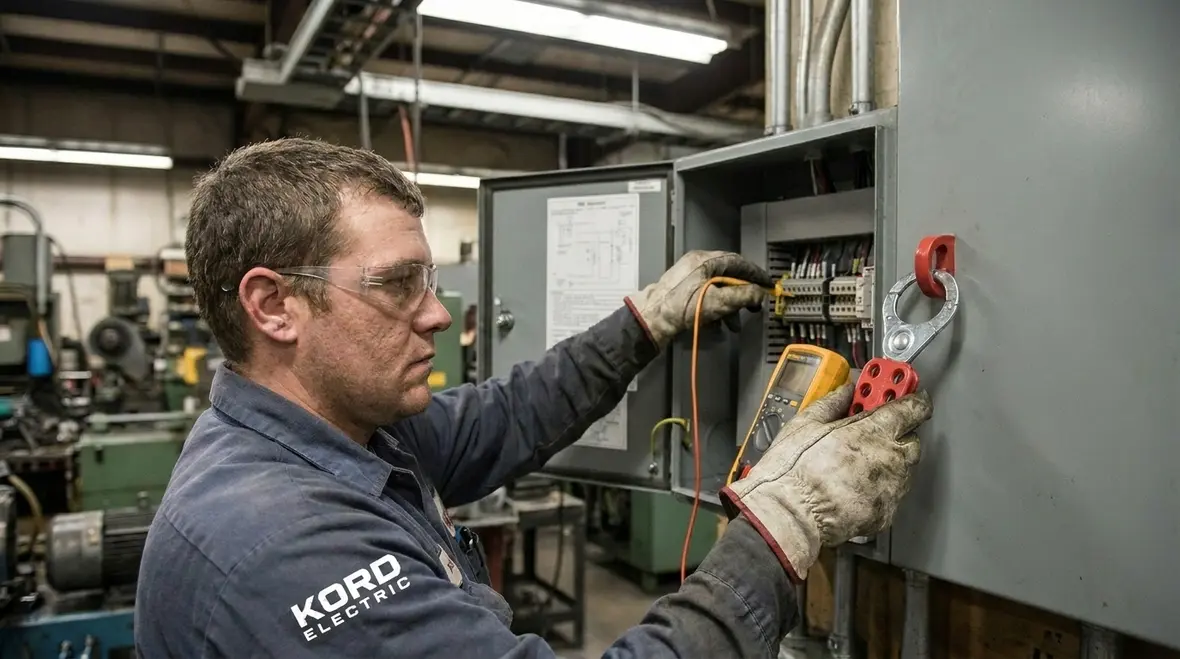
Our expert service staff explains the why behind every step. For instance, they show how stored energy can linger in components, and how test instruments must be used correctly. Then they verify that the test method fits the equipment type. This is where teams get sloppy, because they assume one test proves everything. Spoiler: it does not.
Once verification is complete, we proceed with maintenance tasks only within the defined safe boundary. We document the state of the panel before and after service so the facility team can trust what changed. Meanwhile, we keep emergency routes clear and we control access so only authorized people handle the area.
On many sites, these lockout and verification steps tie into broader preventive practices shaped by standards like NFPA 70B and Kord Electric’s dedicated electrical preventive maintenance services, giving facilities a consistent way to manage risk instead of hoping individual tasks stay safe on their own.
Maintenance plans that keep panels safe and predictable
Kord Electric does not treat panel work like a random errand. Instead, we follow commercial and industrial electrical maintenance plans that align with risk and use. Therefore, the goal becomes predictable performance, lower downtime, and safer conditions for your staff.

If your facility needs structure, our plan framework supports that. You can expect scheduled inspections, targeted preventive maintenance, and clear reporting that helps you budget and plan. Moreover, our team coordinates work windows to reduce impact on production, which matters when equipment cannot simply “take a break.”
Our approach also considers how your electrical panels age in the real world. Heavy motor loads, frequent starts and stops, and seasonal humidity can all shift the wear pattern. So we inspect with those factors in mind, not with a generic checklist that looks great but misses what matters.
And yes, we know calendars exist. Still, planning prevents the classic scenario where the panel gets attention only after the lights flicker like a bad sitcom.
For facility leaders who want a more formal roadmap, this same mindset underpins Kord Electric’s detailed commercial and industrial electrical maintenance plans, which organize inspections, testing, and documentation into a repeatable program instead of a last-minute scramble.
Inspection details that catch problems early
In industrial electrical panel safety, the smallest signs often tell the biggest story. We therefore inspect for heat, looseness, and deterioration using careful visual checks, mechanical verification, and electrical checks where needed. We also look at cable entry points, since damaged insulation at the edges can start as a small issue and grow into insulation breakdown.

Our technicians pay special attention to terminations. Loose connections can create heat that slowly damages metal and insulation. Meanwhile, oxidation can build up on contact surfaces, which raises resistance and increases the chance of failure. Because panels operate under load cycles, we check patterns that align with your workflow, not just what a camera would catch.
We also review protective devices. That means verifying break out conditions, checking labeling accuracy, and confirming the devices match the intended load. When labels are wrong, troubleshooting gets harder. And when troubleshooting gets harder, safety risks creep in. We remove those risks by keeping the panel information clean and updated.
For operations dealing with sensitive loads, these inspection routines often connect with broader services such as Kord Electric’s support for voltage fluctuations in commercial and industrial facilities, aligning breaker performance, connections, and power quality so panels support stable equipment behavior instead of feeding instability.
Labeling, documentation, and training that people actually use
Safety fails when knowledge stays in someone’s head. So Kord Electric pushes for clear labeling and documentation that works for the facility team. We help ensure panel directories make sense, circuit IDs match the one line diagram, and changes get recorded the same day they happen.
Then we train in a practical way. Our expert service staff explains how to recognize abnormal conditions and what to do when something looks off. They also help staff understand basic safe practices, like staying out of panel interiors unless trained and authorized, and keeping the panel area clear of storage.
We even address “access creep.” You know the type. A panel room starts as clean. Then someone stores pallets near the door because it is convenient. We address that early, because convenience is great until it blocks egress or increases dust and debris exposure.
When combined with ongoing inspections—such as those highlighted in Kord Electric’s guidance on hidden electrical risks in commercial buildings—this documentation and training approach gives teams real tools to spot issues instead of hoping every hazard comes with a warning label.
Special safety steps for major property buildings and busy sites
Major property buildings bring unique pressures. You might have multiple tenants, shared power paths, and critical equipment that cannot shut down without consequences. Therefore, our industrial electrical panel safety work follows a site aware method that protects people, assets, and schedules.
First, we coordinate with facility management and, when needed, tenant teams. We confirm which panels serve critical areas and which operations can pause during maintenance. Next, we use a controlled approach to access, so our work does not create hazards for others walking through the area. Then we check the panel environment for heat, airflow, moisture, and contaminants that could affect safe operation.
We also plan for continuity. That means sequencing tasks so the building stays stable, and we make sure any changes are communicated before, during, and after work. If the site has complex switching or multiple feeders, we treat the panel like a node in a larger system. We verify relationships across the distribution path, because isolated fixes can lead to unexpected behavior.
Now, if you are wondering whether this sounds like “a lot,” it is. But so is the cost of an unexpected outage. And while outages can be dramatic, we do not recommend turning your electrical system into a live reality show.
On complex sites such as data centers or large industrial campuses, this same philosophy threads through services like Kord Electric’s data center electrical distribution design for reliability, where panel coordination, maintenance access, and clear communication are all planned long before the first breaker is opened.
FAQ: industrial electrical panel safety for commercial and industrial facilities
Ready for safer panel performance? We can plan your next steps
If your commercial or industrial facility runs critical systems, you deserve a panel safety approach that is calm, organized, and proven. Kord Electric helps manage industrial electrical panel safety through structured maintenance, disciplined lockout and test steps, and clear reporting your team can use. If you want to reduce risk, prevent downtime, and keep your panels operating the way they were designed to, contact us today. We will review your setup, recommend a practical plan, and explain everything in plain language, no mystery smoke included.
When you are ready to take the next step, Kord Electric’s electrical preventive maintenance services give your facility a structured way to turn these panel safety ideas into a repeatable program, coordinated around your operations instead of fighting against them.
For facilities planning capital projects or upgrades that affect panel loading and distribution, Kord Electric can also integrate panel safety work with services such as commercial recessed lighting installation or other infrastructure improvements, making sure new circuits, loads, and layouts still support safe access, labeling, and maintenance.
Whether you manage a single industrial facility or a portfolio of major property buildings, the right time to organize industrial electrical panel safety is before the next outage, not after. The Kord Electric team is ready to help you map out inspections, lockout practices, documentation, and long-term maintenance so your panels support operations quietly in the background—the way they should.