Industrial Warehouse Emergency Lighting Design Plan
Industrial warehouse emergency lighting starts with a plan, not a panic
At Kord Electric, we design reliable emergency lighting systems for industrial warehouses using a careful warehouse emergency lighting design approach from the first site walk through to commissioning. We look at the layout, the exit paths, the risks, and even the way people move when the lights suddenly go out. Then we build a system that behaves the way it should, not the way it promises in brochures.
Because when your loading dock is dark and your crew is trying to find the exit, “close enough” turns into a safety problem. And no one wants their night shift to feel like a horror movie with better lighting. We keep it calm, controlled, and code aligned.
What Kord Electric checks before we select emergency lighting
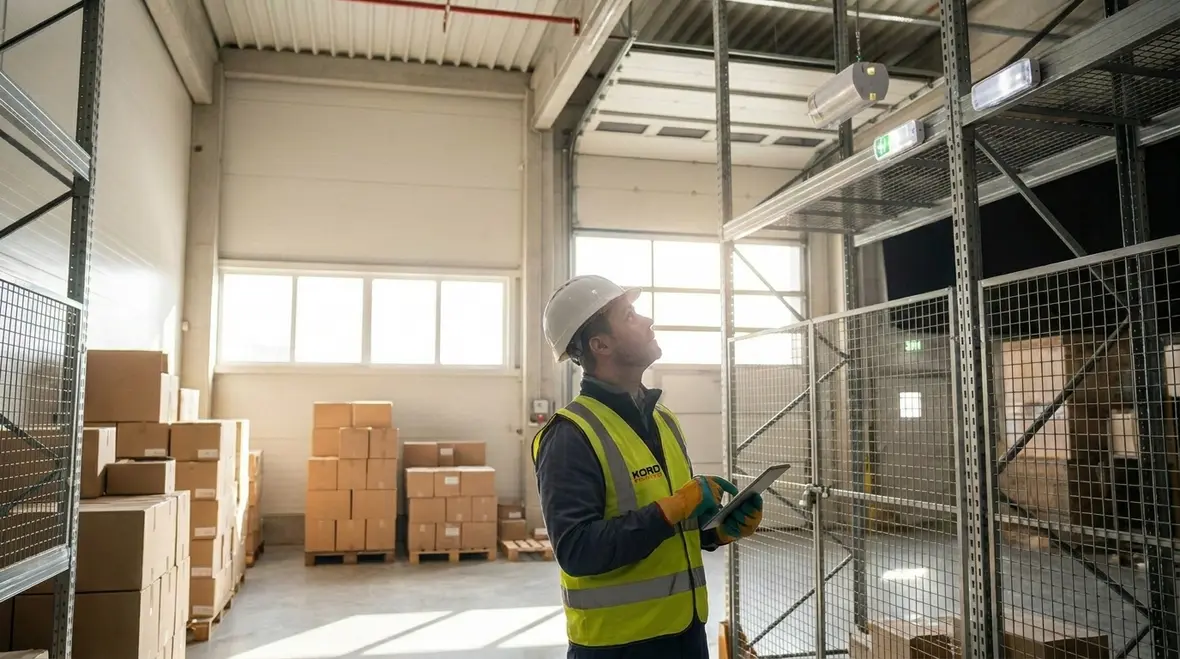
Most facilities call us after something already went wrong. However, we prefer to prevent the problem before it ever shows up on an incident report. To do that, our technicians start with a real understanding of the warehouse environment.
First, we review the life safety intent: safe egress, clear wayfinding, and dependable operation when normal power drops. Next, we evaluate obstructions such as racking, columns, staging areas, and temporary storage. Then we map travel paths that match how workers actually walk, not how the floor plan looks on paper. At this stage, our expert service staff explains the reasoning in plain terms, so the owner or facilities manager understands what they are buying and why it matters.
After that, we evaluate lighting levels. We do not just count fixtures. We also consider spacing, photometrics, glare, and mounting height. And importantly, we factor in environmental conditions like dust, moisture, vibration, and temperature swings, because industrial warehouses do not stay politely dry like office lobbies.
How we design for reliability under real site conditions
We build emergency lighting that keeps its composure during the moments that test it. That means we focus on system behavior, not just equipment selection.
In a warehouse setting, you often get rapid changes: dock doors open and close, forklifts move, pallets shift, and racks get reconfigured. Therefore, we design the system with future changes in mind, so minor layout adjustments do not break egress visibility. We also check cable routing paths for durability and protection from physical damage. If a system runs through areas exposed to forklift traffic, we plan safe routing and proper protection.
Next, we pay attention to how the emergency power source performs in the exact conditions the warehouse will create. If the normal power dips or fluctuates, the emergency system must still switch over and maintain output. That is why we also consider electrical stability topics that owners sometimes ignore until they cause downtime. For deeper context on how voltage behavior affects sensitive systems, our voltage fluctuations in commercial and industrial facilities guide walks through the risks and solutions in more detail.
When we apply that thinking to warehouse emergency lighting design, we connect the dots between theory and the floor. We plan for how transfer switches behave when the line sags, how inverters carry load when big equipment kicks on, and how emergency circuits stay protected even when the rest of the building is having a rough day. Reliability, in this context, is not a buzzword. It is a design target backed by real measurements and field experience.
Why voltage fluctuations can quietly disrupt emergency systems
Even if a warehouse emergency lighting system is installed perfectly, electrical instability can still create problems. For that reason, we look at how voltage fluctuations affect commercial and industrial power.
When voltage swings occur, some components respond slower than expected, and others may not deliver steady output. In other words, the emergency system may still run, but it may not perform the way the design assumed. Our technicians explain this with practical examples, like how certain drivers and control components react under uneven supply, especially during heavy startup loads or when large equipment cycles.
If you want the details behind our thinking, Kord Electric addresses voltage fluctuations in our commercial and industrial guidance, including the ways unstable power can affect sensitive electrical systems. You can find the reference here: voltage fluctuations commercial industrial.
Then we apply those lessons to emergency lighting design. We coordinate emergency power, ensure switching and power transfer behavior aligns with the site, and select components with the right ratings for the conditions we actually see in industrial settings.
Think of it like this: emergency lighting is the stage crew for your safety plan. Voltage instability is the actor who keeps forgetting lines. We make sure the script is solid so the crew can do their job without improvising.
Exit routes, mounting height, and visibility that holds up
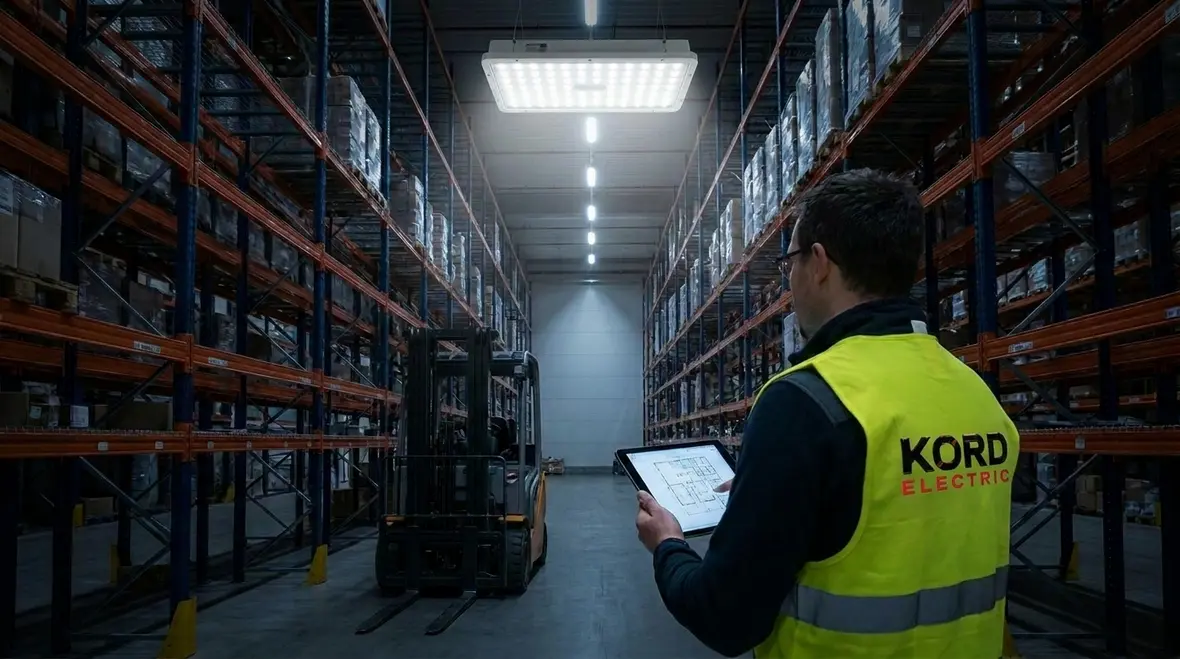
Emergency lighting has one job: help people find safe paths. So we design exit routes with line of sight and visibility in mind, especially in spaces with tall racks, dark corners, and changing reflections.
We place luminaires to support wayfinding along the full egress route. Moreover, we ensure that doors, stairs, and changes in direction receive the right coverage. We consider glare and contrast, because glossy floors and reflective surfaces can wash out light when the power is stressed.
Mounting height also matters. Therefore, we select mounting methods that maintain consistent output and reduce the chance of fixtures being obstructed by stacked materials or future equipment placement. If your facility uses mezzanines, we plan for transitions between levels so workers do not lose the exit path.
And yes, we include signage coordination when it is part of the project scope. We do it because people do not always read every label during a fast emergency. They follow the light. They follow movement cues. We engineer the full picture, not just the brightest fixtures.
For facilities planning broader lighting upgrades beyond emergency systems, our dedicated lighting installation services page explains how we handle full system design, installation, and commissioning across warehouses, campuses, and industrial plants. When emergency and normal lighting are planned together, visibility and safety stay aligned instead of competing.
System testing, documentation, and what our experts walk through
Reliability is not only what we install. It is what we prove after installation, and what we keep working over time. Because an emergency lighting system is like a fire drill you hope never to need. Still, it must work when it matters.
Our service staff explains the testing process in a way that facilities teams can manage and report. We review required inspection intervals, clarify what “functional” means on the job site, and outline what to record. Then we help teams understand how to identify warning signs such as reduced runtime, nuisance behavior, or unexpected faults.
In industrial warehouses, testing must also respect production schedules. We coordinate work around operating hours, and we plan safe access so that testing does not disrupt traffic, racking zones, or hazardous areas. That way, the system gets validated without turning the warehouse into a temporary obstacle course.
And we do not just hand over a binder and walk away. We walk through the system, explain how it behaves during power loss, and show how the components connect in a clear, practical way. Our goal stays simple: make the system understandable to the people responsible for it.
If your facility already runs a preventive maintenance program, we can integrate emergency lighting testing and documentation into that structure. Our electrical preventive maintenance services are built for commercial and industrial environments that need consistent records, clear inspection cycles, and minimal downtime.
Common mistakes we help commercial and industrial owners avoid
We see patterns. Some owners want the lowest upfront cost, then pay later in repairs, compliance gaps, or reduced safety. Others focus only on fixture count, not the full design performance. And some rely on generic layouts even though their warehouse changes throughout the year.
Here are the frequent issues we help correct before they become expensive surprises:
- Overlooking voltage stability needs, which can affect emergency output consistency under load
- Placing fixtures without full travel path analysis, leading to dark zones at turns, doorways, and stairs
- Skipping robust wiring protection, which allows physical damage from daily operations
- Ignoring future layout changes, so new equipment blocks light coverage
- Not planning testing and reporting, which creates maintenance confusion and documentation gaps
To be fair, some of these mistakes happen because the team is busy. Warehouses run on real deadlines. Still, safety systems deserve the same attention you give shipping schedules. A smooth supply chain beats a smooth exit route only until you need the exit route.
When emergency lighting is treated as an afterthought, it often shows up later as a punch list item, a failed inspection, or a “why is this dark?” moment during a real outage. Addressing design, power quality, protection, and documentation together keeps your warehouse emergency lighting design aligned with how your building truly operates, not just how it looked in the original permit set.
FAQ
Call Kord Electric for a design that stays reliable when power drops
If your industrial warehouse needs emergency lighting that performs under real conditions, Kord Electric is ready. We use our technicians and expert service staff to build a warehouse emergency lighting design plan around your layout, your electrical behavior, and your daily operations. Then we test, document, and support your team so you can meet compliance with confidence.
For many facilities, emergency lighting design is just one piece of a broader upgrade: new fixtures, better controls, and more efficient layouts. When you are ready to look at the whole picture, our Lighting Installation Services give you a direct path to coordinated commercial and industrial lighting work, from design through commissioning.
If you also suspect deeper electrical issues behind the scenes—flickering equipment, unexplained shutdowns, or voltage swings—our voltage fluctuation services for commercial and industrial facilities help stabilize the power that keeps your emergency systems ready. Pairing warehouse emergency lighting design with voltage stability work keeps both the script and the stage crew prepared for the next outage.
Call us now to schedule a site assessment and get a system designed to guide people safely, even when normal power fails.