
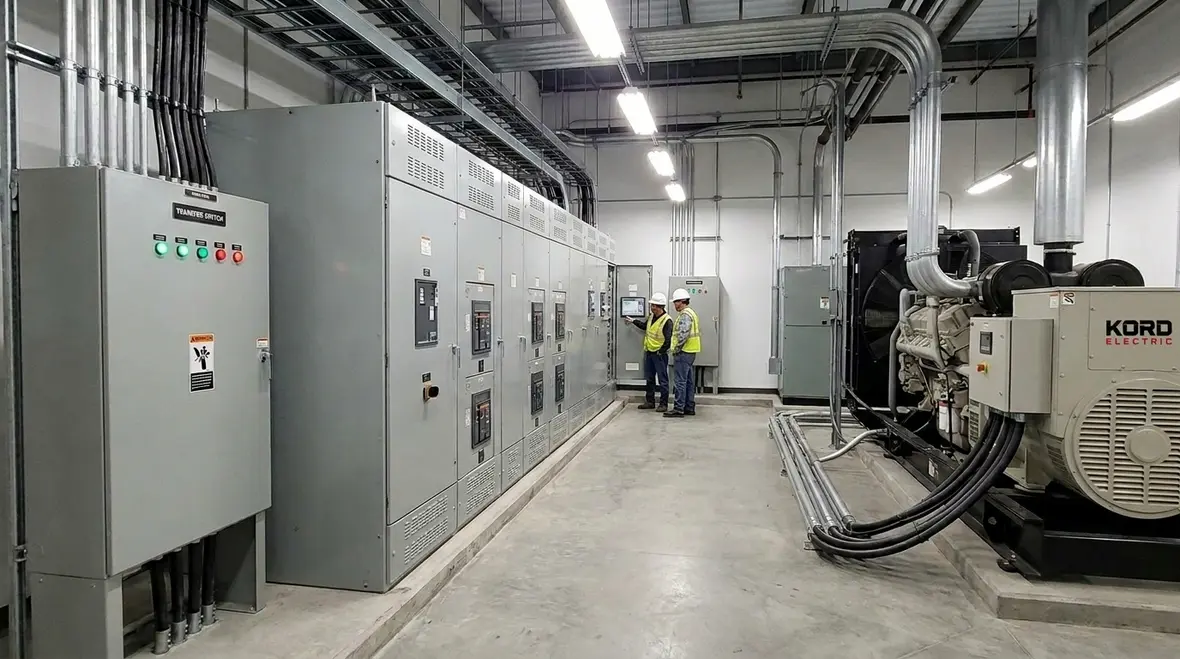
Industrial Power Redundancy Systems for Uptime
At Kord Electric, we build industrial power redundancy systems that keep critical loads alive when the unexpected hits. In many commercial and industrial facilities, power does not just need to be “on.” It must stay stable enough for processes to run, systems to protect people, and operations to avoid costly shutdowns. We guide facilities through a practical path: we assess risk, we map critical loads, and we design layered backup so one failure does not become a full outage. And yes, we know outages can feel like a surprise party where everyone forgets to invite you. So we plan for them anyway.
What critical power redundancy means for industrial uptime
Others might treat redundancy as a box they can check. We treat it as a method. Critical power redundancy systems are designed to prevent downtime when power quality, utility service, or equipment performance falls short. To do that, we plan for both “hard” failures like a transformer fault and “soft” failures like voltage dips that quietly damage drives, PLCs, and sensitive controls.
In industrial and major property buildings, you typically run systems that cannot wait for repairs. Therefore, we separate loads into tiers, then we match each tier with the right level of protection. For example, a building management system may tolerate brief disturbance, while production lines and safety controls require tighter ride through and faster transfer.
Now, here is the calming truth: redundancy only works when it is engineered for your site, not copied from someone else’s floor plan. We explain this in plain terms with our technicians on site, because our experts do not just install. They also teach. If a facility team can understand what happens during a transfer, response times improve and maintenance becomes less stressful. Nobody wants to troubleshoot while the clock is ticking.
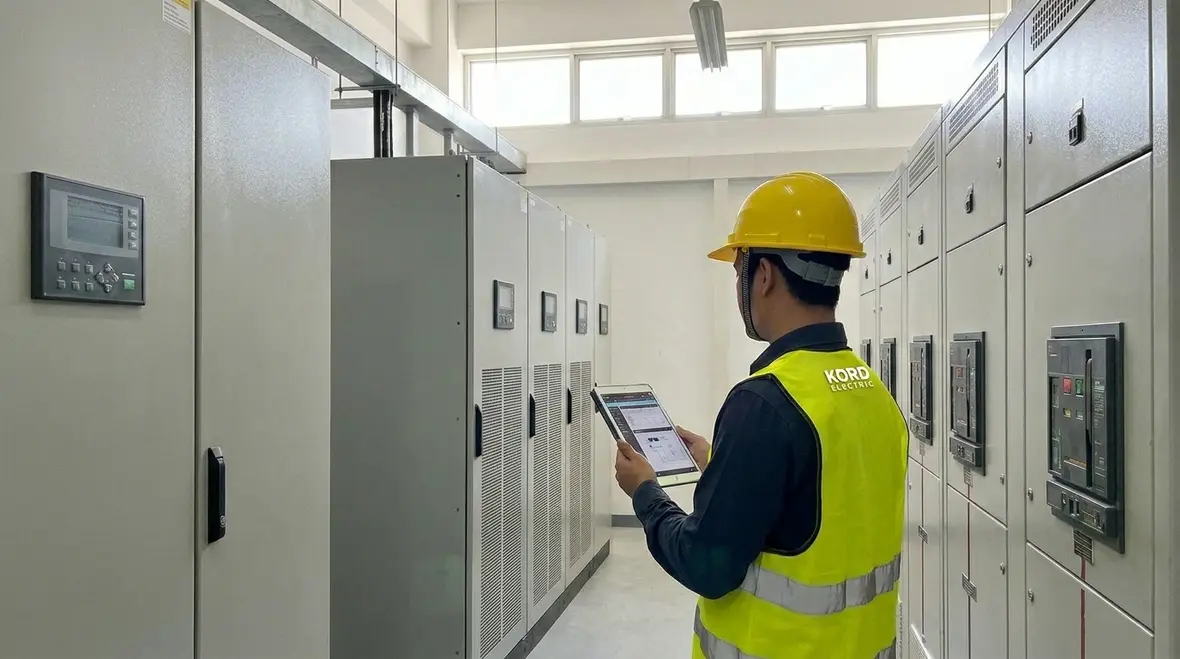
When facilities want to look deeper at how subtle issues begin, they often explore topics like hidden electrical risks and emergency power failures in commercial buildings, then connect those lessons back to how redundancy supports real uptime.
How voltage fluctuations and dips trigger real operational damage
Commercial and industrial facilities often assume a blackout is the main enemy. Yet many failures start before the lights go out. Voltage fluctuations can cause motors to draw more current, protective relays to operate, and process controls to reset. When that happens, operations can stall, scrap can increase, and equipment wear can climb. In our experience, these issues show up first in production variability, nuisance trips, and repeated resets, not in dramatic darkness.
Kord Electric supports clients with a clear approach to power quality. We reference the same fundamentals discussed in our guide on voltage fluctuations in commercial and industrial settings, because it matters. Voltage sags, swells, and flicker can interfere with the normal operation of sensitive loads. Even when the utility “recovers,” the equipment may not recover gracefully.
When an industrial facility runs critical equipment, it needs a redundancy strategy that includes both stability and continuity. Therefore, we design for the full chain: utility intake, distribution, transfer equipment, backup sources, and monitoring. Next, we coordinate protective settings so the system stops the bad fault fast without starving the rest of the plant. This is where many designs fail. People think backup alone solves everything. In reality, it is also about what happens around the backup.
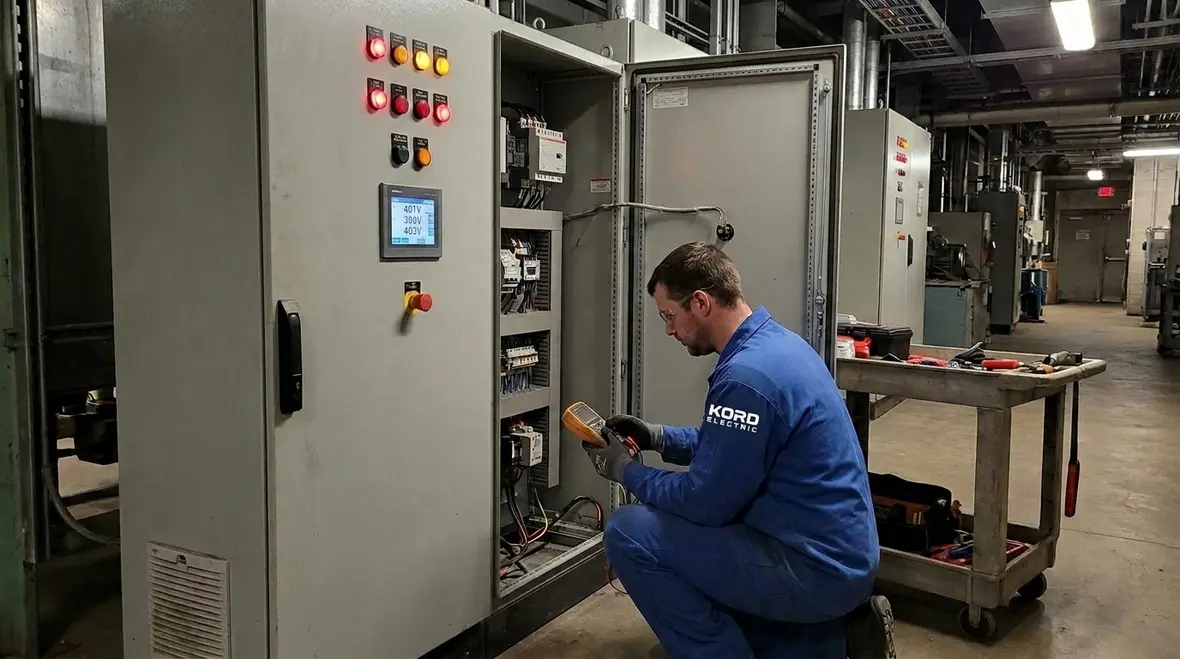
For facilities already navigating unstable service, pairing redundancy design with power quality diagnostics creates a stronger foundation than simply adding more backup equipment and hoping it compensates for every fluctuation.
Layered redundancy: utility, transfer, backup, and smart distribution
We plan redundancy in layers, because each layer covers a different threat. So when one layer underperforms, the next layer carries the weight. Typically, we build a pathway that includes the utility feed, distribution equipment, and selective transfer to backup power sources, followed by stable distribution to critical panels.
Most projects we support in commercial and industrial facilities use a combination of these elements:
- Utility feed protection and monitoring to spot unstable behavior before it becomes a trip or damage event
- Selective transfer schemes so critical circuits switch faster and non critical areas do not drain the system
- Backup generation or energy storage sized for the loads and the time you truly need
- Distribution design that routes power with the right ratings, coordination, and protection
- Load prioritization so essential systems restore in sequence rather than all at once
To keep everything practical, our technicians explain the “why” behind each design choice. For instance, when a transfer occurs, inrush current can spike. However, smart distribution and sequencing can prevent a second failure. Also, good monitoring reduces guesswork. Instead of guessing what failed, your team sees the event, the duration, and the affected loads. It is the difference between reading tea leaves and reading a log file. One feels mystical. The other feels like work, and work is good when it is correct.
Where facilities want to extend that reliability into day-to-day operations, structured programs such as electrical preventive maintenance help keep the same redundant pathways healthy long after the installation is complete.
Single points of failure we remove before they become expensive
Even strong industrial power redundancy systems can fail if a design hides single points of failure. We reduce that risk during our assessment and build review, and we help facility teams understand where the weak links tend to hide.
Some common trouble spots include:
- Unprotected control power where a contactor or transfer controller loses control voltage during an event
- Improper bypass arrangements that make maintenance risky or slow
- Oversized or poorly coordinated protective devices that trip when they should isolate
- Switchgear and wiring paths that create unintended dependencies across areas
- Backup sizing mismatch where the generator or storage can start, but cannot sustain
Then there is the human factor. People can inherit systems without the knowledge to maintain them. That is why we emphasize documentation and training. Our expert service staff helps others understand transfer modes, alarms, test procedures, and what to look for during inspections. Consequently, the system stays reliable, not just installed.
We also run design checks against realistic load behavior. Motors behave differently at startup than at steady state. Likewise, drives and automation loads may respond to power quality changes in ways that create unexpected stress. Therefore, we review load lists, duty cycles, and measured behavior when possible. If we cannot measure, we plan conservatively so the system does not rely on guesswork.
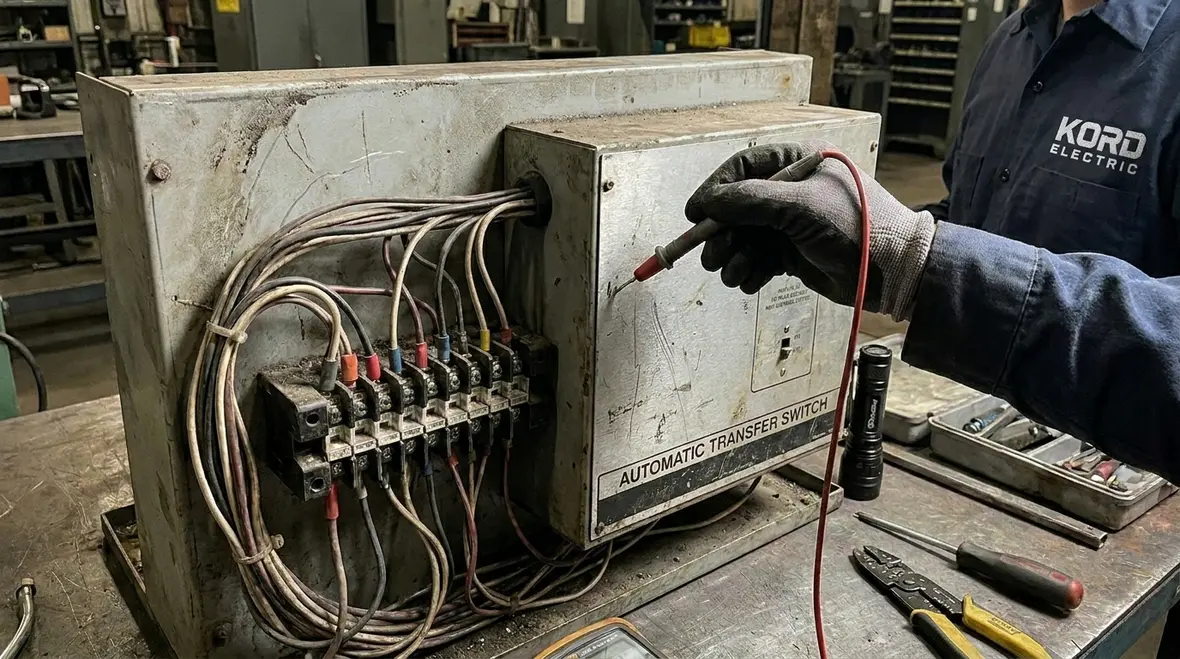
For commercial portfolios where risk keeps growing, broader planning around commercial and industrial electrical maintenance plans can work alongside redundancy upgrades to keep those single points of failure from quietly returning.
Designing for reliability without stopping your business
Industrial and major property buildings rarely have the luxury of a full outage for construction. So we build plans that reduce downtime and keep your site running during commissioning. That means we phase work, coordinate outages, and define fallback plans before any contractor touches a single breaker.
Our team works with facility leadership and on site operations so the schedule matches the reality of production. As we implement redundancy, we also verify performance through testing and commissioning steps that confirm transfer timing, protection coordination, and startup sequencing. In other words, we do not just flip switches and hope. We validate.
In many facilities, the best reliability comes from smart integration. For example, we may use monitoring that links to building systems so operations can see what happened during an event. Then, maintenance can act quickly. Also, good commissioning reduces future nuisance alarms, which otherwise become background noise nobody respects. And once nobody respects alarms, that is when the important ones get ignored. Like a smoke detector that has been chirping for three months. Someone will eventually stop it. Hopefully they stop it before the fire.
When it comes to commercial and industrial facilities, Kord Electric focuses only where it counts. We help critical environments in the places where power affects safety, processes, and tenant operations. We do not spread attention thin across unrelated sectors.
For organizations across Southern California that want a partner who understands both uptime and real-world constraints, Kord Electric’s Los Angeles County electrical services bring that same focus to regional campuses, industrial parks, and major property buildings.
Maintenance, testing, and training that keeps redundancy honest
Redundancy is only as good as its readiness. A backup source that never gets tested can fail at exactly the wrong time. So we support a maintenance strategy that includes periodic inspections, functional tests, and load based checks where appropriate.
We recommend that facility teams treat these steps as part of normal operations, not as a last minute repair cycle. Our expert service staff helps clients set expectations and understand what each test proves. For instance, a transfer test validates the control sequence and switchgear behavior. A generator test verifies startup performance. A power quality check helps confirm that distribution still maintains the stability your equipment expects.
Furthermore, we guide staff on how to respond during events. When an alarm triggers, operators should know which systems can be restored first and which ones should wait for safe conditions. Our approach aims for clarity and calm. If your team understands the sequence, stress drops, and response improves.
And yes, we also laugh a little. Because if we cannot keep the process human, then the system will feel like a haunted house. Reliable power should feel like a steady heartbeat, not like you are waiting for the next jump scare.
For sites that want a clear framework, pairing industrial power redundancy systems with services like emergency electrical services and ongoing preventive maintenance turns uptime into a disciplined practice rather than a hopeful wish.
FAQ: Industrial power redundancy systems for commercial and industrial buildings
Ready to strengthen your critical power uptime
If your commercial or industrial facility depends on uninterrupted operation, Kord Electric can help you build and maintain industrial power redundancy systems that are engineered, tested, and understood by your team. We start with a clear assessment, then we design the right layered protection for your critical loads and power quality needs. After installation, our expert service staff supports training and testing so redundancy stays reliable, not theoretical. Contact Kord Electric today to schedule a review and move from worry to confidence.
When you are ready to align redundancy with long-term maintenance and real-world operating conditions, exploring services such as preventive maintenance, voltage fluctuation diagnostics, and regional industrial support turns today’s project into tomorrow’s uptime advantage.


