
Data Center Power Reliability Design Guide
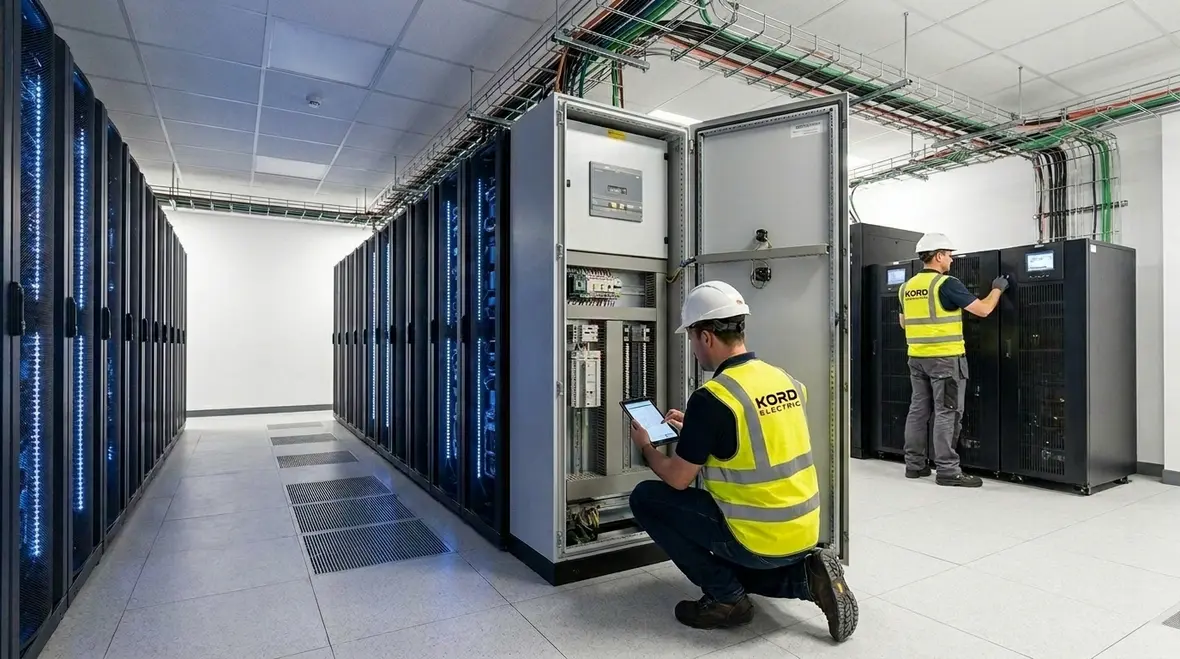
Kord Electric helps commercial and industrial teams protect data center power reliability by designing electrical infrastructure that stays steady when everything else gets loud. Others may treat power as a “nice to have,” but our approach treats it like a foundation that must hold under stress. We plan for failures before they happen, and we coordinate the entire electrical path so the lights do not flicker and the servers do not panic. In this guide, our technicians and expert service staff explain what we build, why it works, and how we keep critical loads supported through storms, maintenance, and real-world wear.
Electrical architecture that keeps critical loads steady
When owners ask how we maximize reliability, we start with the system design choices that influence every outcome. First, we map the full power path from utility intake to switchgear to distribution and finally to the critical loads. Then we decide how much redundancy the facility needs based on downtime cost, IT workload profile, and expansion plans. At Kord Electric, our experts review single points of failure the way a calm air traffic controller reviews flight paths. Nobody wants drama, and nobody needs surprises.
Next, we shape the electrical architecture to reduce risk. We use selective coordination strategies so faults get cleared locally, not across the entire building. We also design switching and transfer logic so loads move between sources without a chaotic shuffle. In plain terms, we make the power behave like a disciplined team, not like a group chat with too many opinions. If you have ever watched a movie where the generator fails at the worst moment, then you already understand why this matters. We design so that “worst moment” never gets its cue.
Redundancy, separation, and why one failure should not spread
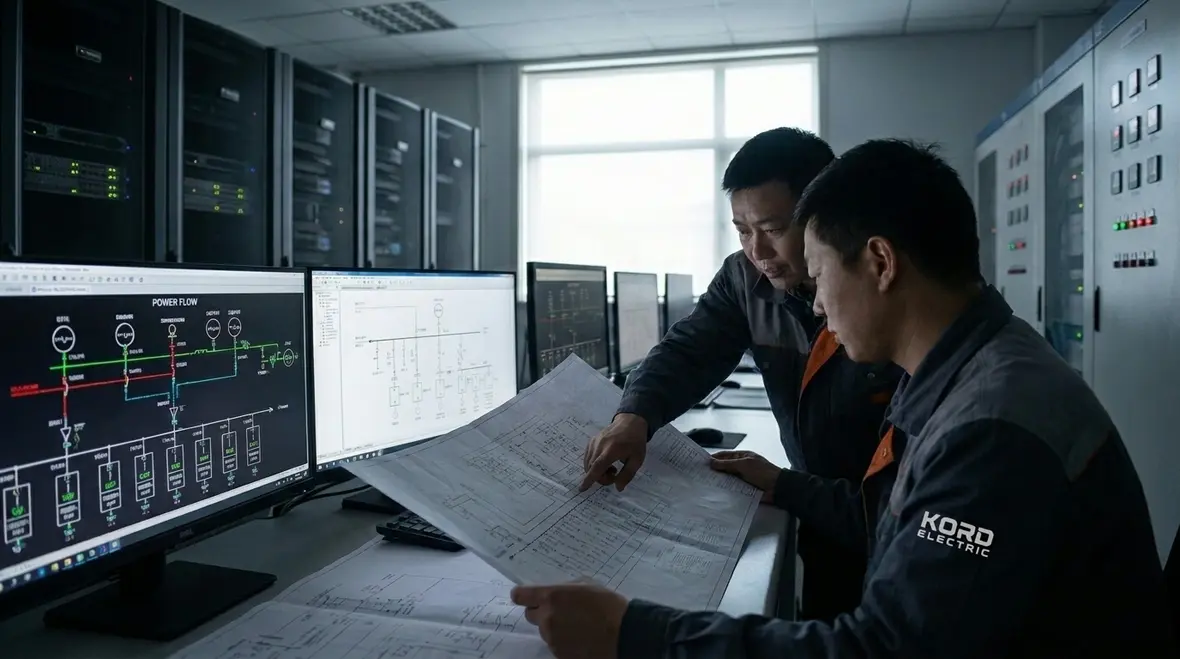
Data center and major property electrical systems fail in patterns, not in one-off events. Therefore, we build redundancy with separation in mind. That means isolating critical circuits and keeping pathways independent where possible, so a single fault does not travel like gossip through an office. Our technicians explain this as physical and electrical segregation, not just repeating equipment names on a one line diagram.
We consider how cables route, how rooms are compartmentalized, and how bus ties and bypass paths are arranged. In addition, we evaluate how maintenance affects uptime. If the facility needs to service a component, we ensure the design supports safe maintenance without forcing a full outage.
Also, we plan for load behavior. Some loads start hard, some need clean power, and some require stable transfer times. We account for those differences so the system does not “meet specs on paper” and then disappoint during real operation. In our experience, this is where strong data center power reliability practices show up: not just in the presence of backups, but in the way the whole system behaves under stress.
UPS and generator coordination for real-world ride through
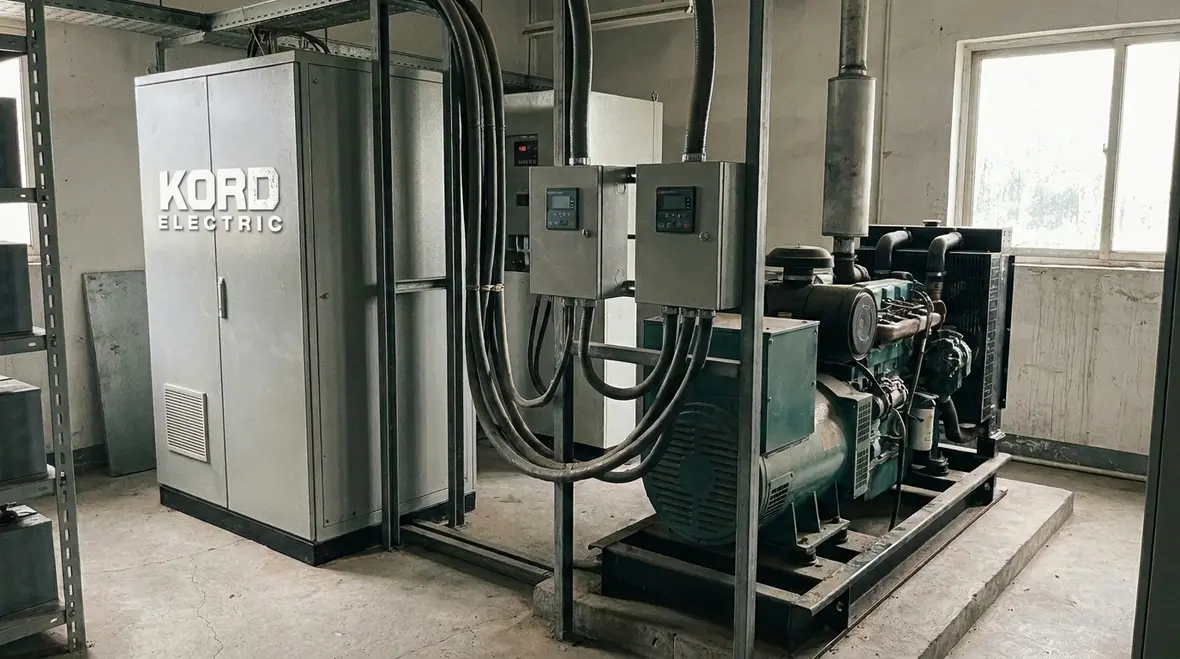
Many teams purchase backup power and assume the story ends there. We disagree, and our expert service staff makes that clear during walkthroughs. UPS systems must coordinate with transfer switches, generators, and distribution so the facility achieves ride through when utility power dips or fails. If you do not coordinate these stages, the UPS may cover the gap, but the transitions can still create interruptions or stress.
Therefore, we coordinate in three dimensions. First, we confirm transfer timing and logic. Second, we verify how the UPS interacts with downstream loads and bypass systems. Third, we validate how generators ramp and stabilize so the UPS does not end up acting like a short-term life raft for a long-term storm.
We also check how harmonics and power quality requirements affect sensitive loads. A system can transfer successfully yet still cause equipment stress if the waveform and stability do not meet the facility needs. Our technicians handle this with measured reviews and targeted adjustments where appropriate.
If you want a deeper dive into how upstream design choices affect ride through and transfer behavior, Kord Electric’s Data Center Electrical Distribution Design for Reliability article explains how selective coordination, redundancy, and maintenance planning work together long before the first UPS goes online.
Switchgear, bus design, and protection that actually clears faults
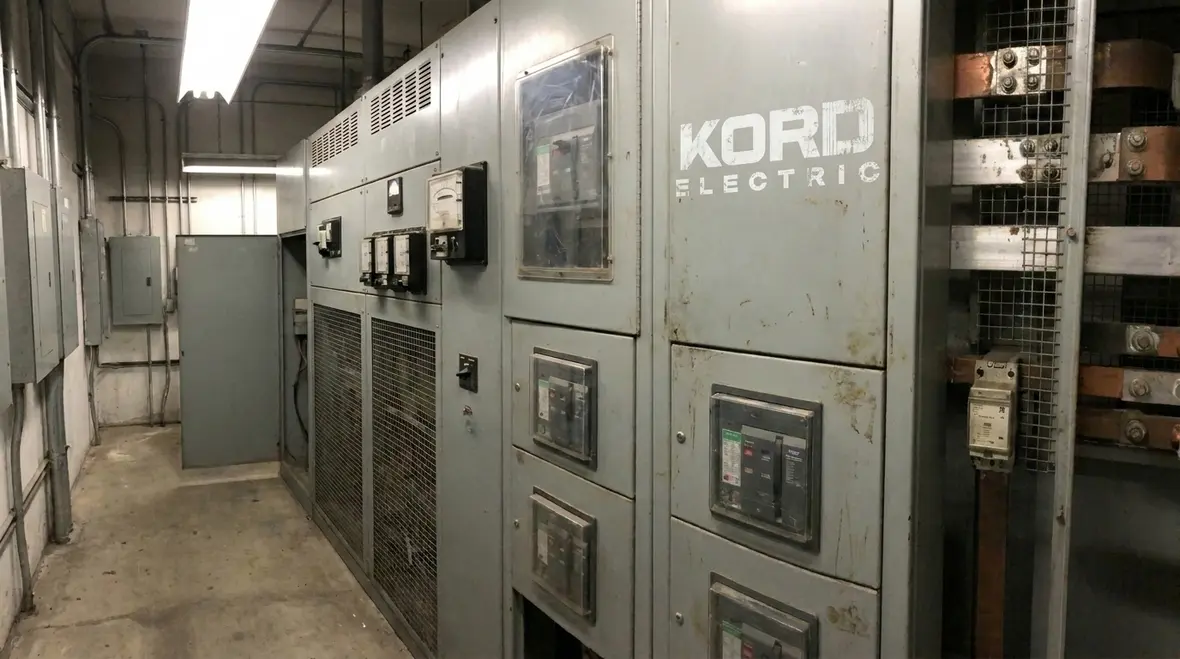
Switchgear and protective devices decide how fast and where a fault ends. So we design fault clearing paths with discipline. Our team focuses on selective coordination so a fault on one branch does not trip upstream sections that feed areas you cannot afford to lose. In other words, we want the smallest blackout, not the biggest one.
We review bus design, breaker ratings, and thermal and mechanical stresses. Then we align protective settings to the specific equipment and cable characteristics. This prevents “guess and check” tuning that can leave gaps when conditions change. Additionally, we consider arc flash hazards and operational safety, so technicians can work without unnecessary exposure.
Our expert service staff also explains test and inspection practices that keep protection reliable over time. Equipment does not stay perfect just because it shipped perfectly. Therefore, we build maintenance routines that verify performance and keep the facility within expected behavior, which directly supports data center power reliability outcomes.
For facilities that want structured preventive practices around breakers, switchgear, and downstream distribution, Kord Electric’s electrical preventive maintenance services outline how disciplined testing and inspections extend the life of critical infrastructure and reduce unexpected outages.
Power quality and grounding: the calm parts that prevent loud failures
Even when the lights stay on, power quality problems can harm equipment, shorten component life, and create intermittent faults that take forever to diagnose. That is why we treat power quality and grounding as core design elements, not afterthoughts. Our technicians explain that “clean power” is not a slogan; it is a set of measurable conditions that influence how rectifiers, drives, and power supplies react.
We address grounding and bonding so fault current paths behave as intended. We also review shielding and separation to control noise and interference. If a facility has sensitive server equipment, we align the distribution strategy with the site’s requirements so the system supports stable operation.
Then we validate how the design handles transient events like switching operations and load steps. A facility can look fine during normal operation and then suffer when teams add new racks or upgrade HVAC and make load profiles shift. Transition planning matters, and we plan for that from day one.
If your site struggles with sags, flicker, or intermittent issues that haunt operations, Kord Electric’s guidance on voltage fluctuations in commercial and industrial facilities shows how power quality analysis, monitoring, and remediation restore stable performance.
Testing, commissioning, and ongoing service that keeps reliability from drifting
Design is only half the story. Commissioning and ongoing service ensure the system works as intended, and we treat this as a major part of maximizing reliability. When we commission a commercial or industrial facility, we do not just verify that equipment powers up. We test protection coordination, validate transfer behavior, review operational sequences, and confirm that the facility meets its performance goals.
After commissioning, we support the facility with scheduled service and practical checks. Our expert service staff documents findings, recommends adjustments when results drift, and helps owners plan for upgrades. That matters because electrical systems change: loads grow, equipment ages, and maintenance practices evolve. Reliability is not something you lock in once and forget. It requires attention, the way a good relationship needs more than one text message from the past.
We also coordinate with facility teams to plan outages and maintenance windows. We understand that downtime costs money, so we aim to reduce disruption. Meanwhile, we keep safety and code compliance in view so work stays controlled, not improvised. Through this process, data center power reliability remains a real capability, not a marketing phrase.
For facility leaders who want a structured roadmap rather than ad hoc fixes, Kord Electric’s commercial and industrial electrical maintenance plans outline how to build a proactive program that keeps critical systems aligned with uptime goals instead of reacting to surprises.
Dual-column summary: what we build and how we validate it
What we design
Redundant pathways with separation between critical loads
Selective coordination in protection systems
UPS and generator interaction for ride through needs
Power quality support through grounding, bonding, and distribution strategy
Safe switchgear operation and fault isolation pathways
How we verify
Functional testing of transfer logic and operational sequences
Coordination studies and protection performance verification
Load behavior checks and stability review during transitions
Power quality measurements and impact reviews on sensitive loads
Inspection, arc safety considerations, and field testing
FAQ
Request a reliability review from Kord Electric
If you want lasting uptime, do not gamble on power design. Kord Electric evaluates electrical infrastructure from intake to distribution, then validates protection, transfer behavior, and power quality for commercial and industrial facilities and major property buildings. Our technicians and expert service staff explain the findings in clear language, so your team can act with confidence. Contact us to schedule a reliability review and build an electrical plan that holds steady when the site needs it most. Let us help you turn “what if” into “it is handled.”
If you manage a site in Southern California and need a broader partner for upgrades, troubleshooting, or new builds, explore Kord Electric’s full Los Angeles County electrical services lineup to see how power reliability, safety, and long-term planning come together across your entire facility.
When you combine the design principles in this data center power reliability guide with disciplined maintenance and informed facility operations, you get a power system that behaves like a dependable teammate, not an unpredictable wildcard. That is the standard Kord Electric aims for on every commercial and industrial project, from dense data halls to complex major property buildings.


