Commercial Switchgear Maintenance Tips Guide
Commercial Switchgear Maintenance Tips We Use Every Day
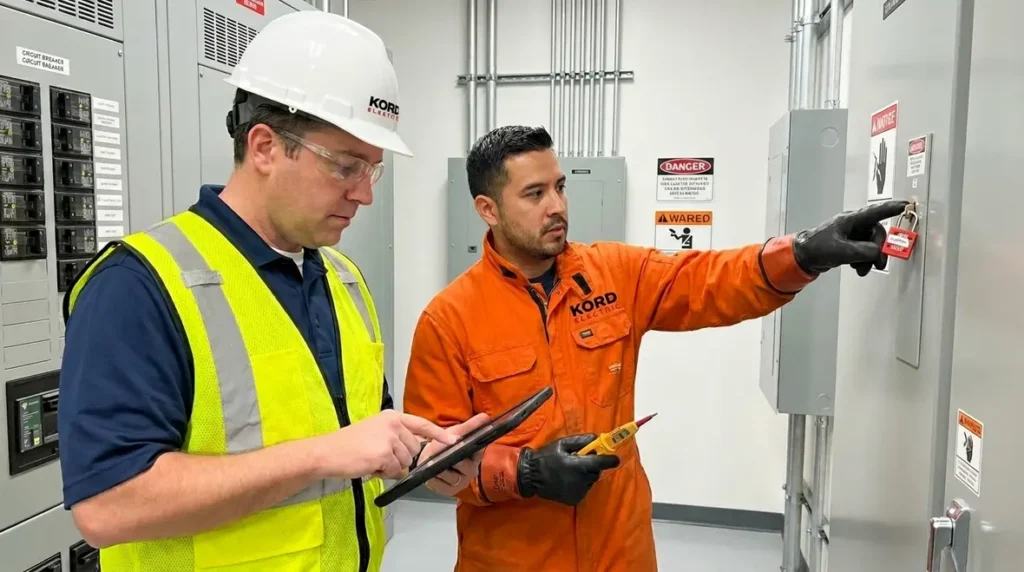
At Kord Electric, we start with the practical electrical switchgear maintenance tips that prevent small problems from turning into big, expensive outages. We inspect contact wear, test protective relays, check for heat and moisture, and document everything so the system stays reliable. When our technicians service a commercial or industrial switchgear lineup, we do not “wing it.” We follow a schedule, we measure results, and we explain what we find in plain language. Others may treat switchgear like a mysterious black box. We treat it like a critical asset, because in major property buildings and industrial facilities, it is. And yes, we have heard the joke that switchgear “just sits there and works.” That is like saying a seatbelt “does nothing” until the day it saves someone.
Why Switchgear Maintenance Keeps Power Stable in Major Buildings
In commercial and industrial settings, electrical gear handles constant demand, frequent starting loads, and changing electrical conditions. Therefore, maintenance matters because switchgear aging shows up in subtle ways long before it fails. Dust, vibration, and thermal cycling gradually reduce contact performance. Moisture and condensation can encourage corrosion and tracking. Loose terminations create resistance, which then creates heat, which then creates the kind of damage nobody wants to troubleshoot at 2 a.m.
Our expert service staff at Kord Electric approaches maintenance like a routine health check for power distribution. First, they confirm the operating status and the history of the equipment. Next, they compare what measurements show today to what “normal” looked like during earlier service. Then, they align protective device performance with the electrical design intent. Put simply, we help keep fault protection accurate, and we help keep distribution predictable.
Inspection and Documentation That Our Technicians Actually Follow
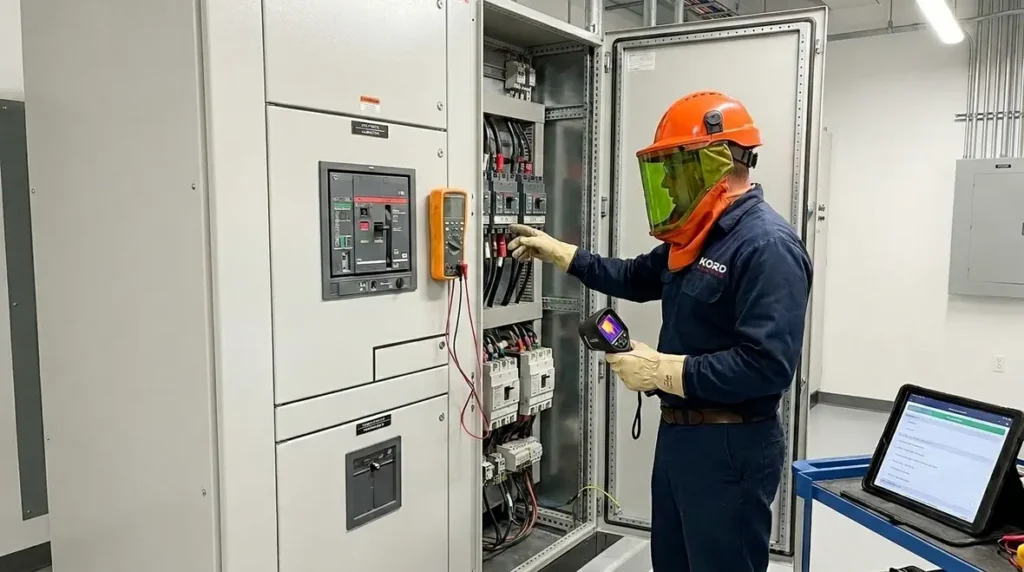
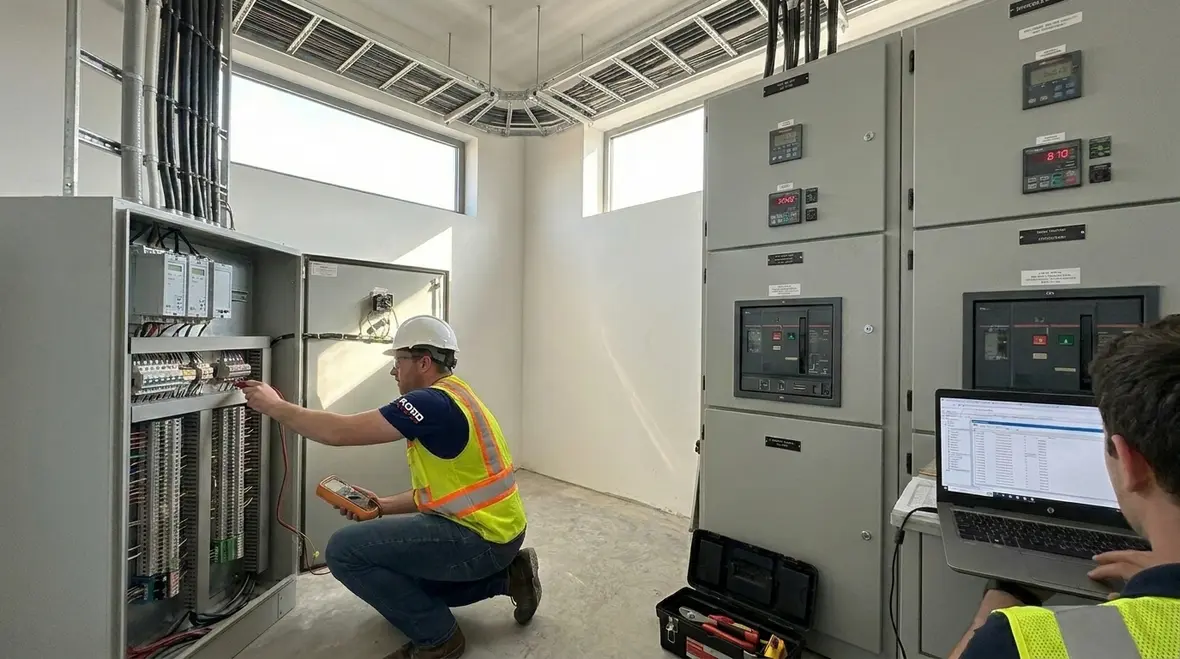
Effective electrical switchgear maintenance begins with a structured inspection. We do not rely on visual checks alone, because a calm exterior can hide a serious internal condition. So, our technicians inspect for abnormal heat marks, discoloration, corrosion, and mechanical wear. They also verify labeling, wiring integrity, and interlocks that prevent dangerous switching errors.
Next, we focus on documentation quality. We record test results, part condition, and corrective actions. In addition, we note any changes in the facility load profile that might affect future risk. For property managers and facility engineers, this matters because maintenance history supports smarter decisions during audits, upgrades, and budgeting.
Our team also explains findings. When a component shows signs of wear, we describe the cause we see and the impact we expect. We keep it professional and business casual, but we do not talk down. After all, you own the facility. We work for you. So the information needs to be clear enough that your staff can use it.
Thermal Imaging and Contact Testing to Catch Trouble Early
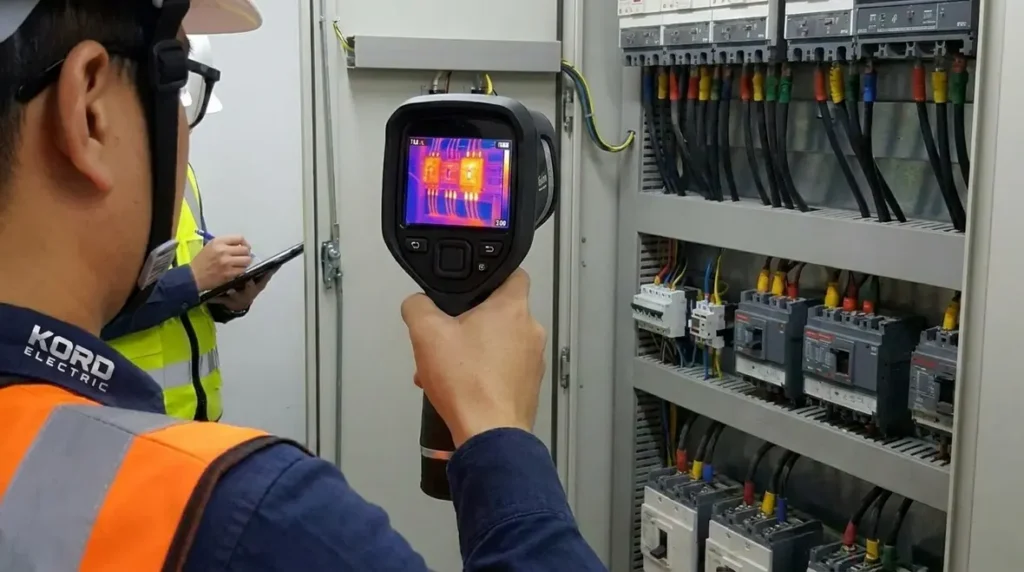
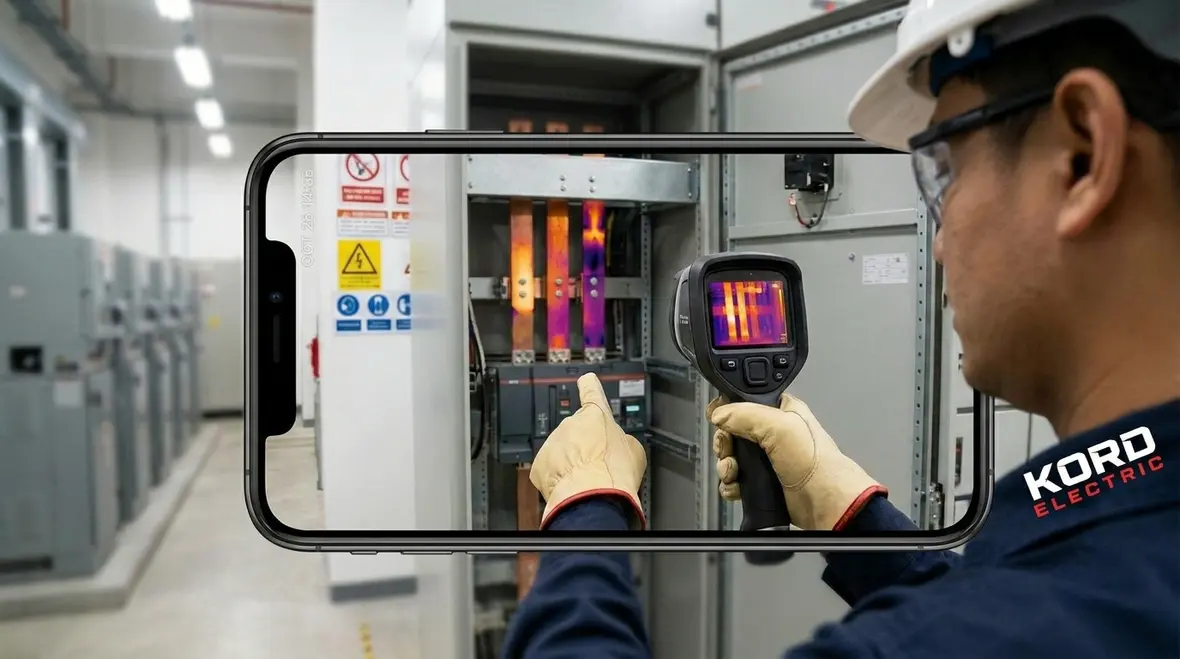
Heat often acts like a silent messenger. If a connection runs hot, it can accelerate insulation breakdown and reduce switchgear reliability. Therefore, Kord Electric includes thermal imaging and targeted contact testing in our maintenance process for commercial and industrial facilities. We locate hotspots at terminations, bus connections, and switchgear components that carry load current.
Then, we move to contact testing that evaluates how well contacts conduct and how they wipe and mate during operation. Contacts wear with cycles, and when they do, resistance increases. That resistance creates more heat, and the cycle repeats faster than people expect. Moreover, thermal imaging alone can show symptoms without explaining root cause, so we pair it with measurements that confirm electrical condition.
Our expert service staff uses results to guide action. Sometimes the solution is cleaning and adjustment. Other times, it is replacement of worn parts or tightening verified with proper torque procedures. We do not “replace everything” by default, because budgets are real, and uptime is the priority.
Relays, Interlocks, and Settings That Stay Accurate Over Time
Switchgear does not only switch power. It also protects it. Protective relays must trip during faults, and they must coordinate with upstream and downstream devices. Over time, relay settings can drift from original design due to system changes, prior troubleshooting, or component wear. That is why we test relays and review settings as part of a complete maintenance plan for commercial and industrial switchgear systems.
We also inspect interlocks and mechanical safety features. These safeguards prevent improper operation and reduce the chance of unsafe switching. In major property buildings, where multiple parties may interact with electrical equipment, the interlock function becomes even more important. After all, safety systems do not care about schedules, training sessions, or “I thought it was fine.” They either work, or they do not.
When our technicians explain relay results, they translate test values into real-world outcomes. Instead of only listing settings, they explain whether the relay response time and thresholds align with the facility’s protection strategy. That way, others can make confident decisions without guessing.
Cleaning, Torque, and Mechanical Checks for Reliability
Even the best electrical parts fail when mechanical condition slips. Therefore, we include cleaning and mechanical checks that reduce risk. We remove dust and contaminants that can trap moisture or worsen insulation performance. We also verify that bus support, barriers, and enclosure integrity remain sound.
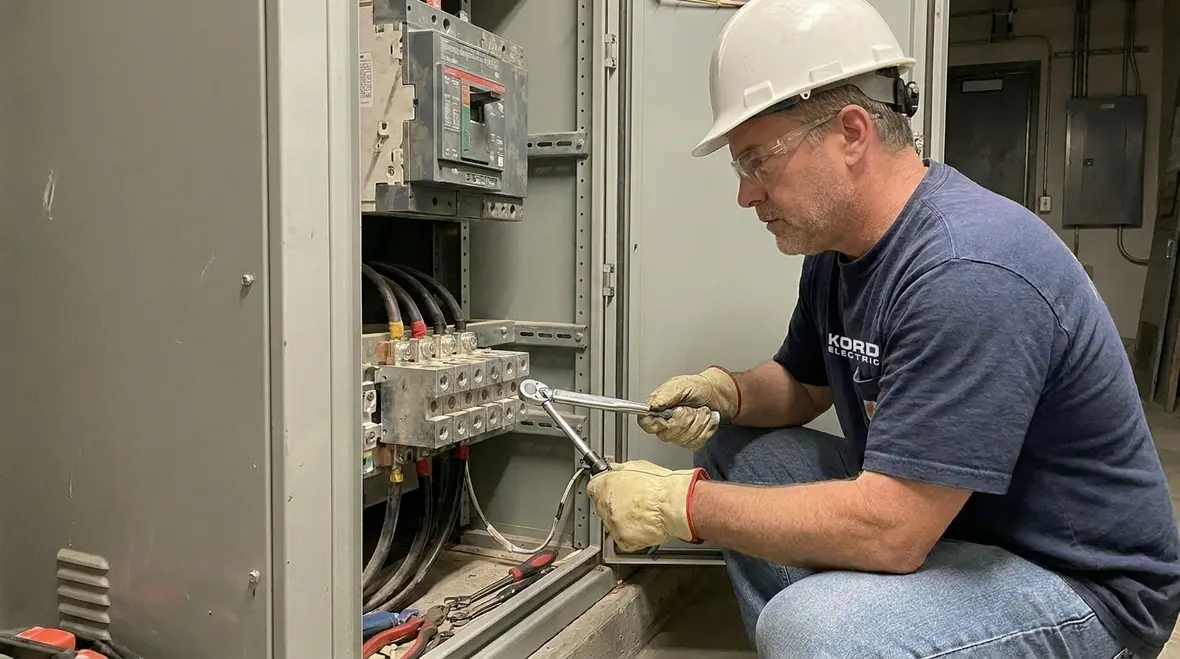
Torque verification deserves its own spotlight. Loose connections cause heat, and heat causes damage. Meanwhile, over-tightening can also deform components and create its own issues. So, Kord Electric uses proper torque practices and checks that match the manufacturer’s requirements. Then we re-check after service activities where appropriate.
Mechanical operation checks focus on mechanisms, travel, lubrication needs where applicable, and alignment of moving parts. We confirm correct operation cycles and ensure the switchgear executes commands smoothly. If something feels sluggish, we investigate, because “it still moves” is not a maintenance standard. It is a hope. And hope does not pass an inspection.
Test Planning for Outage Control and Long Service Life
Facilities do not run on our convenience. They run on production schedules, tenant demands, and critical operations. So we plan testing around your downtime constraints. First, we review the site’s electrical one line diagram and the operational roles of each switchgear section. Then, we create a maintenance plan that sequences tasks to minimize disruption.
Next, we prioritize tests by impact and urgency. For example, protective device testing and thermal risk checks often lead corrective action decisions. Meanwhile, inspection tasks that do not require interruption may run in parallel with other facility activities. This approach keeps work efficient and reduces the time equipment spends offline.
Finally, we align the maintenance cadence with the facility environment. Industrial floors generate more dust and vibration. Major property buildings can see seasonal humidity swings. So our plan adjusts. We avoid a one size fits all approach because the goal is dependable service life, not a generic checklist. Also, the more predictable your maintenance, the less your facility staff has to play “guess the outage window” like it is a reality TV show nobody asked for.
FAQ: Quick Answers for Commercial and Industrial Switchgear Maintenance
Choose Kord Electric for Switchgear Reliability That Holds Up
If you manage a commercial or industrial facility, you already know power reliability affects people, processes, and budgets. Kord Electric helps keep electrical switchgear maintenance on track with disciplined inspections, careful testing, and expert explanations from our technicians. We plan service around your downtime needs and document every step so your team can act with confidence. For broader power quality issues, support is also available for problems like voltage fluctuations in commercial and industrial facilities, keeping your entire distribution system more stable over time.
If you want a smarter maintenance plan for your switchgear system, contact Kord Electric today and let us help you protect uptime for the long run. Our structured programs complement services like electrical preventive maintenance for commercial and industrial facilities, so your switchgear, panels, and distribution equipment all benefit from coordinated care instead of disconnected one-off repairs.
We proudly serve businesses throughout Southern California, including major properties that require complex power distribution support. When you need a trusted partner for ongoing maintenance, targeted upgrades, or larger projects that reshape your system, our team helps align technical work with schedule realities, budget priorities, and long-term growth plans.
For facility leaders responsible for multiple locations or high-importance operations, our services integrate with broader commercial and industrial support, including comprehensive Los Angeles County electrical services for commercial and industrial buildings. That way, your switchgear maintenance strategy lives inside a bigger picture plan that keeps your entire electrical infrastructure working as hard as your business does.
When you are ready to move from “we hope everything is fine” to a proactive, documented, and repeatable approach, Kord Electric is here to help with electrical switchgear maintenance tips, field-proven practices, and a service culture built around uptime, safety, and clear communication.