Business Continuity Power Strategies for Facilities
Keep the lights on through any disruption with our business continuity approach
At Kord Electric, we treat business continuity power strategies as a practical plan, not a slogan. In the first step, we map the risks that can interrupt your electrical service, then we match those risks with the right backup power, transfer methods, and maintenance routines. After that, we test the plan in real conditions, so your facility does not rely on hope when something goes wrong. Meanwhile, our technicians and expert service staff explain each decision clearly, because nobody should have to guess what keeps a hospital wing, warehouse system, or data hall running. Think of it like a seatbelt for electricity. It is not exciting, but it is absolutely comforting when chaos shows up.
Build a plan around your facility’s real critical loads
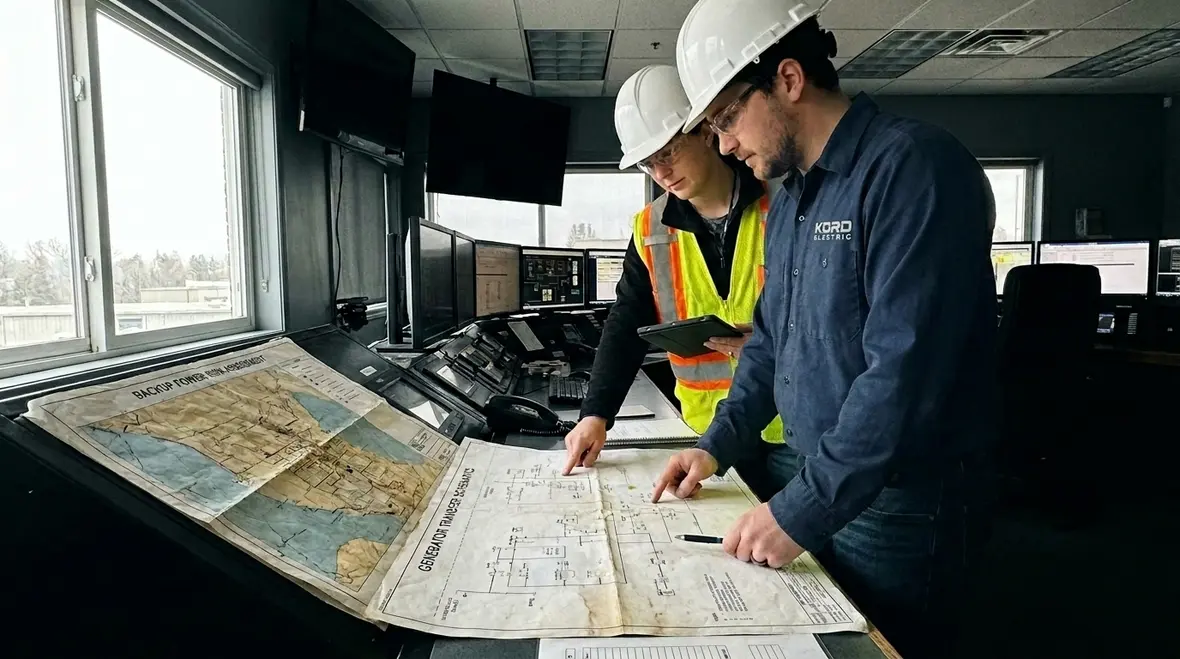
First, we help commercial and industrial facilities identify what truly must stay powered during an outage. Then we separate critical loads from important but nonessential loads. This matters because backup power is not infinite. If we oversize it, you pay for capacity you never use. If we undersize it, the system fails right when the building needs it most.
Next, our team works with your operations managers to define load priorities, which usually include life safety circuits, controls for critical equipment, security systems, refrigeration for essential products, and communications for dispatch and monitoring. To keep the plan accurate, we also consider inrush currents. For example, starting large motors during transfer can create a brief surge that trips protection. Therefore, we tune sequences and shedding logic so the generator, UPS, or standby system handles the moment of transition.
Then we document everything in a continuity-ready format. That includes circuit lists, panel schedules, device tags, and the operational behavior you want during normal and emergency modes. In other words, when the plan is time to act, your staff does not need to open five spreadsheets and pray.
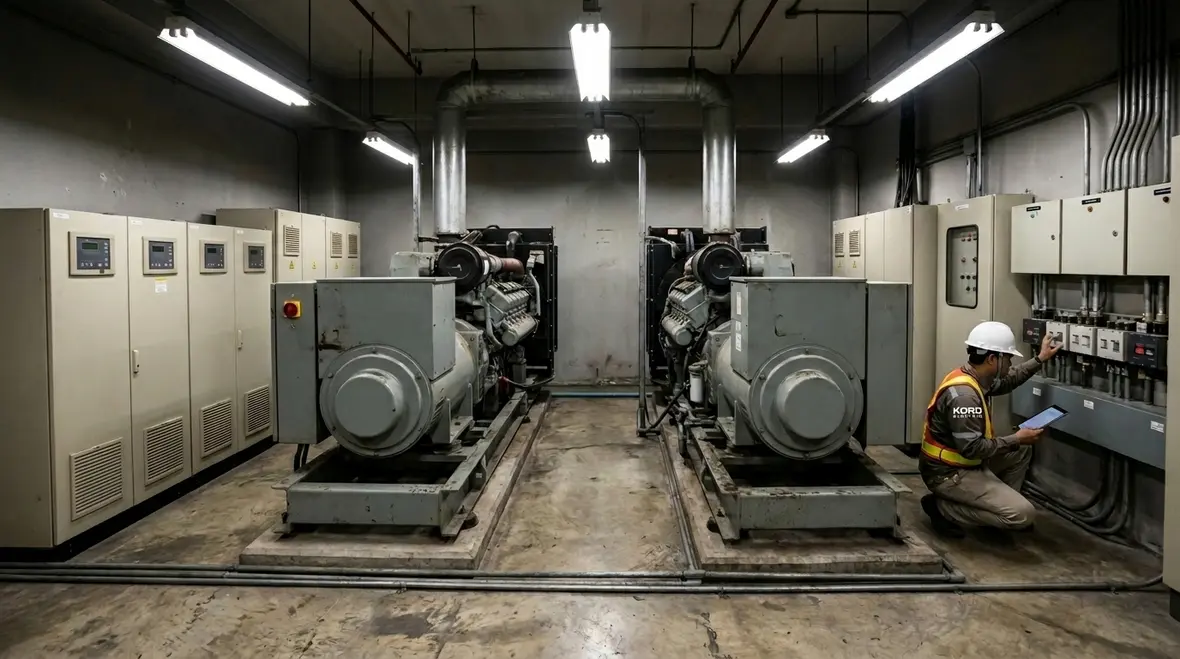
Assess power risks before you buy backup power
Once your critical loads are clear, we perform a risk assessment focused on the electrical realities of your property. Power interruptions do not all look the same. Some are short, some are long, and some come with voltage dips or harmonics that can damage sensitive controls. And if you ignore those details, your continuity system can be built to handle the wrong problem.
Our expert service staff evaluates typical causes such as utility faults, generator fuel constraints, weather related damage, overheating in distribution gear, aging UPS batteries, and maintenance gaps. After that, we review your site history, including outage durations and what happened during prior events. For major properties, we also look at concurrent events, like a storm plus a stalled delivery of replacement parts.
Then we translate the risks into design inputs. We determine transfer times, expected outage length, load shedding thresholds, and the level of ride through you need for sensitive systems. This approach keeps the plan grounded. It also keeps the cost aligned with the actual risk, which is the kind of business decision even the toughest operations team would approve.
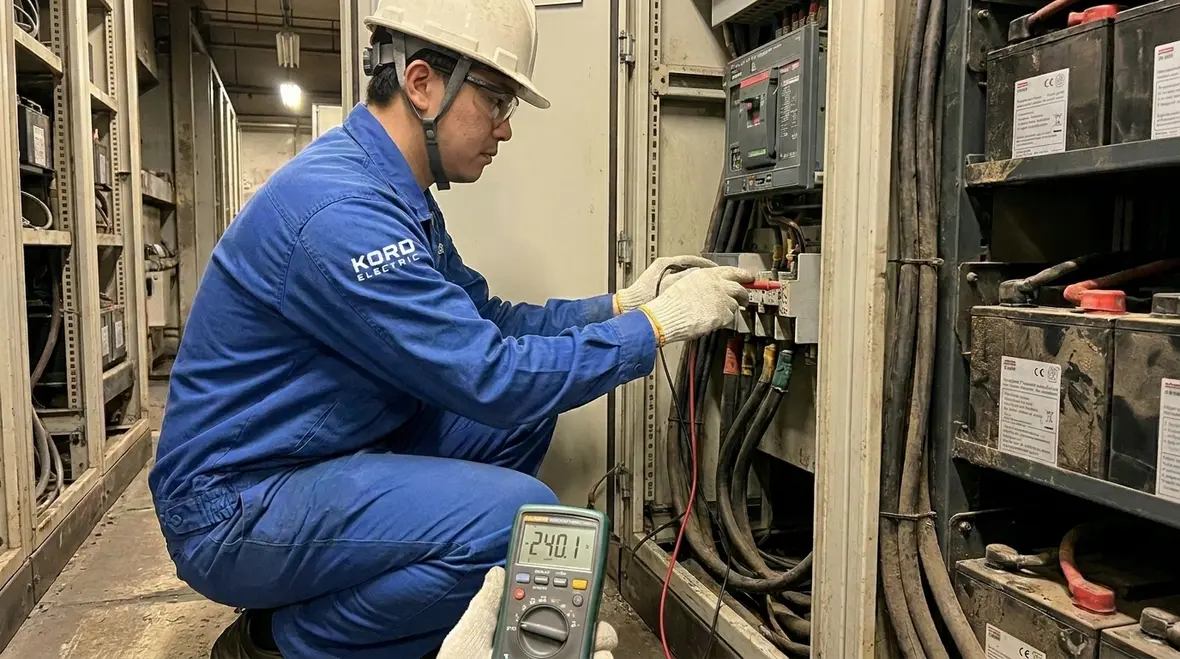
Design transfer and redundancy that actually works under stress
After risk and load details are set, we design the continuity system with transitions in mind. Transfer is where many real world plans fail, not because the equipment is bad, but because the behavior during changeover is not tuned for the facility’s needs.
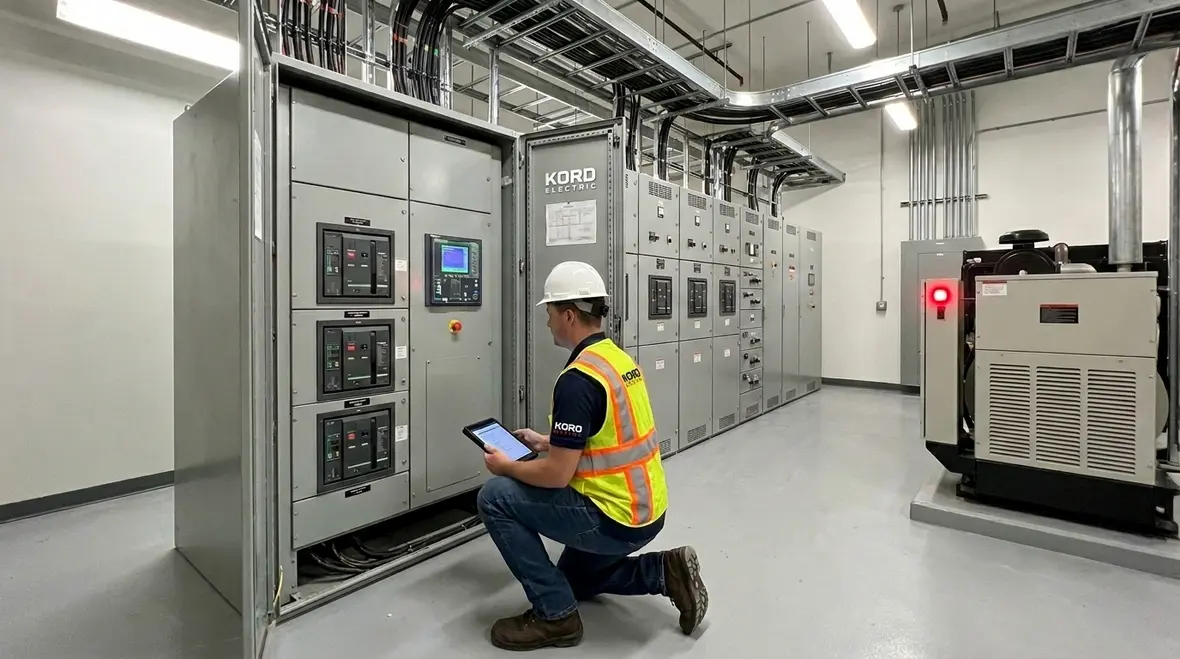
For commercial and industrial buildings, we commonly plan for multiple layers. First, we use UPS where short duration stability matters, such as for controls, server rooms, or process systems. Next, we plan generator systems for longer runtime. Then, for critical segments, we add redundancy in the distribution path so a single equipment failure does not knock out your entire operation.
However, redundancy is only helpful if it is coordinated. Therefore, we coordinate protective devices, verify proper grounding practices, and ensure interlocks prevent unsafe backfeed conditions. Our technicians also plan the order of operations for transfer. For instance, they may delay nonessential loads while allowing critical controls to stabilize. This reduces nuisance trips and protects motor starting.
To support this work, Kord Electric uses disciplined installation methods and quality checks that match the same mindset we apply in other electrical projects. If your team has recently worked with us on recessed lighting installation, the same standards for layout accuracy, wiring safety, and clean integration mindset show up in continuity design. A building should not feel like it was wired by three different crews who never met. Continuity plans should feel like one system with one purpose.
Operational readiness: train staff and document the plan
Equipment alone will not keep power uninterrupted. People do. So we build operational readiness into the continuity plan. We help your team understand what happens before, during, and after an outage. Then we align roles, including who makes the call to start generators, who verifies load transfer, and who logs the event for later review.
Our expert service staff provides clear walkthroughs and uses plain language so your staff does not treat the emergency mode like a mystery episode. We also build checklists that match real tasks, such as fuel verification, battery health checks, test records, and visual inspections of switchgear and transfer equipment.
Additionally, we help facilities establish a communication routine. During an event, staff need to know what alarms mean, which indicators represent safe operation, and how to respond if a circuit fails to transfer. After the event, they need a post incident routine that includes data collection and review. This is where lessons turn into improvements.
Finally, we make sure the documentation fits your building culture. Instead of dense binders that get buried, we design concise, job friendly materials that your team can actually use when time matters. Because when the lights flicker, nobody wants to read a novel.
Test, maintain, and improve with scheduled exercises
Once the system is designed and the staff is trained, we shift to testing and maintenance. This is where continuity stops being a concept and becomes a real capability. We recommend test schedules that match your facility’s criticality and operating environment. Then we track results so the next cycle improves.
Testing often includes transfer tests for generators, UPS runtime checks, and verification of load shedding sequences. We also test alarms, monitoring systems, and remote communications when those features exist. Importantly, we confirm that the facility transitions without surprises, such as unintended load delays or protection trips.
Maintenance is not just battery replacement or oil changes. It includes inspection of breakers, verification of torque where appropriate, cleaning of panels, checking ventilation airflow, and reviewing breaker timing and coordination. In addition, we verify that spare parts lists remain current and that lead times do not turn into a problem at the worst possible moment.
Then we improve the plan based on what we learn. For example, if a test reveals that a specific nonessential circuit loads too early, we adjust the logic. Or if runtime proves shorter than expected, we review fuel planning and service intervals. Continuity power strategies should evolve, because your building and processes evolve too.
Integrate continuity with other electrical upgrades without disrupting operations
Major properties rarely pause their operations for long. So we plan continuity upgrades in a way that reduces downtime and keeps the facility safe. First, we review your current electrical architecture and identify where modifications can occur with minimal impact. Then we stage work to avoid forcing complete shutdowns of critical areas.
In many cases, we coordinate continuity design changes with other electrical projects like panel upgrades, switchgear servicing, or controls improvements. This is where careful scheduling matters. When we plan the work, we consider how each change interacts with transfer behavior, protection settings, and monitoring alerts.
Our process also includes a verification step after installation and commissioning. We do not just energize equipment and move on. Instead, we validate proper operation through functional testing, safety checks, and documentation updates. As a result, your business continuity plan stays aligned with your actual system, not an outdated drawing.
And yes, we keep things tidy. A continuity system that works is great, but a system that is clearly labeled and easy to service is even better. It is the difference between a smooth emergency and a rushed scavenger hunt during a crisis.
FAQ
Short featured snippets: quick answers
- What happens if the load transfers but trips protection?
We tune coordination, shedding logic, and starting sequences so critical circuits stabilize without nuisance trips. - Can one outage expose weak maintenance routines?
Yes. That is why we pair continuity design with routine inspections and battery or equipment health checks. - Do we support only commercial and industrial facilities?
Yes. Kord Electric focuses on commercial and industrial properties and major building projects, not smaller residential work.
Call Kord Electric to make your continuity plan dependable
If your business cannot afford an electrical interruption, we can help you design and test continuity power strategies that match your actual critical loads and real operating conditions. At Kord Electric, our technicians and expert service staff bring clear explanations, careful planning, and commissioning that holds up under stress. Let others treat outages like bad luck. We treat them like a scenario to prepare for. Contact us now to assess your loads, evaluate transfer design, and build a plan your facility can trust. For facilities across Southern California that need a broader partner for code-compliant, large scale electrical work, explore our Los Angeles County electrical services to align your continuity planning with ongoing commercial electrical support.
When you are ready to align your business continuity power strategies with preventive maintenance, system upgrades, and responsive troubleshooting, Kord Electric is prepared to help. From risk assessments and transfer design to integration with lighting, panels, and controls, our commercial and industrial team focuses on one outcome: keeping your operations online, safe, and predictable.
Whether you are just beginning to formalize a continuity roadmap or you are refining an existing strategy after a close call, our technicians and expert service staff can walk your facility, review documentation, and outline practical next steps. Pair your continuity planning with related services like lighting installation, panel improvements, and targeted maintenance so your electrical backbone supports every critical process—not just on calm days, but when conditions are at their worst.