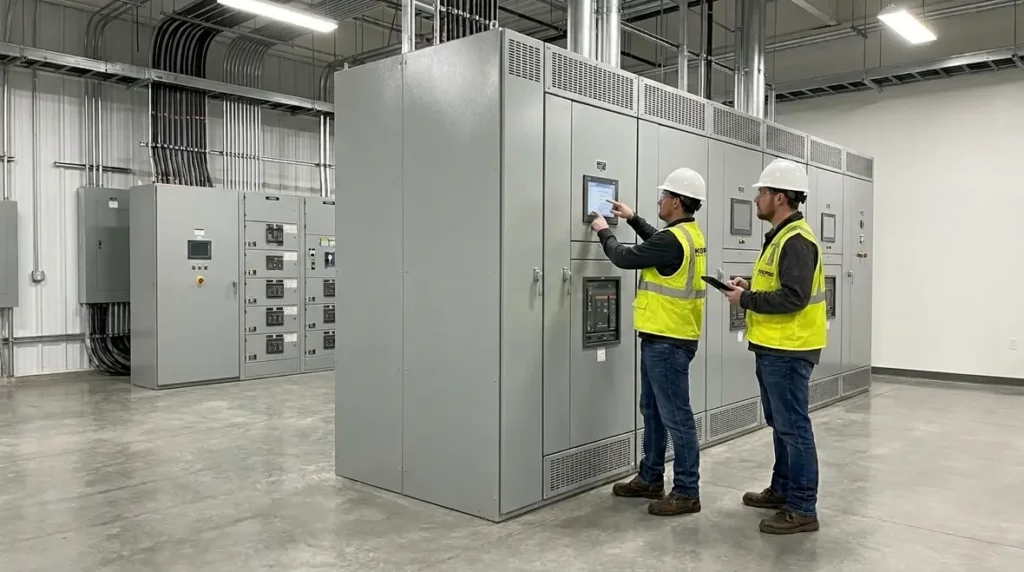
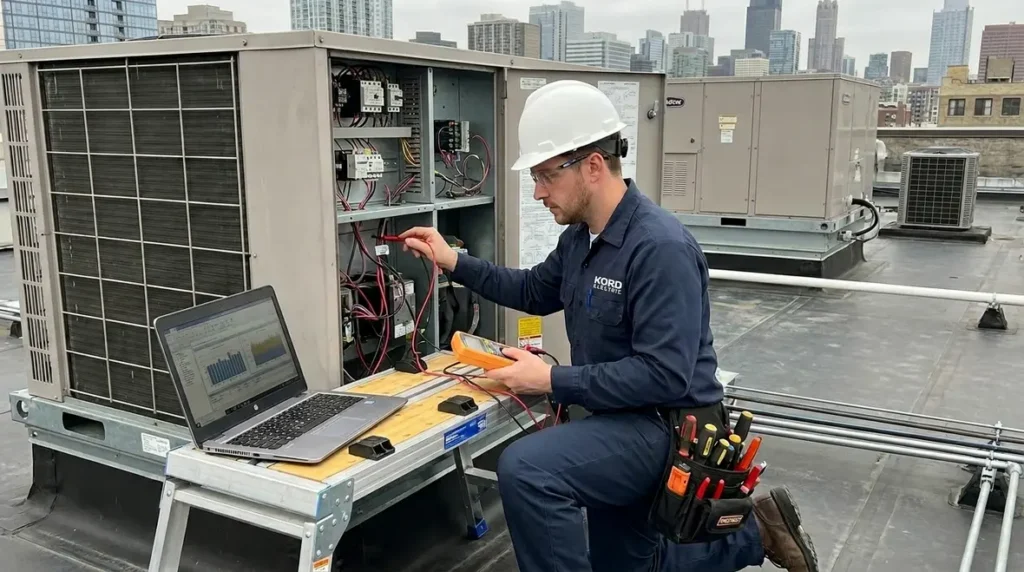
Industrial Power Quality Analysis for Manufacturing
At Kord Electric, our technicians rely on industrial power quality analysis early, because the fastest way to stop a “mystery shutdown” is to measure what’s actually happening on the electrical system. In manufacturing environments, power quality issues rarely announce themselves with a neon sign. Instead, they hide inside voltage dips, harmonics, and unstable grounding, then they show up later as downtime, scrap, and angry maintenance teams. To keep our approach calm and effective, we explain the findings in plain language, and we walk facilities step by step through the cause and the fixes. After all, nobody wants to troubleshoot like it is a crime drama where the power supply is the suspect and the conveyor belt is the witness.
How manufacturing power problems show up before anyone calls us
When others talk about “power quality,” they often picture a one time failure. However, in commercial and industrial facilities, the issues usually build over time. Equipment may keep running, but it runs poorly, and the symptoms spread across production. For example, an operator may report that a motor sounds different after a start up sequence. Then, a week later, a variable frequency drive trips more often. Soon after, sensitive controls begin to reset during peak load changes.
In the background, our expert service staff typically sees repeating patterns tied to plant activity. For instance, large compressors and presses can create voltage sags that affect automation systems. Meanwhile, non linear loads such as drives, rectifiers, and switch mode power supplies introduce harmonic distortion that can overheat conductors and shorten component life. And grounding that works “well enough” can still create stray currents that quietly damage electronics.
Therefore, diagnosing power quality problems starts with behavior. We ask what changed, when it changed, and what equipment reacts. Then we connect those clues to the measured electrical story.
Electrical signals and common faults we look for in the field
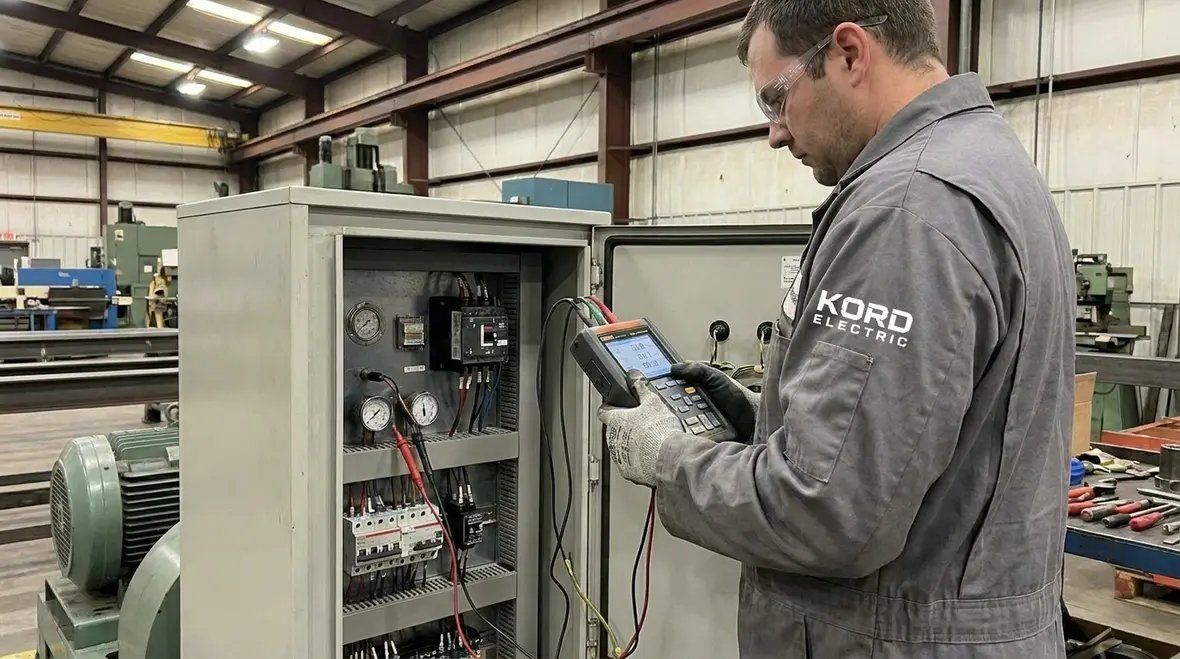
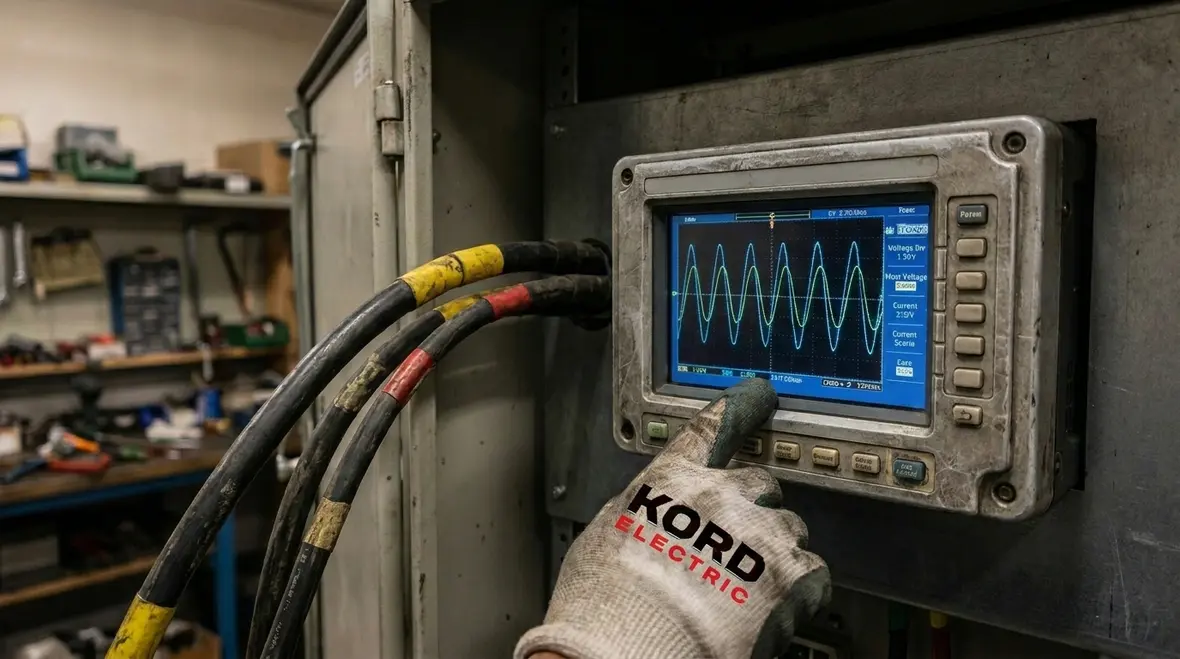
We do not guess. We verify. First, our technicians capture waveforms and trends so we can see how voltage and current behave under real load. Then we compare those readings with equipment tolerances and system design expectations. This is where industrial power quality analysis becomes practical rather than academic.
Here are the key issues we investigate in manufacturing settings
- Voltage dips and swells that happen during motor starting, transformer energization, or rapid load shifts
- Harmonics that distort current and raise temperatures in motors, transformers, and cables
- Frequency variations that can stress clocks, drives, and communication networks
- Unbalance where one phase carries more load than the others, leading to extra heating and torque issues
- Transients such as surges or spikes caused by switching, lightning, or capacitor bank operations
- Ground and bonding problems that create noise and fault conditions for controls and power electronics
Next, we connect the electrical signature to the production side. We explain what each fault does to real equipment, because a “high harmonic number” means little until you connect it to overheating bearings or premature drive failure.
What our process looks like when we diagnose a plant
When others offer “power testing,” it can sound like a one time event. We treat it like a structured investigation. Our process usually follows a clear flow so the facility gets answers without unnecessary disruption.
Step one: we map the system and the load profile. We review single line diagrams, motor schedules, panel boards, transformer sizes, and major process equipment. Then we schedule data collection during the times that match production patterns, not just during random hours.
Step two: we measure and log conditions. Our technicians capture events and trends across the distribution path. Instead of only taking a snapshot, we watch how power quality changes across shifts.
Step three: we correlate power data with incidents. We ask for maintenance logs, drive fault history, and downtime reports. Then we match electrical events to the timestamps. That correlation often turns “we think it might be the utility” into a concrete answer.
Step four: we recommend fixes with a cost and risk view. We focus on reliability, not just compliance. After we explain the findings, we propose mitigation options such as harmonic filtering, selective capacitor controls, transformer adjustments, grounding improvements, or circuit modifications.
At that point, our expert service staff also prepares the facility to prevent repeat issues. That means guidance for future expansions, because adding equipment later can shift the entire electrical balance.
Industrial power quality analysis meets real equipment reliability
Industrial power quality analysis matters most when it protects production, not when it creates a report that nobody reads. Our customers tell us the same thing over and over: the goal is fewer trips, fewer resets, and less unplanned downtime. Therefore, we focus on how power quality affects uptime, parts longevity, and operating cost.
For example, harmonics can cause motors to run hotter and drives to derate. Voltage unbalance can increase losses and reduce torque stability, which then looks like “mysterious belt slippage” or inconsistent stamping force. Transients can degrade power supplies in PLCs and communication devices. And grounding issues can create noise that fools sensors, then triggers production interruptions that feel random.
To make this tangible, we also connect power quality to the facility’s load behavior. When a plant energizes a bank of capacitors, it can reduce reactive load, but if that operation is poorly tuned, it can create resonance and amplify distortion. In other words, a fix in one area can unintentionally create a new problem elsewhere. So we verify settings, timing, and switching strategy before we call anything “resolved.”
And if you are thinking, “We have never had this issue before,” well, that is usually true right up until someone adds a new production line. Then the electrical system responds like a sitcom character walking into the wrong room. Suddenly, everything feels out of place.
How we handle the tricky part: harmonics, grounding, and load changes
The hardest power quality challenges in manufacturing often come from the combination of modern equipment and changing schedules. Today’s plants rely on drives, welding systems, induction equipment, and advanced controls. These devices draw non linear current and can also create fast switching transients. Meanwhile, production changes day by day, which makes issues harder to reproduce.
So we treat the plant like a living system. First, we identify the dominant sources of harmonics and the locations where distortion travels most. Then we check whether compensation devices are properly configured. If the facility uses capacitor banks, we ensure their switching scheme matches the operating profile. Next, we evaluate grounding and bonding continuity, because even a small weakness can create noise in sensitive circuits.
For grounding, we focus on practical outcomes: stable reference levels for controls, reduced interference, and safe fault paths. For harmonics, we look for both electrical reduction and thermal risk reduction in cables and transformers. And for load changes, we recommend strategies that keep power quality stable across normal operating modes.
During these steps, our technicians also explain what we see at the measurement level. We translate results into facility language, because our work succeeds only when others in the maintenance and electrical teams understand the “why.”
Improving efficiency while we correct power quality, too
Manufacturing owners want two things at once: stable electrical performance and controlled energy costs. At Kord Electric, we support power system reliability and we also help improve overall efficiency. For example, our team has explored industrial lighting layout optimization for efficiency, because lighting upgrades can reduce load and support better electrical balance across distribution circuits. When lighting design reduces unnecessary demand and improves placement, the electrical system often benefits indirectly by lowering peak load pressure on feeders and panels.
Now, power quality and lighting design are not the same topic, but they interact in real facilities. Therefore, when we plan upgrades, we look at the total load picture. We coordinate electrical changes so one project does not accidentally trigger another power quality issue. That is how we keep the facility moving forward without hidden surprises.
And yes, we understand the schedule pressure. You want the work done, and you want it done without turning the plant into a museum of dropped production. We plan accordingly, and we keep communication clear.
FAQ about diagnosing power quality in commercial and industrial buildings
Call Kord Electric to stop downtime at the source
If your plant suffers recurring trips, unexplained resets, or equipment that seems to “wear out early,” do not treat it like a guessing game. We, at Kord Electric, use industrial power quality analysis and a structured diagnosis process to reveal the real cause, then we explain the findings clearly so your team can act with confidence. Contact us to schedule an assessment for commercial and industrial facilities, and let’s restore stable power, protect uptime, and keep production running the way it was meant to.
For facilities that want a broader strategy for stability and uptime beyond a single project, you can pair diagnostics with ongoing care through Kord Electric’s commercial and industrial electrical maintenance plans or other Los Angeles County electrical services that support large manufacturing and major property operations.