Smart Lighting Control Integration for Facilities
At Kord Electric, we regularly help commercial and industrial facilities lower costs by using a smart lighting control integration that stops waste before it becomes a monthly bill you did not plan for. In the same way a thermostat learns your comfort, modern lighting systems learn how spaces actually get used, then they adjust in real time. Of course, lights do not “sleep,” but they can absolutely stop burning energy when nobody needs them.
And while the tech does the heavy lifting, our technicians and expert service staff handle the details that matter, like setup, tuning, and ongoing electrical care. When others treat lighting like a one time purchase, we treat it like a living system that should perform every day.
How facility lighting wastes money when controls are missing
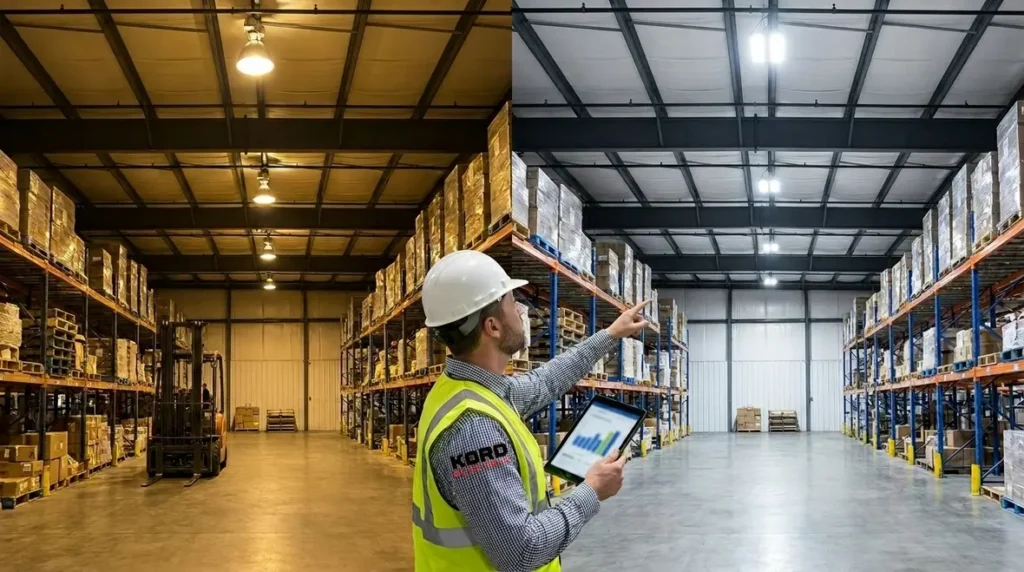
In most large buildings, lighting costs do not just come from electricity. They come from behavior, timing, and aging equipment that keeps running even after schedules change. Therefore, when a facility lacks smart controls, lights often stay on during low occupancy, or they fail to adapt when a warehouse section switches from receiving to storage.
Even if someone has good intentions, rules break down. Shifts start late, meetings run long, and maintenance moves around. As a result, the building runs lights like it is hosting a party that ended hours ago. Meanwhile, older fixtures also produce less light, which pushes staff to compensate by turning more lights on, not less.
Smart lighting control integration changes that pattern. It coordinates lighting with occupancy, time, and daylight, and it can also support zoning so only the right area lights up. In other words, the facility stops guessing and starts managing.

Smart lighting control integration cuts energy use without disrupting operations
When Kord Electric designs lighting plans for commercial and industrial sites, we focus on consistent performance. We do not want lights to flicker like a bad movie. Instead, we target smooth dimming, predictable schedules, and clear fallback behavior during faults.
First, occupancy sensing helps the building react to actual presence. Therefore, when an area sits empty, lighting levels drop instead of staying at full power. Next, daylight harvesting uses natural light near windows, so the system maintains a stable brightness and prevents over lighting. Then, scheduling ties lighting to how a facility runs, whether it is a distribution center, office floor, or manufacturing bay.
In practice, this reduces energy use in a few clear ways. It lowers watt draw, it minimizes re lighting cycles, and it helps prevent “always on” habits. Plus, it improves comfort, which matters because people work better when the environment feels steady, not random.
For facilities already looking at broader efficiency programs, smart lighting control integration pairs well with structured electrical maintenance. When your electrical backbone is stable, your lighting controls perform more predictably and your savings stay consistent instead of drifting over time.
Lower maintenance costs with smarter diagnostics and fewer surprises
Energy savings help, but operational costs also rise when lighting systems fail unexpectedly. When a fixture goes out during a busy shift, a facility team loses time, and repairs cost more because issues become urgent instead of planned. However, a smart system can help by tracking performance and flagging changes early.
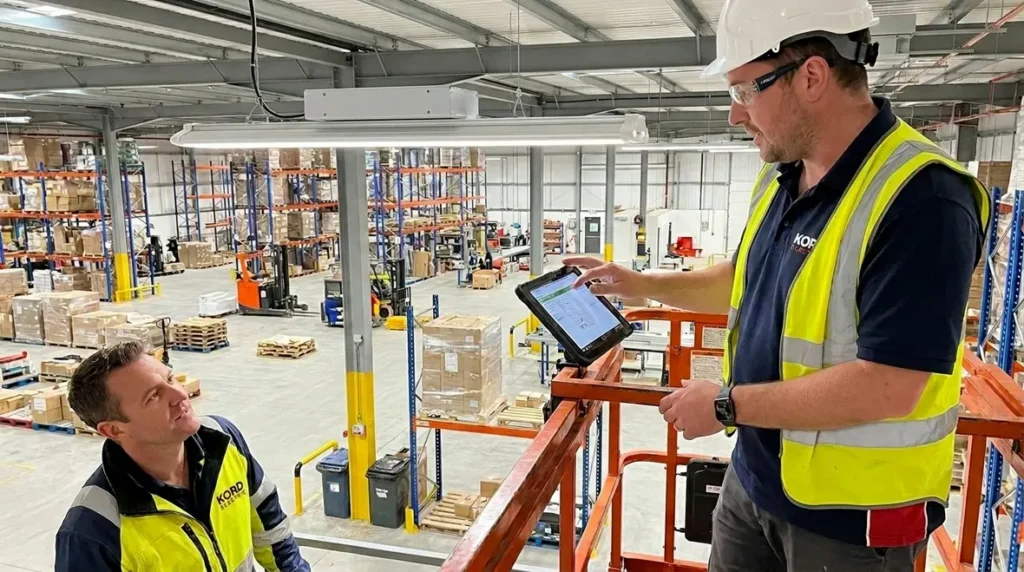
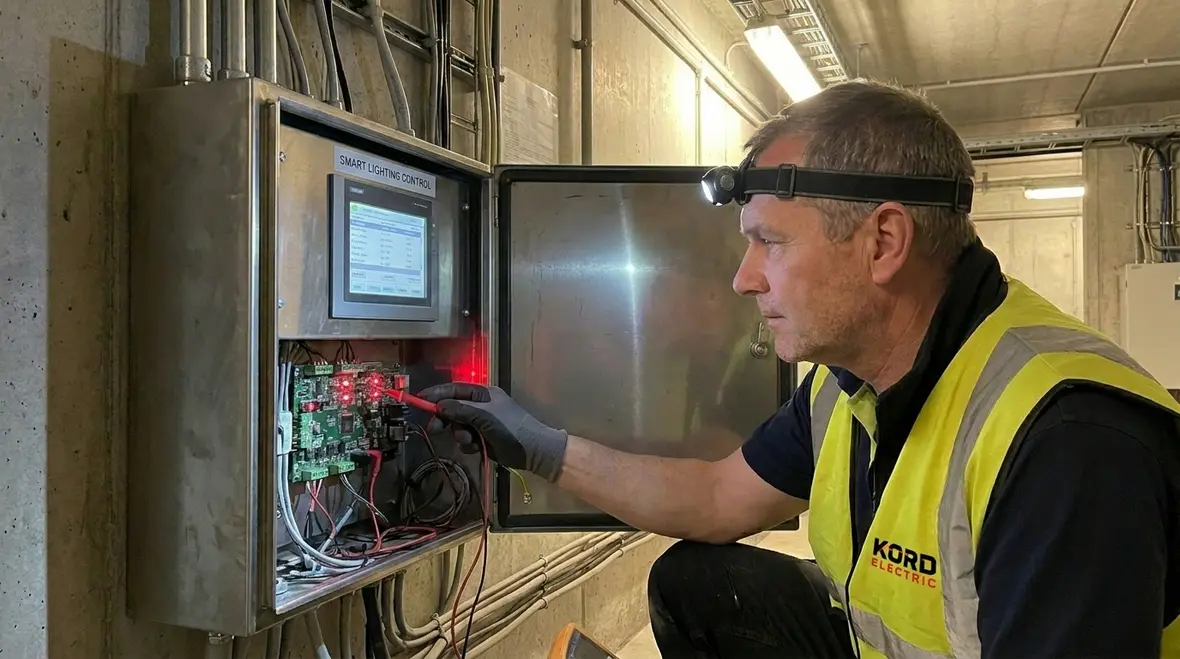
For example, our technicians can configure systems to report faults and monitor device status. So rather than waiting for residents to notice a dark hallway, the building gets alerts before minor issues become major downtime. Additionally, smart lighting control integration can support better lamp life management by avoiding unnecessary operation and reducing wear caused by poor timing.
We also see fewer costly “hunt sessions” during troubleshooting. In older setups, electricians spend hours tracing panels, guessing circuits, and walking the floor. On the other hand, when the system identifies which area or device is acting up, service becomes faster and calmer. And trust us, facility teams hate drama as much as anyone. The electrical system should not be the main character.
How integrated controls support compliance and safer facility management
Commercial and industrial buildings operate under strict expectations, and lighting influences safety in more ways than most people think. Illumination levels affect visibility for walkways, stairs, loading areas, and work zones. Meanwhile, controls that manage glare and uniformity can improve performance for both people and equipment.
As lighting gets integrated with other systems, facility managers gain better oversight. Smart controls can help align lighting behavior with occupancy patterns and operational states, which supports safer movement during shift changes. In addition, the system can support documentation and consistency, which matters for audits and internal standards.
Here, preventive planning plays a role. If a facility follows a routine maintenance plan, the building does not wait for emergencies. Kord Electric’s approach includes commercial and industrial electrical maintenance plans designed to keep systems in good health. We align smart lighting integration with that discipline, so the building stays reliable, and your team spends less time reacting and more time operating.
Maintenance planning for smarter lighting performance over time
If a facility installs smart lighting and then forgets it, costs creep back in. Therefore, Kord Electric treats integration as an ongoing program, not a one time event. Our technicians and expert service staff set up the system correctly, then we support it with planned inspections and updates.
One reason this matters is that building use changes. A warehouse expands, a production line shifts, or a tenant renews a floor layout. When that happens, lighting zones and schedules should adjust. Smart systems make that change easier, yet they still require knowledgeable service to keep everything calibrated.
That is why we align with the logic behind our commercial and industrial electrical maintenance plans. We review system health, verify key components, and keep performance steady. Over time, this approach reduces the chance of repeated repairs, improves response time, and protects your investment.
And yes, we say “investment” on purpose. Lighting is not just paint for the air. It influences productivity, safety, and utility spend. Treat it like a strategic asset, and your facility tends to behave like one.
ROI for smart lighting control integration in warehouses, campuses, and offices
Facility leaders often ask about payback because budgets are real and forecasts matter. Smart lighting control integration typically improves ROI through energy reduction, fewer repairs, and better asset life. However, the best results happen when the design matches how the site operates.
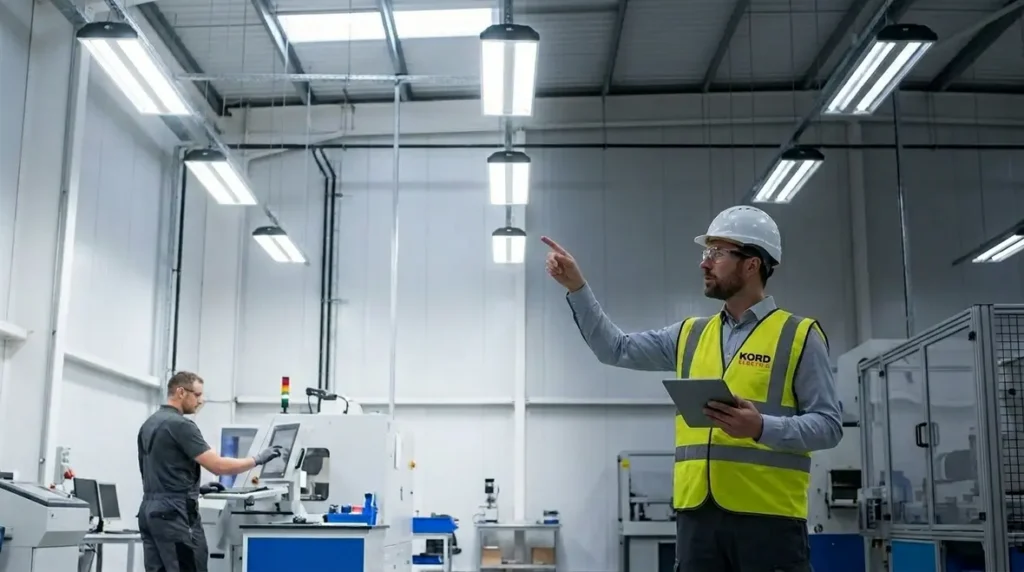
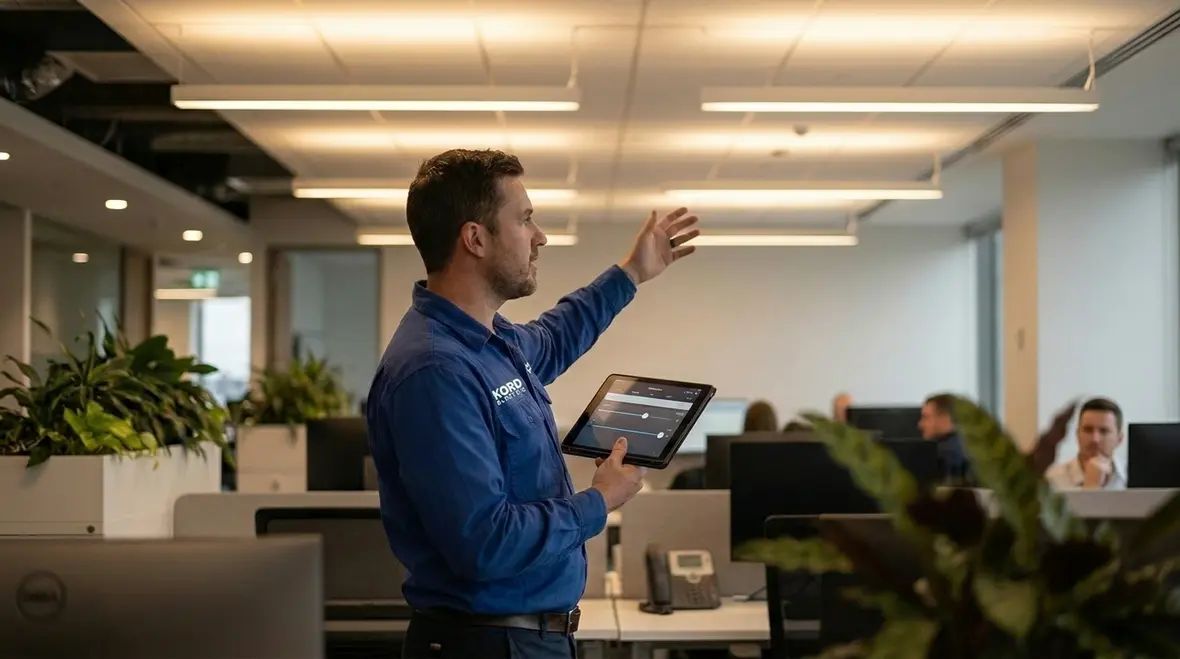
In warehouses and manufacturing areas, occupancy and process schedules drive savings. In office spaces, daylight harvesting and zone control prevent waste from conference rooms and windowed areas. On campuses and multi building properties, centralized control helps maintain consistent settings across locations. Therefore, a manager can monitor performance and keep the program uniform, even when day to day use varies.
Additionally, we help facilities avoid costly mismatches. Sometimes a building installs controls in the wrong places or sets schedules that do not reflect actual shifts. Consequently, the system can waste more than it saves. Kord Electric addresses this by working with your team during planning, then we fine tune settings after installation.
People like to think savings arrive automatically. Smart systems do help, but they still need expert setup and service. Like tuning an instrument, the difference is subtle until you hear it play. Then you notice everything.
For multi-site operators or major property buildings, pairing smart lighting control integration with broader preventive programs such as electrical preventive maintenance services makes the ROI story even stronger. You are not just reducing today’s bill. You are protecting tomorrow’s infrastructure.
FAQ about smart lighting integration for commercial and industrial facilities
Final word: let us modernize your lighting without the headaches
Kord Electric helps commercial and industrial facilities cut lighting waste with smart lighting control integration that supports predictable performance, safer spaces, and fewer maintenance surprises. Our technicians and expert service staff explain each step in business friendly language, then we tune systems so they match how your building truly runs. If you want lower operational costs and a lighting strategy that lasts, contact us for an assessment and an integration plan built for your property. Let’s turn lights into a system, not a recurring problem.
If your facility is ready to coordinate lighting with broader upgrades or maintenance efforts, our team can connect smart lighting projects to larger service offerings across Los Angeles County. From integrating controls into existing panels to planning future expansion, we help you move from scattered fixtures to a unified plan that respects how your building actually operates.
For facilities that need a single partner to handle upgrades, maintenance, and troubleshooting, explore our Los Angeles County electrical services. We support campuses, warehouses, and major properties with field-proven commercial and industrial expertise, so your lighting, power, and maintenance plans stay aligned instead of fragmented across vendors.