

Industrial Power Surge Protection for Facilities
Secure Commercial and Industrial Loads With Industrial Power Surge Protection
Kord Electric helps commercial and industrial facilities keep sensitive equipment alive when the grid gets chaotic. We focus on industrial power surge protection so control panels, drives, PLCs, servers, pumps, and compressors do not take the hit from sudden voltage spikes. And yes, when power behaves badly, it can damage parts faster than a coffee shop line during rush hour. In this guide, we explain how surges happen, what damage looks like, and how our expert service staff helps others reduce risk with proper testing, coordination, and device selection. You will see practical steps, plus the kind of guidance our technicians give on site, in plain language, without the “trust us, it’s fine” attitude.
Why Voltage Surges Harm Industrial Systems
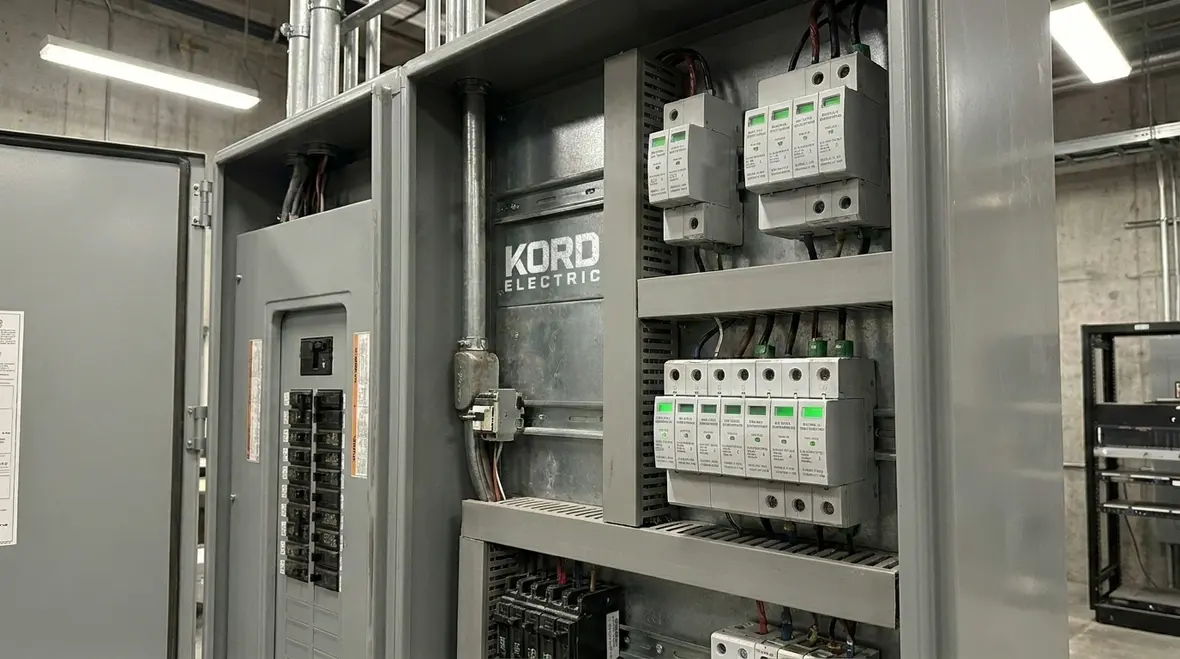
Power surges do not always announce themselves. Sometimes the event is brief, yet the voltage spike contains enough energy to stress insulation, overheat components, or punch through protection already weakened by age. Consequently, equipment can fail later, and staff may blame “normal wear” instead of the real cause. For commercial and industrial sites, even small interruptions can lead to lost production, shutdowns, and costly downtime.
We also see voltage fluctuations and disturbances that do not fully count as a surge, but they still strain electronics. In our experience, the best protection strategy starts by understanding the patterns in the facility. In addition, Kord Electric encourages others to treat the electrical system like a living system, not a one time installation. When conditions change, the protection plan must adapt too.
Our technicians explain it like this: a sensitive device often needs stable power, and surges act like sudden stress. And just like lifting weights without proper form, you might feel okay at first, but the damage stacks up.
Common Surge Sources at Major Properties
Industrial power problems often originate off site or inside the building. Therefore, the plan must look beyond the main service. Typical sources include lightning strikes, utility switching events, motor starting, and load transfer. Internally, large equipment cycles can create momentary spikes. Externally, the utility network can shift voltage during switching or fault clearing. Even if others cannot see the event, the electrical system captures it.
Kord Electric frequently finds that facilities with frequent motor operations, elevators, HVAC systems, or variable frequency drives face more stress on power quality. Meanwhile, sites with long cable runs or multiple building zones can experience uneven surge behavior. That means one device may not protect the way you expect across the whole campus.
So, when our expert service staff walks through a facility, we ask the practical questions. What loads start at the same time? Which panels feed what systems? Where do sensitive cabinets sit relative to transformers and distribution equipment? Those details drive the right approach, not guesswork. And no, “I think it’s the weather” does not count as a power audit.
Signs of Surge Damage Before It Becomes a Failure
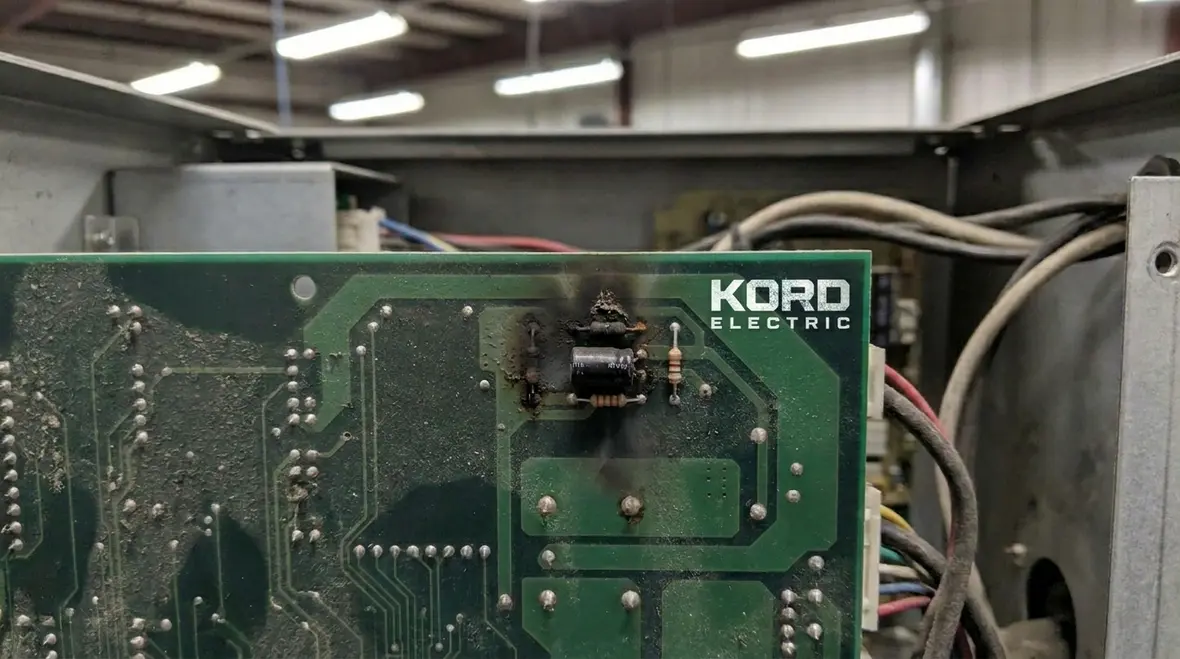
Surge damage rarely arrives with a dramatic bang every time. Instead, it often shows up as symptoms that look unrelated. For example, we may find repeated nuisance alarms, intermittent comms errors, or random trips on drives and controllers. Over time, the equipment might still run, but its tolerance drops.
We also see physical clues. Failed surge protective components can show discoloration or end of life status indicators. Power supplies can run hot. In some cases, control boards exhibit burn marks or degraded capacitors. However, staff should not rely only on visible damage. Many power components fail internally and only show up when the next surge hits.
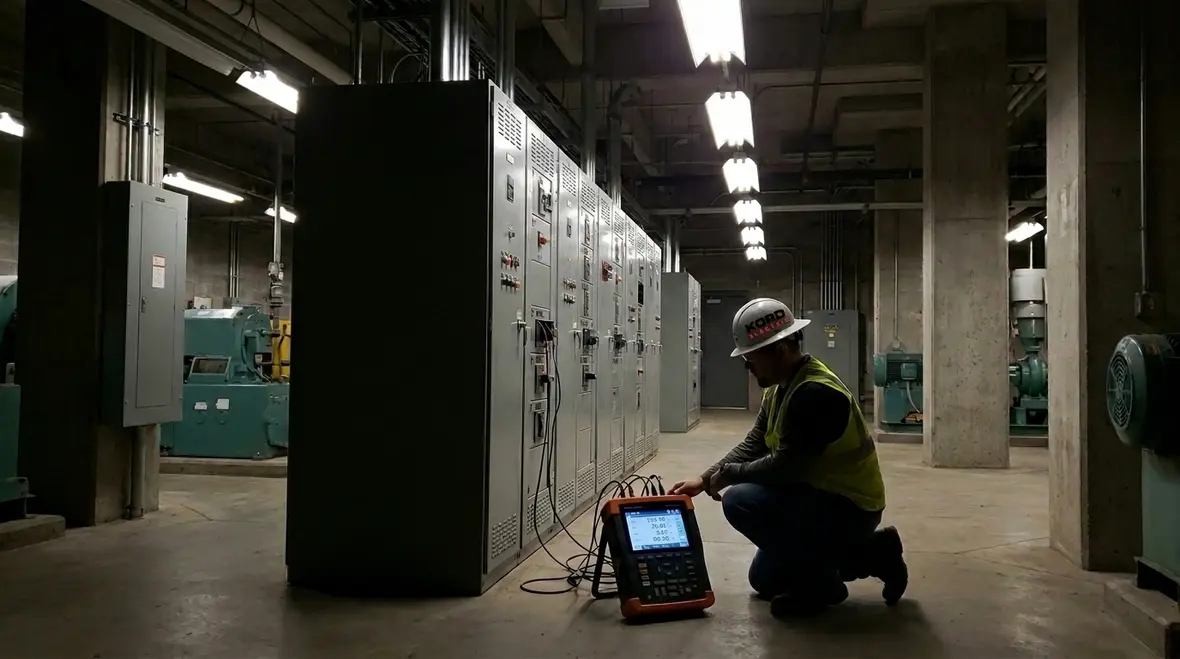
Because hidden damage can develop slowly, Kord Electric recommends preventive checks. Our technicians measure and document conditions, then match findings to the equipment risk profile. Transition matters here: if others address surges early, they avoid the “we replaced one board and now three more boards failed” pattern. That pattern is not a mystery. It is usually an incomplete protection and coordination strategy.
How Industrial Power Surge Protection Should Be Designed
Effective industrial power surge protection does not mean installing a single gadget and hoping for the best. It means designing a layered system that fits the site. First, we coordinate protection levels at service entrance, distribution, and end use where needed. Second, we ensure devices work together so one stage does not become overwhelmed while another stage fails to clamp properly.
Our industrial clients often run mixed loads. That is why we guide others to separate high sensitivity circuits from general power circuits when practical. We also consider grounding and bonding, because surge control depends on how current returns to earth. A good clamping device cannot perform well if the grounding path is poor or inconsistent.
Here is where our expert service staff earns its keep. We explain why coordination matters, and we help others match protection to the voltage environment. In addition, we document recommended device types, replacement intervals, and inspection triggers. In other words, we treat protection like a system with maintenance requirements, not a disposable receipt.
Follow the Right Process: Site Review, Coordination, and Testing
Kord Electric uses a practical process for commercial and industrial facilities and major property buildings. We start with a review of the electrical one line diagram, the equipment list, and the building layout. Then we evaluate surge exposure and determine where protection should land. Because layouts vary across campuses, we do not use a one size approach.
Next, we coordinate devices so the energy flows in the right way. Transitioning to the next step, we verify design details that affect performance, including conductor routing, panel placement, and grounding continuity. After that, we schedule testing and commissioning work, based on facility requirements and safety rules.
And yes, we explain the results clearly. Our technicians do not speak in riddles. They explain what measurements mean, what changes we recommend, and what risks remain if certain upgrades do not happen right now. If you have ever tried to read an electrical report written like a secret diary, you know why this matters. We keep it direct.
Typical Upgrade Paths for Commercial and Industrial Facilities
Every facility has different priorities, so we offer a few upgrade paths that fit budget and risk tolerance. First, some sites need immediate protection for the most sensitive control systems. Others need whole facility coordination at service and distribution. Many clients benefit from a staged approach, where we protect critical loads now and expand coverage as equipment life cycles allow.
For example, a major property building with tenant equipment may require protection that covers both shared infrastructure and key internal panels. Meanwhile, manufacturing facilities may need attention on variable frequency drives, PLC cabinets, and motor control centers. In addition, data and communication systems may require separate consideration due to how they connect and fail under disturbances.
Our team also helps others plan maintenance. Surge protective devices can reach end of life after events, even if the facility looks fine. Therefore, we build inspection steps into the program so replacements happen before failures spread. That is how we keep protection dependable, not just installed.
Dual Column Snapshot: What We Protect and How We Support
We Protect
- PLC and control cabinets
- Variable frequency drives
- Servers, network gear, and comms
- Motor control centers and panels
- HVAC and pumping control systems
We Support
- Site review and electrical mapping
- Protection coordination planning
- Grounding and bonding checks
- Testing, commissioning, and documentation
- Maintenance and inspection guidance
Power Quality, Voltage Fluctuations, and Surge Protection
Surges rarely travel alone. Many facilities also deal with voltage fluctuations, sags, and other disturbances that slowly erode equipment health. When power quality slips, sensitive controls, servers, and drives pay the price first. That is why pairing industrial power surge protection with a broader power quality strategy matters for long term reliability.
Kord Electric helps decision makers look beyond a single event and focus on patterns. If you are already tracking voltage fluctuations in commercial and industrial areas of your facility, the next step is coordinating protection, grounding, and monitoring so your system reacts in a controlled way instead of taking random hits. Done right, this keeps production lines, building systems, and tenant equipment online when the grid gets noisy.
For teams planning broader upgrades, it often makes sense to bundle surge protection with other reliability work. Whether you are reviewing options for voltage fluctuations in commercial and industrial facilities or mapping out multi year electrical improvements, integrating surge protection into the same roadmap prevents duplicated work and scattered projects.
Connecting Surge Protection to Wider Electrical Service Planning
Industrial power surge protection does not live in a vacuum. It ties into everything from transformer sizing and panel layouts to grounding grids, data cabling, and even how you stage future expansions. Treating protection as part of a complete electrical strategy, instead of a last minute add on, keeps your facility ahead of both code requirements and real world operating risk.
Our technicians and expert service staff frequently support clients who are upgrading automation, adding EV charging, or modernizing lighting. In each case, we review how those changes affect fault levels, transient paths, and the performance of existing protective devices. The goal is simple: when you invest in new systems, you should not inherit new surge vulnerabilities as an unwanted side effect.
If your facility operates across Los Angeles County and the surrounding region, aligning surge protection with broader Los Angeles County electrical services for commercial and industrial properties helps keep everything coordinated. One team understands your one line, your equipment history, and your risk tolerance, which makes it easier to prioritize upgrades without guesswork.
FAQ: Industrial Power Surge Protection for Major Buildings
Ready to Stop the Next Power Incident
When the electrical grid throws surprises, we help commercial and industrial facilities respond with confidence. Kord Electric designs and installs industrial power surge protection that fits your building, your loads, and your risk level. Our technicians and expert service staff explain the plan in clear terms, then test and document the results so you know what is protected and why. If you manage a major property building or industrial site, contact Kord Electric today and let us help you prevent avoidable downtime.
For facilities planning upgrades or long term reliability improvements, integrating surge protection with broader service offerings keeps your system prepared for both everyday operation and extreme events. Whether you are coordinating new construction, rewiring, or power quality projects, treating surge protection as a core part of the plan helps keep sensitive equipment online instead of on the repair bench.


