Industrial Subpanel Upgrade and Capacity Planning
Commercial power demands do not stay still, and that is why Kord Electric starts with industrial subpanel capacity planning early. In the first stage, our team estimates future load, maps where power actually goes, and sizes the upgrade so the facility does not hit a wall the next time a tenant expands or a new production line turns on. After all, a subpanel that fits today can feel like a phone charger that only works while you hold it just right. We make sure it does not work that way. Instead, we align electrical design with real-world growth, so the building stays reliable, safer, and easier to maintain.
When commercial subpanels start failing, the signs show up fast
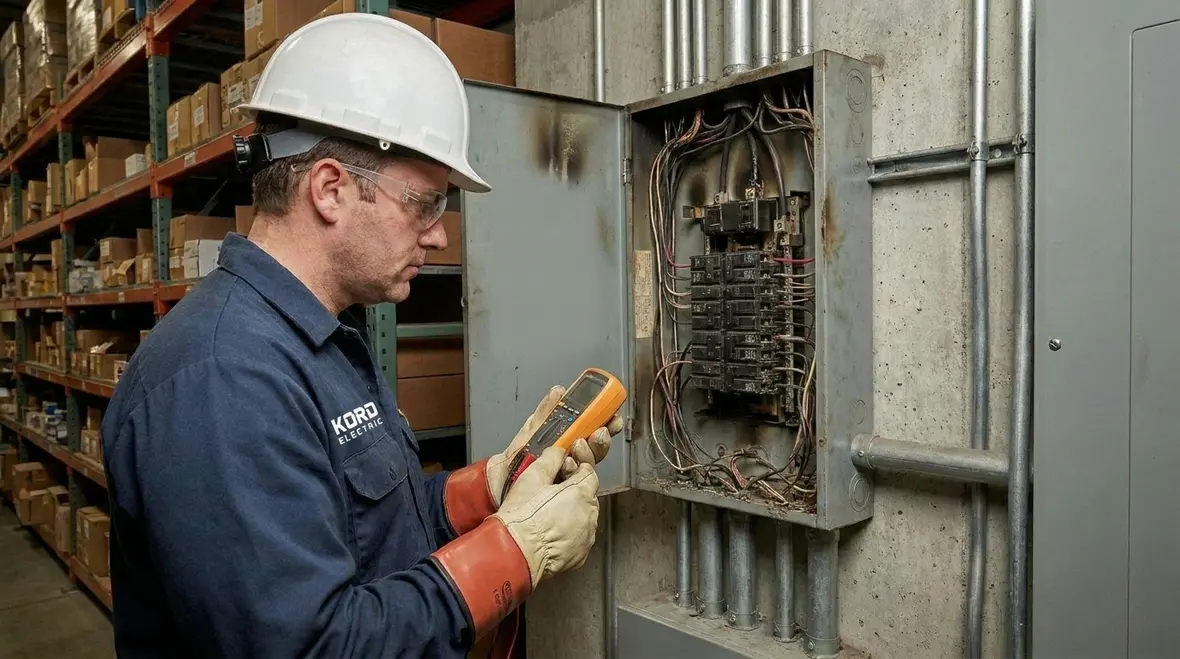
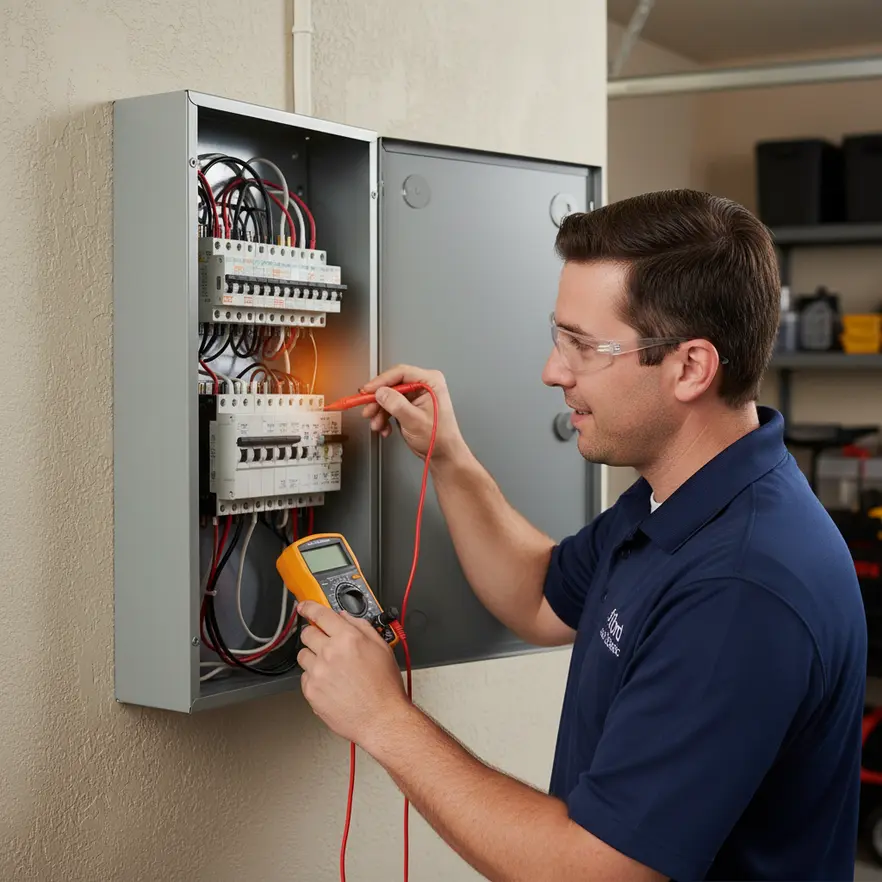
Others can only guess why a building trips breakers or causes flicker, but our technicians usually find the story in the details. First, they listen to what the operators report, then they verify it in the field. For example, they may notice a pattern of nuisance tripping during shift changes, or they may find heat marks around breakers and bus bars that signal worn connections. Meanwhile, voltage drop complaints often rise when loads increase across kitchens, pumps, HVAC systems, or manufacturing equipment.
More clues show up during routine inspections. We commonly see missing labels, outdated wiring methods, or panel interiors that look like they have survived a long weekend of stress. In addition, facilities with multiple tenants may have subpanels that were never rebalanced after renovations. As a result, one circuit can carry more load than intended, while another circuit sits idle. That imbalance wastes capacity and increases wear.
Because we serve commercial and industrial facilities, we also pay attention to lifecycle realities. Warehouses age differently than offices, and major property buildings face different demands than a single small tenant space. Therefore, we approach the diagnosis as a systems problem, not a “replace and hope” problem.
How to spot a facility that needs upgrades before the next expansion
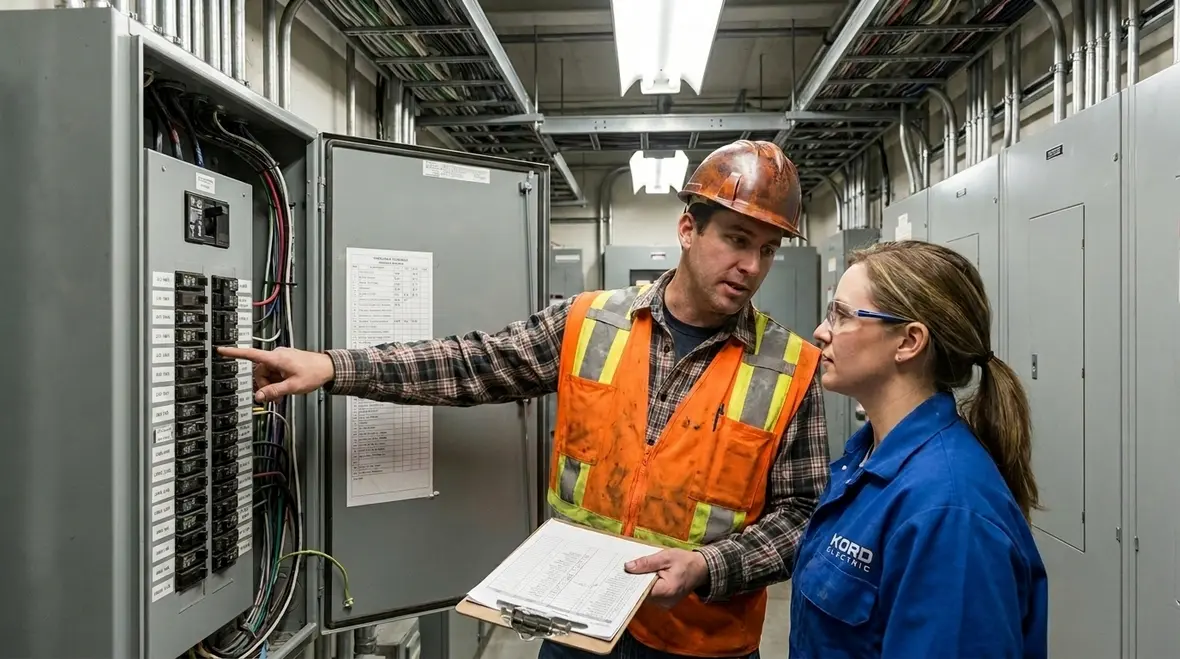
Most major buildings do not suddenly decide to grow, but they often announce growth with smaller steps. One more freezer goes in. One more rack adds load. One more tenant comes in with equipment that draws power at peak times. Then the electrical system starts acting like it is keeping secrets. It might still function, but it begins to run hot, trip at the edges, or fall short during surges.
Kord Electric uses a practical assessment approach. We check the current one line overview, then we compare it to what the facility actually uses today. Next, we review equipment schedules, future project plans, and utility demand patterns. This is where industrial subpanel capacity planning becomes a guide, not a buzzword. If the existing subpanel can only support today’s loads, it will struggle tomorrow, especially when you add motors, process equipment, or high draw systems.
Our service team also looks at installation quality. Old upgrades can hide issues like undersized conductors, loose terminations, or corrosion inside enclosures. Even if the panel passes a quick visual check, those hidden issues can shorten service life. Meanwhile, facilities with frequent power interruptions can see more damage over time because every event stresses components.
And yes, sometimes the “sign” is just poor organization. When circuits are unclear, maintenance teams guess. Guessing in electrical work rarely ends in a win for anyone. So we document everything and explain it clearly, because our job is to keep your operations running, not to run a guessing game on your downtime budget.
If your facility is already chasing strange voltage behavior, unexplained breaker trips, or panels that never quite look “settled,” pairing an upgrade discussion with a structured maintenance plan can keep small issues from turning into emergencies. For many commercial and industrial sites, a dedicated electrical preventive maintenance program becomes the backbone that supports every subpanel decision.
What capacity planning should cover for industrial and commercial buildings
In a strong upgrade plan, we do not only look at the total load on a spreadsheet. We also break it down by circuit type, operating profile, and growth path. First, we classify loads like HVAC, lighting, receptacles, pumps, compressors, and process equipment. Then we map load demand against operating schedules. After that, we confirm how future projects might shift peak use, especially during seasonal cycles or production ramps.
Next, we account for design realities. Panels need margin for inefficiencies and future additions. Also, breakers and bus capacity should match the system layout so current does not overheat connections. We avoid overpromising and underdelivering, because in real facilities, “close enough” becomes “call us again.” Our technicians explain these choices step by step, using plain language so your decision makers can understand tradeoffs without needing an electrical engineering degree.
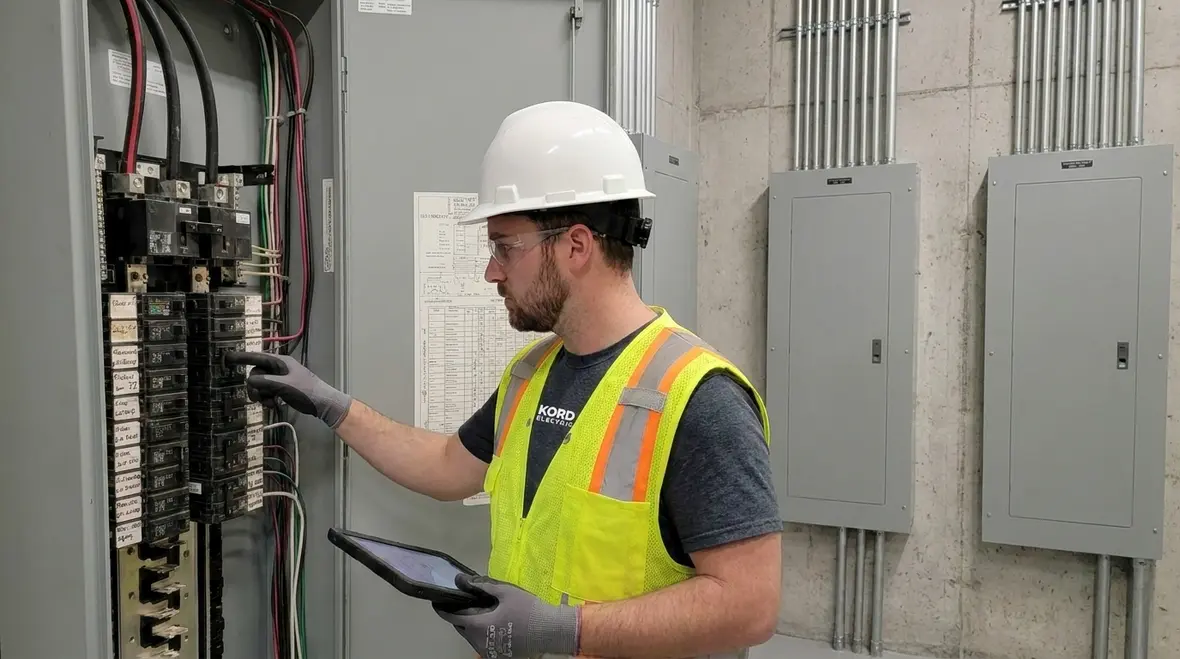
To keep the plan solid, we also consider coordination. If a main service and feeder strategy changes, the subpanel must support it. That affects ratings, short circuit considerations, and how protective devices work together. At the same time, we verify labeling standards and circuit accessibility, so maintenance teams can work safely and quickly. That often includes aligning subpanel upgrades with clear circuit documentation inspired by the same principles used in Kord Electric’s electrical panel labeling best practices guide, so what is on paper actually matches what lives behind the metal door.
Finally, we review physical constraints. Enclosures need correct dimensions, clearances, and proper routing space. Even the best electrical design falls apart if the cabinet cannot fit in the space allotted. So we walk the facility, inspect conditions, and plan for the install, not just the theory.
Assessment to upgrade: what our technicians do on site
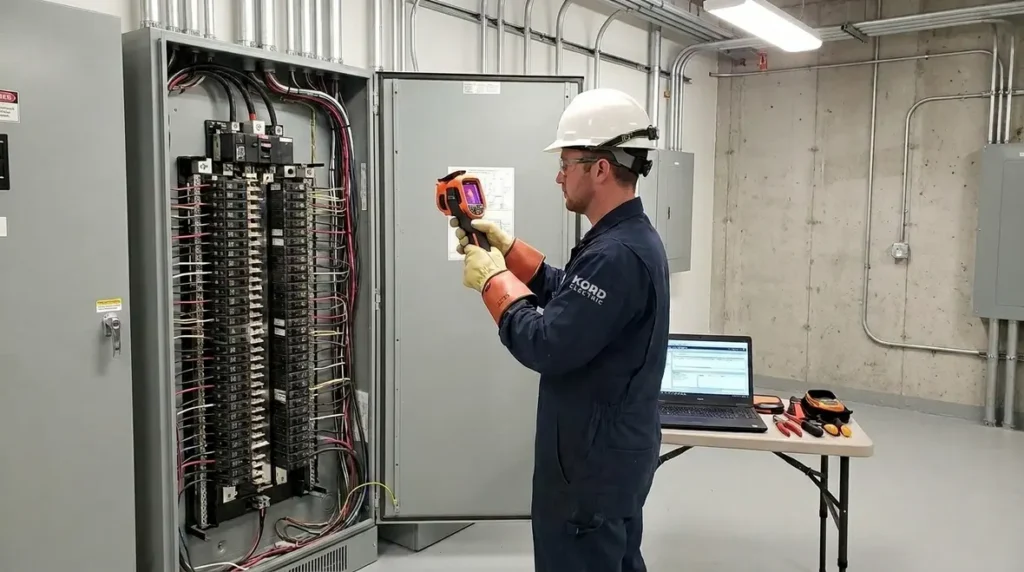
When Kord Electric arrives, our process stays calm and thorough. We start with the current panel condition and system context, then we document everything that matters. One of our technicians checks for heat damage, mechanical stress, and evidence of loose connections. We also inspect breaker types, verify ratings, and review how circuits are grouped. That matters because how load clusters in certain sections can reveal weak spots.
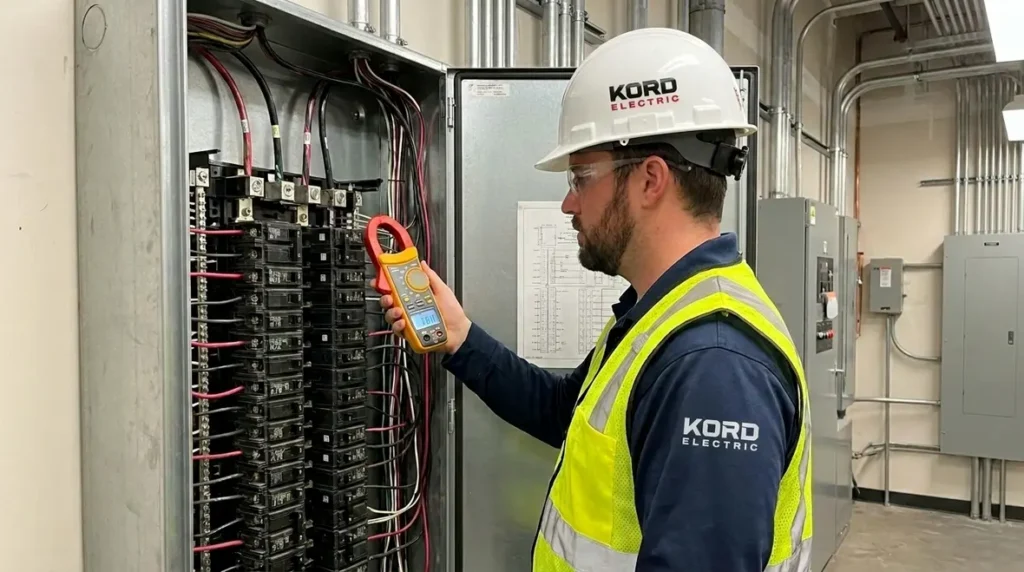
Then we validate what the building uses. We may compare measured loads to nameplate data, and we check whether protective devices behave as they should under expected demand. If the facility has energy monitoring, we use it to understand peak timing. If not, we gather operational details from your staff. Our expert service staff then explains findings in a way that helps your team act with confidence.
At this stage, we also talk about upgrade paths. Some facilities need a full subpanel replacement. Others may benefit from adding capacity with new sections, replacing aging components, or redistributing circuits across properly sized breakers. In certain cases, we recommend changes to labeling and circuit organization to reduce future confusion.
And because we work for commercial and industrial buildings, we plan work sequences that minimize downtime. In other words, we try to avoid the building schedule becoming a casualty of the upgrade. We coordinate so your team does not lose more time than necessary. Think of it as a power plan with manners.
For sites that frequently push equipment near its limits, we may also recommend pairing subpanel work with focused diagnostics such as power quality analysis or a structured electrical system troubleshooting checklist for factories. That way, the upgrade does not simply replace gear; it corrects the underlying patterns that caused stress in the first place.
Dual column: upgrade choices and the real outcomes they deliver
Upgrade option
Panel replacement with properly rated components
Addition of subpanel sections or new boards for growth
Circuit redistribution and rebalancing for reduced hot spots
Component replacement for aging breakers, bus connections, or conductors
Outcome for the facility
Improved safety margins and reliable protection during peak loads
More room for planned expansion without repeated emergency calls
Smoother load sharing and fewer nuisance trips
Longer service life and fewer intermittent faults that interrupt operations
Because every building differs, Kord Electric aligns the solution to the operational profile and the project timeline. In many cases, the best choice is not the most dramatic option, but the most correct one. If your facility plans major work, we also support coordination so the electrical plan matches the construction schedule.
FAQ: commercial subpanel upgrade questions people ask before they call us
Next steps: schedule an assessment with Kord Electric
If your building keeps adding equipment, Kord Electric helps you stay ahead of the electrical stress. Our technicians assess subpanel condition, verify how power flows through your facility, and build a clear upgrade path tied to industrial subpanel capacity planning and real growth. Then our expert service staff explains the plan in plain terms, so your team can approve the work with confidence. Call Kord Electric today to schedule an assessment and stop waiting for the next trip to become your new normal.
For properties across Southern California, aligning subpanel upgrades with broader reliability work—such as voltage fluctuation repairs for commercial and industrial facilities or recurring maintenance programs—helps protect every level of the electrical system. If your site includes multiple buildings, campuses, or high-demand tenants, partnering with a team that already handles large-scale Los Angeles County electrical services keeps your upgrade strategy consistent from service entrance down to the last subpanel.
Whether you are planning a phased renovation, a new line of production equipment, or a set of energy upgrades that will touch solar, lighting, and mechanical systems, starting with a grounded look at subpanel capacity gives you room to grow. The right decisions at this level support safer operations, fewer surprises, and a building that can say “yes” to the next project without flinching at the electrical room door.