Intelligent Lighting Controls ROI for Commercial Facilities
At Kord Electric, we focus on intelligent and efficient lighting for commercial and industrial facilities, as well as major property buildings. We design and install systems that deliver real commercial lighting controls installation benefits from day one. Our clients see fewer wasted hours, smarter schedules, and lighting that responds to actual occupancy instead of guessing like a tired night shift supervisor. And yes, we still explain every step in plain language, because nothing should feel like a mystery box, even if it looks like one on the ceiling.
In the sections ahead, we break down the ROI of intelligent lighting controls for commercial facilities, the costs that actually matter, and how our technicians and expert service staff guide each project from survey to commissioning.
What ROI really looks like for commercial facilities
ROI is not just a nice number on a slide deck. Instead, we view ROI as a chain of measurable outcomes tied to energy, labor, and building performance. At first, many facilities think lighting controls are only about dimming. However, the better approach treats controls as a system that manages light based on use patterns, daylight, and device status.
For commercial buildings, the ROI story usually starts with three value streams.
- Lower energy use through occupancy sensing and scheduled dimming
- Lower maintenance cost from reduced lamp and driver stress, plus better fault detection
- Lower operational hassle because fewer manual overrides and less tenant complaints
Then, because we work with major property buildings and industrial sites, we also account for how controls reduce unnecessary commissioning visits and troubleshooting time. To put it simply, when you install right the first time, the system behaves, and your operations team stops feeling like they are babysitting a smart device that is not actually that smart.
Where savings come from when light behaves intelligently
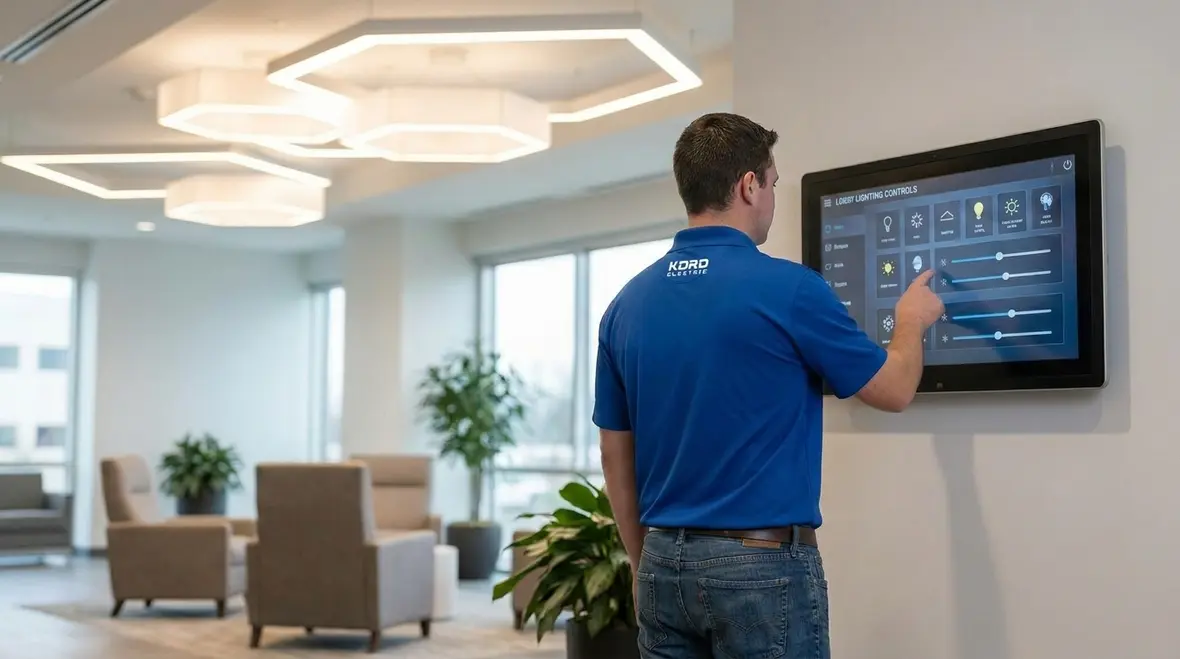
Most facilities already know that LEDs cut energy. Yet, intelligent controls help you keep those savings steady. As a result, your facility avoids the common trap where people override lighting during the day, or schedules stay “set and forget” long after a space changes use.
We typically see value from these control strategies:
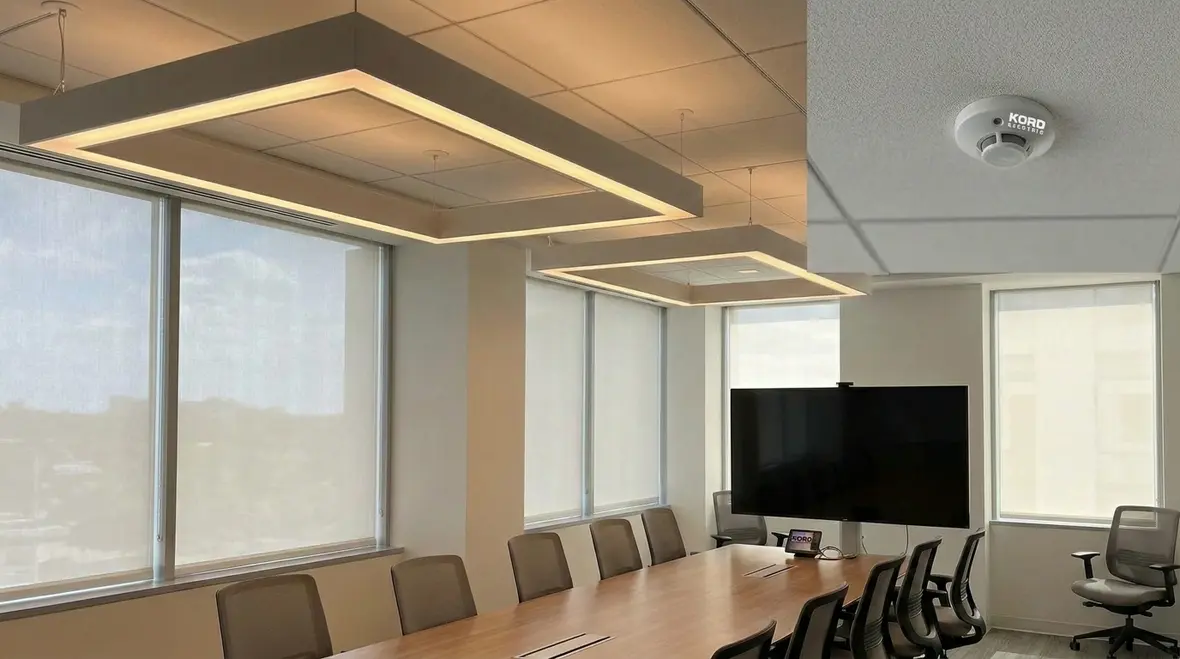
- Occupancy sensing that turns lights down or off when areas sit empty, such as conference rooms, break rooms, and corridors
- Daylight harvesting that dims electric light near windows while sunlight does the heavy lifting
- Time based scheduling that matches shift patterns for offices, warehouses, and production support spaces
- Scene control that aligns lighting levels to tasks, like cleaning, maintenance, or presentations
- Zone control that prevents whole floors from running at full output when only one section needs it
Then there is the part many people miss: savings come from how the system is tuned. Our technicians and expert service staff do not just install hardware; they help set up zones, verify sensor coverage, and confirm that overrides match real behavior. In other words, we make the lighting controls act like the building’s brain, not like a strict teacher who grades you for being late.
Costs to plan for, and why estimates need accuracy
To calculate ROI, we must first talk about costs with clarity. There are equipment and installation costs, yes. However, the bigger risk is underestimating how the building will be integrated into the electrical and controls backbone.
In commercial and industrial facilities, the financial plan often includes:
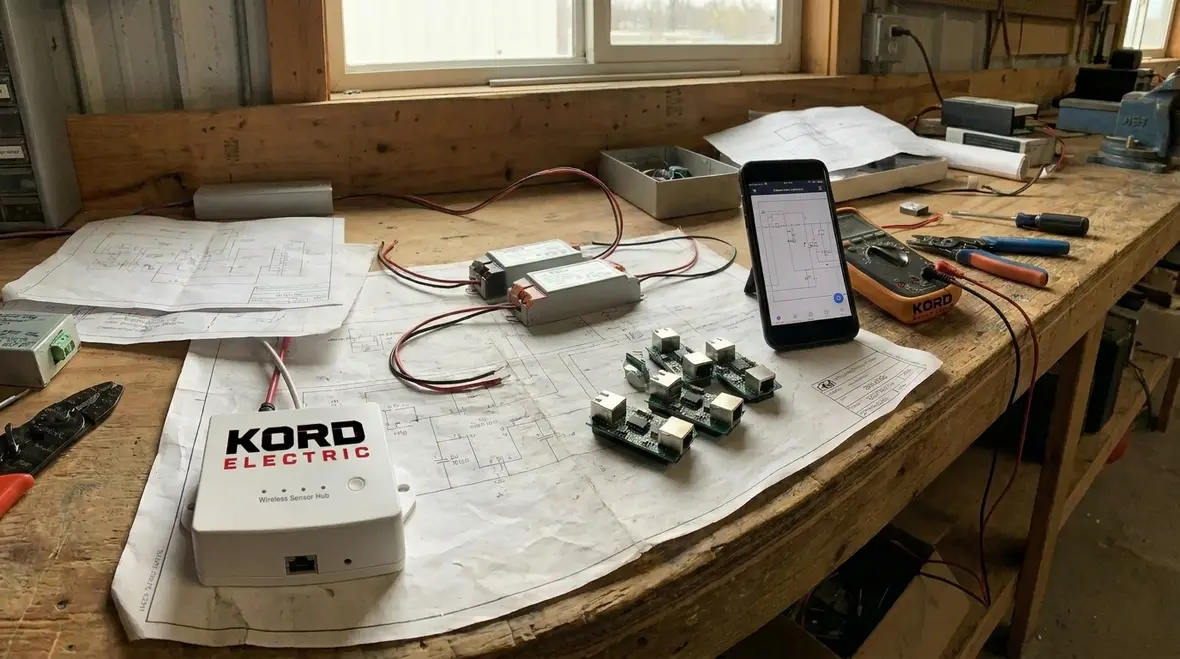
- Controls hardware like sensors, lighting panels or drivers, and network modules
- Labor for field wiring, mounting, and commissioning
- Programming and tuning so schedules and zones match how the facility operates
- System integration if the building uses energy management platforms, building automation, or data logging
At Kord Electric, we also consider how the site’s electrical infrastructure behaves. For example, when facilities manage power distribution and monitoring, they can connect lighting performance to broader energy goals. Our experience with data center electrical infrastructure essentials reminds us that proper power distribution, monitoring, and safe design choices influence how any electrical system performs over time. While lighting controls are different from data center power, the mindset is the same: build for stability, then validate performance. For teams who want to see how that mindset applies to high-density environments, our resource on data center electrical infrastructure essentials walks through that approach in more detail.
So, when we produce project guidance, we aim for estimates that stand up in real operations, not just during the walk-through. This keeps ROI projections honest, and it reduces the chance of “surprise costs” that show up like pop quizzes in the middle of a workday.
How intelligent controls affect operating budgets and staffing
ROI does not only live in the utility bill. It also shows up in time, coordination, and the work your team avoids. When lighting stays controlled by a schedule that actually matches occupancy, staff stops doing repeated manual adjustments.
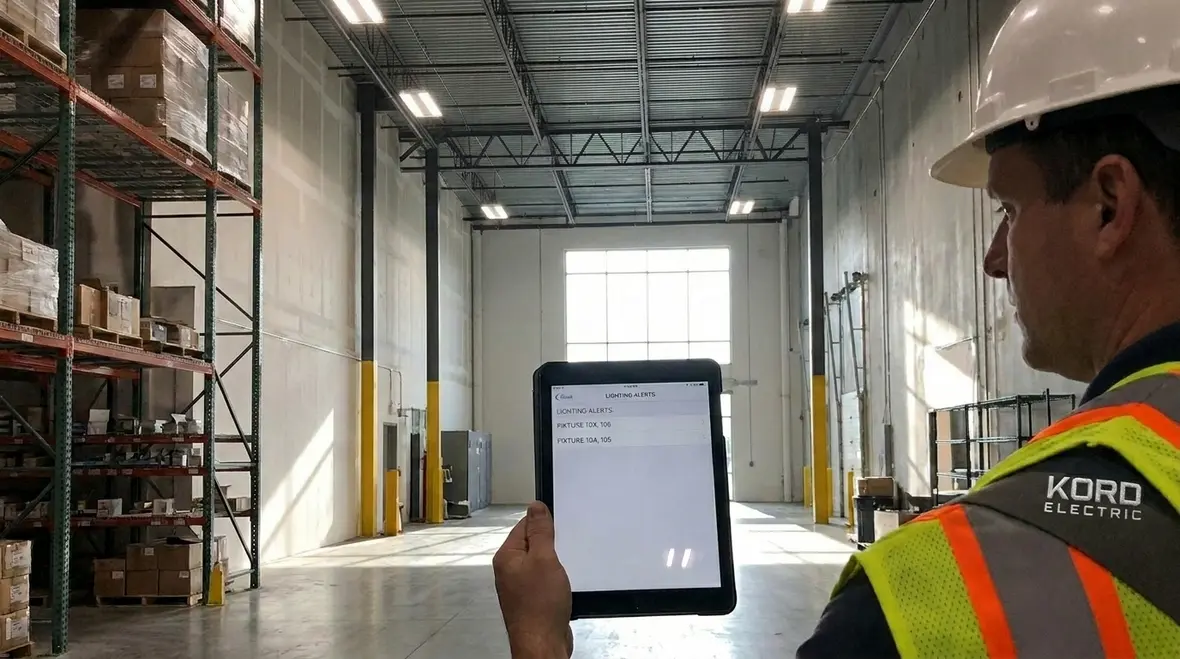
Additionally, smart systems help you manage facility operations in a calmer way. For example, when the system flags failed components or behavior changes, the right technician can respond sooner. Therefore, you reduce downtime that can disrupt work areas, tenant operations, or production schedules.
We also see that staff buy-in improves when our expert service staff explains the logic clearly. If your facilities team understands why a zone dims at 2:00 PM or turns off after a sweep of occupancy, they use overrides correctly and avoid fighting the system. And when they need changes, they know who to call, because we keep the process organized.
In short, better controls create fewer “why did the lights do that?” moments. If you have ever tried to troubleshoot lighting during an active shift, you know those moments cost more than money. They cost focus.
How we install controls for reliability in commercial and industrial sites
We design installation for long service life, safe operation, and predictable performance. So, instead of rushing into new devices, we start with a field assessment that considers building usage, lighting layout, and the electrical path that powers the system.
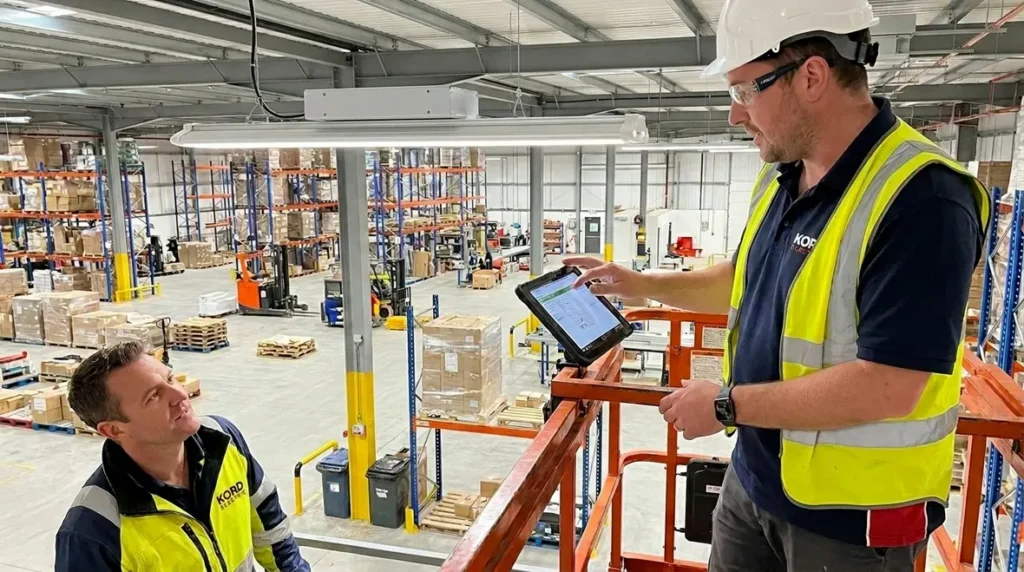
Then we plan the commissioning steps. Commissioning matters because controls only perform as well as their setup. Our technicians validate sensor coverage, ensure zones reflect how people actually move, and verify that daylight dimming behaves in a stable way. After that, we provide clear guidance for ongoing use, including what overrides should do and when maintenance should occur.
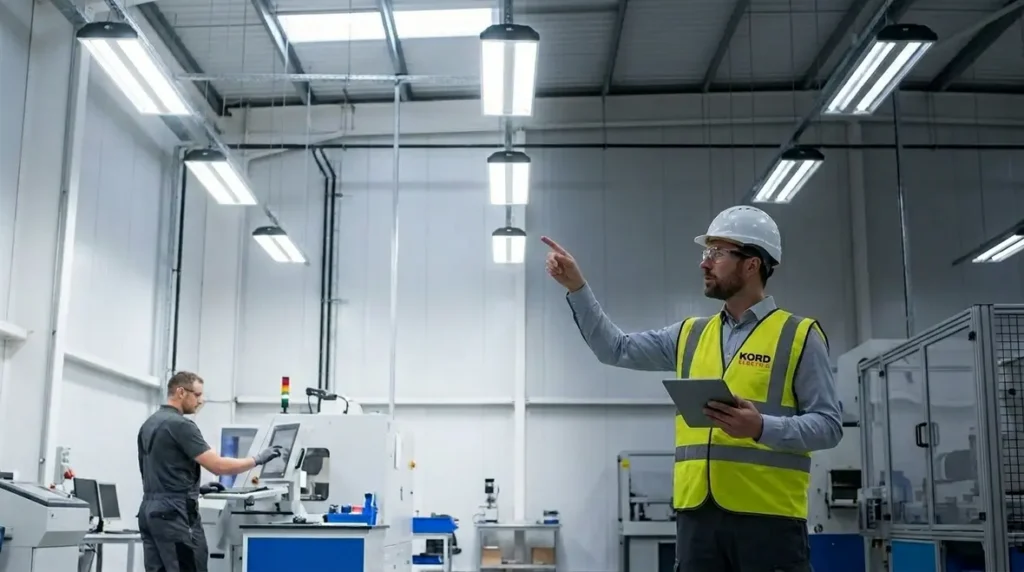
In facilities such as warehouses and production support areas, we also pay attention to motion patterns and coverage range. Motion sensing can fail if placement is wrong, and dimming can annoy occupants if it swings too aggressively. Therefore, we tune behavior to your workflow and comfort needs.
Meanwhile, for major property buildings with mixed tenant spaces, we help keep the system organized. We treat each zone like it has a job, because it does.
How long until payback, and what factors change it
Payback periods vary, and anyone who claims a guaranteed number usually sells something rather than solves problems. Still, intelligent lighting controls often deliver meaningful results within a few years, depending on the site.
Here are the factors that can speed up ROI:
- High occupancy variability, such as offices with meeting rooms and departments that rarely run all day
- Strong daylight access, especially in perimeter zones
- Frequent schedule changes, where overrides would otherwise lock lights into wasteful modes
- Long operating hours, where small efficiency improvements compound
- Clear zone layouts, which make sensor mapping simpler and performance more stable
And here are the factors that require careful planning:
- Complex ceiling layouts that block sensor sight lines
- Multiple tenants with different schedules and lighting needs
- Older wiring systems that may limit control design choices without upgrades
- Spaces with irregular occupancy, where tuning must reflect real patterns
For major property buildings and industrial facilities, our approach reduces guesswork. Since we help configure systems to real operations, we protect the payback timeline. Otherwise, ROI can turn into “maybe,” and nobody budgets for maybe.
FAQ: Intelligent lighting controls ROI for commercial facilities
Conclusion: Start measuring ROI with a real lighting controls plan
If your facility wants to control lighting with less waste, better comfort, and clearer maintenance outcomes, Kord Electric helps you build a smart, reliable system that supports your budget goals. We assess your space, design zones that match how people work, and commission the setup so performance stays steady. If you want the ROI numbers to feel solid, not hypothetical, contact us for a commercial and industrial lighting controls installation evaluation. We will guide the plan, step by step.
For facilities planning broader electrical strategies, intelligent lighting controls also pair well with structured electrical preventive maintenance programs. Coordinating controls, inspections, and testing keeps critical systems aligned, compliant, and ready for long-term performance.