Preventative Electrical Maintenance for Warehouses
At Kord Electric, we treat industrial warehouse power the way others treat seatbelts. You do not brag about it when it works, but you absolutely notice when it fails. That is why our preventative electrical maintenance checklist for warehouses starts with a simple plan: inspect, test, correct, and document. First, we verify terminations, busbars, and panel conditions. Then, we test protective devices and check for overheating. Next, we review grounding and bonding, confirm labeling, and scan for water or pest intrusion. Finally, we schedule repairs and keep records that help others trust the system when the lights, cranes, or conveyors need to run without drama. And yes, we mean it: the goal is fewer surprises, not more meetings.
Why preventative electrical maintenance matters for industrial warehouses
Industrial warehouses operate like busy cities. You have shifting loads from forklifts, HVAC systems, racking, dock equipment, and production lines that may kick in at unpredictable times. As a result, electrical wear stacks up slowly, then shows up suddenly. Corrosion grows at the worst connections. Dust collects where airflow used to be. Heat cycles loosen terminals. Over time, the warehouse starts to feel “fine” right up until it is not.
Our expert service staff explains this plainly to site managers and maintenance teams. They share how preventative work reduces arc flash risk, keeps motors and drives happier, and helps protect sensitive controls. Moreover, inspections catch small defects that would later become costly replacements. In other words, we stop the problem at the “early symptoms” stage, not the “why is everything off” stage. And if you have ever heard an alarm at 2 a.m., you know that stage does not come with a soundtrack you enjoy.
Key inspection tasks for electrical rooms and distribution panels
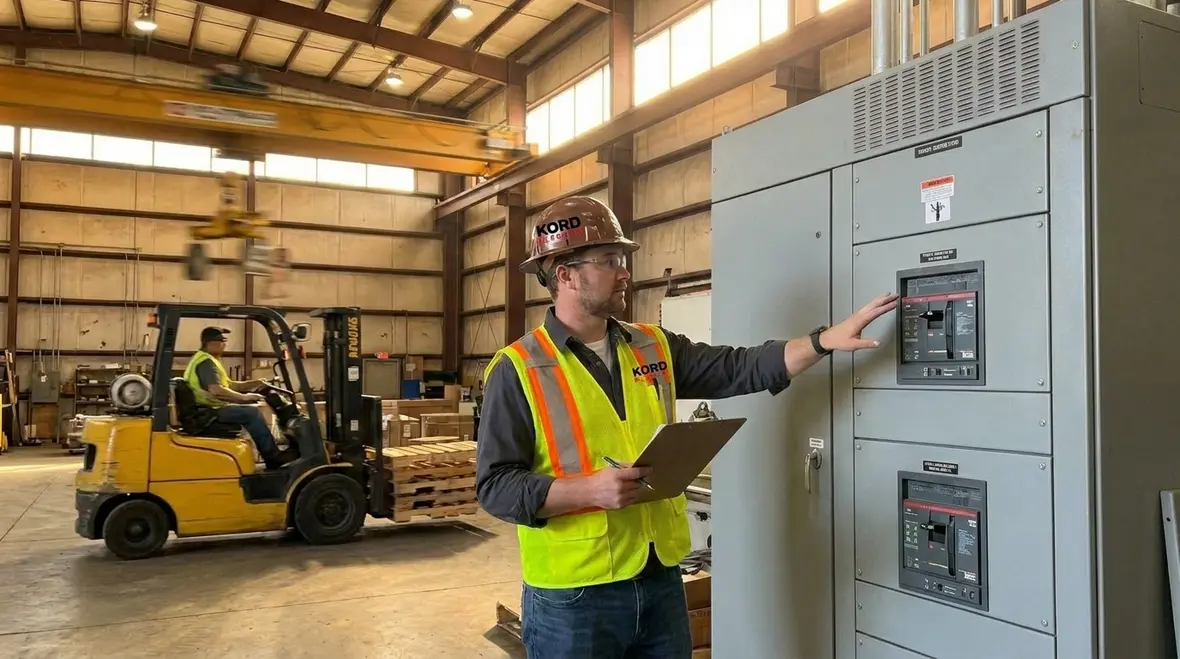
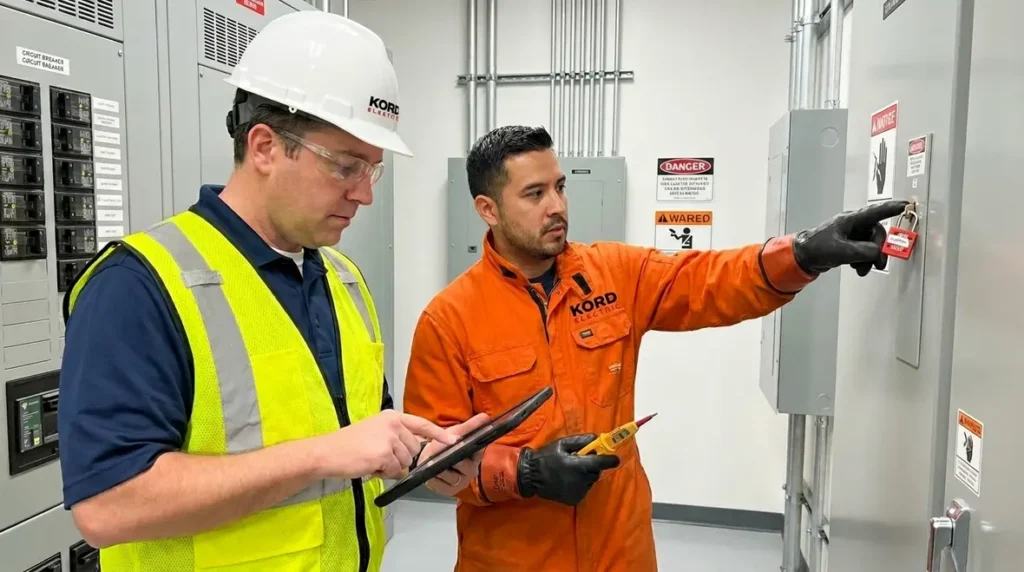
When our technicians walk an electrical room, they do not only look for obvious damage. Instead, they follow a routine that checks condition, labeling accuracy, and operational readiness. First, we inspect enclosures, doors, and seals to confirm water and dust control. Then, we evaluate panel interiors for signs of overheating such as discoloration, melted insulation, or warped parts.
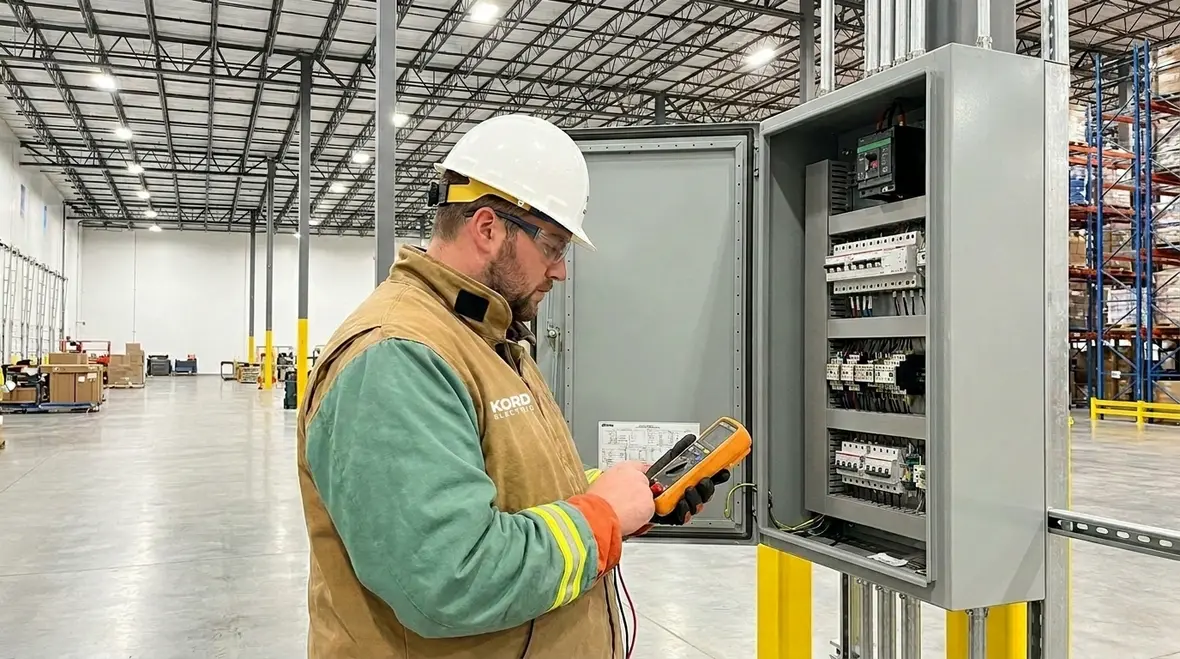
After that, we verify that connections remain tight and properly torqued. Loose terminations can increase resistance and generate heat, which turns normal wear into accelerated failure. We also look for missing hardware, improper wire sizing, and any evidence of past repairs that never got properly documented. Finally, we test protective devices and verify coordination so the system trips the right way, at the right time, for the right fault.
Here is where our team keeps things practical. We make sure the facility can maintain uptime and safe access. So, we coordinate inspections around off peak shifts. Also, we help other contractors understand what we found and what we plan to do next. That prevents the dreaded “someone else changed it again” moment.
Testing and diagnostics that catch failures before they start
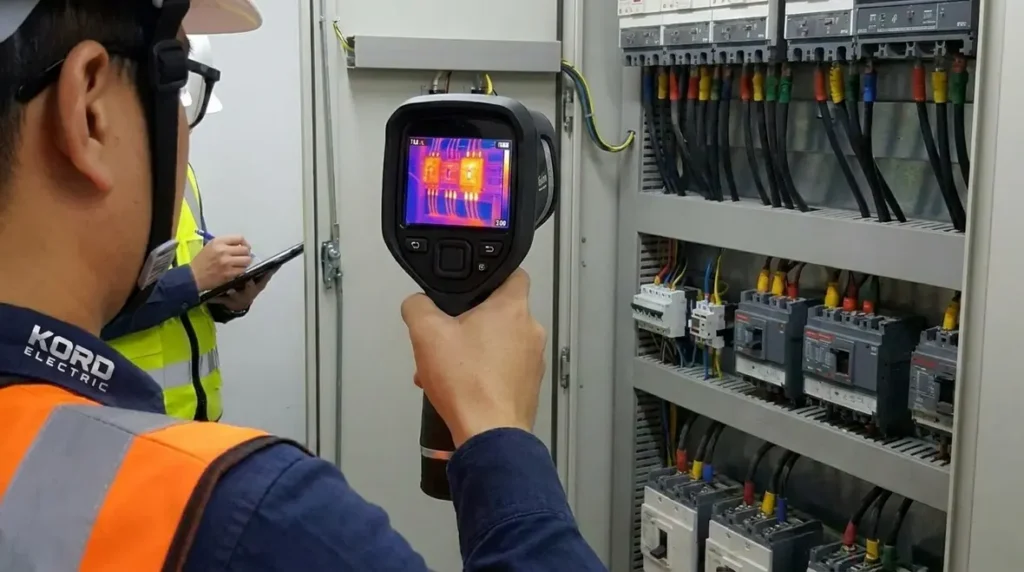
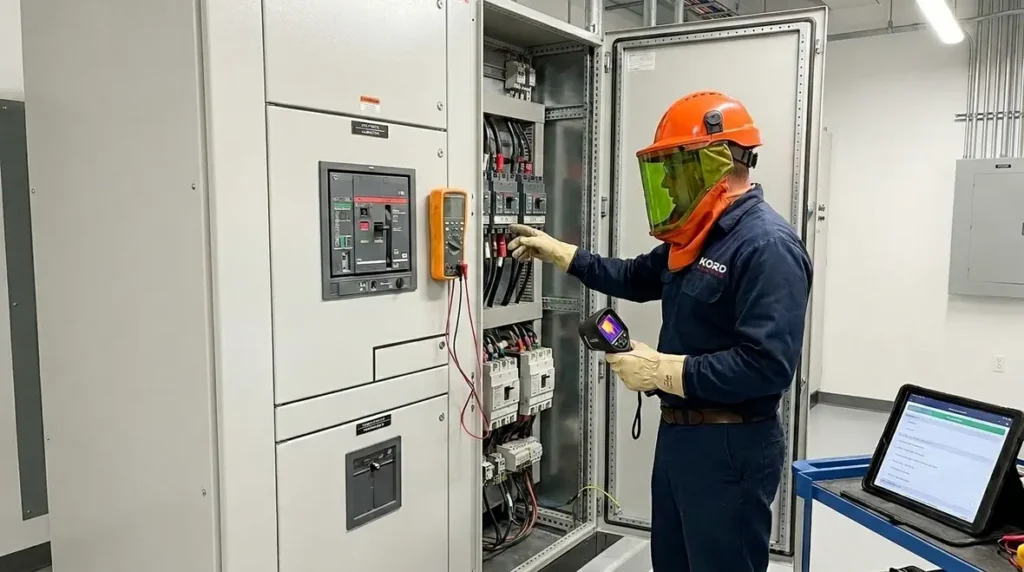
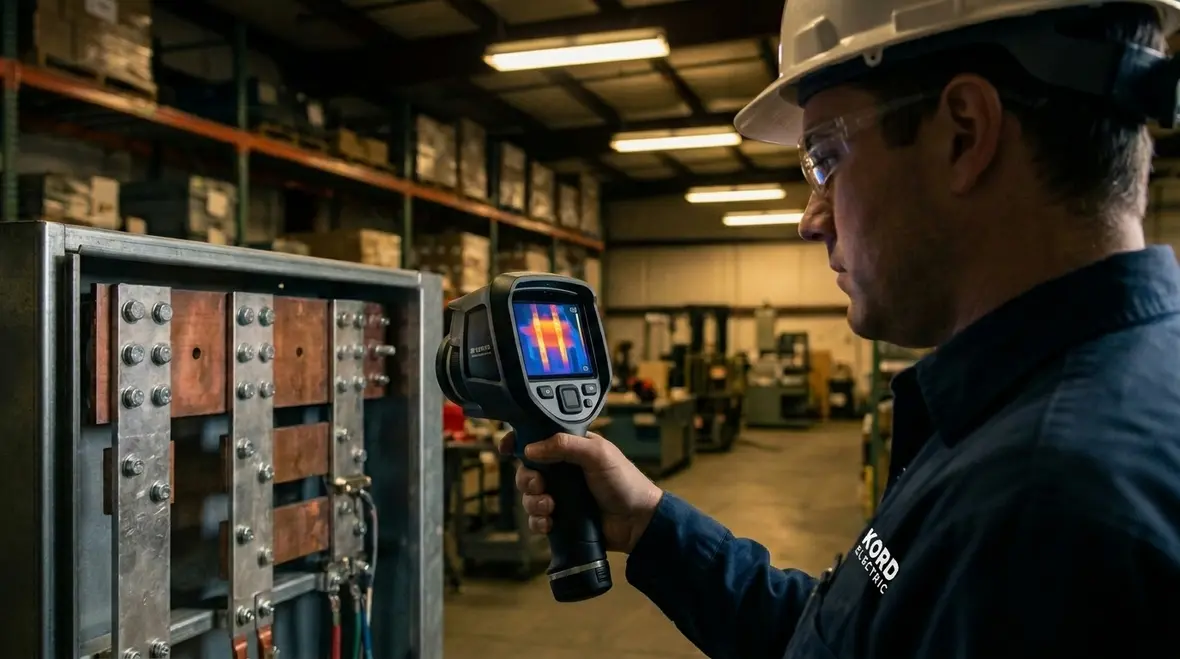
Preventative electrical maintenance needs more than visual checks. We use measurements and diagnostics that show what the system feels like under real stress. For example, infrared scanning can highlight hot spots on busbars, lugs, and connections. However, the scan alone does not tell the full story, so we pair it with targeted checks. Then we confirm that protective relays and breakers respond as designed.
We also evaluate grounding and bonding, because a weak path to earth can cause abnormal behavior during faults and surges. Proper grounding reduces shock risk and helps protective devices clear faults reliably. Moreover, we review surge protection and assess whether it still meets performance expectations given local conditions.
In many industrial warehouses, the distribution system connects to larger electrical infrastructure like data and communications spaces, even if those rooms are not “warehouse areas.” That matters because shared infrastructure can carry disturbances into control systems. Where facilities need it, we help align the health of the overall electrical pathway, including the essentials that support critical loads. If a facility wants a clear view of electrical infrastructure components, our team points to the same principles covered in our Kord Electric blog resource on data center electrical infrastructure essentials. The approach transfers well because the goal stays consistent: keep critical power stable, clean, and protected.
How power quality affects motors, drives, and automation
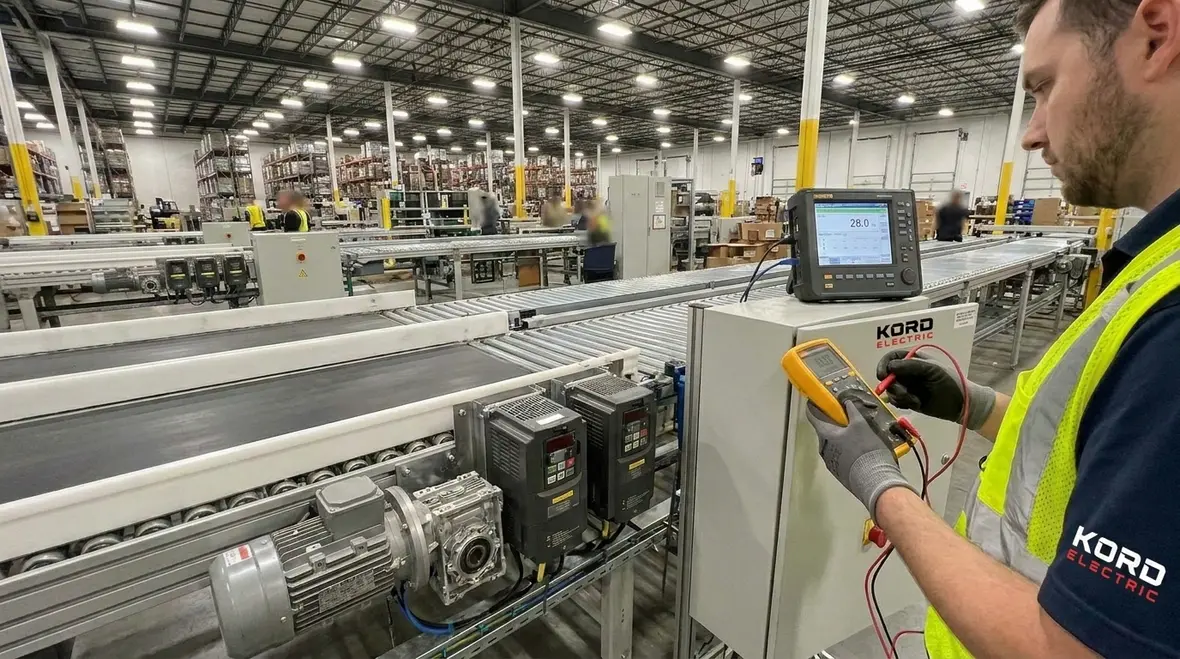
Warehouses run more automation than many people realize. Conveyor controls, sortation systems, warehouse management hardware, access control, and machine vision depend on stable power. Yet power quality problems do not always appear as a full outage. Instead, they show up as nuisance trips, higher motor temperatures, damaged drives, or random control glitches that eat hours of troubleshooting.
Our technicians track common culprits like voltage sags, harmonics, and recurring transients. Then we compare findings to the operating profile of the facility. If a warehouse uses variable frequency drives, for instance, harmonic distortion can rise and stress components. Therefore, we help facilities plan corrective actions such as filtering, improved system configuration, or targeted component replacement.
Additionally, we pay attention to load changes. When a facility adds new racking, expands cold storage, or brings on a new HVAC arrangement, the electrical system does not automatically adjust its stress levels. So, we update our preventative electrical maintenance checklist for warehouses with the new reality. In a warehouse, change is constant. Our job is to make sure the power system stays ahead of it, not chasing it after the fact. And yes, power quality issues can feel like ghosts. They show up just when you want to relax.
Safety planning, documentation, and coordination with operations
Maintenance does not help anyone if it disrupts safety or operations. Kord Electric coordinates closely with facility staff to plan inspection schedules, isolate work areas when needed, and ensure proper lockout and safe work practices. We also verify labeling so other technicians and electricians can work with clarity, not guesswork. Labels matter. When they fail, everyone spends their time playing “find the breaker” instead of doing real work.
Our expert service staff also documents results in a way that supports decision making. We provide clear observations, prioritize issues by risk, and explain the next steps in plain language. After all, someone has to approve repairs. Moreover, if a critical component shows early signs of failure, we help the team plan the timing so production stays moving.
We also help with coordination across teams. Sometimes a warehouse uses one vendor for electrical work and another for controls. We help bridge that gap by sharing findings that relate to both power and device health. That keeps other contractors from treating electrical symptoms like control mysteries. And that saves time, money, and a lot of frustration.
Common problems we see in warehouse electrical systems
Across commercial and industrial warehouses, we see patterns. First, we often find overheating at terminations where torque has changed or where corrosion has weakened the contact surface. Second, we see moisture issues caused by condensation, roof leaks, or poorly sealed conduits. Third, we find dust buildup around ventilation paths in electrical cabinets, which reduces cooling and speeds up component aging.
We also spot aging insulation and worn cables in high vibration areas. Then there are cases where past renovations created undocumented changes. Someone swaps a device, moves a conduit, or bypasses protection during an emergency. Later, no one remembers what changed, and the system works until it does not.
Finally, we see protective devices that meet the letter of code but miss the spirit of reliability. If a breaker trips too early, maintenance teams keep resetting it without deeper review. If it trips too late, faults can grow bigger than they should. Therefore, our approach focuses on correct operation, not just compliance on paper.
As a gentle joke, we tell teams the system does not need more “hope.” It needs better testing, clean connections, and a plan that matches how the warehouse actually runs.
Maintenance scheduling and budgeting that keeps uptime steady
Industrial facilities need a schedule that fits real operations. We help warehouses develop a maintenance rhythm that includes periodic inspections, annual testing, and condition based follow ups. We also recommend special attention after major changes such as equipment additions, panel expansions, or new dock infrastructure. In addition, we coordinate testing windows so forklifts, lifts, and loading activity stay uninterrupted as much as possible.
Budgeting should not feel like a gamble. Instead, we treat maintenance as risk management. We prioritize repairs based on safety impact, likelihood of failure, and effect on critical loads. That way, facilities spend money where it prevents the most disruption. Moreover, preventive electrical maintenance checklist for warehouses becomes a living document, updated as findings evolve.
Our team also encourages leadership to ask one clear question during planning. What parts of this electrical system protect the people and keep essential operations alive? Once that is answered, scheduling becomes clearer. And when the plan is clear, teams stop reacting to the calendar and start running it.
FAQ
Conclusion
Industrial warehouse electrical systems do not fail all at once. They degrade quietly, then they demand attention fast. Kord Electric helps commercial and industrial facilities keep power reliable with clear inspections, proper testing, and documentation your team can trust. Our technicians and expert service staff explain findings in plain language and help you plan repairs that protect uptime and safety. If you want fewer surprises and more steady operations, contact us today for a preventative electrical maintenance visit and a focused maintenance plan.
For warehouses that want to go deeper into long term reliability strategies, our broader commercial and industrial electrical maintenance plans resource walks through how structured programs support larger portfolios. And when power quality issues start to show up as drive trips or motor problems, our team can connect warehouse findings with dedicated diagnostics similar to those outlined in our voltage stability services for commercial and industrial facilities.
If your warehouse operations are growing, expanding hours, or adding automation, it is also a good time to review how lighting, loading areas, and distribution equipment are supported. Our electrical preventive maintenance services are designed specifically to keep commercial and industrial facilities ahead of failures, instead of reacting to them after a shutdown.