Kord Electric Boosts Commercial Kitchen Load Capacity
How Kord Electric improves commercial kitchen electrical load capacity
In a busy commercial kitchen, the commercial kitchen electrical load capacity matters more than most people admit, until the lights flicker and the ovens decide to take a day off. Kord Electric designs and optimizes power distribution so high demand cooking gear, ventilation motors, refrigeration, and controls can run with stable voltage and safe temperatures. In our experience, we see the same pattern: a kitchen expands, loads quietly shift, and the electrical system keeps “hoping” it will be fine. Then the system throws a fault, a nuisance trip, or worse, a failure that turns dinner service into damage control. Therefore, we plan, measure, and maintain the distribution system in a way that supports dependable performance and smarter energy use.
Map the loads before equipment gets added
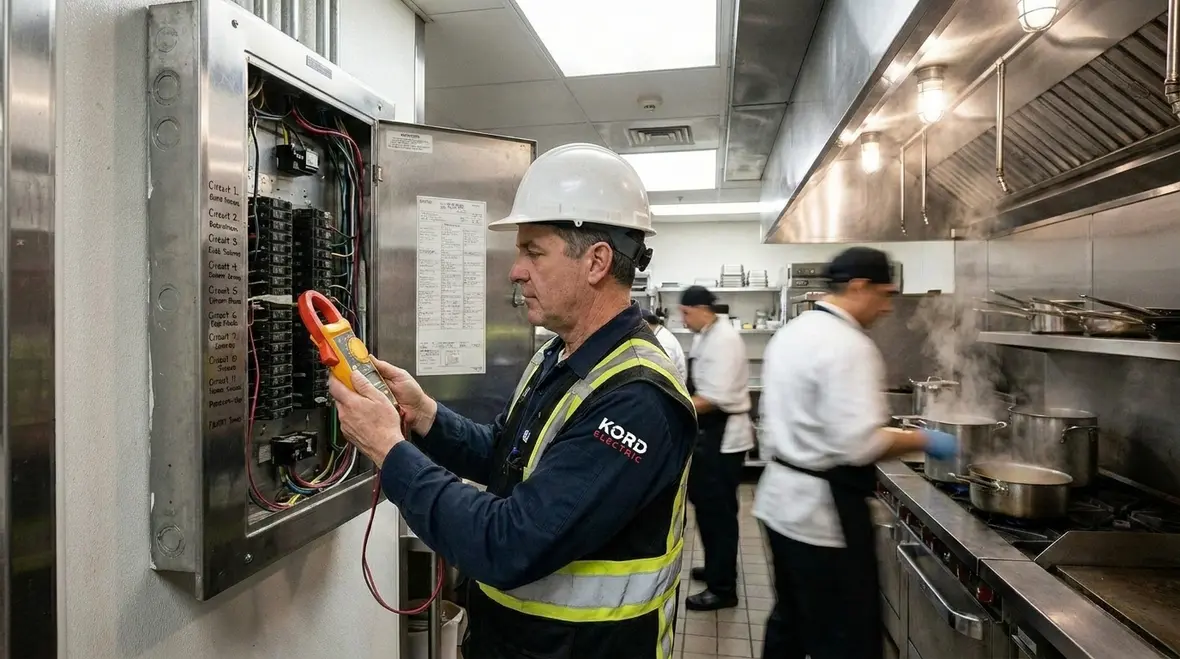
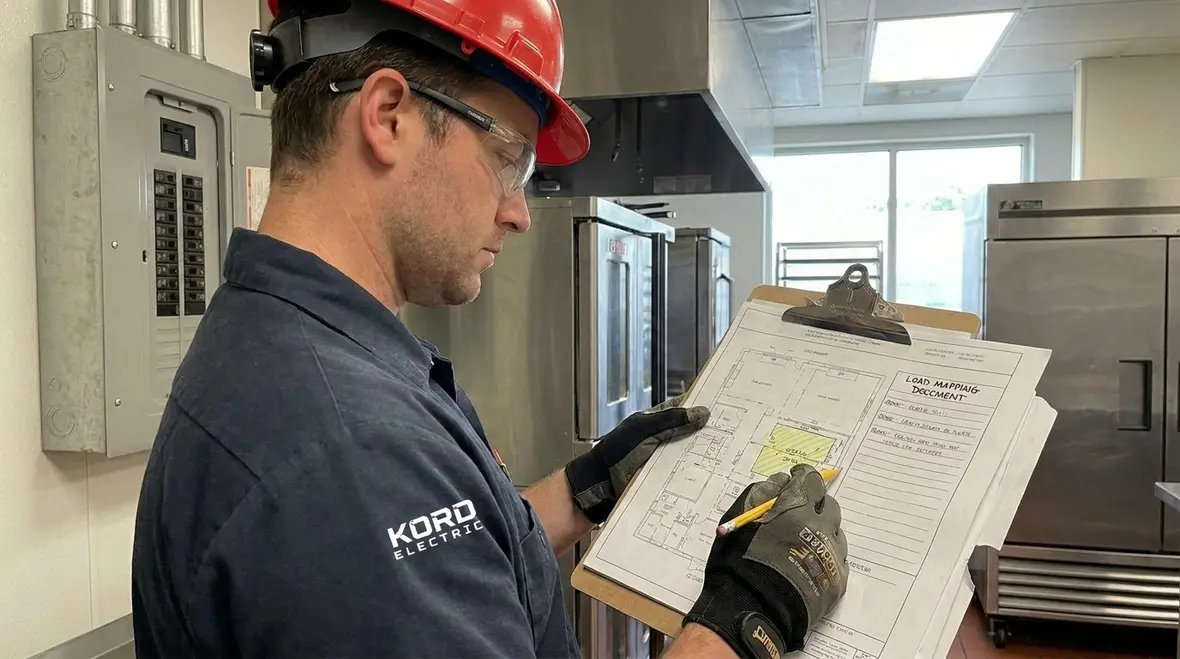
People often add equipment first and figure out power later. However, power distribution should start with a clear load map, not a guessing game. Kord Electric technicians begin by reviewing the site’s actual gear list and its operating method: steady running, cycling loads, start up surges, and peak demand windows. Then we measure existing supply capacity, panel ratings, feeder sizes, transformer capacity, and how the facility behaves during the busiest service hour.
Next, we break down the kitchen into zones like cooking, warewashing, refrigeration, and HVAC support. This matters because one hood system might spike demand for short bursts, while a refrigeration rack can add a constant background draw. When the loads overlap, the distribution system must handle it without voltage drop. In short, we design so the kitchen does not “borrow” power from the rest of the building until everything starts to sag.
Of course, we also consider electrical load types. Resistive loads like heating elements behave differently than motor loads. Therefore, our team checks both real power and reactive power needs so breakers, busbars, and contactors keep operating within safe limits.
Why voltage drop and heat buildup cause costly downtime
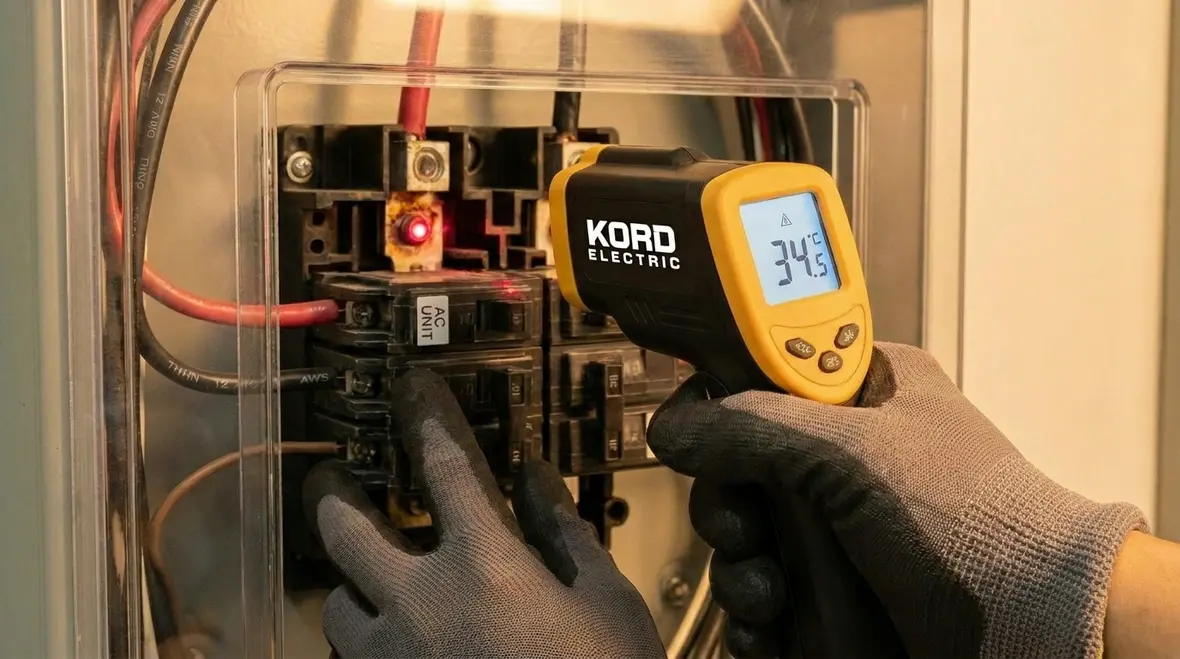
Voltage drop looks harmless on paper, but in the field it can lead to equipment instability, controller errors, and motor stress. When a feeder runs long distances or uses undersized conductors, the voltage at the equipment ends up lower than the panel expects. Consequently, motors draw more current and heating equipment runs less efficiently. That inefficiency turns into heat, and heat always has an opinion. It accelerates insulation aging, loosens connections, and increases the chance of failures right when the kitchen is fully loaded.
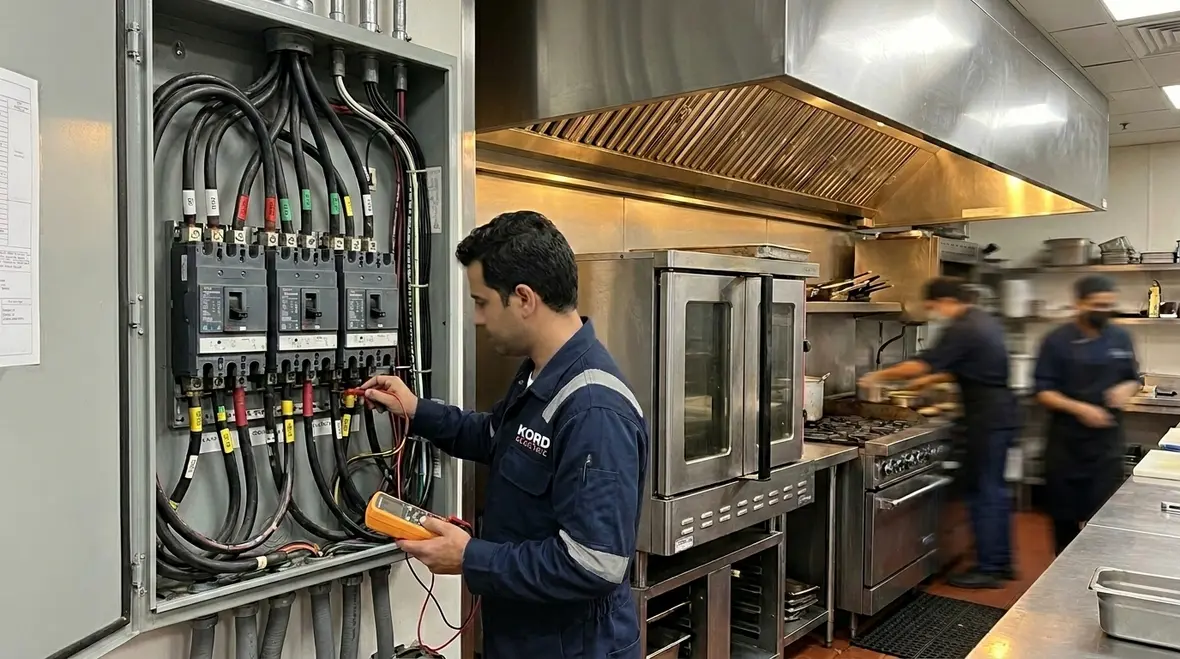
Additionally, heat buildup often appears as “mystery problems.” One technician might find a warm breaker, another might notice a hot lug, and someone else might blame the new fryer. Yet the root cause usually traces back to distribution design or maintenance gaps. That is why Kord Electric evaluates connection quality, torque values, and termination condition during service calls and planned visits.
And yes, we have heard every version of the joke: “The breaker is fine, it is just moody.” Breakers do not get moody. They get hot when the electrical system asks them to do the impossible.
Design power distribution for kitchens with peak demand swings
Commercial kitchens do not run in a gentle, steady way. They spike. A rush period can start multiple burners, activate exhaust fans, kick on make up air, and bring warewashing equipment to life. At that moment, the distribution network must deliver current while keeping voltage within acceptable limits. Kord Electric optimizes the system using practical steps that reduce bottlenecks and improve balance.
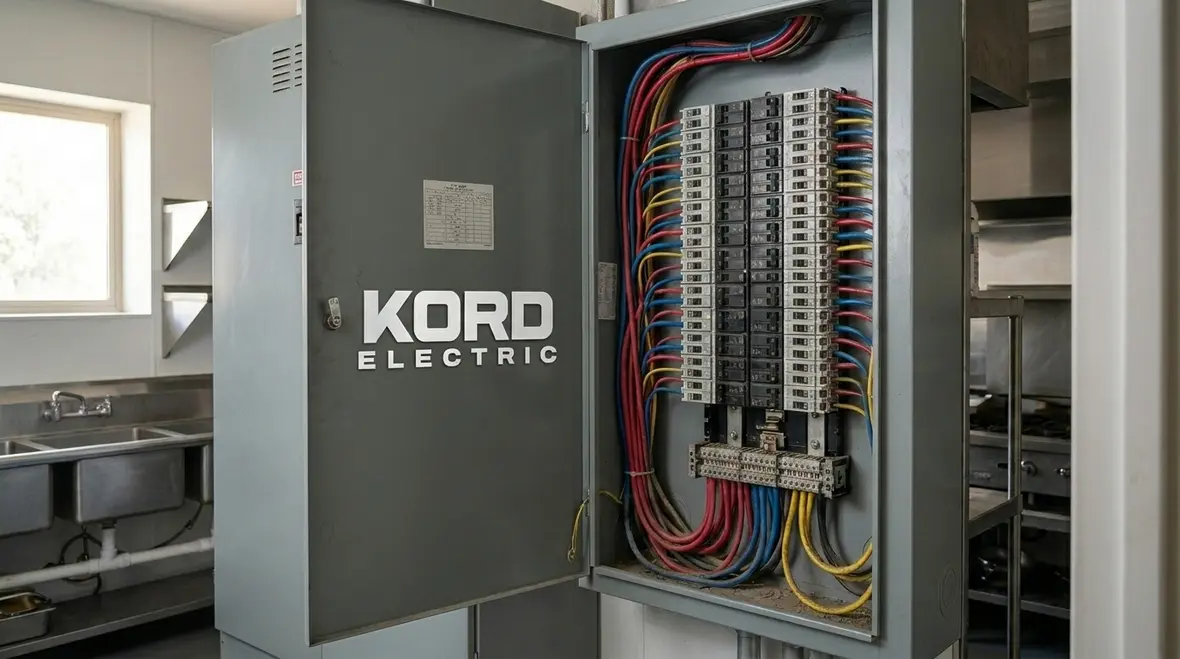
First, we check panel and busbar capacity. Then we verify feeder segmentation so one large load does not dominate voltage behavior. Where it makes sense, we recommend dedicated circuits or better load grouping for equipment that cycles frequently. We also verify protective device settings and coordination so nuisance trips stop happening and faults clear fast without harming upstream gear.
To avoid hidden issues, our technicians consider starting current for motor loads and compressor systems. Therefore, we look at inrush behavior, not just nameplate ratings. If the kitchen uses multiple three phase motors with similar start times, we plan the distribution sequence and feeder strategy so the facility can handle the peak without stressing conductors or transformers.
Use preventive maintenance to protect your distribution system
Design helps, but maintenance keeps the system honest. Kord Electric follows a preventive maintenance approach built for commercial and industrial facilities, especially major property buildings that run long hours and cannot afford repeated disruptions. Our team checks the same areas that most people skip until something breaks: connections, breaker condition, insulation health, thermal performance, and protective device operation.
In our preventive program, our expert service staff performs inspections and testing that reveal early warning signs. We track trends, because one warm spot today often becomes a failure later. Then we schedule corrective actions at times that fit your business schedule, not ours. We also document findings clearly so the facility manager can make decisions with confidence. For facilities that want a structured, long term plan, we align our kitchen work with broader electrical preventive maintenance programs across the property.
Importantly, we understand that kitchen electrical systems face harsh conditions. Grease, humidity, vibration, and frequent equipment cycling all take their toll. Therefore, preventive maintenance must focus on areas where heat and wear build up over time, not just a quick visual look. If you want the short version, it is this: we help you avoid the “wait until it fails” strategy, because waiting is expensive and usually happens on a holiday weekend.
Coordinate breakers, grounding, and surge protection like professionals
Even a well designed system can underperform if protective and safety elements do not match the real kitchen loads. Kord Electric coordinates breakers and protective devices so faults clear properly and equipment stays protected. We verify trip characteristics, check for loose or overheated components, and confirm that protective ratings align with the application.
Next, grounding and bonding need attention. Kitchens often include metal hoods, refrigeration frames, motor housings, and control enclosures. If grounding paths become compromised, equipment can develop nuisance faults, stray voltage issues, and safety risks. Accordingly, our technicians check bonding points and ensure the system supports safe clearing during fault events.
Surge protection deserves a serious look too. When the kitchen starts motors and cycles contactors, electrical transients appear. Meanwhile, the building may also face utility switching events. Therefore, we evaluate surge devices and installation practices so sensitive controls and communication systems stay stable. We do not sell “extra gadgets” for fun, we reduce real risk. If anything, we prefer fewer surprises over more blinking lights.
What our technicians explain to help facility teams make smarter decisions
One reason Kord Electric builds trust is how our technicians explain what they find. We do not hide behind technical jargon. We walk facility teams through the cause and the impact, then we outline options with clear next steps. For example, we explain how a small voltage drop can create bigger motor stress, and how a connection that looks fine during a quick glance can overheat under load. Then we connect those findings to your budget and operational schedule.
Also, we help teams prepare for future growth. If a property plans to add another hood, expand refrigeration, or upgrade warewashing, we can review the distribution design before the purchase order lands. That is the calm way to do it. It avoids the last minute rush where everyone debates power while the kitchen team just wants dinner on time.
Finally, we use ongoing communication. We provide findings, recommend actions, and support timing. In short, our service staff treats the electrical system like a core operational asset, not a background utility.
FAQ
Call Kord Electric for commercial and industrial kitchen power support
If your facility serves guests at scale, your electrical system should perform like it means it. Kord Electric helps commercial and industrial buildings optimize power distribution for high demand kitchens, reduce voltage drop, improve safety coordination, and keep the system healthy with preventive maintenance. Our technicians explain findings in plain language and plan next steps that fit your operations. If your kitchen upgrades are part of a broader facility strategy, we can also coordinate with services such as lighting installation services to keep the entire building aligned with your electrical goals. Contact Kord Electric to review your current setup and protect your kitchen from avoidable downtime, because the only thing that should be hot in your kitchen is the food.
To keep your commercial kitchen electrical load capacity aligned with future growth, our team also reviews expansion plans, renovation timelines, and upcoming equipment changes. That way, service upgrades, panel work, and distribution improvements can be scheduled alongside other projects instead of arriving as last minute surprises.
Whether you are planning a remodel, responding to nuisance trips, or simply ready to modernize an aging distribution network, Kord Electric brings structured planning, detailed testing, and clear explanations to every phase of the project.
When you are ready to move from reactive fixes to a proactive strategy, Kord Electric can align your kitchen electrical system with facility wide goals for efficiency, reliability, and safety, so your team can focus on service instead of circuit breakers.