Emergency Electrical Safety for Commercial Properties
Emergency electrical safety for commercial properties: how managers prevent the worst before it happens
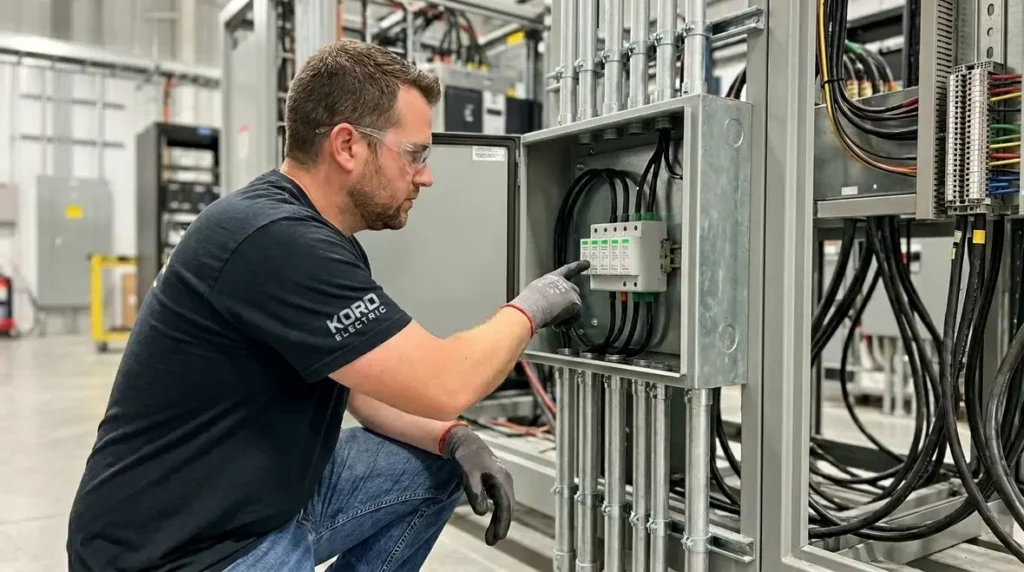
Emergency electrical safety for commercial properties is not a “someday” task. It is an everyday plan that helps keep people safe when something fails fast, like a breaker tripping at the exact wrong time. We at Kord Electric work with commercial and industrial facilities, and we see the same pattern again and again: managers respond well when the basics are already in place. In this guide, others can follow clear, field-tested protocols that our technicians and expert service staff explain on site, then train your team to repeat without guessing. And yes, the goal is to keep incidents from turning into headlines, fires, or that awkward meeting nobody wants after hours.
Set the emergency response plan before the power goes quiet
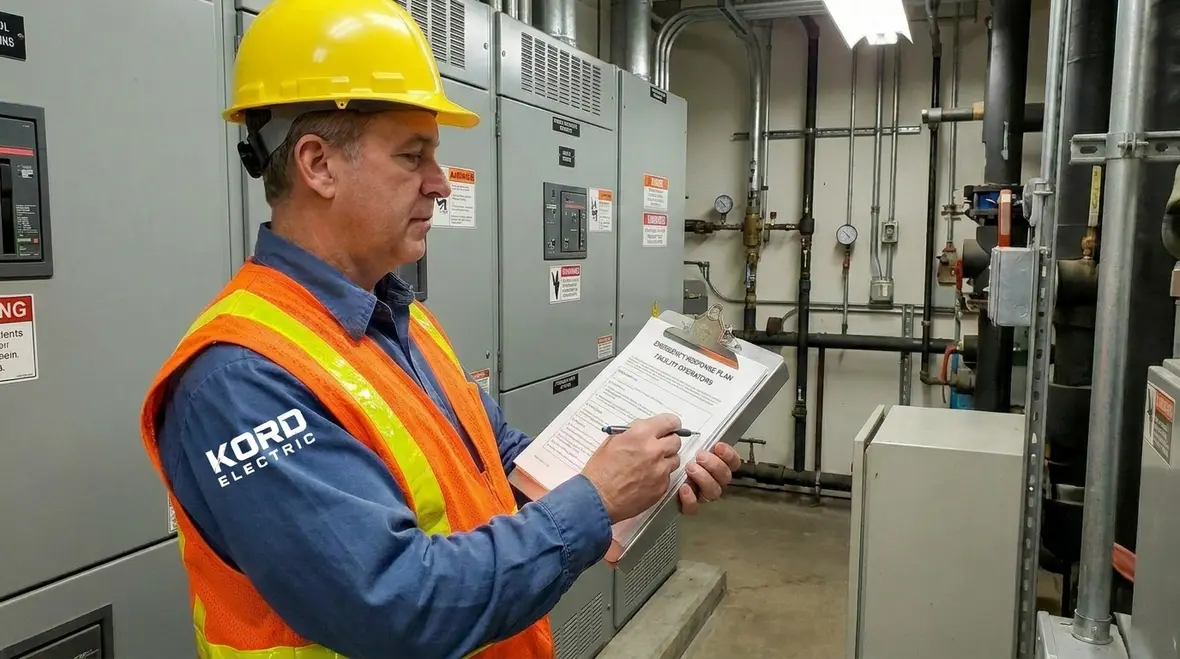
We start by building an emergency response plan that fits the site, the load, and the real layout, not a generic document that lives in a binder. First, we identify the electrical rooms, switchgear, transfer equipment, UPS rooms, and any data center zones that hold sensitive power paths. Then we define who does what, and how fast. After that, we confirm evacuation routes and meet points so the team moves without confusion.
Next, we spell out shutdown steps in plain language. If an incident involves smoke, arcing sounds, or burning smells, staff must stop work and follow the facility alarm process. Meanwhile, our approach emphasizes controlled isolation: we advise managers to know the locations of main disconnects and panelboards, and we stress that only trained personnel should operate critical equipment. Transition planning matters because in many real events, people rush to “fix it” like a DIY episode, and electricity does not care about your confidence.
Finally, we document the plan and rehearse it. We do not mean a one-time tabletop exercise. Instead, we schedule periodic drills, update contact lists, and confirm that contractors, security teams, and on call leaders can reach each other instantly.
Know the power chain: from utility service to critical loads
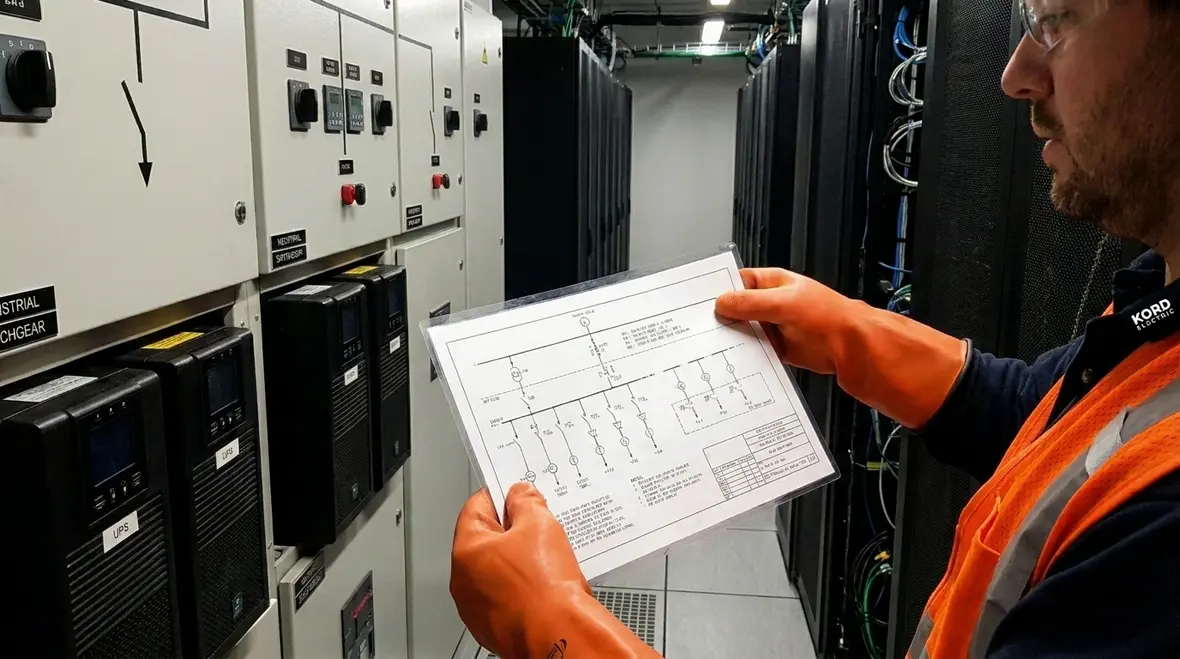
Commercial and industrial buildings often hold a layered electrical system. Therefore, emergency electrical safety depends on understanding the chain of power: utility entry, main switchgear, distribution, branch circuits, and the critical loads that must stay alive. When managers know the path, they can isolate safely and restore power faster.
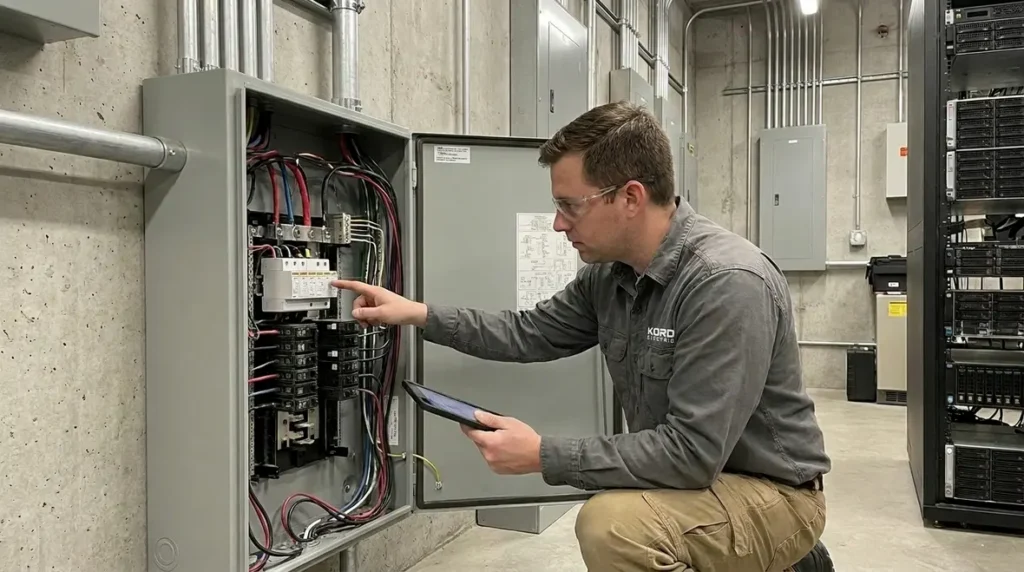
At Kord Electric, our technicians walk facility teams through system mapping that includes labels, one line logic, and site-specific hot spots like motor control centers, busways, and generator interfaces. If a facility has UPS systems or redundant paths, we help managers identify what stays energized even during partial shutdowns. This is where many teams get caught. People assume everything is “off” because the lights went out, but critical circuits can remain live.
For data center style spaces, we often reference the power architecture essentials that support reliability. In the resource we provide on data center electrical infrastructure, the focus stays consistent: clean pathways, correct protection, and safe separation of critical loads from non critical systems. That same logic applies to major property buildings that rely on dependable uptime. You can see that approach in more detail in our breakdown of data center electrical infrastructure essentials, where we show how power paths, redundancy, and maintenance combine to keep high value systems online.
In short, managers should treat their electrical system like a map, not a mystery novel. Then they reduce downtime and avoid unsafe isolation during an emergency.
Protect people first with safe isolation and basic incident rules
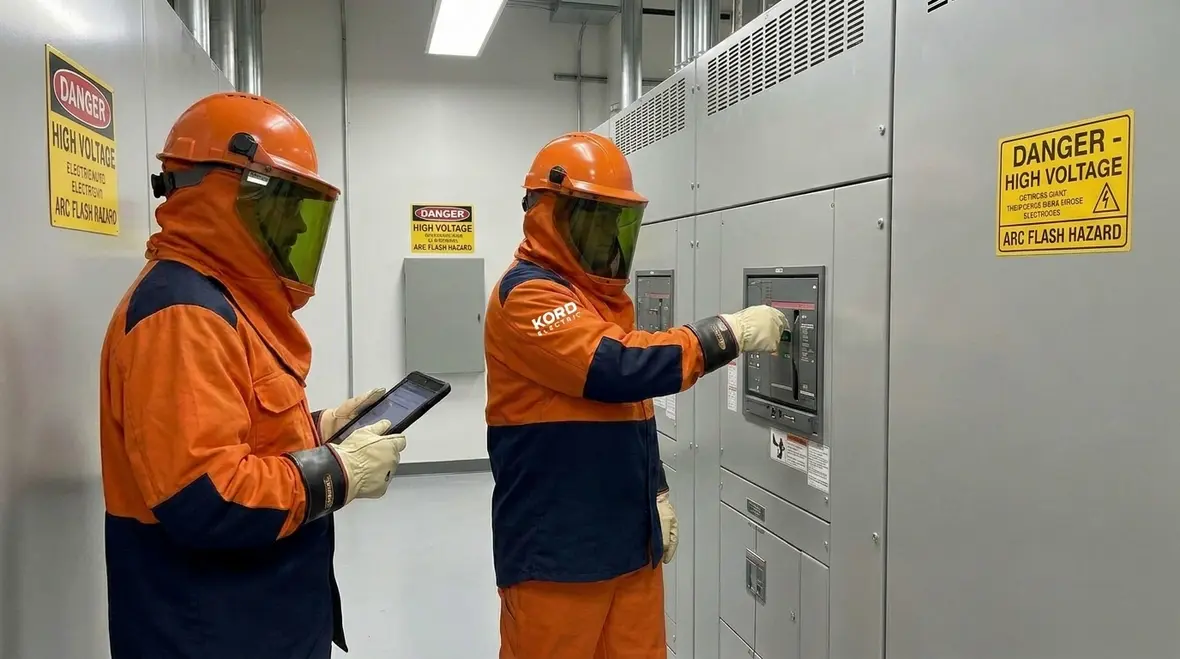
When an incident starts, seconds matter. We encourage managers to implement a simple rule set that everyone can follow. First, if there is visible damage, smoke, or arcing, staff should not approach until power isolation procedures begin. Second, they should avoid standing water and wet surfaces near electrical equipment. Third, they should never reset breakers that trip due to signs of damage, because repeated resets can turn a fault into a bigger fire.
Our expert service staff also trains teams on incident triggers. For example, a burning smell near switchgear is not “just electrical,” it is a warning. Similarly, humming with heat, frequent nuisance tripping, or scorch marks on panels should stop normal operations. Then, the manager triggers the plan: call the right internal lead, alert security, and coordinate with our licensed electricians for safe assessment.
Also, keep a strict boundary around electrical rooms. Nobody should block access with storage or furniture. Even if the room looks calm, it may contain live bus work or energized components behind doors. In many facilities, managers also forget about accessible routes for firefighters and emergency crews. Therefore, we work with your operations team to keep clear pathways and signage.
One more thing, and we will say it gently: electricity does not respond to “good intentions.” So our protocols push staff away from troubleshooting during active hazards and toward communication and isolation.
Manage life safety systems and emergency power with clear control points
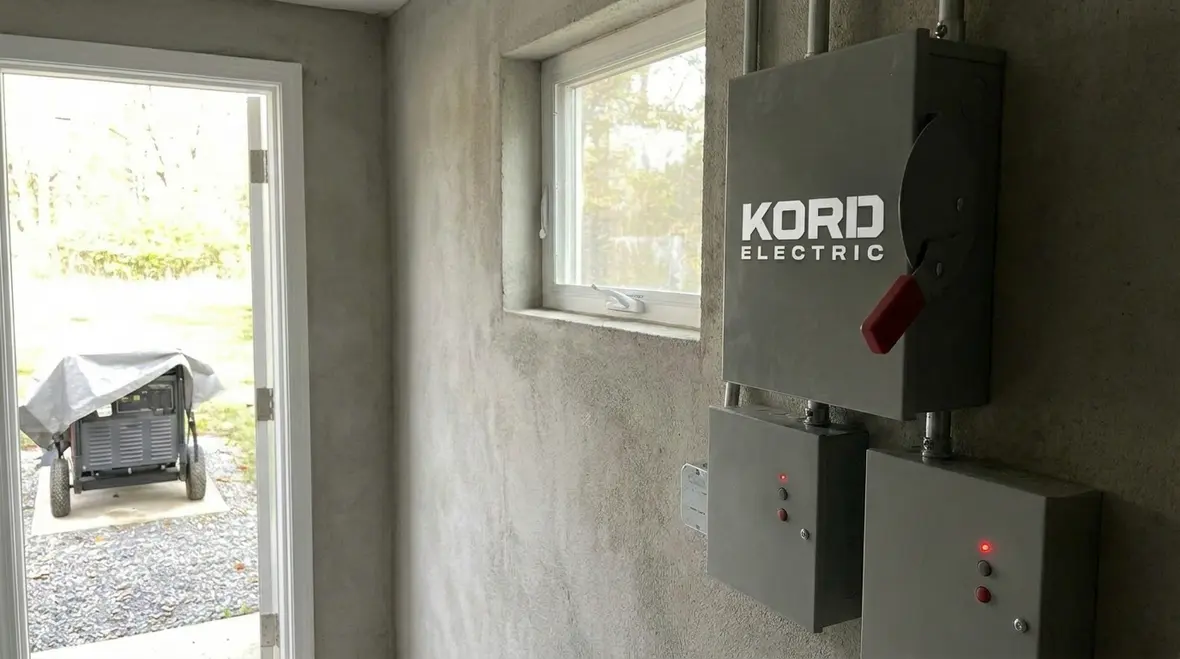
Commercial and industrial buildings rely on life safety circuits and emergency power systems, so emergency electrical safety for commercial properties also means keeping those circuits predictable. Managers should understand which systems support egress, fire alarm operations, smoke control, and emergency lighting. They should also know how standby generators, transfer switches, and UPS systems interact.
In practice, we help teams map control points for these systems. For instance, we verify that transfer switch locations are known and that the facility has clear instructions for operating or locking out specific controls during tests or emergencies. Then, we confirm that emergency lighting circuits do not share unnecessary paths with general power.
When something fails, the protocol should guide your team. If the generator fails to start, staff should follow the emergency lighting and life safety plan, not attempt random resets. If UPS systems show fault indications, you need trained assessment, since abnormal conditions can point to battery issues, charging faults, or internal problems.
Transitioning from general power to emergency power should feel smooth on paper and in real time. Therefore, our technicians help managers plan for testing windows, load bank coordination, and the timing of notifications. We also remind teams to document outcomes so the next event goes faster and safer.
Maintenance, inspection, and testing that actually reduce risk
If managers want lower incident odds, they must tie emergency electrical safety to ongoing maintenance. We do not just recommend inspections. We support schedules that match site use, aging equipment, and environmental factors. For example, moisture, dust, vibration, and temperature swings can degrade connections and insulation. Over time, this raises the risk of faults.
Our technicians focus on high value checks: breaker health, torque integrity on bus connections, thermal imaging trends, proper labeling, and verification of protective devices. We also ensure that emergency power equipment receives the right attention, including startup readiness, transfer operation, and functional testing under safe conditions. In many commercial properties, managers track performance for tenants, yet they miss the electrical story. We help close that gap. For teams that want a structured approach, our dedicated electrical preventive maintenance services align perfectly with long term safety and uptime goals.
To keep operations stable, we coordinate testing with facility schedules and ensure that downtime windows do not disrupt critical functions. Additionally, we recommend recordkeeping that goes beyond “it passed.” When we document results, we include what changed, what trended, and what needs corrective work. That makes the next inspection more than paperwork. It becomes a clear safety tool.
Also, do not skip staff training after equipment upgrades. When a new switchboard or UPS is installed, the team learns new controls and new interfaces. Therefore, we conduct walk-through training and explain what to do during abnormal indications.
Communicate with tenants, security, and contractors without creating panic
Commercial buildings often host tenants, vendors, and rotating contractors. When an electrical emergency hits, communication must stay calm and exact. We encourage managers to set a communication flow: who contacts tenants, who updates security, and who authorizes contractor access. Then, managers should keep messages consistent and avoid guesswork.
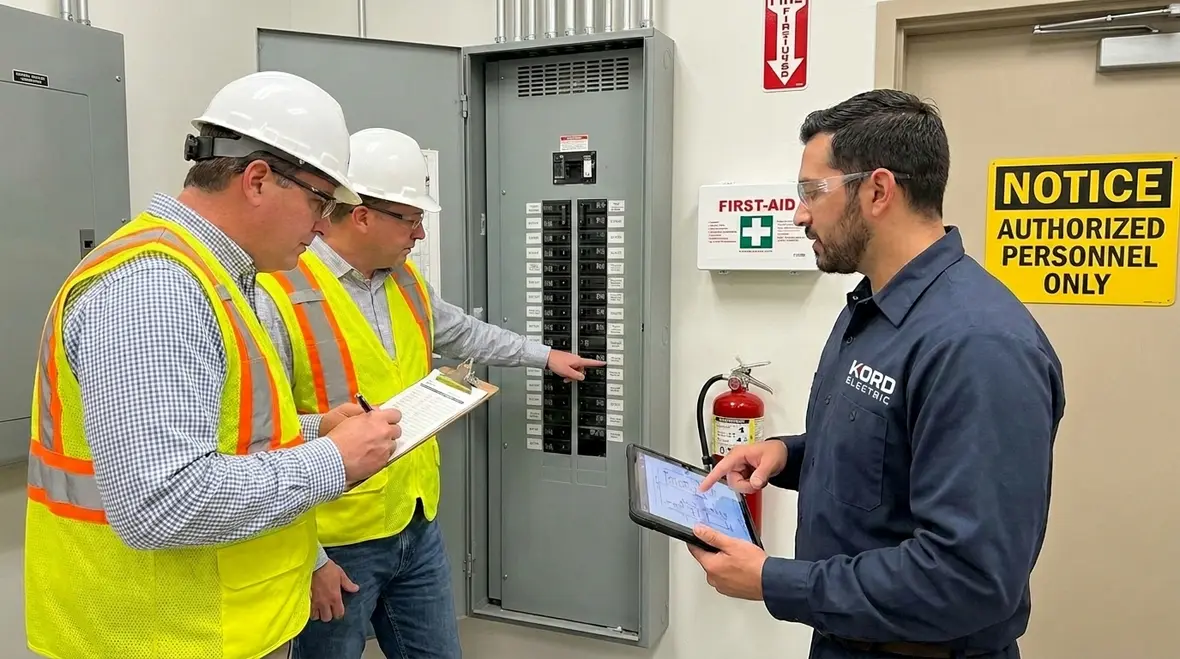
Our approach includes clear boundaries on who can enter electrical areas. Security teams should know that they must restrict access to rooms with energized equipment until our technicians confirm safe status. Meanwhile, tenant communication should explain what is happening, what areas are closed, and when normal operations might resume.
In addition, managers should prepare for contractor misunderstandings. Sometimes, a vendor hears “power down” and assumes that everything is safe. However, critical circuits may still be energized. Therefore, our expert service staff helps managers craft simple instructions that contractors can follow without improvising.
And let us be honest, sometimes people treat alarms like background noise. Yet in real events, alarms and indicators can be the difference between a small fault and a large loss. So we train everyone to treat electrical warnings seriously, even if the office looks like it just went into “meeting mode.”
FAQ for commercial property managers and operations leads
Conclusion: build a safer electrical plan with Kord Electric now
When we plan emergency response before an incident, we reduce risk, speed up recovery, and protect people without guessing. Kord Electric supports commercial and industrial facilities with technician-led guidance, system mapping, and practical safety protocols that your team can follow. If you want a clearer plan for shutdown steps, emergency power behavior, and staff training, contact us. We will review your site conditions, explain the control points, and help you set an approach that stays calm even when the lights do not.
For teams responsible for Emergency electrical safety for commercial properties who also want everyday reliability, it often makes sense to pair emergency planning with structured services like commercial and industrial voltage correction and stabilization or broader preventive maintenance programs. That way, the same partner who helps you during an incident is also helping you prevent the next one.
If your facility is ready to tighten its emergency protocols, strengthen electrical resilience, and align maintenance with real world risk, our commercial and industrial service team is ready to help you map the next steps.