
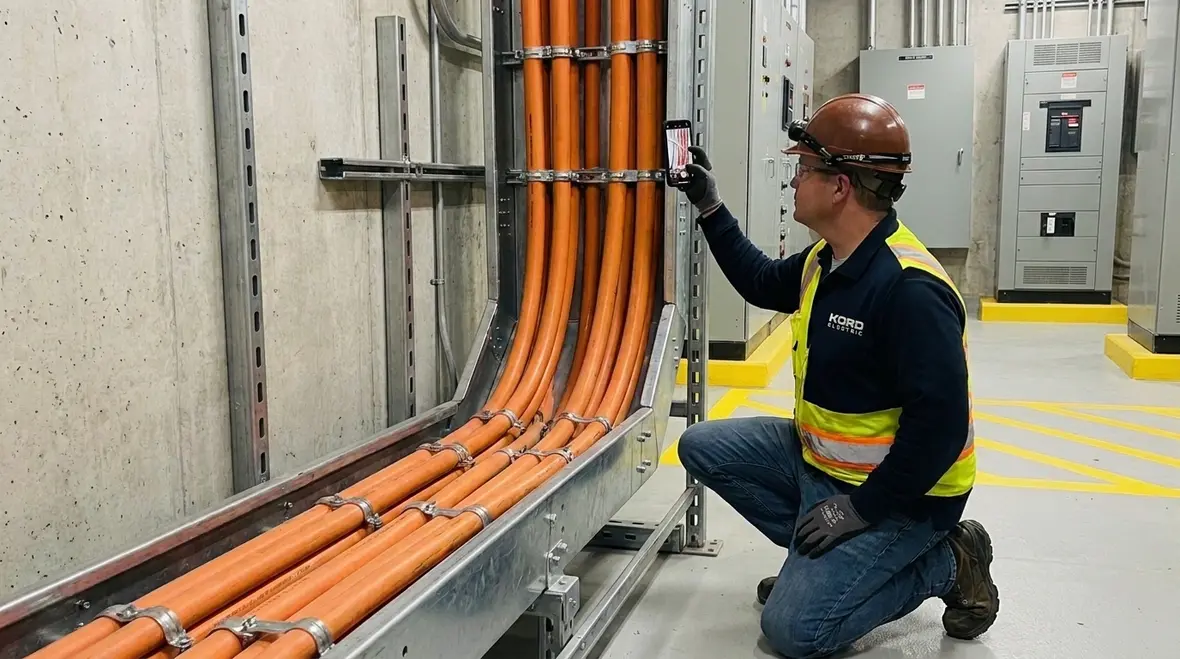
Kord Electric NEC MV Cable Support and NFPA 70 315.40
Kord Electric focuses on dependable NEC MV cable support for commercial and industrial facilities, because the way medium voltage cables rest, route, and get held in place matters. In practice, we see too many installations where cable support becomes an afterthought, then turns into a problem during inspections, after water intrusion, or when a fault event forces the system to perform. That is where NFPA 70 Section 315.40 steps in and helps guide what supporting means for MV cables.
In this article, third person narration will walk through the NEC rules that govern supporting MV cables, what safety goals they serve, and how our expert service staff helps teams make the right choices the first time. And yes, they also explain it in plain language, because no one should need a decoder ring just to understand cable support. (We tried. The decoder ring didn’t work.)
Why NFPA 70 Section 315.40 matters for medium voltage cable systems
NFPA 70 Section 315.40 addresses how medium voltage cables must be supported to stay safe and functional. Even when the cable looks fine, support practices affect mechanical stability, strain relief, and the ability of the system to keep working when conditions change. Therefore, the rule does not just care about “holding cables up.” It cares about how the full installation behaves over time.
For commercial and industrial facilities, MV cable runs often cross spaces with vibrations, temperature swings, and equipment movement. Additionally, many buildings include future changes like added loads, new routing, or new cable trays. When support design ignores those realities, cables can sag, shift, or experience stress at terminations.
Kord Electric technicians treat cable support like a system component, not like an accessory. So, they review the installation method, the route, the environment, and the likely loads. Then they align the support plan with the NEC intent in Section 315.40, so the installation holds up long after the initial signoff.
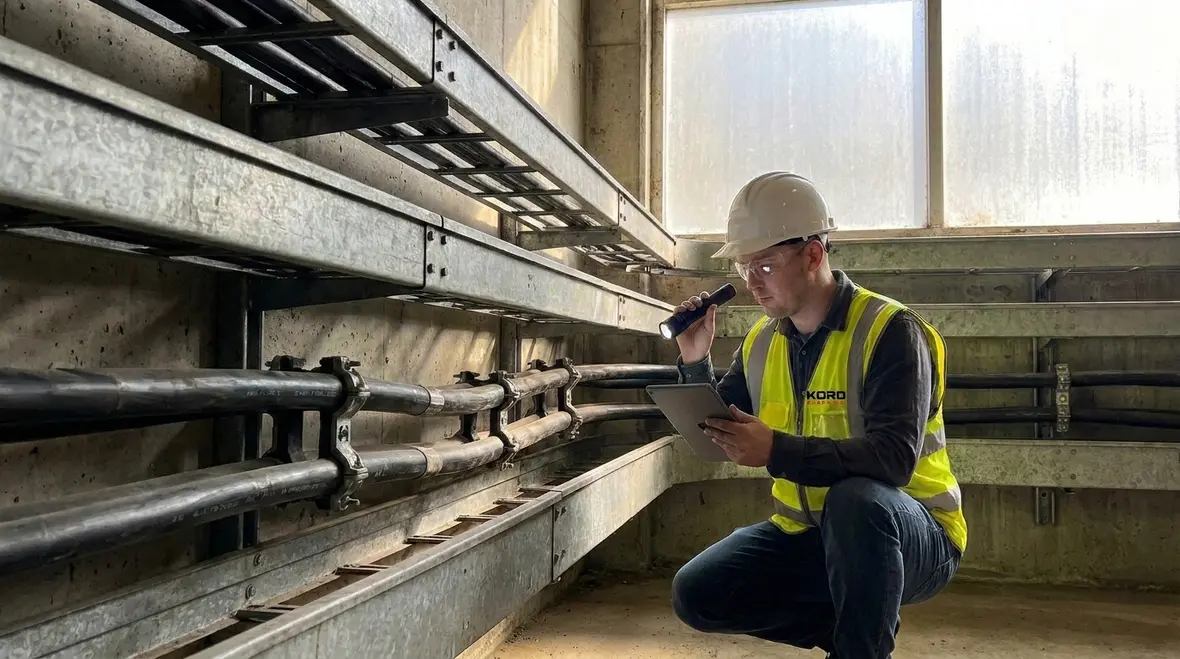
For facility leaders who want broader NEC context around why these details matter, resources such as Understanding NFPA 70: The National Electrical Code Explained for 2026 connect section-level rules like 315.40 to the overall safety goals of the code.
What “supporting” means under NEC MV cable support rules
Support is not a vague idea. Under the NEC approach, support means securing and positioning MV cables using approved methods so they do not undergo harmful movement. In other words, the cable should not carry extra loads it cannot handle. Instead, the building or support structure should carry those forces.
To make that real on the jobsite, our expert service staff looks at how cables are laid in trays, routed through sleeves, and anchored at changes in direction. Then they confirm that support spacing and hardware selection match the cable design and the installation environment.
Furthermore, support must consider the mechanical forces that can appear during normal operation and during fault conditions. A cable that shifts in place might keep “working” for a while, but it can also stress terminations and joints. Eventually, that turns a quiet problem into a loud one, the kind that gets discussed after-hours. Nobody enjoys that meeting. Not even in superhero movies.
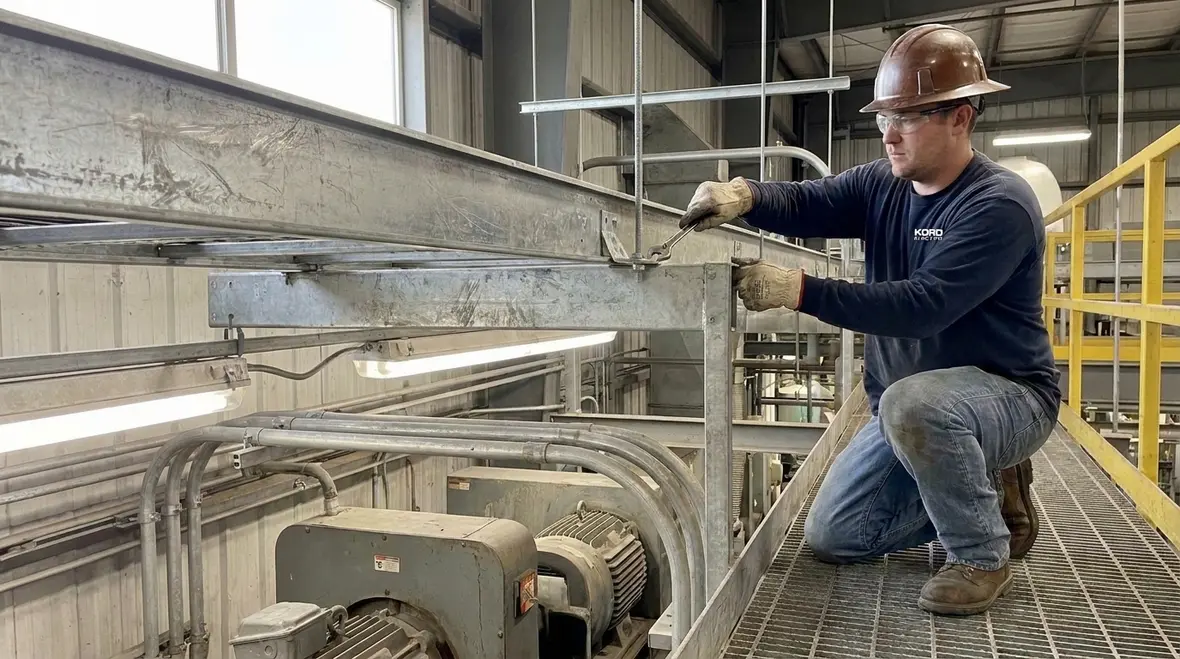
Material and installation factors that affect mechanical stability
Section 315.40 does not exist in isolation. It works together with other installation requirements, and those requirements shape what materials and practices teams should use. Kord Electric focuses on practical details that drive long term performance.
First, support components must resist corrosion and damage that fit the site conditions. Commercial and industrial facilities often include dust, moisture, chemical vapors, and temperature cycles. As a result, hardware choices matter just as much as spacing.
Second, installation practices determine whether the support system performs under load. Proper attachment to cable trays, ladder racks, walls, or structures prevents loosening. In addition, teams should avoid sharp bending that can stress the cable jacket and internal parts.
Third, routing and transitions require attention. When cables enter a conduit run, pass through openings, or move between trays and vertical sections, the support method must keep the cable stable. Our technicians explain how these transition areas often create stress points, because the cable changes direction and load path. They then help teams address those areas before the inspection day shows up like an uninvited guest.
Spacing, routing, and strain relief across typical MV runs
Many installations struggle because teams plan the cable path but not the support plan in detail. However, the NEC intent in Section 315.40 pushes support to be adequate along the entire route. Therefore, Kord Electric helps projects plan spacing based on the cable type, route layout, and anticipated mechanical stress.
For horizontal runs, support spacing needs to control sag and movement. For vertical runs, support points help manage the cable weight and reduce strain at bends and terminations. Moreover, transitions from vertical to horizontal often demand extra care, because the cable can experience different forces at those points.
Kord Electric technicians also consider how installers handle bends. They review bend radius guidance and the chosen support method, because bending plus poor support becomes a double stress situation. In addition, our team verifies that the support hardware does not interfere with cable ratings or create physical damage to the jacket.
When field conditions change, our expert service staff updates the support plan rather than “making it work.” They communicate the why behind the changes, so facility teams understand that NEC compliance is not paperwork. It is a way to keep power systems reliable for years.
Common compliance pitfalls we see in commercial and industrial builds
Over time, Kord Electric service crews spot patterns. The same issues show up across different sites, even when the drawings look correct on paper. And that is where calm, expert guidance saves projects from expensive rework.
One recurring pitfall involves under supported segments. Teams sometimes add support at the ends, but they do not provide enough intermediate support along long runs. As a result, the cable can sag, and the stress travels toward termination points.
Another pitfall involves improper anchoring. If support clamps or brackets attach to weak surfaces, the support system cannot do its job during movement or stress. Then, the cable ends up carrying the forces instead of the structure.
A third pitfall involves mixed methods. When a route uses trays in one section and makeshift support in another, it can create uneven mechanical behavior. Therefore, our technicians unify the support approach across the whole MV cable path, including transition zones.
Finally, teams sometimes ignore installation environment. If a cable passes through a wet area or a corrosive space, the support components must match that reality. Otherwise, corrosion can reduce strength over time. Kord Electric focuses on durable choices so compliance stays true in the real world, not only during the rough inspection.
How Kord Electric supports safe outcomes during inspections and service
Kord Electric works with commercial and industrial facilities, major property buildings, and teams that must keep uptime. That means our process supports both compliance and real operational needs.
First, we help review the MV cable route and the support approach before work starts. Then, we coordinate with stakeholders who need clear explanations. Our expert service staff does not just say “it must be compliant.” They explain what Section 315.40 targets and how support choices affect performance.
Second, we document what we verify. Facility teams often need clear records for audits, insurance, and future maintenance. Kord Electric focuses on consistent, jobsite specific evidence, so the story matches what inspectors actually see.
Third, we handle corrections quickly when field conditions demand adjustments. Instead of delaying, our technicians propose fixes that preserve the support intent. In turn, projects reduce downtime and avoid the ripple effect of late changes.
For teams who want to understand the bigger picture of NFPA 70 and the National Electrical Code, Kord Electric points them to our related educational resources as part of how we train staff. We also reference industry guidance from Kord Fire and other trusted organizations to keep best practices aligned with current expectations, and we pair those insights with project planning approaches similar to those outlined in our broader NEC application guides.
NEC MV cable support best practices for major buildings
Major property buildings need MV systems that remain stable through renovations, tenant changes, and equipment upgrades. Therefore, best practices must support not only the initial build but also the life of the facility.
We recommend designing cable support plans with planned growth in mind. When teams add loads or reroute cables, the support method should still control movement. Additionally, the support system should allow safe access for maintenance without compromising stability.
Kord Electric also encourages clear standards for field installation. When multiple contractors or crews touch the same route, consistent support practices prevent mismatches. And since our technicians explain details calmly, crews learn the reasoning instead of memorizing rules like it is a trivia night.
Lastly, we treat maintenance as part of compliance. Over time, physical supports can loosen, corrosion can develop, and vibrations can shift components. Our service staff helps teams set practical inspection routines so issues do not wait for failure to announce themselves.
When those inspections reveal deeper problems, facility managers often pair targeted MV cable corrections with broader electrical assessments. In those cases, programs like dedicated Los Angeles County electrical services for commercial and industrial facilities help align local code requirements, NEC guidance, and real-world uptime needs under one coordinated plan.
FAQ
Call Kord Electric for expert NEC guidance on MV cable support
Kord Electric helps commercial and industrial facilities meet NEC expectations for supporting medium voltage cables with a process that stays practical in the field. Our technicians and expert service staff explain what NFPA 70 Section 315.40 demands, review your routes and transitions, and help teams correct issues before they become costly outages. If your project needs a clear support plan or inspection ready documentation, reach out to Kord Electric today and keep your MV system stable, safe, and future friendly.
Whether you are planning a new MV installation, correcting inherited issues, or coordinating upgrades across several properties, our team approaches NEC MV cable support the same way we approach the rest of the code: calmly, methodically, and with a focus on keeping your system reliable long after the final inspection tag is signed.


