LED Retrofit Energy Savings for Manufacturing ROI
Kord Electric helps commercial and industrial facilities capture LED retrofit energy savings for manufacturing facilities that translate into real ROI, not just a slide deck with bright colors. In many plants, lighting upgrades stop being an “electrical project” and start behaving like a quiet, steady improvement to the bottom line. We see it when utilities, maintenance teams, and operations leaders all notice the same thing: less energy use, fewer lamp replacements, and cleaner lighting where people work. And yes, we still keep it practical, because even the best retrofit plan can fail if it ignores your production schedule.
Others call it modernization. We call it reducing wasted power while keeping your crews focused on the work. Think of it like swapping an old cassette tape for a streaming playlist, except the math on the savings is even more convincing than your favorite podcast.
Why Lighting Upgrades Pay Back Faster Than Most People Expect
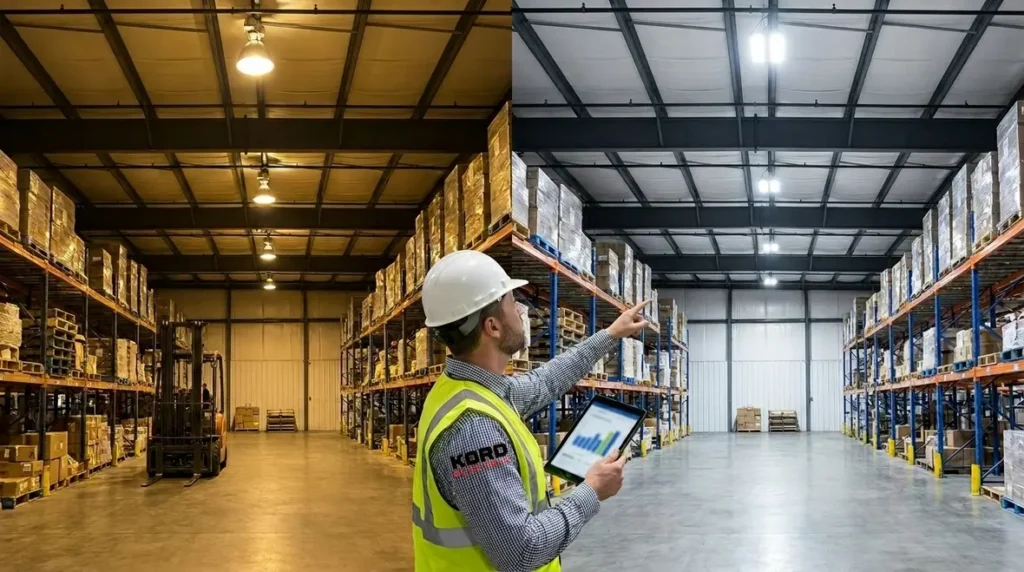
When we plan LED retrofit energy savings for manufacturing facilities, we start with how energy flows through your lighting system. Traditional fixtures often waste power through heat, inefficient drivers, and older lamp technologies. Meanwhile, LEDs convert electricity into light more directly, and that efficiency tends to stay consistent even as equipment runs for long hours. As a result, your operating costs can drop right away.
Additionally, LED retrofits usually reduce maintenance time. Fewer failures mean your maintenance staff spends less time chasing burnt lamps and more time on tasks that actually move the plant forward. Therefore, ROI improves not only through lower utility bills, but also through reduced labor and downtime. We have technicians who explain this in plain terms, step by step, because the best savings plan should feel clear, not like it requires a secret engineering decoder ring.
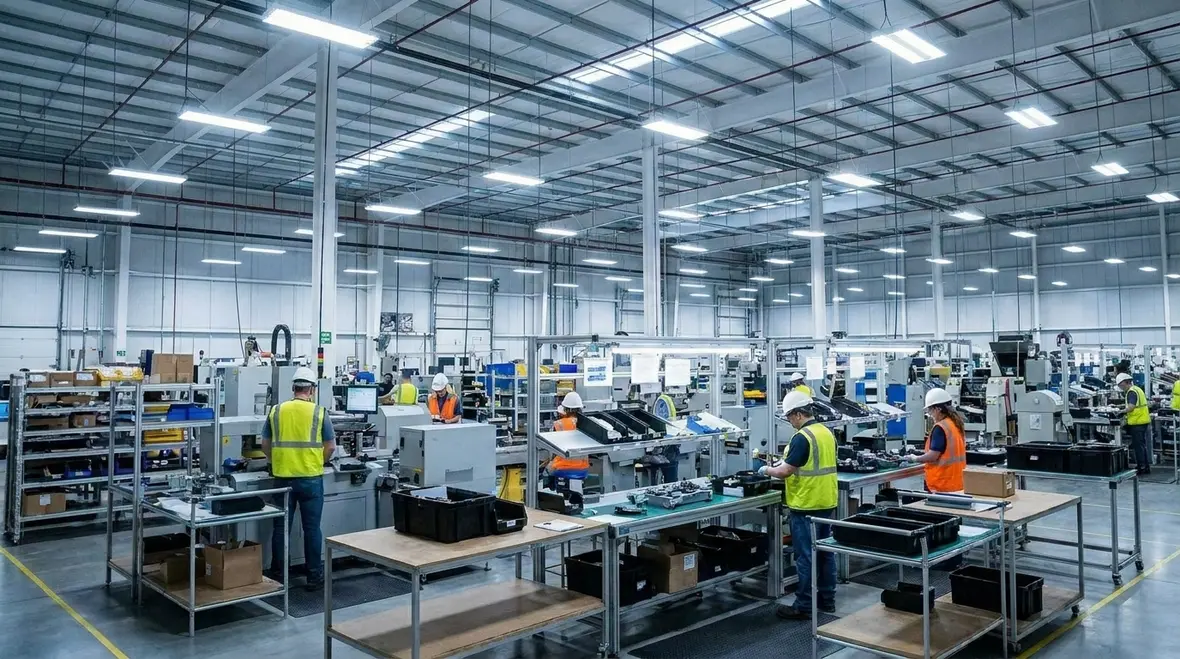
Finally, good retrofits improve light quality. That means better visibility for operators, safer zones for movement, and fewer workarounds like using extra task lights. So even if someone thinks lighting is “just lighting,” the whole operation benefits.
How We Perform a Retrofit That Fits Real Plant Operations
A retrofit that ignores the production calendar is how projects drag on, cost more, and annoy everyone. We avoid that. First, our team works with facility leaders to map the lighting inventory, identify fixture types, and check how each area supports the work. Then we group spaces based on usage patterns, trim installation complexity, and access requirements.
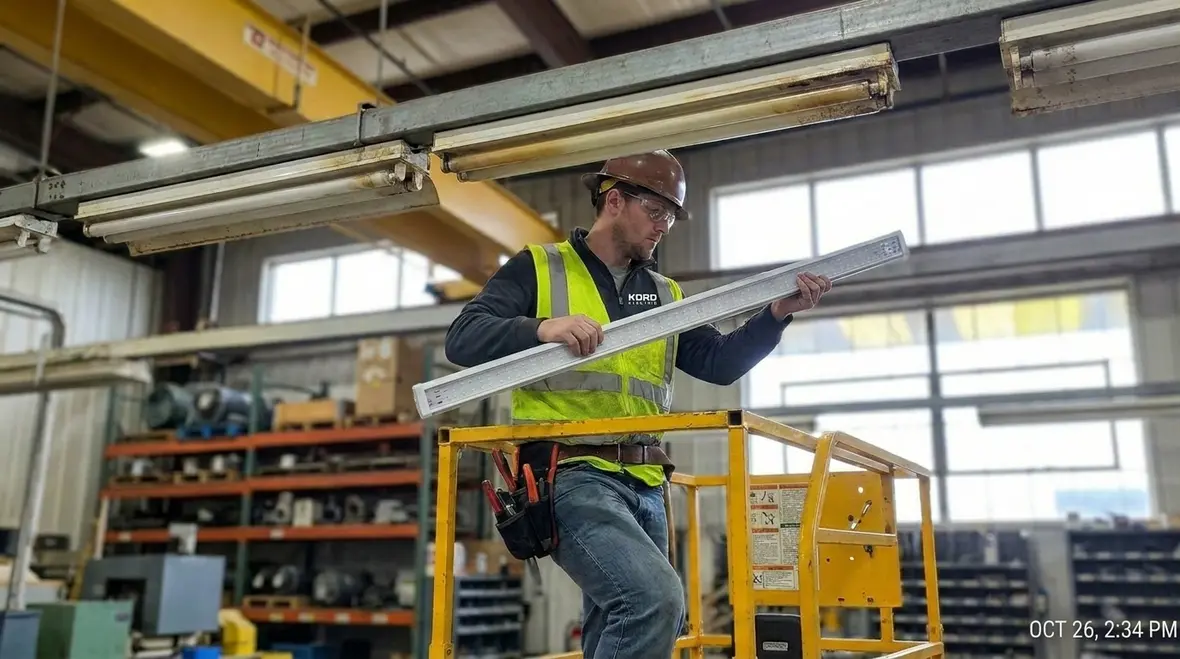
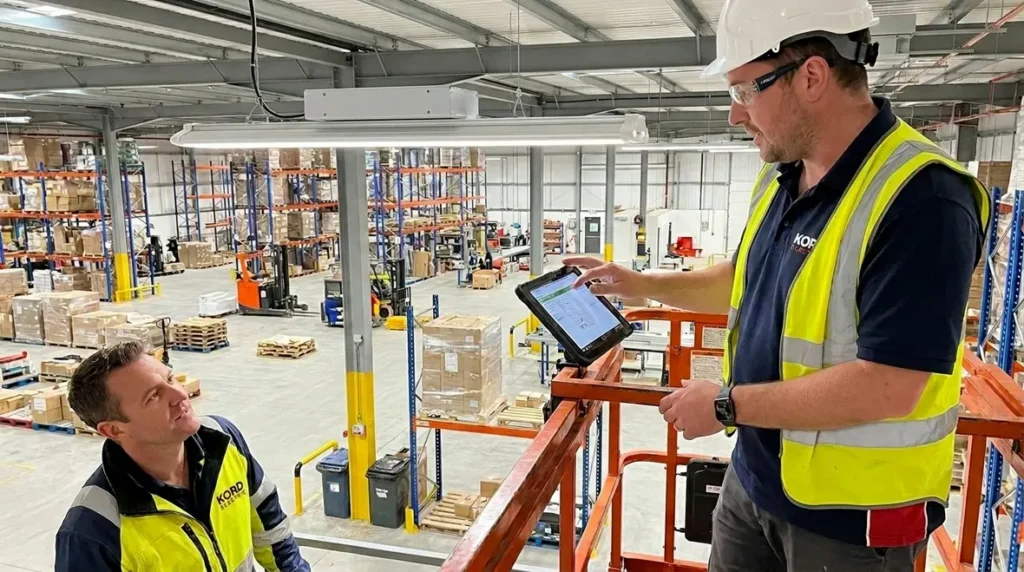
Next, our technicians review critical constraints such as safety requirements, operating hours, and ceiling conditions. If a line must stay running, we plan staged installs and schedule work during periods that protect productivity. In other words, we treat your facility like a living system, not a showroom.
Then we verify performance targets. We consider brightness needs, glare control, and uniformity because LEDs can perform very differently depending on optics and placement. After that, we coordinate procurement and confirm compatibility for the retrofit approach. Finally, we document what we install so your staff can track expected performance.
That process is why others can offer a generic retrofit. We offer one that fits your workflow and your constraints. It is also why our communication stays calm and steady, like an experienced lead who knows the floor is busy and the last thing you need is confusion.
Real Savings Come From Smart Controls and Right-Sized Design
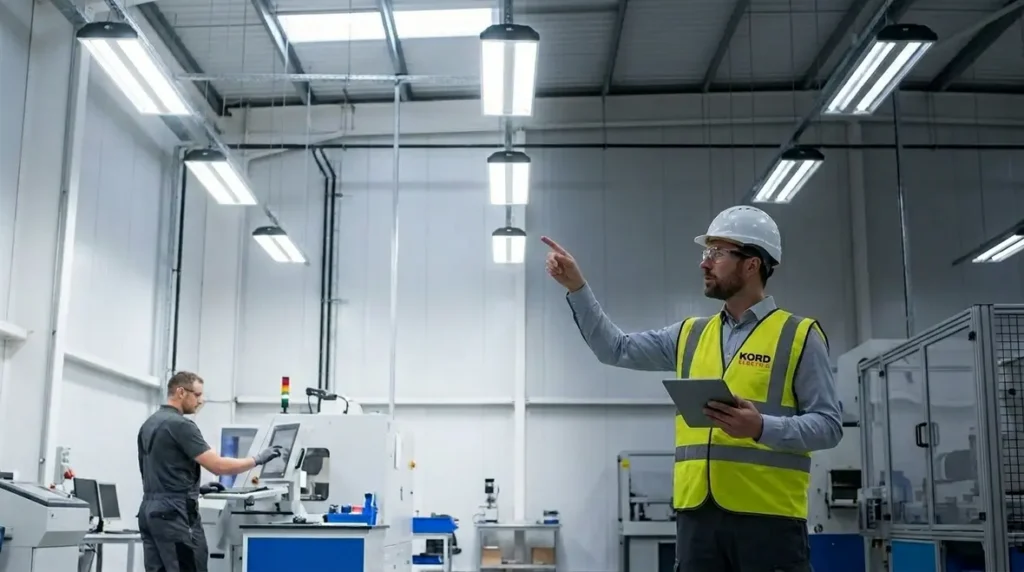
Energy use does not come only from the number of fixtures. It comes from when they operate and how much light they produce. So while LED retrofits reduce baseline power, controls help fine tune usage. For example, occupancy sensing supports areas where people pass through rather than work continuously. Daylight harvesting can trim output near windows or skylights. Dimming strategies reduce energy while maintaining sufficient illumination for the task.
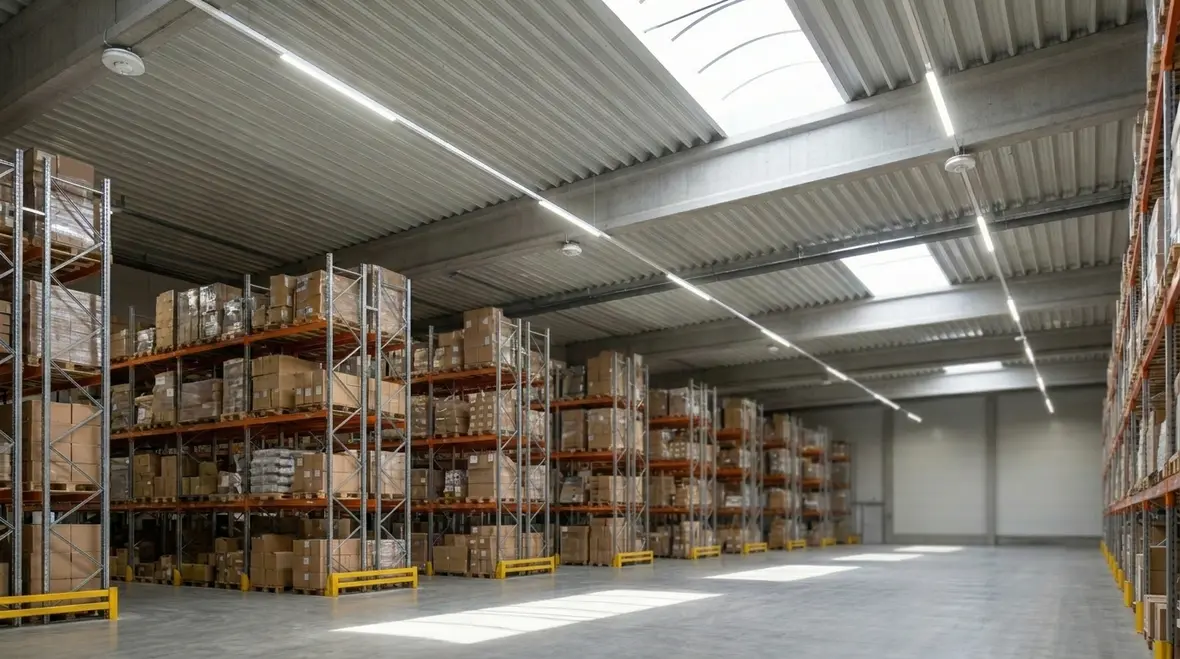
Moreover, right-sized design matters. If lighting gets overpowered, you pay for light you do not need. If it gets underpowered, you end up with complaints and workaround behavior. Either way, ROI suffers. Therefore, we align design to actual task requirements and layout realities.
Our experts help facility teams understand control options without drowning them in jargon. And yes, we sometimes hear, “Controls sound great, but will they work on our site?” We answer directly: they work when we select, commission, and verify the strategy for your environment. That means testing, adjustment, and clear handoff to your maintenance staff.
In the end, the energy story becomes more than “LEDs are efficient.” It becomes “we tuned the system,” and that is where savings grow and stay stable.
Maintenance, Downtime, and Labor Savings You Can Measure
Let us talk about the part many people ignore until it bites them: maintenance. Older lighting systems fail more often, especially in high vibration zones, dusty areas, or locations with frequent temperature swings. Each failure usually triggers an outage, a replacement run, and a time cost that builds quietly over months.
When we install LED upgrades, the system typically lasts longer and needs less frequent replacement. Consequently, maintenance teams can reduce the number of truck rolls, inventory changes, and emergency fixes. That also reduces the risk of operating disruptions while someone waits for parts or schedules access.
At the same time, LED performance can remain stable over time when we select quality components and install correctly. We also help teams plan a maintenance path so they know what to check and when. Our technicians explain these steps clearly, because your staff should never feel like the lighting system is a black box.
And if you are thinking, “Great, fewer replacements, but will we lose coverage during installs?” We plan staging to minimize gaps in lighting. We also coordinate access so the floor stays safe. That is how savings stays on schedule instead of turning into delays.
Energy Audits, Documentation, and Helping You Track ROI
To boost ROI, you need more than installation. You need proof. We support commercial and industrial facilities with an approach that includes audit work and documentation. First, we gather baseline information like fixture types, wattage, operating schedules, and area usage. Then we analyze expected performance based on the retrofit plan and control strategy.
Next, we help teams define how they will measure success. That can include utility tracking, runtime estimates, and performance verification after install. Therefore, you can connect the project to outcomes your leadership trusts.
In addition, we provide clarity on what gets installed and where. That matters because facilities change, teams rotate, and people need answers later. Our expert service staff keeps things straightforward so managers, electricians, and maintenance leads can all understand the work without a scavenger hunt.
Some vendors hand you a receipt and disappear. We stay engaged through commissioning and handoff because the ROI story does not end at the last light turning on. It continues when your team can confidently operate and maintain the system.
For facilities taking a broader look at their electrical health, many teams pair their retrofit strategy with a structured program like electrical preventive maintenance. Coordinating both efforts often uncovers additional savings and reduces unplanned downtime.
Choosing the Right Retrofit Approach for Warehouses and Plants
Not every facility space behaves the same way. Warehouses often prioritize high-bay efficiency and uniform coverage. Production floors require task-appropriate light and glare management. Storage areas may benefit from occupancy sensing. Additionally, some buildings need upgrades while keeping certain zones reliable for safety and compliance.
So we match the retrofit path to the environment. That means evaluating fixture mounting, ceiling height, access methods, and electrical conditions. In some cases, a direct retrofit solution works well. In other cases, we choose a replacement approach that gives better control options and improved performance.
We also take weather and dust considerations into account where relevant, especially for major property buildings with demanding conditions. And because we focus on commercial and industrial work only, we understand the operational pressure that comes with keeping production moving.
As a result, your LED retrofit energy savings for manufacturing facilities does not feel like a gamble. It feels like a planned upgrade with steps that hold together from start to finish.
If you want to dig deeper into project ranges and planning, you can explore our related guide on commercial lighting upgrade cost, which walks through the factors that shape an LED retrofit budget for larger facilities.
FAQ
Take the Next Step With Kord Electric
If you want LED retrofit energy savings for manufacturing facilities that stick, we recommend starting with an energy and lighting assessment. Kord Electric works with commercial and industrial facilities to plan an upgrade that fits your operations, supports controls, and improves ROI through lower energy use and reduced maintenance. Our technicians and expert service staff keep the process clear from audit to commissioning. Contact us today, and let us help you turn lighting into measurable savings, not just brighter walls.
Many facilities also combine their retrofit plan with broader lighting installation services to address new construction, expansion areas, or code-driven upgrades at the same time. Aligning these efforts can streamline project scheduling, simplify documentation, and deliver a more unified lighting strategy across your entire property.