LED Retrofit ROI Analysis for Real Facilities
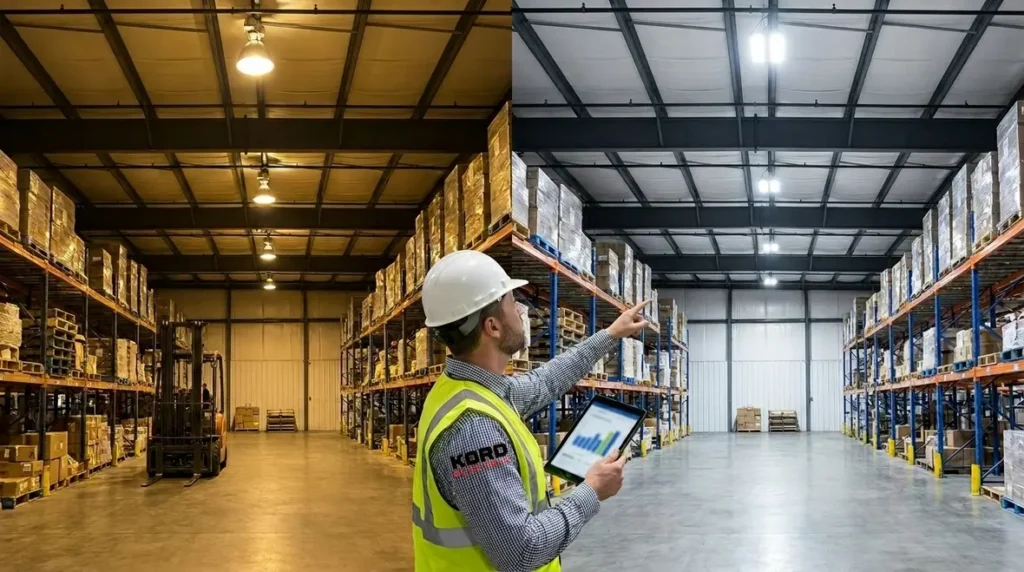
At Kord Electric, we often start with one question from facility leaders who want the truth, not a sales pitch wrapped in confetti: What will an LED retrofit actually do for our budget? That is why we run an LED retrofit ROI analysis early, before anyone commits to equipment, labor, or long shutdowns. Our team looks at current lighting costs, how often systems run, the utility rate impact, and the real timeline for payback. Then we explain the numbers in plain language so others can make decisions with confidence.
How we build an LED retrofit ROI analysis for real facilities
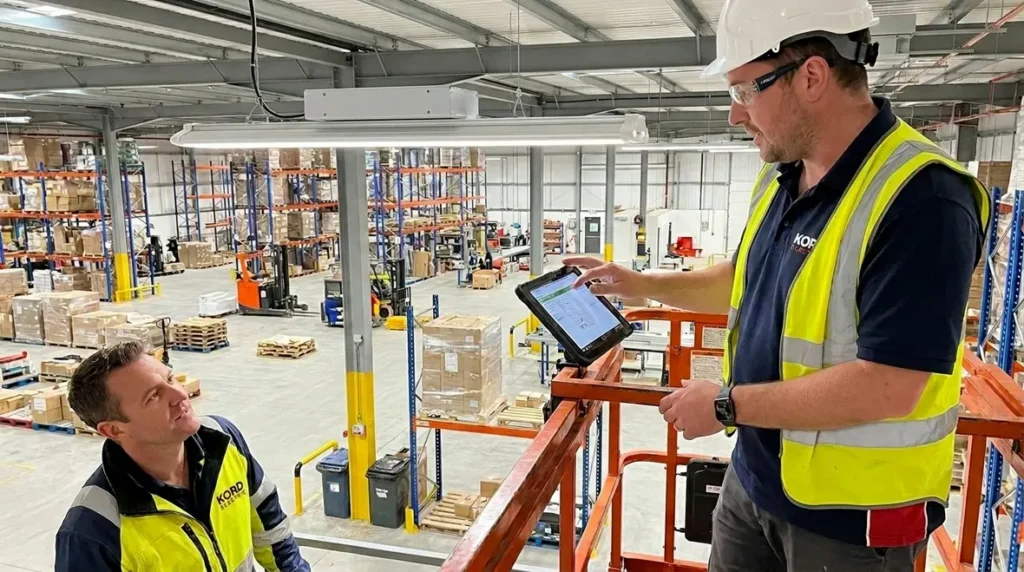
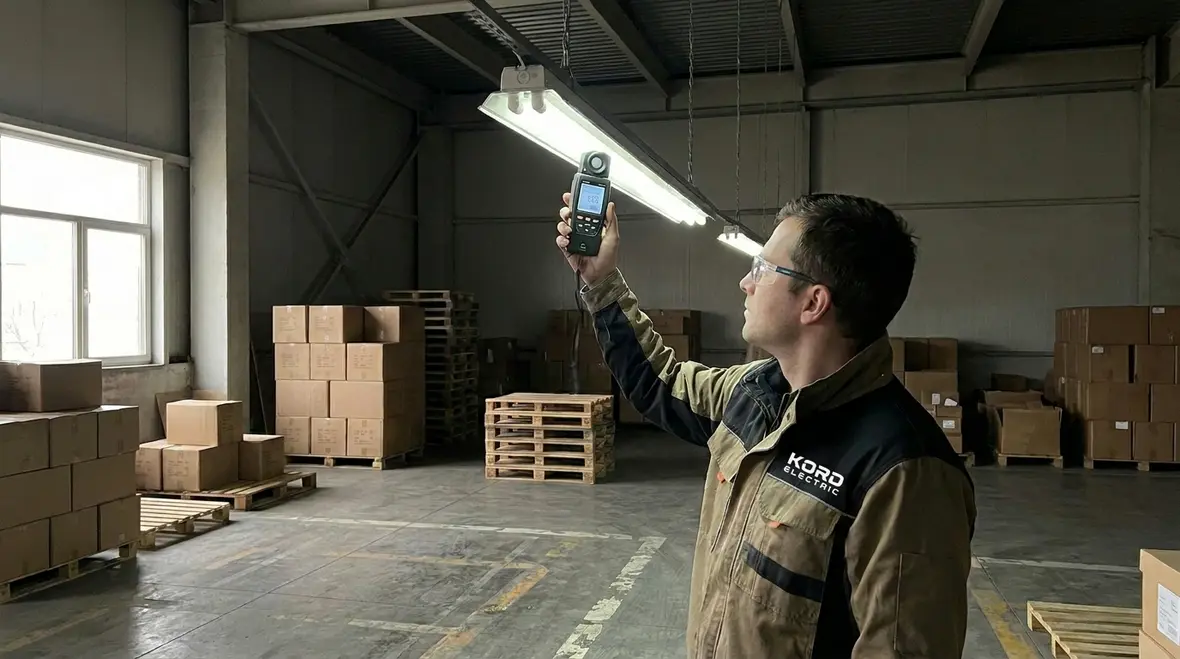
We focus on commercial and industrial facilities and major property buildings, because those sites have steady operating schedules and measurable energy use. First, our technicians and expert service staff gather the lighting baseline. They verify fixture types, wattages, control settings, and installation conditions. They also capture practical details that many proposals skip, like how lighting affects work tasks and tenant satisfaction.
Next, we model energy savings using your actual hours of operation and the demand profile your electrical system faces. Then we factor in maintenance, replacement cycles, and labor. In other words, we do not pretend your current lights will magically behave forever. LED systems usually extend service intervals, and fewer maintenance visits reduce disruption and cost.
Finally, we translate all of it into a clear ROI view: projected annual savings, projected cost, simple payback, and longer term value. When our people explain the results, they do it like they are helping you interpret a dashboard, not like they are reading from a tiny scroll written in engineering hieroglyphs.
For property teams who also want to understand how project budgets translate into installed lighting cost, this ROI conversation pairs naturally with Kord Electric’s detailed breakdown in their Commercial Lighting Upgrade Cost Guide, which walks through how square footage, ceiling heights, and control strategies shape total LED retrofit investment for real buildings.
What data we collect before we touch a single fixture
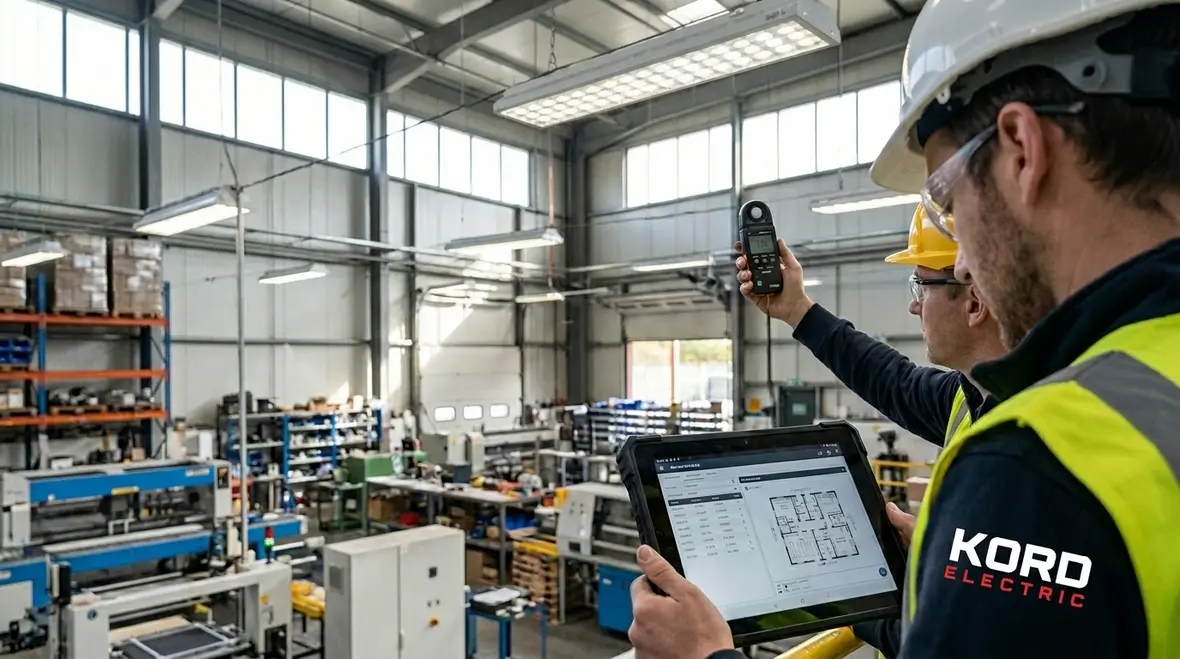
To keep our analysis accurate, we pull data that matches how your facility truly operates. Therefore, we collect site schedules, operating hours, and lighting control logic. We review whether lights are controlled by occupancy sensors, time clocks, photosensors, or building automation systems.
Then we validate lighting output and distribution. If a warehouse has hot spots or dark zones, replacing fixtures is not just about savings. It must support safe travel paths, consistent visibility, and productivity. We also check power quality considerations when relevant, including how your site handles load changes.
Because the goal is not theoretical efficiency, our technicians document field conditions. They note fixture age, ballast type, reflectance levels, and installation constraints. In addition, they identify where retrofit upgrades can avoid costly rewiring or avoid downtime bottlenecks.
And yes, we have seen plans where someone assumed every fixture was identical. That is like assuming every customer at a soccer match behaves the same. It does not. So we verify.
When facilities in California also need to confirm that future lighting upgrades align with evolving Title 24 and commercial lighting code rules, Kord Electric’s California Commercial Lighting Code Guide for 2026 and their California Commercial Title 24 Lighting Compliance Guide offer deeper context on how today’s retrofit decisions impact tomorrow’s inspections and energy audits.
How utility savings and maintenance reductions drive payback
Once we have the baseline, we estimate savings using two main levers: energy cost reduction and maintenance cost reduction. Energy savings come from lowering wattage and improving system efficiency. If your lighting runs for long shifts, the savings compound quickly.
Maintenance savings come from fewer lamp and driver replacements, reduced labor calls, and less time spent managing failures. For many commercial and industrial facilities, maintenance labor and downtime risk create a hidden tax on old lighting systems. When a critical area fails after hours, the repair becomes urgent, and urgency always costs more.
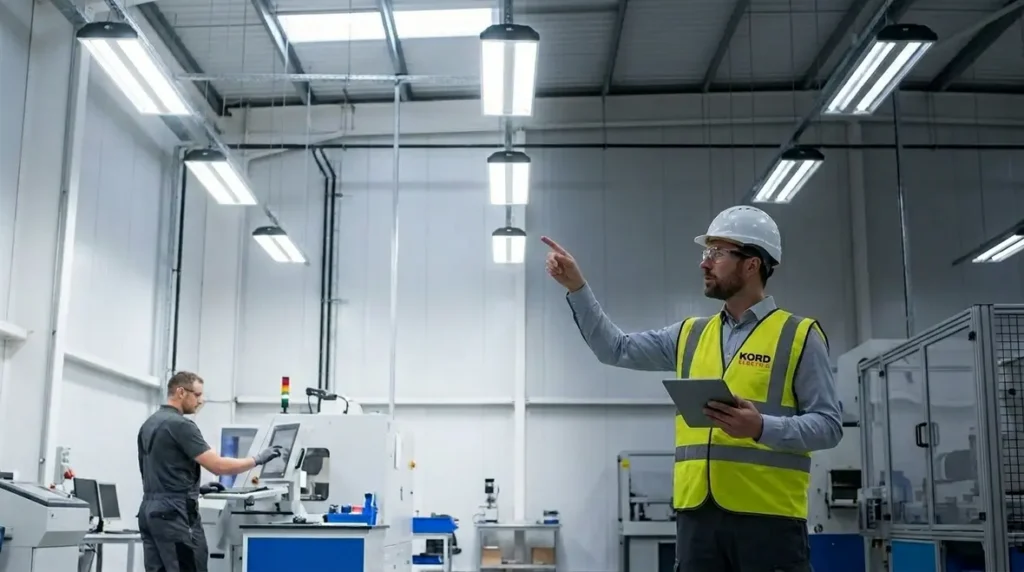
However, we do not stop at cost reduction. We also consider quality outcomes, such as more consistent illumination and better glare control where needed. That matters for retail adjacencies, production lines, loading bays, offices, and corridors across major property buildings. So the ROI is not just a math exercise. It supports operations.
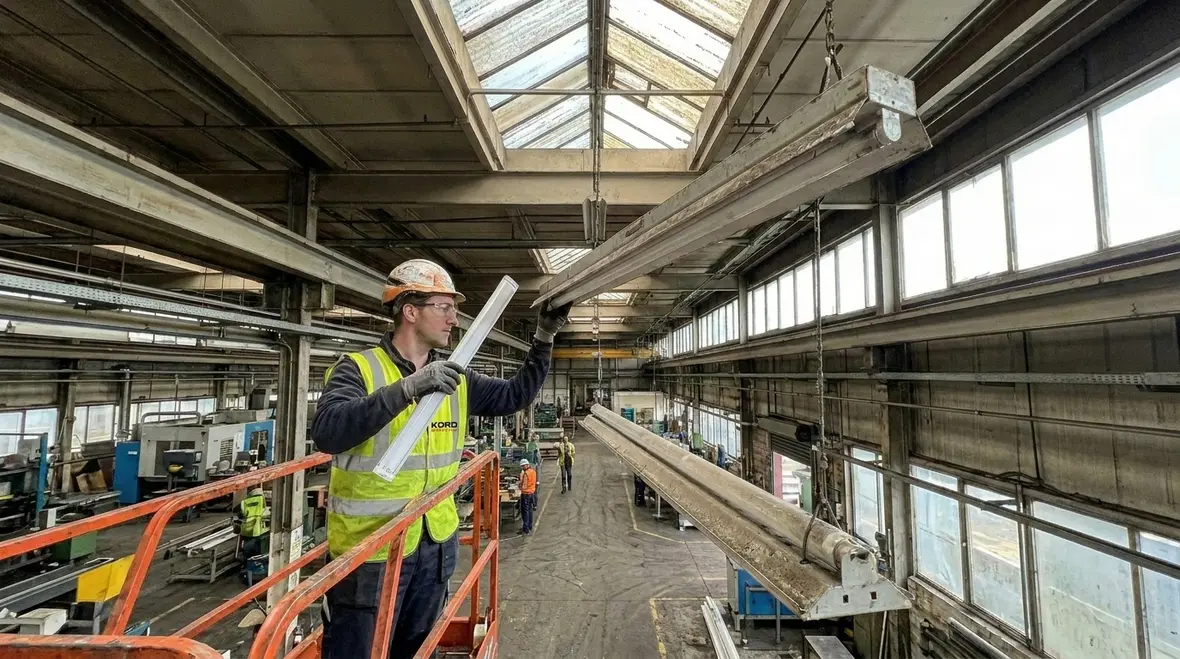
For some facilities, a carefully planned retrofit also becomes a launching point for broader reliability improvements. When lighting upgrades are coordinated with electrical preventive maintenance programs, facilities can align savings with risk reduction, extending the life of panels, feeders, and protective devices that keep every LED system powered and stable.
Choosing retrofit options without creating new problems
LED retrofit projects can take different forms. We help facilities choose approaches that fit the electrical and ceiling realities. In some cases, we recommend lamp or driver replacements. In others, we recommend fixture-level upgrades or targeted improvements in problem areas.
Our expert service staff also considers controls and smart lighting. If your site already uses advanced controls, we align the retrofit plan with your existing strategy. If you lack controls, we recommend options that match usage patterns, such as occupancy-based control for spaces with irregular traffic and time scheduling for consistent zones.
We also pay attention to integration. A retrofit that saves energy but causes flicker complaints, nuisance switching, or coverage gaps leads to change orders and unhappy teams. So we validate compatibility and performance expectations before installation.
That is where a strong LED retrofit ROI analysis earns its keep. It ensures you do not choose the “cheapest per fixture” path when the real cost includes rework, downtime, and callbacks.
When facilities want to see how retrofit choices connect to field realities like code inspections and control strategies, pairing the ROI model with Kord Electric’s dedicated Lighting Installation Services gives leaders a full picture from planning through installation, testing, and documentation.

Timeline planning: reducing downtime and protecting operations
Facilities rarely shut down just because a lighting plan needs attention. Therefore, we plan around production schedules, security needs, and tenant activity. We coordinate installation sequencing so you can keep critical areas operating where possible.
Our technicians schedule work by zone. They verify access requirements, staging needs, and any safety controls for high-ceiling or industrial spaces. Then they align inspection points so you can see progress without waiting until the end of the project to understand what changed.
In addition, we discuss commissioning and verification. We confirm the retrofit performs as designed, including photometric targets when specified, control behavior, and consistent output across the area. That helps prevent the dreaded scenario where a site discovers issues after the contractor has packed up.
And if you wonder whether this takes longer, we will say it plainly: careful planning often saves time later. It is like preparing a warehouse pick list before walking the aisles. You move faster when you know what you are looking for.
For facilities that want a deeper look at how lighting projects stay aligned with inspection requirements and safety expectations over the life of a system, Kord Electric’s Lighting Installation Code Compliance Guide connects day-one installation decisions with long-term operational confidence.
Warranty, rebates, and risk: how we make ROI feel safe
Strong ROI includes more than energy savings. We also look at warranty coverage, expected performance, and the practical durability your facility needs. Our expert service staff shares what documentation you should keep and how to support future maintenance if questions arise.
We also evaluate potential incentives where available. Rebates and utility programs can improve payback timelines, but they require correct labeling, installation details, and reporting. We help facilities avoid the “we missed the paperwork” problem. That problem is real, and it is more common than anyone wants to admit.
To reduce risk, we present assumptions clearly. If we assume certain hours of operation, we state them. If we estimate energy rates, we show how changes impact results. That way, facility leaders can adjust inputs and still understand the range of outcomes.
In many cases, the LED retrofit ROI analysis and the field plan move together. When the project aligns with the assumptions, the ROI holds up in real life, not just on a spreadsheet.
Because rebates and compliance frequently intersect, especially under California’s Title 24 rules, Kord Electric’s California Commercial Title 24 Lighting Compliance Guide helps facilities see how documentation, control strategies, and fixture selections all support a safer, more predictable payback story.
What other leaders ask us before approving an LED upgrade
Facility decision makers tend to ask similar questions, and we answer them directly. They want to know whether controls will behave correctly. They want to know how maintenance patterns change. They want to know how fast they will see savings and whether the project will cause disruptions.
We explain options with a focus on commercial and industrial environments and major property buildings. That includes work around safety requirements, high-usage hours, and the need for consistent visibility. When people ask for clarity, we give it.
Sometimes, they also ask whether ROI changes if they expand operations or shift schedules. So we show how adjustments in operating hours and loading impact annual value. Because a plan is only helpful if it can adapt. Life changes, and lighting plans should not treat your future like a fixed photograph.
By the way, one of our favorite questions is the one that begins with “Can this be done without a full shutdown?” And yes, we plan for it. If it cannot be done, we say so early, not after the budget has already started sweating.
FAQ
Ready to see the numbers and move with confidence
If you run a commercial or industrial facility, we can help you understand whether an LED upgrade makes financial sense before you invest. At Kord Electric, we deliver a clear LED retrofit ROI analysis that uses your real hours, your real conditions, and your real operating needs. Then our technicians and expert service staff explain the results in plain language and plan the installation to protect your uptime. Contact us now to schedule a review and get a roadmap that pays back on schedule.
For property teams that are ready to turn analysis into action, Kord Electric’s dedicated Lighting Installation Services bring the plan to life in the field, from fixture selection and control integration to commissioning and documentation, so your LED retrofit performs as well as the spreadsheet promised.