Commercial EV Charging Site Assessment Guide
At Kord Electric, we help facility managers make confident decisions through a Commercial EV charging site assessment that keeps projects grounded in real site conditions. In the first steps, we look beyond the charger model and ask the questions that actually matter: how power moves on your property, how vehicles arrive and park, and how the plan supports day to day operations. Then we translate what we find into a practical layout, a safe power strategy, and a schedule your team can live with. And yes, we also handle the boring parts, like documentation and code checks. Someone has to. It is either us, or your staff spends the afternoon guessing while the parking lot keeps its own time.
What a Commercial EV charging site assessment actually covers
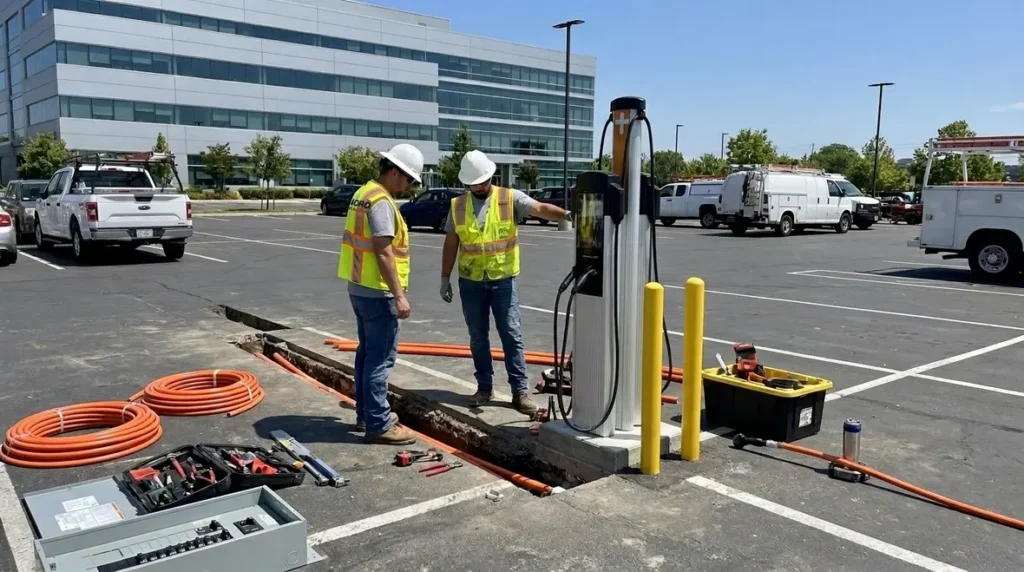
A strong assessment does not start at the charger. It starts with your facility, your utility limits, and your daily workflow. First, our team reviews the property map and identifies where vehicles stage, where they charge, and where staff and deliveries create bottlenecks. Next, we check electrical capacity and distribution. Then, we confirm whether upgrades will be needed, and how those upgrades will impact downtime, budgets, and future growth.
After that, we consider the human side. In many commercial and industrial properties, charging is not a “set it and forget it” feature. Instead, it becomes part of operations, like dock scheduling or night cleaning. Therefore, we design for safe access, clear signage needs, and smooth maintenance access. Meanwhile, our expert service staff explains each recommendation in plain terms, so facility managers do not feel like they are reading a manual written by aliens.
Site layout, traffic flow, and charging behavior on property
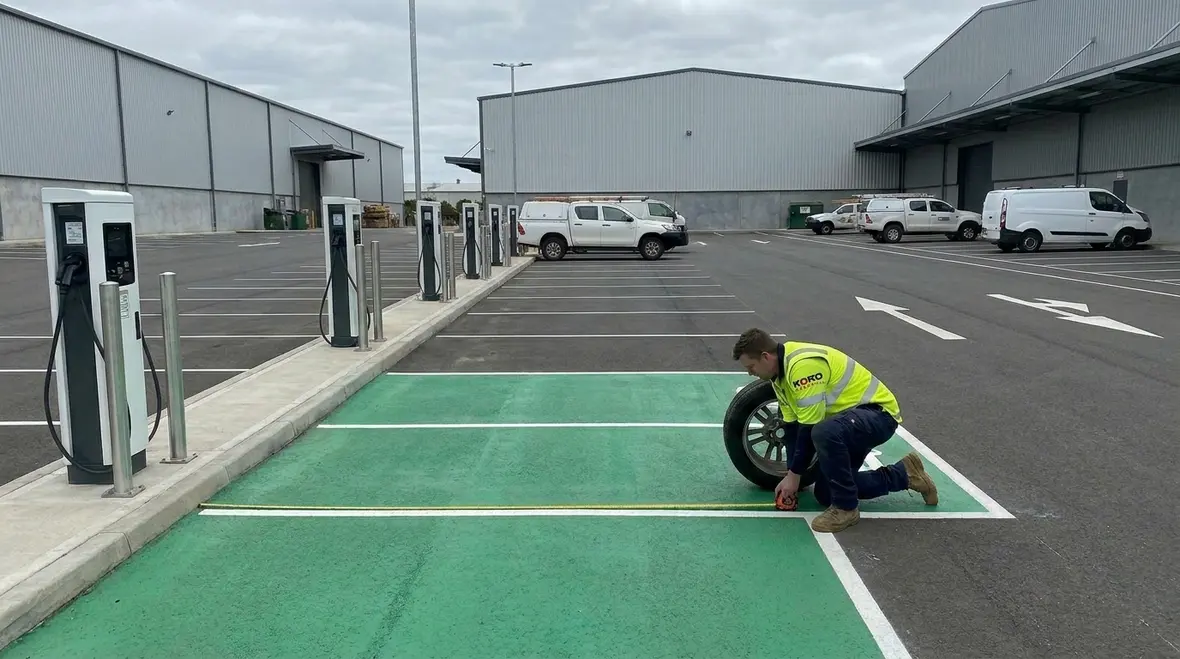
Once a site manager tells us where vehicles can park, we still verify the reality on the ground. Cars do not always pull in the way drawings suggest. Drivers do not always park straight. Weather and lighting change how people behave. So we examine stall width, aisle spacing, turning radius, and the distance from the electrical room to the planned charging locations.
Next, we model typical usage patterns. If the fleet is concentrated at certain hours, then charging should reflect that. Likewise, if employees arrive at staggered times, we plan so chargers do not fight for power like guests reaching for the last appetizer at the same moment.
Then we account for safety and visibility. We look at foot traffic routes, bollard needs, and potential conflict points. Moreover, we ensure the system supports routine access for inspections and service calls, because a charger that is unreachable becomes a very expensive sculpture.
From drawings to real-world parking behavior
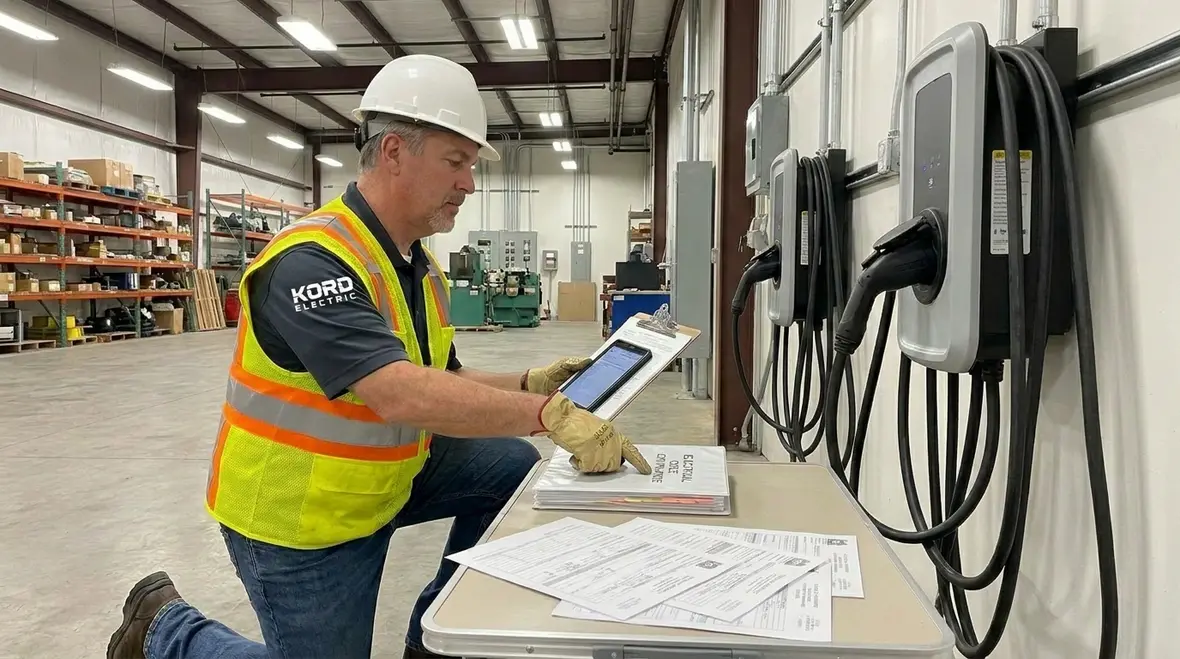
Engineering drawings can suggest an ideal world. Our Commercial EV charging site assessment checks how people actually park on Monday mornings, during deliveries, and when the weather is not cooperating. We watch how vehicles approach, how often spaces stay full, and which corners of the lot turn into unofficial loading zones. That real-world behavior keeps charger placement honest.
Designing stalls that work for drivers and operations
In commercial and industrial facilities, a clean stall layout is not just about maximizing space. It is about keeping traffic flowing while forklifts, service trucks, and personal vehicles all share the same property. We balance the need for dedicated EV stalls with fire lanes, ADA access, and the paths that people naturally choose when they are in a hurry. The goal: chargers that are easy to reach, simple to use, and hard to accidentally block.
Power capacity and utility constraints that affect design
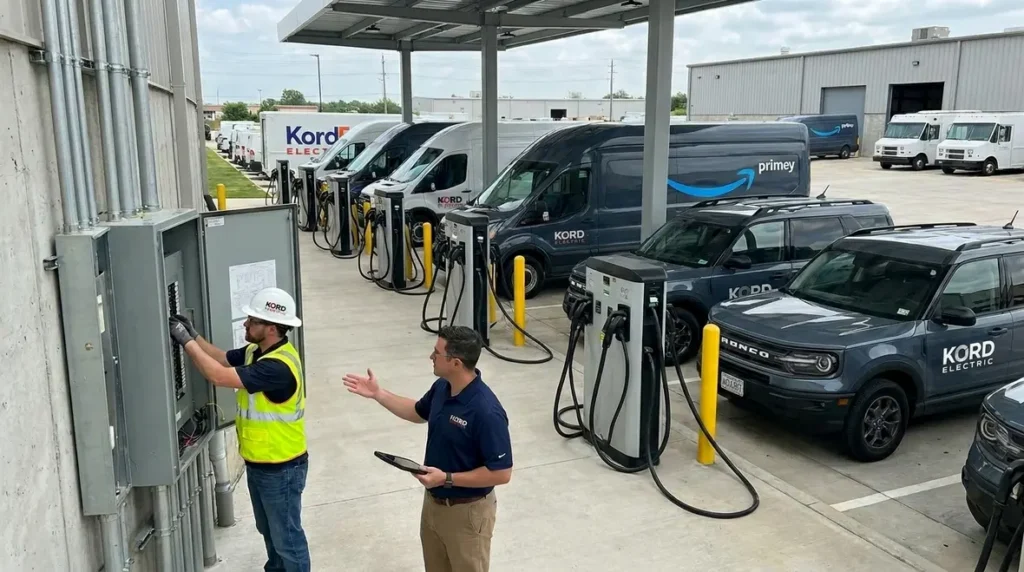
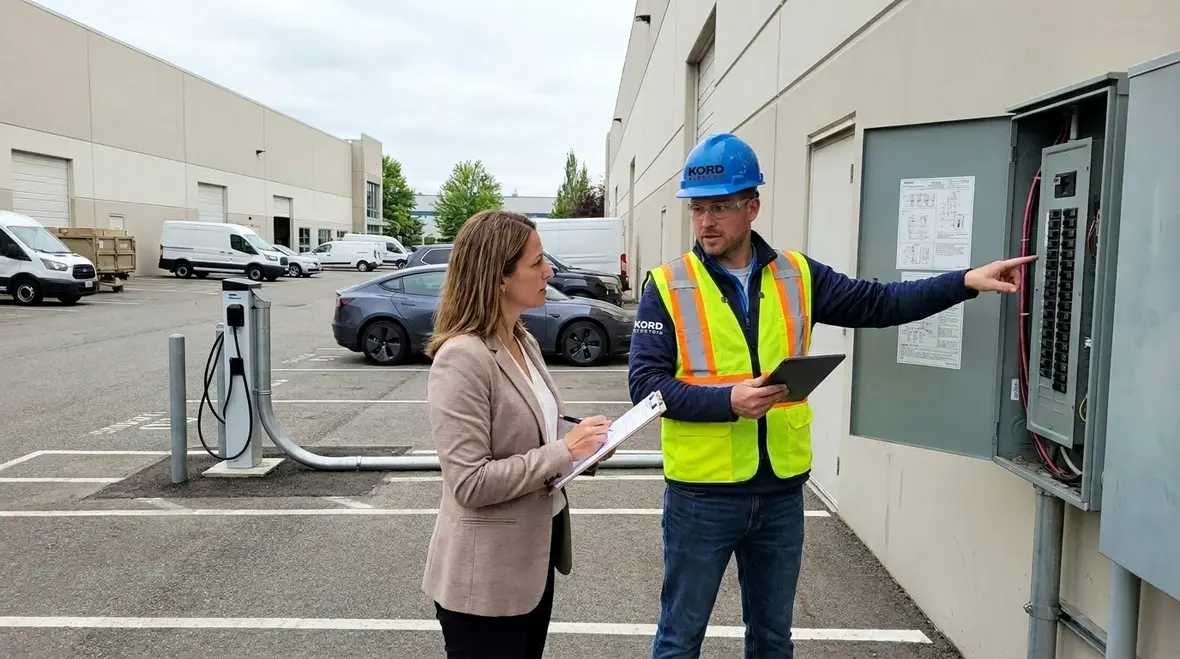
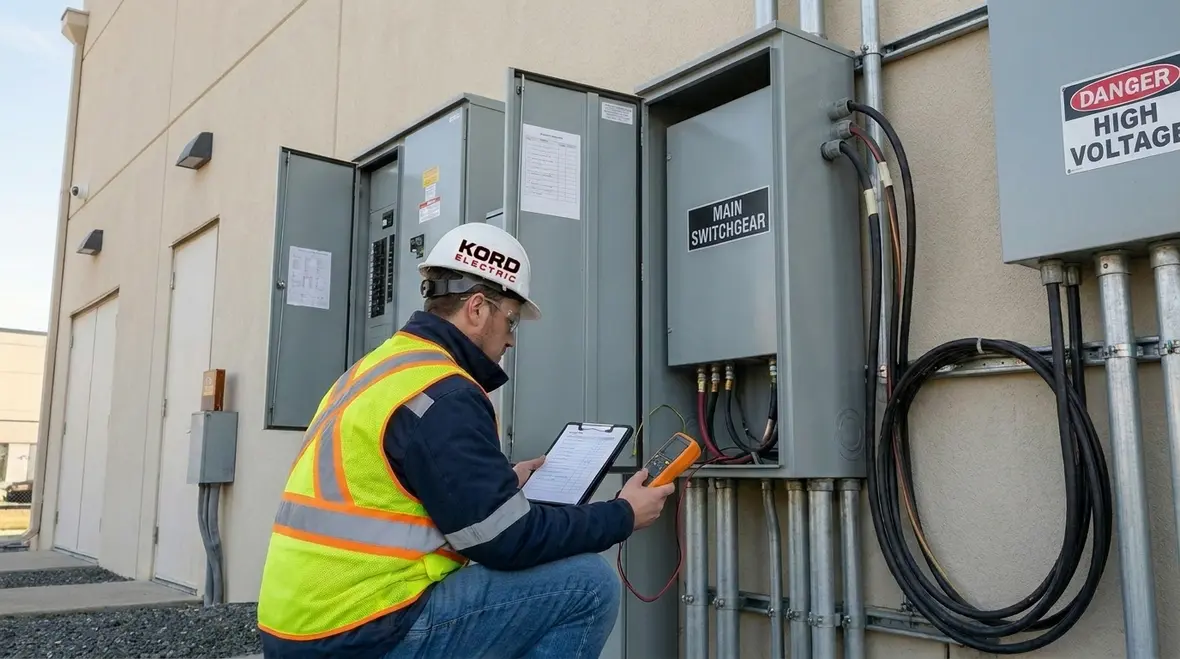
In most commercial builds, power is the main limiting factor, not charger hardware. Therefore, we evaluate incoming service size, panel capacity, and existing loads such as HVAC, lighting, production equipment, and tenant spaces in major properties. After we gather that data, we determine whether capacity exists for your initial charger count and for any likely expansion.
At this stage, our technicians and expert service staff explain tradeoffs clearly. For example, if your service cannot support full simultaneous charging, we can recommend load management. Also, if the circuit runs are too long, we may propose better routing or staged installation. Each option carries a cost and a timeline impact, so we align the electrical plan with what the facility can realistically manage.
Then we document assumptions so stakeholders can review them. As a result, you avoid the classic scenario where everyone agrees in a meeting and then reality shows up at install time. Reality always shows up. It is like taxes, but with more cables.
Balancing chargers with existing building loads
Most commercial and industrial properties already ask a lot from their electrical systems. A Commercial EV charging site assessment reviews how much load the building carries today, what peaks look like, and where EV charging can fit without pushing everything into the red. We look at distribution on each panel, how loads stack during the day, and where spare capacity actually lives instead of where everyone hopes it might be.
Planning for smart load management and future upgrades
If utility upgrades are not realistic in the short term, we map out options such as phased charger deployment, load sharing, and smart scheduling. When upgrades do make sense, we explain how they affect other projects, like future solar integration or electrical preventive maintenance programs. That way, EV charging becomes part of a broader infrastructure strategy, not a one-off experiment bolted onto already busy switchgear.
Code, permitting, and reliability for commercial sites
For commercial and industrial facilities, the project has to meet code and pass permitting without drama. Kord Electric approaches this with structured steps. We confirm required signage and safety features, review equipment placement rules, and align installation methods with applicable standards. When permits are required, we help the team navigate the process and keep the project moving.
We also plan for long term reliability. That means we focus on proper conduit routing, weather and physical protection, grounding, and breaker selection that matches the site’s electrical conditions. In addition, we think about future expansion so you do not end up tearing up pavement just to add one more station.
Just as important, we explain how the system should be used and maintained. Therefore, facility managers understand what to expect during operations, and others know who to contact if something needs attention. Our expert service staff stays involved so the project does not vanish the moment the last screw goes in.
Keeping EV projects aligned with code and standards
Code rules evolve, especially around EV infrastructure and commercial power systems. During a Commercial EV charging site assessment, we review clearance requirements, working space, cable protection, and how the system fits with current interpretations of the National Electrical Code. The goal is simple: when the inspector arrives, the installation should feel predictable, not creative.
Reliability that matches commercial and industrial realities
EV chargers in a commercial yard or structured parking garage live a harder life than chargers in a quiet residential driveway. We design with that reality in mind. Conduit routes avoid high-impact zones. Equipment sits where forklifts, carts, and pallet jacks are less likely to meet it. Grounding and bonding choices match the environment. Reliability becomes something you can plan for, instead of something you cross your fingers and hope for.
Choosing charger types and features for fleet and property needs
Not every site needs the same charging setup. A fleet yard with return-to-base behavior works differently than a mixed-use parking area, and Kord Electric focuses only on commercial and industrial facilities and major property buildings. Once we understand the vehicle mix, expected session length, and the goal of charging, we recommend charger types that fit the workflow.
We help clients evaluate power levels, connector styles, and whether smart features make sense. Then we translate those choices into a plan that supports daily use. For instance, if the facility wants reporting for internal tracking, we can guide configuration options. If the goal is predictable energy usage, we align the system with load management strategies and scheduling concepts.
And yes, we do this without treating the facility manager like a bystander. We talk through decisions and provide clear next steps. Nobody should need a decoder ring to understand their own infrastructure.
Aligning charger selection with how vehicles really operate
Some fleets linger overnight. Others cycle through all day with brief pauses. Our Commercial EV charging site assessment looks at dwell time, turnaround expectations, and how much energy each vehicle actually needs between shifts. That operational picture shapes whether Level 2 chargers, DC fast charging, or a mix of both belongs on your site.
Smart features that earn their keep
Dashboards and apps can be helpful, but only if they support your facility’s real work. We help facility teams decide when networked chargers, user authentication, usage tracking, and demand-response tools make business sense. The result is a system where the software supports the hardware, not the other way around.
Our process for an EV charger installation that follows the assessment
Our work connects the dots from assessment to installation. If you review our EV charger installation guidance, you will see how we keep the process organized, with steps that support planning, site preparation, and execution. First, we confirm the design details we derived from the assessment. Next, we verify the physical constraints on the property so installs match real conditions, not just the optimism of a site plan.
Then we coordinate installation steps around operational needs. For commercial and industrial properties, downtime matters. Therefore, our technicians plan work windows, equipment staging, and safety controls so the facility can keep running while we install the system.
After the hardware and electrical components are in place, we test and verify performance. Then, we document the system for maintenance and future upgrades. Finally, our expert service staff explains how the system operates and what facility teams should watch for during routine use. That way, your chargers stay productive, not mysterious.
From Commercial EV charging site assessment to live infrastructure
A disciplined Commercial EV charging site assessment makes the installation phase far more predictable. We arrive on site with a plan that accounts for conduit paths, equipment locations, staging areas, and safety controls. That planning shortens surprises and keeps your internal teams from firefighting preventable issues during construction.
Tying EV charging into broader electrical maintenance
Because EV charging becomes part of your core electrical infrastructure, we often connect new systems to broader electrical preventive maintenance programs and commercial and industrial electrical maintenance plans. That way, chargers, panels, feeders, and emergency systems all get checked on a coordinated schedule, instead of living in separate silos.
Featured FAQ: quick answers for facility teams
Conclusion: make the next move with Kord Electric
If a charger project stalls at the “we think it will fit” stage, you lose time, budget, and momentum. We help facility managers get clarity through a disciplined assessment, then we carry that plan into a reliable EV charger installation built for commercial and industrial realities. Reach out to Kord Electric and we will review your site conditions, electrical constraints, and growth goals. When your plan matches your property, charging works from day one. Call us today, and let us make the parking lot earn its keep.
If you are also reviewing your broader electrical strategy, consider pairing your Commercial EV charging site assessment with structured support such as dedicated electrical preventive maintenance and system evaluations. Aligning EV charging with these services helps protect uptime, manage risk, and keep your overall power infrastructure ahead of demand.