Lighting Audit California for Commercial Buildings Code and Savings
Lighting audit in California for commercial buildings: what we verify first
In California, a Lighting Audit California: Commercial Energy, Safety & Code Requirements is not a paperwork exercise. We use it to find real savings, confirm safe operation, and reduce the risk of code problems before inspections turn into surprise pop quizzes. At Kord Electric, our team focuses on commercial and industrial facilities and major property buildings, because those sites carry real load, real occupants, and real liability. And frankly, wasting energy in a facility that runs all day is like leaving your car running to keep your coffee warm. It sounds “convenient” until the bill shows up.
We start with a practical review: how the space looks, how it functions, and how the lighting system behaves under current conditions. Then we connect those findings to the California code direction for commercial lighting efficiency and controls. From there, our expert service staff explains what we find in plain language, so others on site can make decisions without guessing.
Why a lighting audit matters for energy, safety, and operations

First, energy. Commercial and industrial buildings often run long hours, high occupancy, and complex lighting zones. As a result, even small inefficiencies add up fast. We measure what is actually installed and how it performs, then we compare it with what should be typical for safe, efficient operation. Next, safety. Poor lighting makes hazards harder to see, and it also increases the chance of falls, mistakes, and slow response times. Finally, operations. When lighting systems fail in the wrong place, at the wrong time, nobody enjoys “quick fixes” that keep repeating.
So, rather than rely on assumptions, our technicians treat each facility like a living system. If a corridor lights unevenly, or a parking level flickers when the load changes, we track the cause. And if the solution is simple maintenance plus a controls upgrade, we recommend that. If the solution requires replacement, we plan it to minimize downtime. Either way, we keep the focus on commercial and industrial performance, not residential shortcuts.
What our team reviews during a commercial lighting assessment
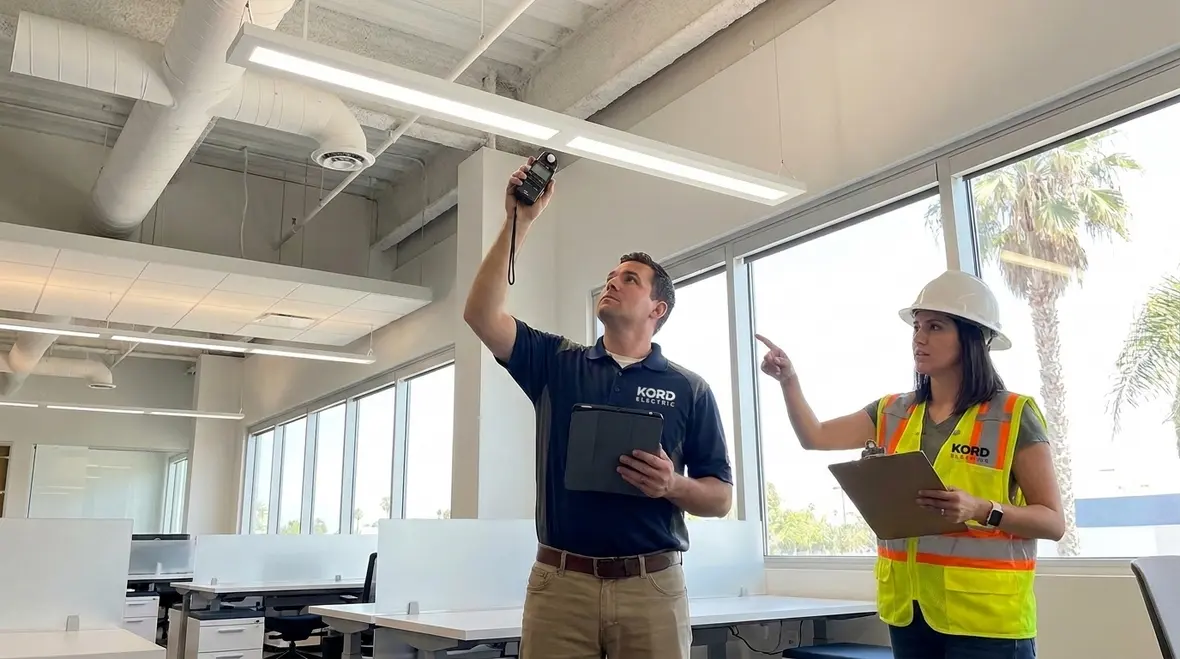
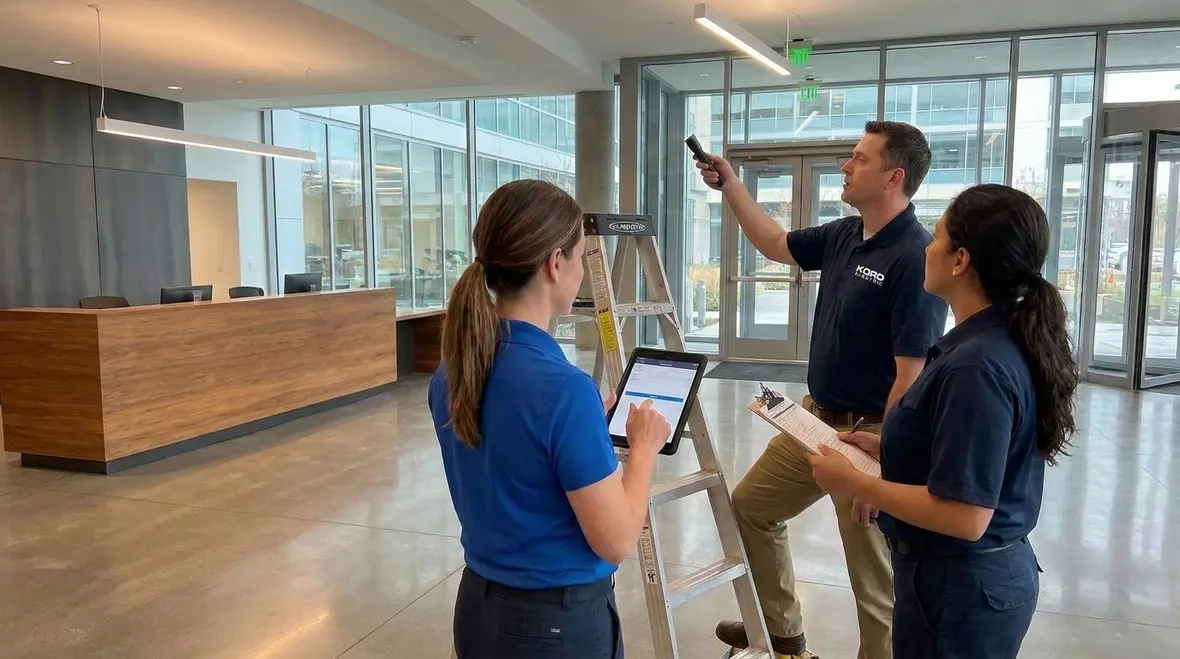
Our Lighting Audit California work begins with walkthroughs and field checks. Then we layer in data so the conclusions stay grounded. Our technicians and expert service staff explain each step as we go, because clarity keeps projects moving. After all, nobody wants a consultant moment where everyone nods and nobody knows the plan.
We typically review these areas:
Installed fixtures and technology, including age, lamp type, and whether the system still matches intended use
Distribution and uniformity so task areas get the right light without glare or dark zones
Controls and zoning, such as occupancy sensors, daylighting, scheduling, and override behavior
Electrical performance, including driver or ballast issues, panel loading concerns, and wiring condition where needed
Serviceability, meaning how hard it will be to maintain the lights at scale in a busy facility
Building usage patterns, because lighting should fit how people and operations actually run
Additionally, we document lighting locations and performance notes. That way, our next steps connect to real areas of improvement, not vague ideas. And when we recommend changes, we describe why those changes help energy use, comfort, and compliance.
How California commercial lighting code guidance shapes our recommendations
Next, we align our findings with California commercial lighting code direction. Kord Electric references the current code guide that our team keeps updated for major property buildings, including the California Commercial Lighting Code Guide for 2026 on our site. We do this so our audit recommendations reflect the requirements inspectors expect, not the requirements we wish existed. That approach helps you avoid a classic scenario: you upgrade lighting, then discover the controls strategy does not match the compliance intent.
In plain terms, code guidance often pushes facilities toward efficient lighting and smarter control of lighting load. Therefore, our audit focuses on two practical outcomes: lower energy use and reliable control behavior. We also confirm that lighting remains safe and usable. For example, parking areas, stairways, and task zones each carry different operational needs. We do not treat the whole building like it is one big open-plan office.
In addition, we review how the current system reacts across conditions. Does it turn on when needed? Does it stay on long enough for safe egress? Does it dim or shut off at the right times? We then connect the right control methods to the space type and usage pattern.
Connecting audits to real-world commercial lighting performance
Our commercial clients expect more than a checklist. They want lighting that behaves predictably during shift changes, emergency drills, and periods of partial occupancy. That is why we tie audit findings directly to control logic, Title 24 expectations, and how people actually move through the building.
Lighting Audit California approach to energy savings and payback
Here is where the conversation stops being theoretical. We calculate potential energy savings based on what we measure and what we can improve. Then we estimate impact on operating hours and system behavior. Because commercial and industrial buildings often run many hours daily, small reductions in power draw can translate into meaningful savings over time.
However, we do not chase savings by cutting corners. Our expert service staff explains the tradeoffs: glare, uneven illumination, and premature failures can cost more than they save. Instead, we build a recommendation that balances energy, comfort, maintenance, and code alignment.
Typically, the biggest levers include:
Upgrading to efficient LED systems where fixtures and drivers no longer perform as intended
Improving controls so lights respond to occupancy and schedules instead of running “forever”
Using daylighting strategies where windows and skylights exist, so ambient light reduces artificial load
Right sizing zones so lighting output matches real task locations, not just rough guesses
To keep the project practical, we also map recommendations to business impact. If a space needs continuous operation, we phase work and plan around site schedules. And yes, we know that “right now” is never the right time for upgrades. But we make it as painless as possible.
Linking audits to retrofit planning and controls strategy
Many property teams move from audit findings straight into retrofit conversations. We often connect those next steps with resources like our office building lighting energy upgrades guide and our deep dives on control retrofits. That way, your Lighting Audit California: Commercial Energy, Safety & Code Requirements review does not live in a folder; it turns into a clear, sequenced upgrade plan.
Common issues we find in commercial and industrial facilities
Even well run buildings can drift out of alignment over time. Fixtures age. Controls get bypassed. Renovations create mismatched lighting zones. Then the building starts “working” but not in the efficient or code compliant way it should. During our onsite review, we frequently see patterns that create unnecessary energy use and safety risk.
Common issues include:
Outdated fixtures with degraded output or inconsistent color, which reduces usable light
Controls that do not match occupancy, such as sensors that turn off too quickly or overrides that never get reset
Unbalanced illumination, where some areas look bright but task zones fall below safe comfort levels
Overlit spaces where lights run at full output because zoning never got updated after layout changes
Maintenance gaps where lamps or drivers get replaced unevenly, leaving different levels across the same area
Then there is a less glamorous issue: documentation. Facilities often lack clear records about what changed, when, and why. As a result, decision makers struggle during audits and tenant changes. Our technicians address that by organizing findings and recommended steps so others can act with confidence.
How Kord Electric delivers audit results for major property buildings
Next, we present the results in a way that facility leaders can use. Because not everyone on site reads technical lighting reports for fun, we translate the findings into clear actions. We also explain what changes mean for safety, energy, and long term performance.
For large facilities, we handle the process like a project, not a vague suggestion. We coordinate with building schedules, confirm access needs, and plan the order of operations. Then our expert service staff reviews the proposal so stakeholders understand the steps, the timing, and what success looks like.
Audit output format snapshot
What you receive |
How it helps |
|---|---|
|
Measured findings and notes by zone Controls and system performance observations |
Targets upgrades where they matter most Prevents “blanket replacements” that miss the real problem |
|
Compliance and code alignment guidance based on current requirements Upgrade options and phased recommendations |
Reduces inspection risk Supports better budgeting and scheduling |
From audit to implementation with a commercial-focused electrical team
Because audit results often lead straight into electrical work, property teams value working with a contractor who also delivers installation and service. Kord Electric supports everything from lighting control retrofits to full commercial rewiring, including regional support through our Los Angeles County electrical services team. That continuity helps projects move from inspection readiness to long term performance without starting over with a new vendor.
FAQ
Ready for a lighting upgrade plan that actually holds up?
If your facility runs all day and your lighting still feels inconsistent, it is time to stop guessing. Kord Electric performs thorough Lighting Audit California: Commercial Energy, Safety & Code Requirements reviews for commercial and industrial sites and major property buildings. Then we deliver clear recommendations your team can act on, with technicians and expert service staff who explain the why, not just the what. Call us to schedule an onsite assessment and get a plan built for real-world operation.
From code-driven lighting compliance to energy-focused retrofits, our team helps California facilities stay ahead of inspections while reducing wasted power. Whether you are planning a targeted controls upgrade or a full system redesign, a structured lighting audit is the most direct way to understand where you stand and what to do next.
If you are coordinating electrical improvements beyond lighting, Kord Electric also supports broader commercial upgrades, service work, and maintenance across Southern California. Our licensed crews handle panels, circuits, and lighting systems as one integrated electrical strategy instead of disconnected projects.