Manufacturing Electrical Troubleshooting and Downtime
Common Causes of Downtime in Manufacturing Electrical Systems and the Role of Manufacturing Electrical Troubleshooting
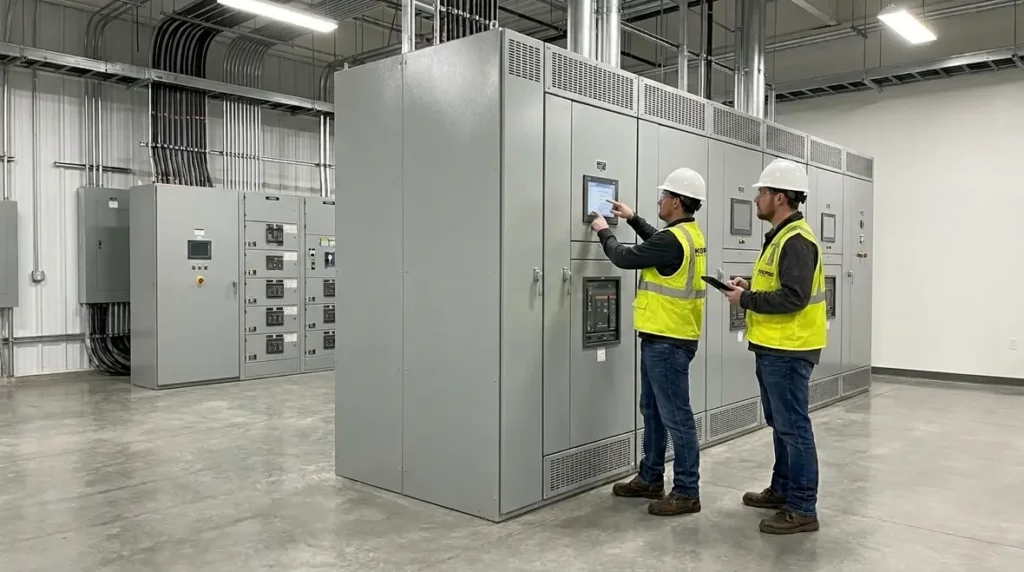
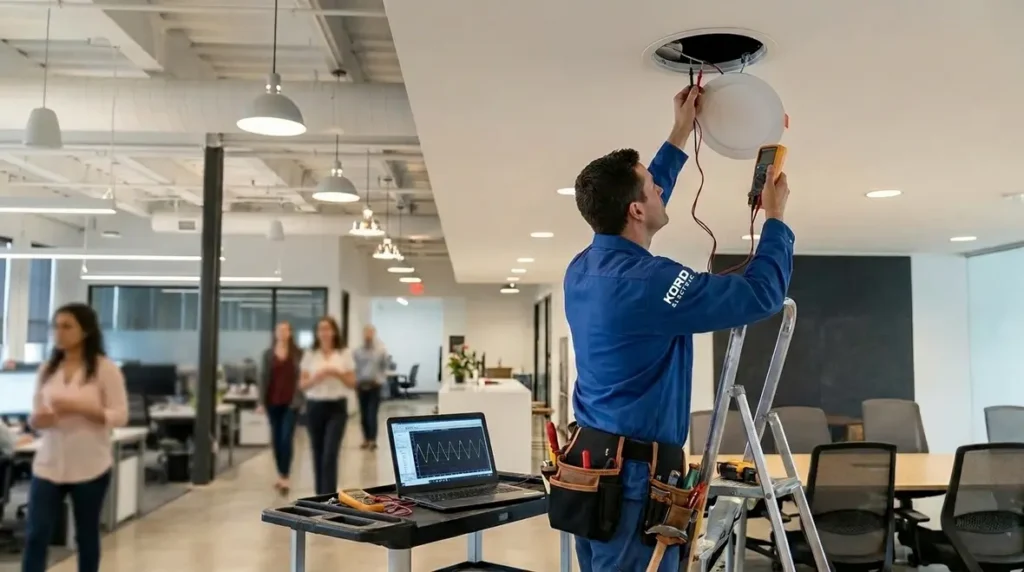
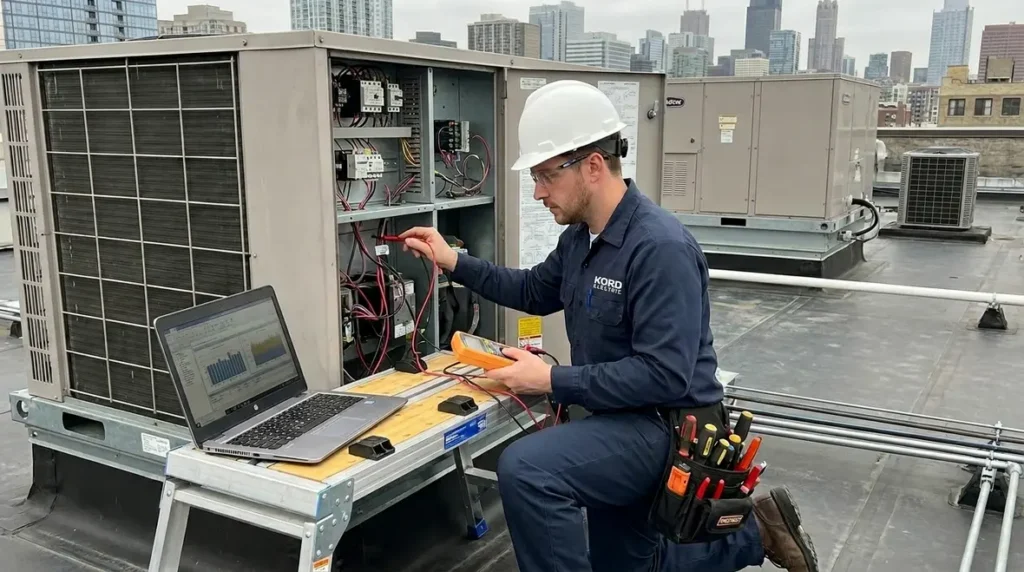
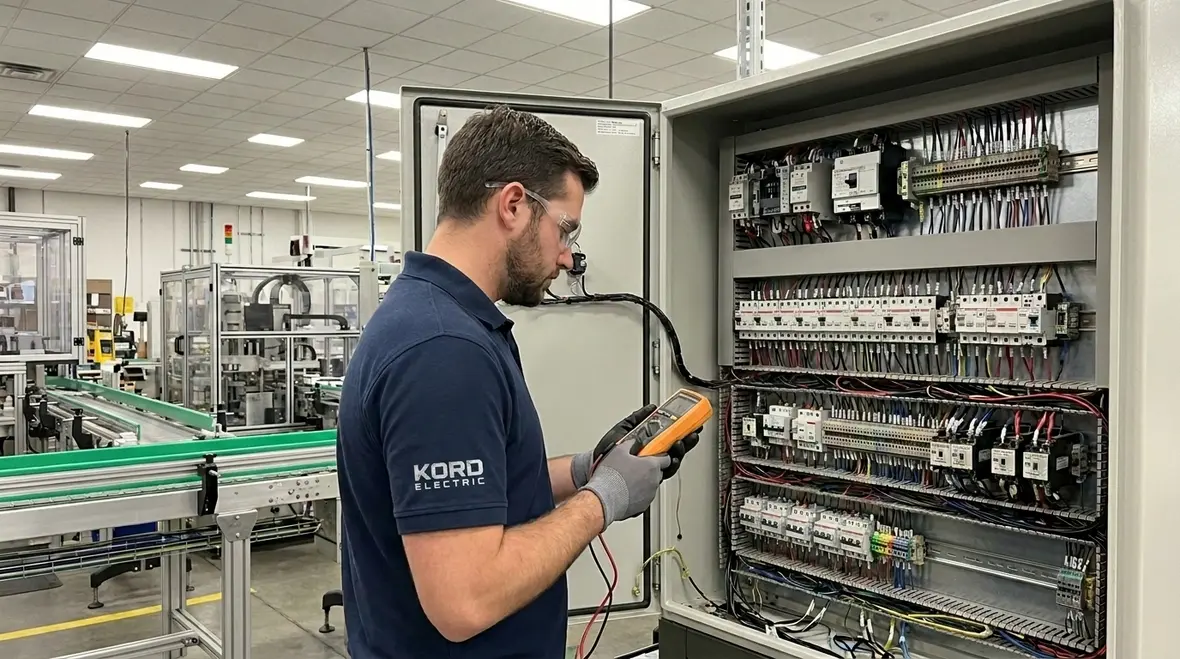
When production stops, the hours feel like days, and the costs add up faster than a payroll spreadsheet during a budget freeze. In manufacturing, we often see downtime begin long before anyone admits it. That is why Manufacturing Electrical Troubleshooting matters, because it helps others move from guesses to facts while systems fail in the real world.
At Kord Electric, we support commercial and industrial facilities, as well as major property buildings. Our technicians and expert service staff explain what they find, why it failed, and what to do next, without hiding behind jargon. And yes, sometimes we even make a light joke, because an outage is stressful enough without adding drama.
How hidden electrical risks in buildings quietly trigger downtime
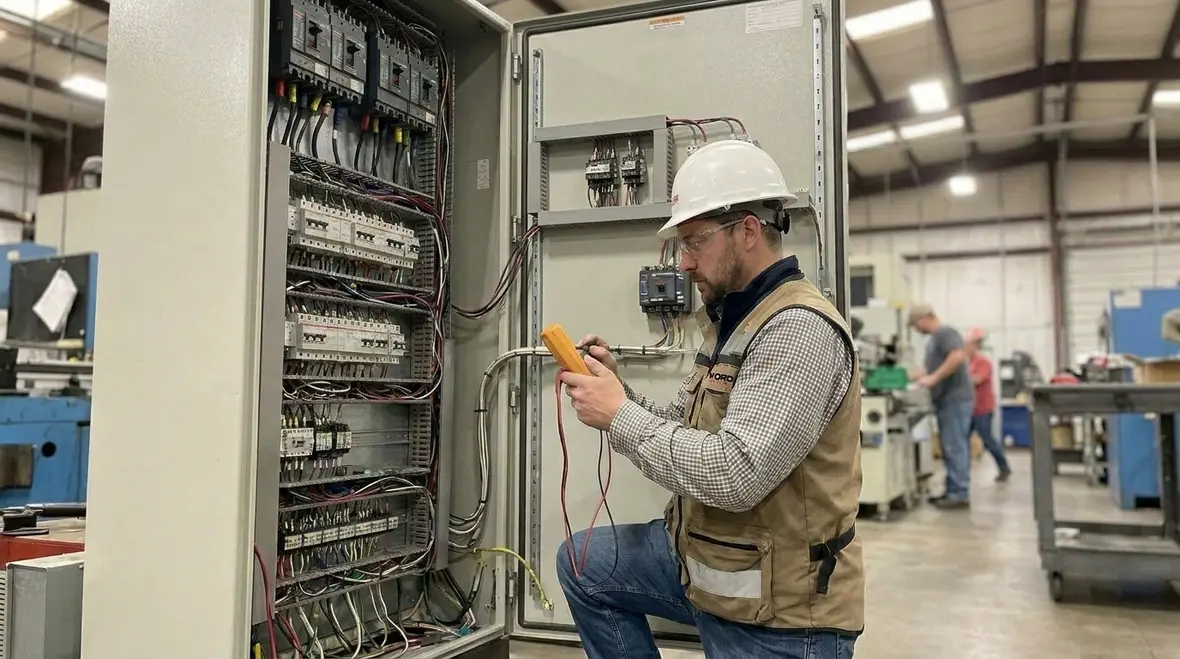
Downtime rarely shows up wearing a name tag. Instead, it creeps in through small, neglected conditions that grow worse over time. Our team has shared several hidden electrical risks in commercial buildings, and many of them show up in industrial power systems too, just with more dust and heavier loads. For a deeper look at these issues on the commercial side, you can explore our article on hidden electrical risks in commercial buildings and see how similar problems play out on the plant floor.
For example, we often find insulation breakdown near heat sources, loose connections that heat up under current, and moisture intrusion that creates leakage paths. Even when the system looks fine from the outside, the inside can behave like a slow leak in a tire. At first you barely notice. Then the plant loses a line, and everyone suddenly becomes an expert electrician at 2 a.m.
To avoid that pattern, we recommend early review of conditions that affect reliability: cable routing, panel cleanliness, gland sealing, and grounding health. Our technicians do not just “check boxes.” They verify readings, compare them to expected values, and document what changed before failure.
Overloaded circuits and motor loads that run beyond their safe limits
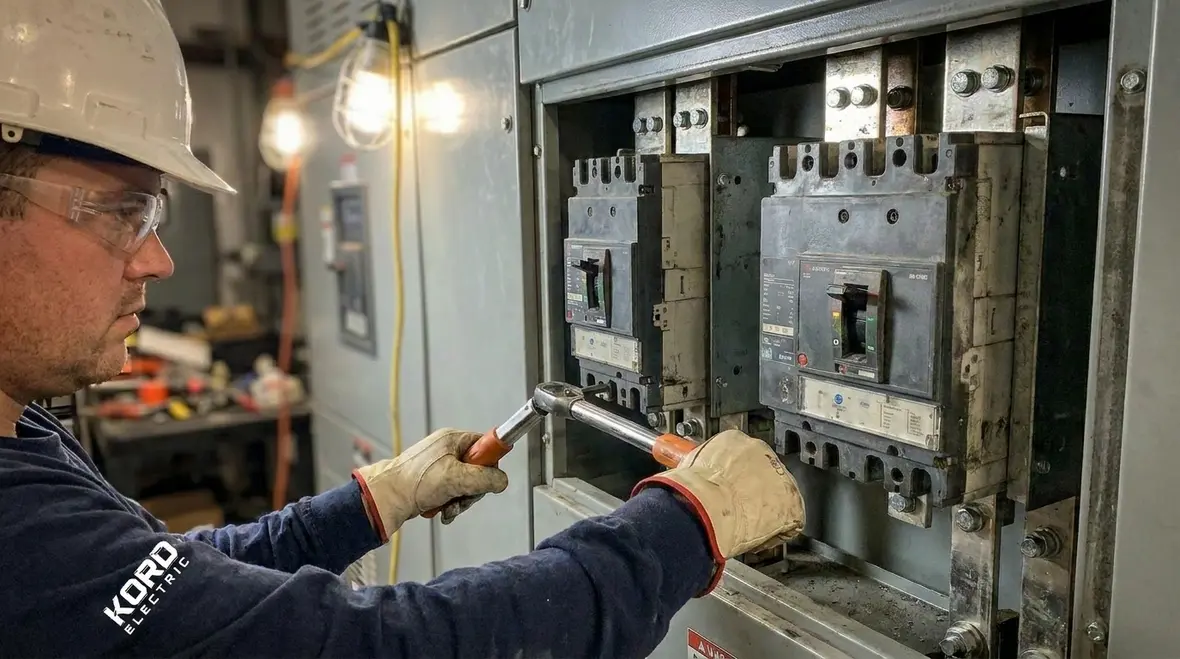
One of the most common downtime causes in manufacturing electrical systems comes from demand creep. Equipment keeps improving, production schedules get tighter, and then the electrical system slowly absorbs more load than it was planned for. At some point, the protection devices trip more often, motors draw higher current, and conductors run hotter.
As a result, failure can look random. A line stops after a lunch break. Another stop happens after a planned restart. Meanwhile, the root cause sits in plain sight: an overloaded circuit, an aging motor, or a load that changed without updating the electrical design.
During Manufacturing Electrical Troubleshooting, we help others separate nuisance trips from real overload conditions. We verify motor load signatures, inspect starter components, and check for mechanical drag that increases electrical demand. Then we explain the connection: when the motor works harder, the system pays the bill through heat, voltage drop, and wear.
In business, as in sitcoms, the problem rarely stays the same episode. It escalates, then it ruins the finale.
Loose connections, aging terminations, and the heat that nobody budgets for
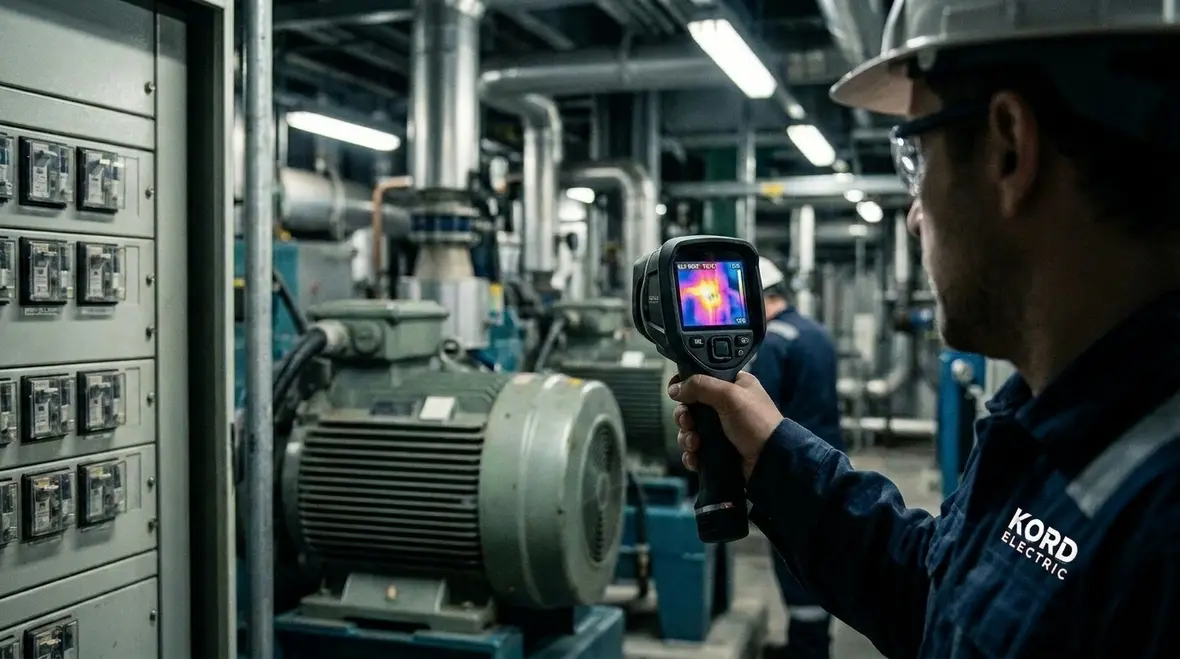
Loose connections rank high on the list because they can survive for a while, then fail fast. Heat from poor contact changes metals, loosens more hardware, and increases resistance. Over time, that creates a cycle that ends with arcing, tripping, or even damage to bus bars and switchgear.
In manufacturing, vibration and frequent maintenance can worsen the situation. Technicians open panels, swap parts, and sometimes reassemble with slight misalignment. Not always. But enough times to cause repeat problems in multiple locations.
Here is where our technicians bring calm logic. We do not assume the worst right away. Instead, we measure and inspect. We check torque marks, look for signs of discoloration, and confirm contact pressure on critical terminations. Next, we connect findings to the symptoms: hot spots, voltage drop, and recurring trips that seem to happen “for no reason.”
Because heat leaves evidence. You just need someone to read it without panic.
Grounding faults and poor bonding that create shocks, nuisance issues, and damage
Grounding and bonding protect people, equipment, and control logic. When that system weakens, downtime follows. Sometimes you see tripping and alarms. Other times the plant keeps running, but the electrical system slowly takes hits that appear later.
Common patterns include corrosion on grounding conductors, broken bonding jumpers, missing connections after upgrades, and damaged ground paths caused by construction changes. Then, with current leakage and uneven reference points, controls behave strangely. Sensors misread. Communication slows. Protective devices interpret faults incorrectly.
In Manufacturing Electrical Troubleshooting, we focus on how the grounding system affects both power and control. We validate continuity and resistance where appropriate, inspect grounding electrode connections, and confirm that metal enclosures and raceways bond correctly. We also explain results in plain terms so others can make decisions quickly, without turning every meeting into a debate about what the meters “probably” mean.
Grounding problems do not just create danger. They create confusion. And confusion is the enemy of uptime.
Insulation breakdown, moisture, and contamination in harsh plant environments
Industrial sites live in extremes. Humidity, chemicals, conductive dust, and temperature swings all challenge electrical insulation. Even “dry” plants experience condensation cycles. As temperatures change, moisture collects where it should not, and contamination can sit on surfaces and creep into enclosures.
Then insulation resistance drops. Protective devices see leakage or abnormal current paths. At first, staff may notice only minor issues: slow resets, intermittent alarms, or a panel that smells faintly like trouble. Later, insulation fails in a way that forces a shutdown.
Our expert service staff helps others identify the likely sources by reviewing the environment as closely as the wiring. We inspect seals, check drain paths, verify enclosure integrity, and review cable conditions. We also help plan changes that reduce risk, like better sealing methods and targeted cleaning routines for commercial and industrial areas.
We keep the conversation practical: what we can fix now, what needs monitoring, and what requires replacement before it becomes an emergency call.
Protection device mismatch, coordination issues, and false confidence
Another cause of downtime comes from protection devices that do not cooperate. If a breaker trips too early, it interrupts production. If it trips too late, it allows damage to spread. Coordination errors can stem from component upgrades, added loads, or design changes that never fully updated the protection settings.
Then staff sees a pattern of failures that looks messy. A feeder trips and takes out equipment downstream. A contactor fails and triggers a cascade. Someone swaps a component, and the issue seems “fixed” until the next cycle.
During Manufacturing Electrical Troubleshooting, we evaluate how protective devices behave together. We check settings, verify trip curves where available, and confirm that devices match the expected system profile. Then we explain how coordination affects downtime, because one wrong setting can turn a minor fault into a plantwide problem.
Think of it like traffic lights. If they do not sync, intersections become chaos, and the road to your next shift gets blocked.
FAQ
Choosing the right service approach to prevent the next shutdown
Downtime does not have to be a surprise. When we handle Manufacturing Electrical Troubleshooting with a clear method, we reduce repeat failures and shorten repair time. Our technicians and expert service staff focus on what matters in commercial and industrial facilities: real electrical conditions, dependable protection, and fixes that hold under plant stress.
Many facilities pair structured troubleshooting with ongoing care, using programs like electrical preventive maintenance for commercial and industrial sites to keep panels, terminations, and protection devices ready for the next surge in production.
If your manufacturing plant sits in or around Los Angeles County, aligning investigations with regional support such as Los Angeles County electrical services for industrial and commercial facilities helps you respond faster, stay compliant, and keep downtime from becoming a recurring character in every budget meeting.
If you want your operations to run like they are supposed to, contact Kord Electric today. We will listen to the symptoms, inspect the system, and explain the findings in business-ready terms. Let us help you stop guessing, restore uptime, and keep your facility moving through the next shift with confidence. Call us now.