Manufacturing Facility Lighting Upgrades LED Controls
How Kord Electric Helps Manufacturing Teams See More, Waste Less, and Produce More
At Kord Electric, we see it every day in commercial and industrial spaces: old lighting works, sure, but it quietly drains time, money, and comfort. That is why we focus on Manufacturing Facility Lighting Upgrades: LED, Controls & Energy Savings. During a typical upgrade, our team replaces outdated fixtures with efficient LED systems, then we add controls that match how people actually work. In other words, we stop lighting the whole building like it is a stage for a never ending talent show.
In this article, we explain what we change, why it matters, and how our technicians guide facility managers from the first site walk to the final check. Because once the lights are right, productivity tends to follow. And yes, the savings are real too, even if someone tries to blame the electric bill on “bad luck.”
What We Look For in a Facility Lighting Upgrade
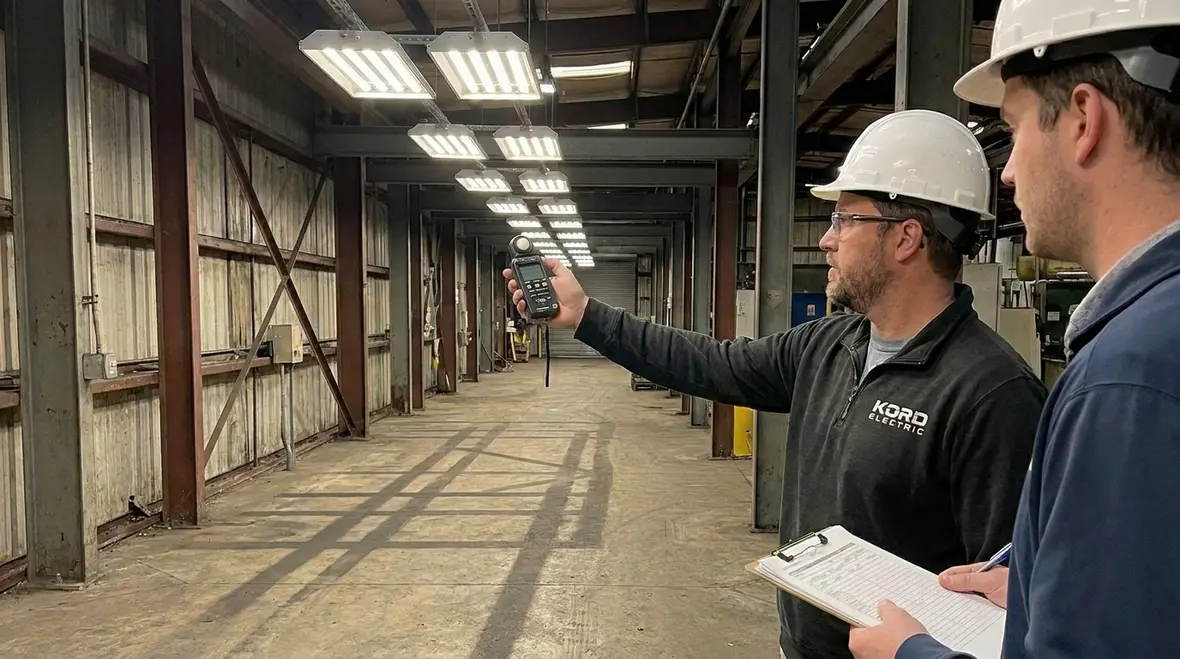
To start, we do not treat manufacturing lighting like a simple swap. Instead, we begin with real observations across the production floor, corridors, warehouses, and outside loading areas. Then we compare that with the way tasks happen in each zone. As a result, the upgrade plan becomes practical, not guesswork.
Our technicians also evaluate glare risk, shadow patterns, and color consistency. When operators move under uneven light, they work slower and feel more tired. Meanwhile, inspectors and line workers often need stable visibility to catch defects early. In fact, poor lighting can turn quality checks into a guessing game, and nobody wants that game running past shift change.
Next, we review power quality and fixture condition. Some sites have wiring issues or components that limit performance. Therefore, we coordinate with the facility team to reduce disruption and keep production moving. We then map which areas need immediate attention and which can follow in phases.
Finally, we document everything so others in management can make confident decisions. We explain options in clear, business friendly terms, so facility leaders do not have to decode electrical jargon like it is a hidden message in a comic book.
Connecting layout, tasks, and inspection standards
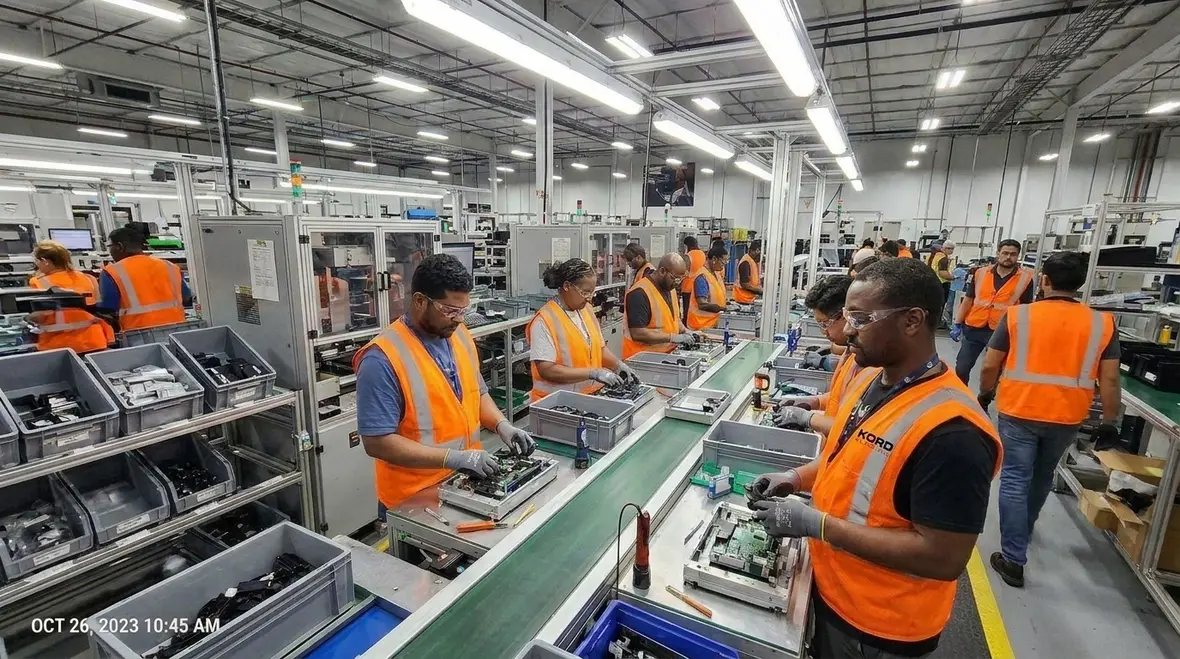
Because no two manufacturing floors operate the same way, we pay close attention to how each zone actually runs. Assembly lines, inspection cells, packaging areas, and high-bay storage all place different demands on light levels and contrast. We evaluate where people need strong vertical illumination to read labels, where forklift operators need wide, even coverage, and where sensitive inspection tasks depend on high color rendering. That way, the upgrade supports how your operators really move, not just how a generic layout drawing thinks they should move.
Why LED Improves Production, Not Just the Bill
When we install LED as part of Manufacturing Facility Lighting Upgrades: LED, Controls & Energy Savings, we aim for outcomes that matter to the floor. LEDs deliver consistent output and better control of where light lands. Consequently, workers spend less time leaning, squinting, or repositioning tools just to see.
In our experience, the biggest gains show up in three areas.
- Visual clarity for assembly work, maintenance, and material handling
- Faster comfort because uniform light reduces eye strain over long shifts
- Stable performance so the site does not suffer random dark spots after bulb failures
Also, LEDs support modern lighting strategies that traditional fixtures cannot handle well. For example, we can target higher quality lighting at workstations while using efficient settings in less active zones. That balance helps keep production areas bright without turning hallways into bright artwork that costs money.
And because LEDs last longer, teams spend less time on ladder work, re-lamping, and emergency repairs. That means fewer interruptions, and fewer maintenance tasks that pull technicians away from more urgent problems.
LED quality, color, and manufacturing precision
Not all “bright” light supports accurate work. In manufacturing environments, color temperature and color rendering can influence how operators see subtle differences in materials, finishes, or wiring. We select LED solutions with suitable color rendering so your teams can distinguish between similar shades, read markings, and spot early signs of wear without guesswork. That accuracy protects quality, reduces rework, and keeps your inspectors from feeling like they are working in a fog.
How Controls Tighten the Link Between Light and Activity
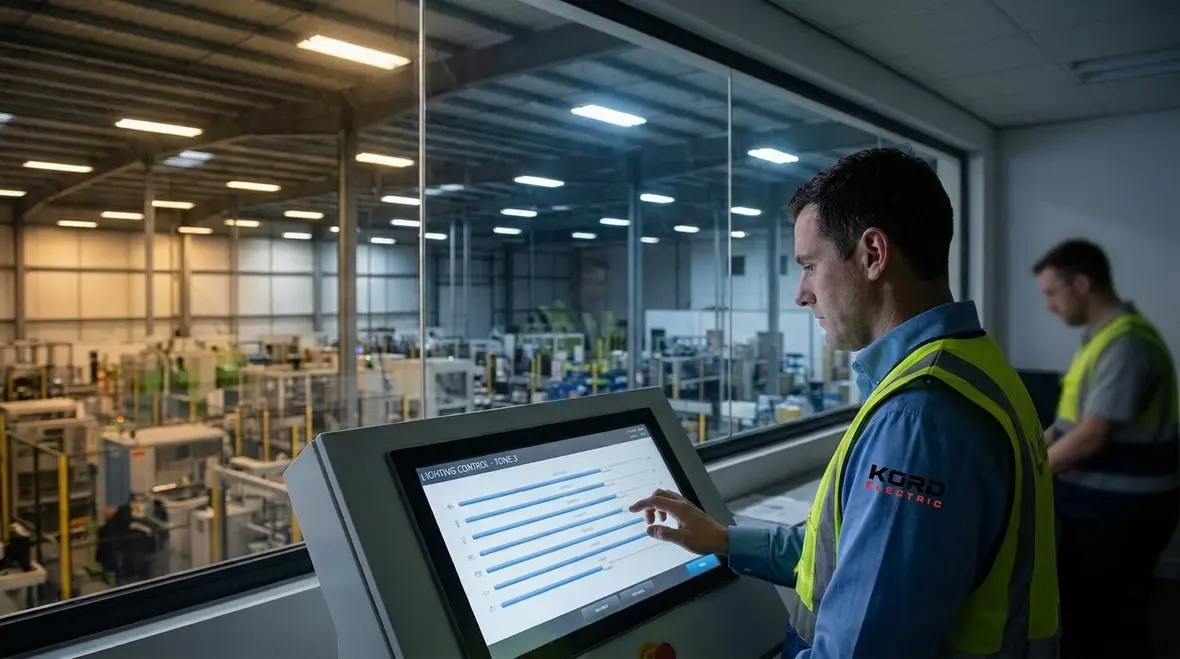
LED helps, but controls make the upgrade feel smarter every day. With lighting controls, we match output to occupancy, time schedules, and zone usage. As a result, the facility does not light empty space at full power just because it always has.
In manufacturing environments, controls can support different needs across the day. During active shifts, the work zones stay at required brightness. After hours, corridors and storage areas reduce output while still keeping safety lighting in place. Then if motion or activity happens in certain areas, lights respond quickly. This reduces waste while maintaining coverage.
We also help teams set up proper commissioning. That means we confirm sensor placement, adjust settings, and verify the system works exactly as intended. Our technicians explain each setting and provide guidance so the facility staff can manage it without guessing later. We know that for many sites, lighting controls must integrate with existing facility practices, not fight them.
One playful truth from our field: controls are like a good supervisor. They pay attention when work happens, and they stop wasting time when nobody is punching the clock. Of course, they also do not take smoke breaks.
Examples of controls that fit real production schedules
On a typical project, we use occupancy sensors in storage aisles, time-based scheduling in support areas, and higher level controls or scenes in production zones where brightness expectations change between setup, normal production, and cleanup. In some cases, we coordinate with existing building automation or energy management systems, so your new lighting controls become part of a bigger strategy instead of a standalone toggle that nobody remembers how to adjust.
Estimating Energy Savings and Payback Without Guessing
Every facility manager wants clear numbers. Therefore, we build estimates based on real fixtures, real operating schedules, and the actual layout of the space. We do not use generic averages and hope for the best. Instead, we measure and calculate what the site currently uses, then model performance after the upgrade.
We typically look at:
- Existing fixture type and wattage per area
- Hours of operation by zone, including shift overlap and weekends
- Expected LED performance and system design
- Controls strategy impact, such as dimming and occupancy behavior
- Maintenance reductions, which also protect labor time and uptime
From there, we show how the energy plan affects the budget. Additionally, we address comfort and safety impacts that support long term value. Better lighting can also reduce rework during inspection, because people see defects more reliably the first time.
Then we help leadership plan for implementation. We phase upgrades so high traffic areas do not stall production, and we coordinate installation timing for minimal downtime. In other words, we protect your output while improving your operating costs.
When someone hears “payback,” we can see their eyes glaze over. So we keep it practical. We translate the numbers into what matters for the business.
Linking upgrades to ROI, compliance, and broader projects
For many facilities, lighting is part of a broader capital plan that includes power distribution, new process equipment, or other efficiency projects. When we develop savings estimates, we can align them with insights from resources like Kord Electric’s Commercial Lighting Upgrade Cost Guide and other planning tools. That way, your payback story covers energy savings, maintenance cuts, and long term value in the same language your finance team uses.
Scheduling, Safety, and Project Management on the Production Floor
Manufacturing upgrades must respect safety rules and production schedules. That is why we plan around the facility, not the other way around. First, we hold discussions with the site contact and confirm access requirements, work windows, and any constraints around hazardous areas.
Next, we phase the installation by zone. For example, we can update a production line area during planned maintenance windows, then move to the warehouse and loading bays when traffic is lower. This approach reduces disruption and keeps the site running. Meanwhile, we maintain safe work practices for our technicians, and we coordinate with the facility team on lockout procedures as needed.
We also label changes clearly and document what was installed where. That matters later, when maintenance teams track assets and plan future projects. Moreover, our technicians explain how the controls operate and what staff should expect during normal use.
If there is one thing we learned from working on major property buildings, it is this: a smooth electrical project feels boring. And boring is good, because it means the plan worked and nobody had to scramble like they forgot a deadline.
Keeping production teams informed at every step
Before work begins in any zone, we confirm what operators, supervisors, and safety leads should expect. That includes when lifts will appear, how temporary lighting will be handled if needed, and how we will coordinate around shift changes. By aligning communication with your internal processes, we help the upgrade feel like a planned improvement instead of a surprise guest showing up in the middle of your busiest run.
Maintenance Outcomes and Long Term Reliability
After installation, many sites care about reliability more than anything. LEDs typically reduce routine maintenance needs due to long life and stable output. Yet reliability also depends on installation quality and correct system settings.
That is why we focus on thorough commissioning and verification. We test for consistent coverage, proper dimming behavior, and correct sensor response where controls apply. Then we review the system with facility staff so they understand how to monitor performance and handle common operational questions.
We also recommend maintenance practices that keep the system performing well over time. For instance, we encourage teams to manage cleanliness around fixtures and keep controls settings aligned with shift changes. As schedules evolve, we can adjust controls strategies to keep the facility efficient.
Our goal stays simple: we deliver Manufacturing Facility Lighting Upgrades: LED, Controls & Energy Savings that keep working well and stay easy to manage. In the long run, that reduces service calls and protects uptime.
Supporting future changes and expansion plans
As your facility adds lines, reconfigures equipment, or adjusts storage layouts, lighting and controls may need to evolve too. Because we document zones, fixture types, and control groupings during your project, follow up changes become straightforward instead of mysterious. When you are ready to expand on your initial upgrade, we can align that work with broader strategies like electrical load capacity assessments or additional energy-saving projects that keep your system stable while you grow.
FAQ
Ready to Upgrade Your Facility Lighting?
If your manufacturing floor still runs on outdated lighting, Kord Electric can help you plan a clean, efficient upgrade that supports safety, comfort, and stronger output. We replace fixtures with LED solutions, we add controls that match activity, and we explain the system in plain language so your team feels confident. Reach out to us for a site assessment and a practical upgrade plan focused on manufacturing facilities and major commercial property buildings. Let us turn your lighting into a performance advantage, not a recurring expense.
To see how lighting strategy translates into real-world gains, you can also explore related insights like Kord Electric’s industrial lighting layout optimization for efficiency or case studies where manufacturing facility lighting upgrades support productivity. When you are planning upgrades across a larger portfolio or multiple buildings within the same region, partnering with a team that understands both lighting and electrical infrastructure keeps every project aligned.
If your facility is located in Southern California, Kord Electric also provides comprehensive Los Angeles County electrical services that cover lighting, power distribution, and long term maintenance planning. That way, your Manufacturing Facility Lighting Upgrades: LED, Controls & Energy Savings program can move forward with one partner who understands your entire system, not just the fixtures over the line.