
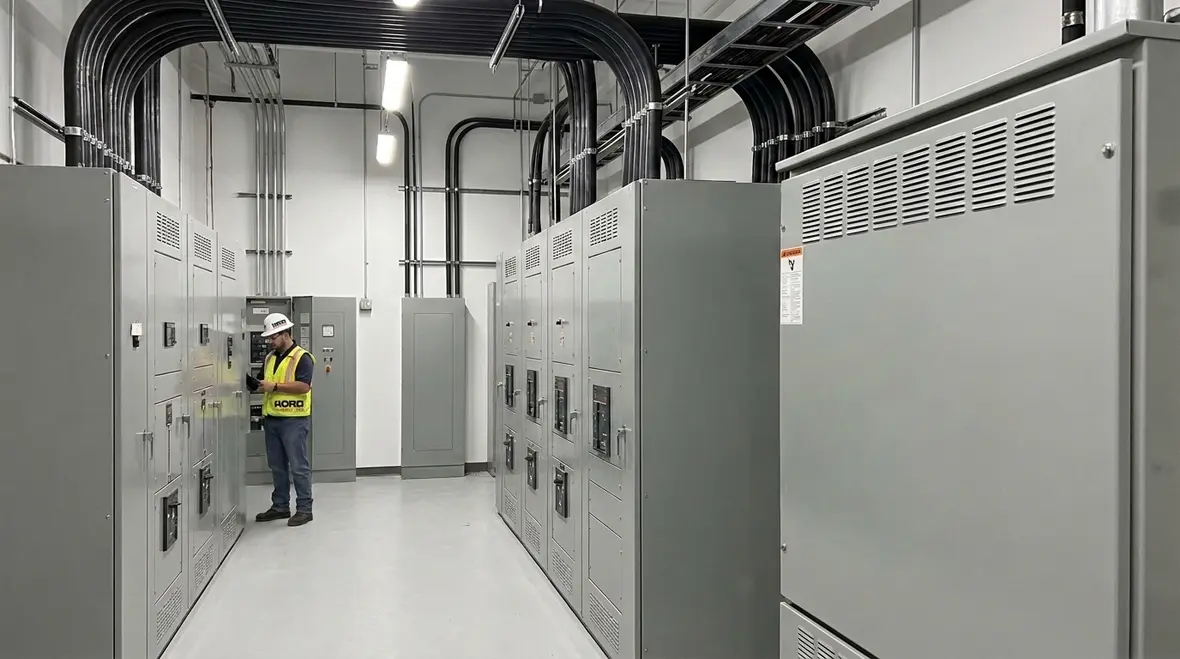
Medium Voltage Electrical Systems for Commercial Buildings
For medium voltage electrical systems commercial buildings, the goal is simple: power must arrive on time, stay steady, and stay safe. In many commercial and industrial facilities, the work begins before the lights ever flicker. It starts at the medium voltage level, where utilities deliver energy and facilities distribute it through switchgear, transformers, and protective devices. And yes, when something goes wrong, it usually happens at the least fun moment, like during a tenant meeting or right before a big equipment startup. That is why Kord Electric focuses on medium voltage electrical systems commercial buildings and similar major property and industrial sites, where reliability is not a “nice-to-have” but a daily requirement.
How medium voltage power distribution works in commercial sites
Third person, but with real life experience behind it, matters here. Kord Electric technicians explain that medium voltage power distribution follows a clear path. First, the utility feeds power into the facility at medium voltage. Then, switchgear routes it safely. After that, transformers step the voltage down to levels used by motors, lighting, HVAC systems, and controls. Finally, protective devices watch current and voltage and act quickly when conditions drift out of range.
In other words, the system does not just “deliver electricity.” It manages power flow like an experienced conductor. Transitioning from utility feed to facility distribution requires careful coordination so that one trip does not become a building-wide blackout. Meanwhile, the design must match load needs, starting currents from motors, and expected growth for major properties.
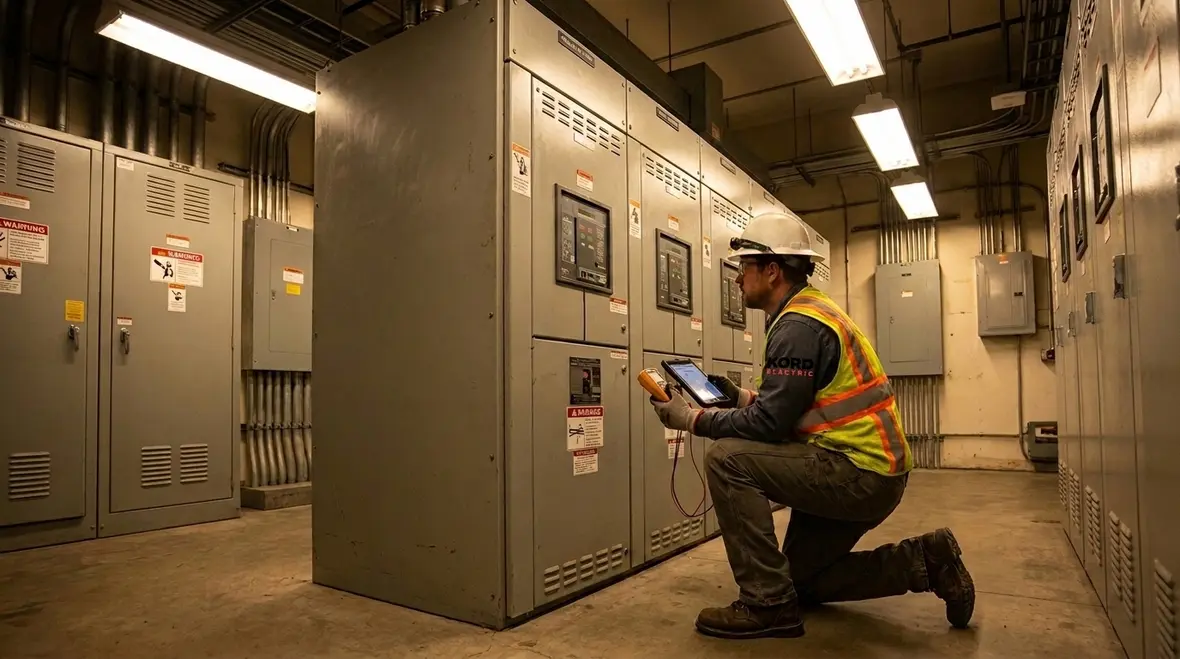
In larger properties and campuses, medium voltage also helps keep voltage drop under control across long feeder runs, multiple buildings, and tall structures. Instead of fighting losses with oversized low voltage conductors everywhere, a well-planned medium voltage backbone lets the system deliver power efficiently and then step it down close to where loads actually live.
Major components: switchgear, transformers, and protective relays
To understand the heart of these setups, one must look at the core parts. Kord Electric’s expert service staff often notes that people tend to remember the transformer because it sounds important. Yet switchgear and relays often do the quieter, more critical job of preventing damage.
Switchgear provides safe switching and isolation. It also supports fault interruption when a short circuit occurs. Transformers then convert the medium voltage to the voltages used by the building’s distribution panels and motor control centers. Protective relays monitor conditions like overcurrent and ground faults, and they help ensure the right breaker clears the fault.
Additionally, interlocks, metering, and grounding systems tie everything together. As a result, medium voltage electrical systems commercial buildings can operate with controlled fault response, which helps limit downtime. And when the relay logic is correct, maintenance teams spend less time guessing and more time fixing what actually needs attention. If you have ever tried to diagnose a problem without logs, you know how that feels. Like solving a mystery with only the ending.
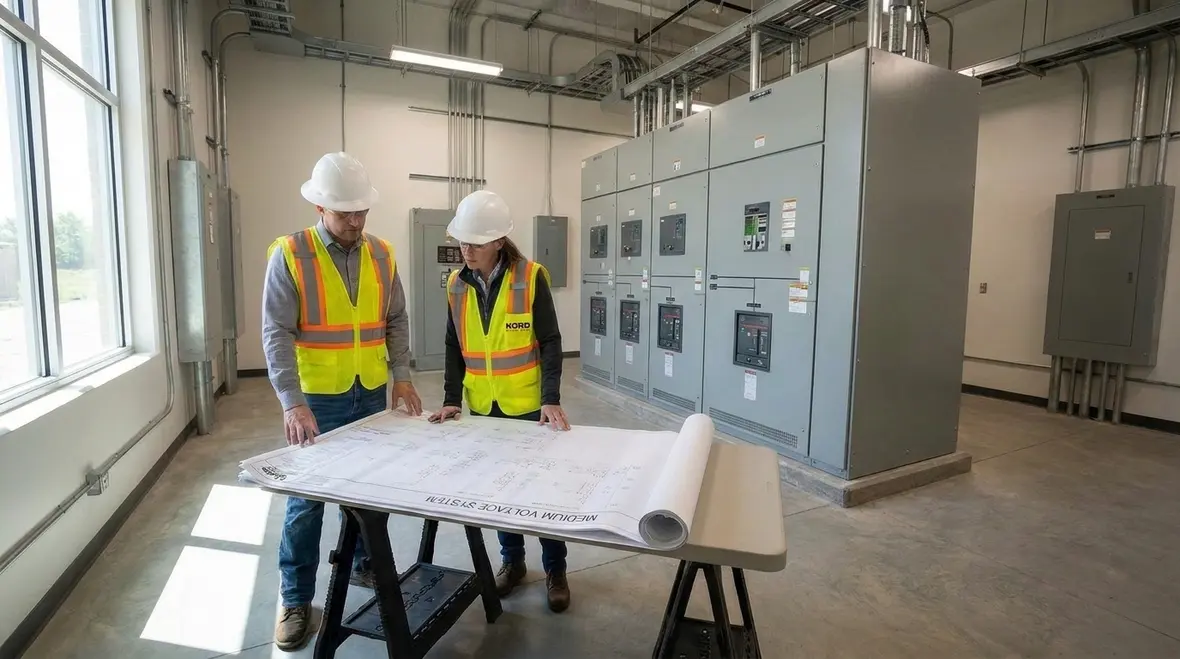
In many commercial and industrial facilities, these components sit in dedicated electrical rooms, yards, or vaults that never show up on glossy leasing brochures. Yet they carry the full weight of tenant comfort, process performance, and life safety systems. Kord Electric’s teams treat this equipment like critical infrastructure, not background scenery.
How relays, breakers, and coordination work together
When a fault occurs, relays measure current and voltage conditions and compare them to their protection settings. If something crosses a threshold, the relay signals the appropriate breaker to trip. In a well-coordinated system, the breaker closest to the problem opens first, while upstream devices remain closed. That is how a single motor fault does not become a campus-wide outage.
This selective coordination is one of the defining advantages of well-planned medium voltage electrical systems commercial buildings rely on daily. It keeps disturbances contained, protects equipment, and lets operations continue everywhere that is not directly affected by the fault.
Why commercial and industrial facilities use medium voltage
Many commercial and industrial sites choose medium voltage because it supports efficient power distribution over longer distances and through multiple floors or large complexes. When facilities grow, they also add motors, cooling systems, pumps, and process loads. These loads can create higher currents during starting. Medium voltage can reduce losses and help manage conductor sizes compared with relying only on low voltage.
However, the main benefit stays reliability. Medium voltage electrical systems commercial buildings support selective coordination, meaning the system clears faults in sections instead of taking the entire facility offline. Transitioning from low voltage systems in large properties to medium voltage setups also helps facilities plan capacity. In short, the electrical architecture becomes easier to expand without constant rewiring and repeated service interruptions.
Kord Electric supports major property buildings that need dependable power for tenants and mission-critical equipment. We do not treat this as a one-time installation. We treat it as an ongoing system you can trust.
For facility teams planning multi-year upgrades, it can help to zoom out and look at the whole picture. Resources like Kord Electric’s commercial electrical systems guide for modern buildings show how service capacity, distribution, automation, and safety practices all connect back to that same medium voltage backbone.
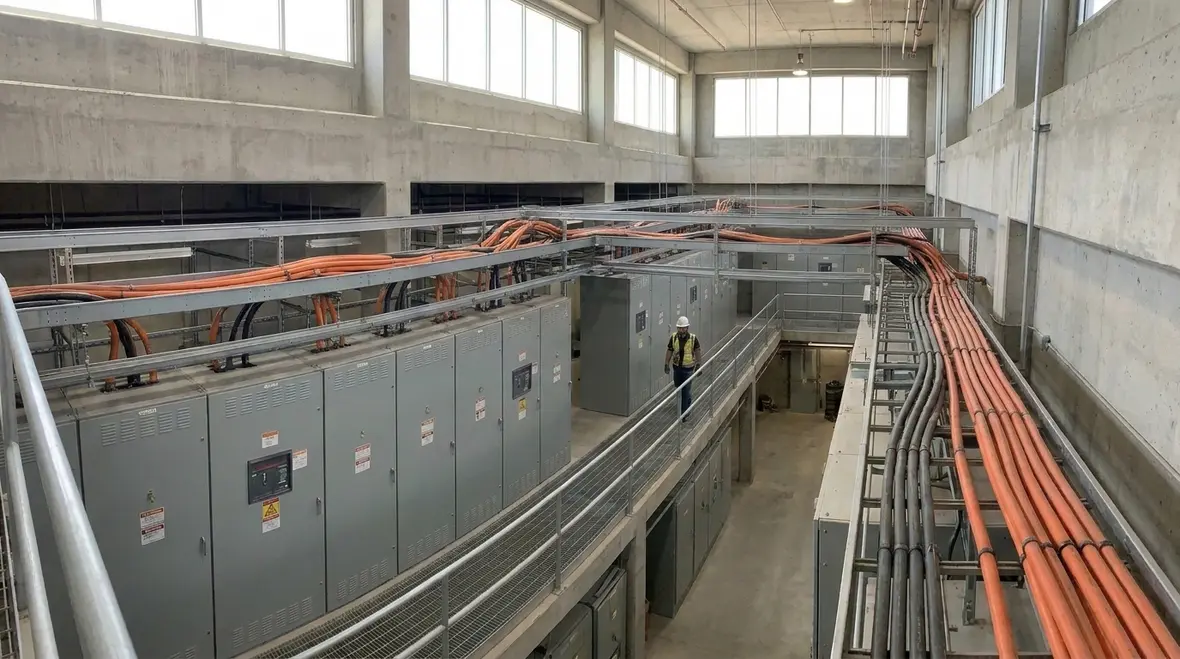
That broader view helps owners link decisions about gear, feeders, and redundancy to tenant expectations, production schedules, and long-term asset value instead of chasing problems one outage at a time.
Medium voltage and large property design choices
In high-rise office towers, distribution centers, hospitals, and mixed-use campuses, medium voltage distribution can feed multiple transformers located near load clusters. That approach shortens low voltage runs, improves voltage stability, and supports phased build-outs. It also gives project teams more flexibility when new tenants arrive with bigger equipment lists than anyone expected.
When paired with thoughtful short circuit and arc flash studies, medium voltage lets commercial and industrial sites meet code requirements while still keeping maintenance tasks practical. The end goal is always the same: dependable power that fits the building’s real-world usage patterns.
Planning load, growth, and redundancy without wasting money
Good medium voltage electrical design starts with good planning. Kord Electric’s team explains that engineers and owners must consider peak demand, motor start impacts, power quality, and future expansion. If a facility underestimates growth, the electrical system becomes a bottleneck. If it overbuilds without justification, capital costs rise and value slips.
Therefore, smart studies matter. Load studies identify connected demand and how it behaves during normal and peak conditions. Short circuit studies help determine breaker ratings and fault interruption needs. Arc flash studies improve safety planning for maintenance tasks. And reliability planning decides how much redundancy the site needs, depending on operational risk.
Then comes coordination. Kord Electric technicians prioritize selective coordination so protective devices work in the correct order. As a result, a fault in one area clears locally while other areas stay powered. This reduces downtime costs and protects sensitive equipment. In a commercial environment, downtime is rarely just “lost time.” It becomes lost revenue, failed production windows, and frustrated people.
Those studies also help create a roadmap for upgrades. When Kord Electric’s crews perform work like service capacity improvements or infrastructure refreshes, they are not guessing. They are following data that shows where the system is tight, where it has room, and where resilience needs to improve before the next round of tenant changes or process upgrades arrives.
Balancing capital cost and operational risk
Every facility leader walks the same line: investing enough in the electrical system to keep operations stable, without turning the budget into a science experiment. Medium voltage planning brings that conversation onto clear ground. With the right baseline studies and modeling, owners can compare options such as: dual utility feeds, redundant transformers, parallel feeders, or staged gear replacements.
Because Kord Electric supports projects across Los Angeles County and surrounding areas, the team also understands how local permitting, utility coordination, and construction constraints affect those decisions. That way, recommendations reflect not just ideal engineering, but real-world timelines, access, and tenant expectations.
Compliance, safety, and maintenance in the real world
Commercial and industrial facilities operate under strict safety expectations. Medium voltage gear requires safe access controls, labeled components, and defined maintenance intervals. Kord Electric service staff takes a practical approach. They verify torque values, inspect terminations, check insulation health, and confirm protective settings align with the facility’s current one line and operating conditions.
Additionally, safety practices like proper arc flash labeling and maintenance procedures protect technicians and reduce risk. Over time, dust, moisture, and vibration can affect contact reliability. That is why preventive maintenance works better than reactive “wait and see.” Transitioning from reactive repairs to planned service often improves uptime and lowers total cost. It also prevents the classic scenario where the building keeps running until it suddenly does not, like a pop song reaching its chorus at exactly the wrong time.
When it comes to medium voltage electrical systems commercial buildings, Kord Electric focuses on sites where downtime must be controlled, safety cannot be flexible, and maintenance must be documented.
For sites building structured programs, pairing this approach with tools like an electrical preventive maintenance checklist or a commercial electrical safety audit can keep the system aligned with codes and internal standards instead of drifting over time.
Aligning with codes without drowning in acronyms
Medium voltage systems must align with the same core standards that shape the rest of a commercial electrical system. NEC requirements, NFPA references, and utility standards all influence how switchgear, transformers, and protective devices get installed and maintained. Kord Electric’s teams translate those code expectations into clear field actions so that every torque check, relay update, and labeling task points back to safety and reliability instead of just paperwork.
Power quality, monitoring, and the signs that something is off
Electrical issues rarely announce themselves politely. They show up as nuisance trips, overheated equipment, flicker, unexpected motor performance issues, or reduced efficiency in HVAC and pumps. In many commercial environments, power quality problems create ripple effects across controls, drives, and process equipment.
To address this, Kord Electric often recommends monitoring that goes beyond basic metering. Real diagnostic data helps facilities spot harmonic distortion, voltage sags, unbalance, and recurring faults. Once teams see patterns, they can target repairs and adjust settings with confidence instead of chasing the loudest symptom.
Meanwhile, inspections reveal mechanical and electrical signs like corrosion, loose connections, or worn switchgear components. Relays can also drift over time due to changes in load or equipment. Therefore, ongoing verification protects performance. It keeps medium voltage electrical systems commercial buildings operating at stable levels and helps reduce surprise downtime for major property operations.
When to call in a commercial electrical troubleshooting team
If a facility sees recurring trips, unexplained equipment failures, or hot spots that never seem to stay fixed, those are signs that deeper power quality issues may be at work. A structured troubleshooting process—backed by metering, thermal imaging, and relay event records—can break the cycle of guess-and-check repairs and get to the root cause.
Kord Electric’s technicians approach these calls with a calm plan: verify the complaint, gather data, isolate the affected circuits, and confirm results with measurements. That discipline keeps investigation time focused and lets building managers explain what happened in clear language to owners and tenants.
How Kord Electric supports medium voltage systems for major buildings
Kord Electric serves commercial and industrial facilities, and we focus on major property buildings that demand stable, safe power. Our technicians and expert service staff explain the system in plain language, then back it up with hands-on work. We help owners and facility managers understand what matters: correct protection settings, proper coordination, safe maintenance, and realistic planning for growth.
Additionally, we support the full lifecycle: installation coordination, commissioning, preventive maintenance, troubleshooting, and upgrades when the facility expands or equipment changes. Transitioning through those phases requires careful attention, because one wrong assumption can cause long-term reliability problems. Kord Electric treats the work like a business partner, not a vendor sprinting to the next site.
If you want the kind of power system that behaves like a steady professional, we build and maintain it like one.
For commercial and industrial properties across Southern California, Kord Electric’s Los Angeles County electrical services connect medium voltage work with panel upgrades, EV charging, preventive maintenance, and emergency response so that each project supports the broader electrical roadmap instead of standing alone.
FAQ
Conclusion: schedule an expert review with Kord Electric
Kord Electric helps commercial and industrial facilities keep their medium voltage systems dependable, safe, and ready for growth. Our technicians and expert service staff explain what they find, then recommend practical next steps that protect uptime and reduce risk. If your site shows nuisance trips, overheating, or capacity concerns, do not wait for the next “surprise event.” Contact Kord Electric to schedule an electrical system review today, and build power confidence like it is part of your business plan.
When you are ready to connect your medium voltage electrical systems commercial buildings strategy with real-world upgrades, Kord Electric’s crews coordinate studies, protection settings, and field work so that each change makes the system stronger instead of more complicated. From commercial service upgrades to long-term preventive maintenance, the goal stays simple: power that quietly does its job every day.


