
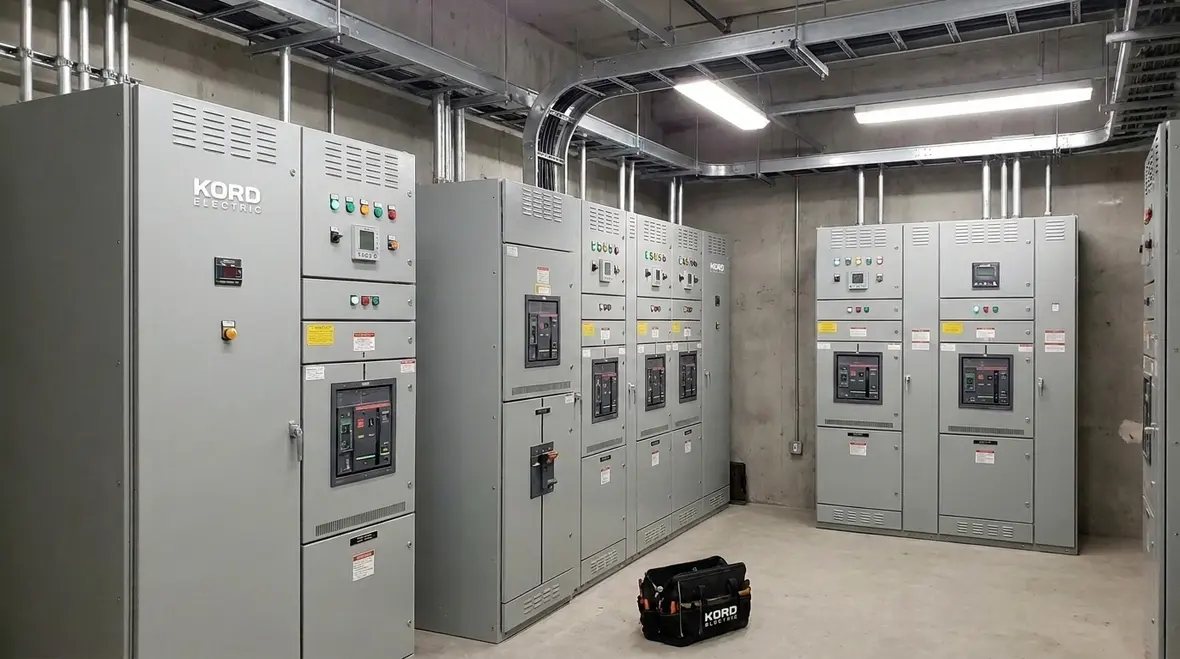
Electrical Switchgear in Commercial Buildings
What is electrical switchgear in commercial buildings, and why does it matter?
In this guide from Kord Electric, we focus on what is electrical switchgear commercial buildings need to run safely, reliably, and without nasty surprises. Switchgear is the control and protection system that manages how power moves through a facility. In commercial and industrial spaces, and for major property buildings, that job is not optional. Without proper switchgear, a building can face higher downtime, unsafe electrical conditions, and costly repairs. Meanwhile, everyone keeps blaming the “mysterious power outage,” as if the grid is playing pranks. It is not. It is physics. And physics always shows up to the meeting.
Our team at Kord Electric explains this clearly, because we believe facility owners deserve calm, practical answers, not vague jargon. And if you ever wonder how a building stays powered through normal operations and emergencies, switchgear is a big part of that story.
Switchgear in plain terms, delivered by our expert staff
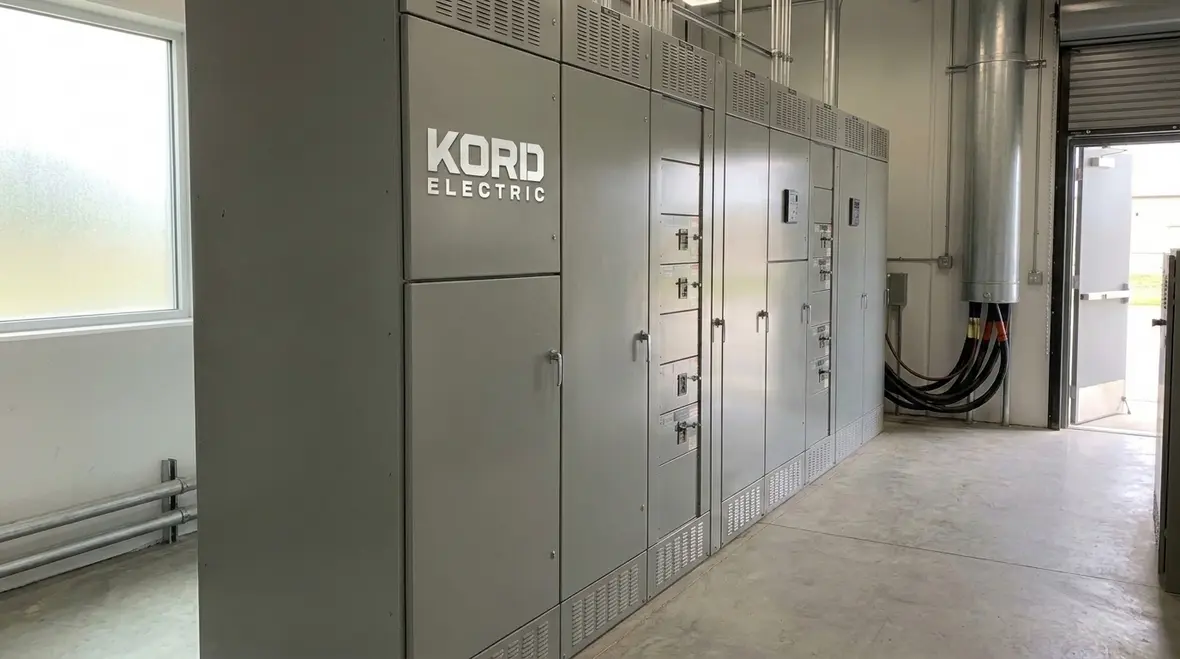
Our technicians describe switchgear as an electrical “traffic controller” for high voltage and medium voltage power distribution. It does two key things at the same time. First, it routes electrical power to the right parts of a system, like feeders, transformers, and distribution panels. Second, it protects equipment and people when something abnormal happens.
To make this easier, we often walk clients through the main pieces. Switchgear typically includes breakers, relays, busbars, meters, and control wiring. These parts work together so that, when a fault occurs, the system can isolate the problem quickly. In addition, controls and monitoring help operators understand what is happening and why.
In our experience, some people think switchgear only matters during “bad days.” However, even on a normal Tuesday, switchgear supports steady performance, proper coordination, and safer shutdown behavior when required.
Where it sits in commercial electrical systems
In Kord Electric’s commercial electrical systems guide, we show that commercial and industrial electrical design follows a path: utility service, main distribution, load distribution, then end-use equipment. Switchgear usually lives in the middle of that path, often near the service entrance or at key distribution points. For a deeper look at how all of these layers connect, you can explore Kord Electric’s resource on commercial systems layouts in their commercial electrical systems guide for modern buildings, which explains how panels, feeders, and protection work together behind the scenes.
Because major property buildings involve multiple tenants, varied loads, and different operating schedules, the electrical system becomes more complex. Therefore, switchgear helps the building stay organized. It separates sections so that a failure in one area does not take down everything. Also, it enables clearer maintenance planning by making it easier to isolate sections safely.
When a facility has high life-safety expectations, switchgear also supports emergency power strategies, where systems must switch reliably between normal and backup sources. In other words, it helps keep the lights on when the building actually needs them.
Electrical protection: how switchgear prevents damage and downtime
Switchgear protects by detecting abnormal conditions and then reacting fast. When current, voltage, or system behavior goes outside limits, relays interpret the issue and trigger breakers to open. As a result, the fault stays contained, and downstream equipment has a better chance of surviving.
Our expert service staff explains that protection is not one-size-fits-all. They configure settings and coordination so breakers trip in the right sequence. If coordination fails, equipment may experience prolonged stress, even if the system finally shuts down. Plus, poor coordination can increase outage times, which is the kind of “surprise meeting” no one wants.
Common fault types include short circuits and ground faults. In addition, switchgear design considers load behavior and inrush current, such as when motors start. Therefore, proper protective logic helps avoid nuisance trips that shut down equipment for no real reason. Yes, a “false alarm” in a hospital wing is still a problem, even if it feels like the system is being cautious.
Reliability, safety, and smarter monitoring
Reliability is more than keeping power available. It also means keeping the system safe for operators and maintenance personnel. Switchgear includes barriers and enclosures that help limit exposure to energized components. Furthermore, interlocks and switching procedures reduce the risk of accidental contact during service.
Modern facilities increasingly want visibility. Consequently, we see more demand for metering, event logging, and status indicators. When monitoring is present, operators can track alarms, detect trends, and plan maintenance before failures happen. In fact, a well-monitored switchgear lineup can shorten troubleshooting time because the system tells you what it sensed and when it sensed it.
Our technicians also stress that reliability comes from correct installation and ongoing maintenance. Over time, components can wear, seals can degrade, and connections can loosen. Then again, connections do not “get tired” like humans do, but they can still degrade. So we inspect, test, and verify performance, based on the building’s needs and operating environment.
Maintenance and upgrades that fit commercial and industrial needs
Switchgear maintenance usually includes inspection, testing, cleaning, and verification of protective functions. Because commercial and industrial buildings operate with real schedules and real staff, we plan maintenance to reduce disruption. If a building can tolerate a short planned outage window, we coordinate work to use that time wisely. If not, we plan partial isolation steps where appropriate.
Our service staff often recommends a maintenance mindset rather than a “wait until it fails” mindset. During routine inspections, we look for signs of overheating, corrosion, damaged insulation, or abnormal wear. Then we evaluate breaker health and relay performance.
When the system needs improvement, upgrades can help. For example, facilities may add better relays, enhance metering, improve safety features, or replace aging components with modern equivalents. However, we do not treat upgrades like a casual shopping trip. We assess compatibility, protection coordination, and how the building’s electrical loads behave today, not just how they behaved ten years ago.
In addition, because major property buildings can expand over time, we consider future capacity. We help owners choose solutions that handle planned growth, so the next expansion does not force a full redesign. For facilities looking ahead to large-scale changes, Kord Electric’s broader planning resources, such as their electrical infrastructure upgrade planning guide, pair well with a detailed switchgear strategy so upgrades, rewiring, and capacity changes stay aligned.
How we support complex facilities with engineering and field expertise
Kord Electric serves commercial and industrial facilities and major property buildings. That focus matters, because these projects involve strict uptime expectations, code requirements, and complicated power pathways. Our process combines planning with hands-on execution.
First, our team clarifies the facility goals, such as minimizing outages, supporting tenant needs, and aligning with life-safety and emergency power expectations. Next, we evaluate existing electrical distribution and protection behavior. Then we recommend switchgear solutions and service plans that fit the real operating conditions on site.
Finally, our technicians verify performance through testing and careful commissioning. And while some teams treat commissioning like paperwork, we treat it like peace of mind. If the system works the way it should in the field, everyone sleeps better. Even the building manager, who has seen every “quick fix” turn into a long weekend.
For organizations across Los Angeles County that need more than one-time fixes, Kord Electric’s Los Angeles County electrical services provide an integrated path from assessments and troubleshooting through upgrades, new installations, and long-term maintenance for critical commercial power systems.
FAQ
Conclusion: secure your power flow with Kord Electric
When a facility depends on steady power, switchgear becomes a foundation, not an afterthought. Kord Electric helps commercial and industrial customers design, maintain, and upgrade switchgear so protection works as intended, safety stays high, and downtime stays low. If you want clear recommendations from technicians who explain every step, contact us. We will review your current electrical setup, discuss service needs, and build a practical plan that keeps your building running with confidence.
If your facility is planning larger upgrades or new infrastructure, Kord Electric’s team can also connect your switchgear strategy with services like electrical capacity upgrades, commercial EV charging infrastructure, and broader power distribution improvements, so your building’s electrical backbone grows in a controlled, code-conscious way.
When you need a partner who understands how commercial distribution, protection, and local codes fit together across Los Angeles County, Kord Electric’s dedicated commercial services team is ready to help keep your switchgear, panels, and critical circuits working with calm, predictable performance instead of surprise outages.


