
Commercial Electrical Distribution Systems Guide
Commercial Electrical Distribution Systems, Explained in Plain Terms
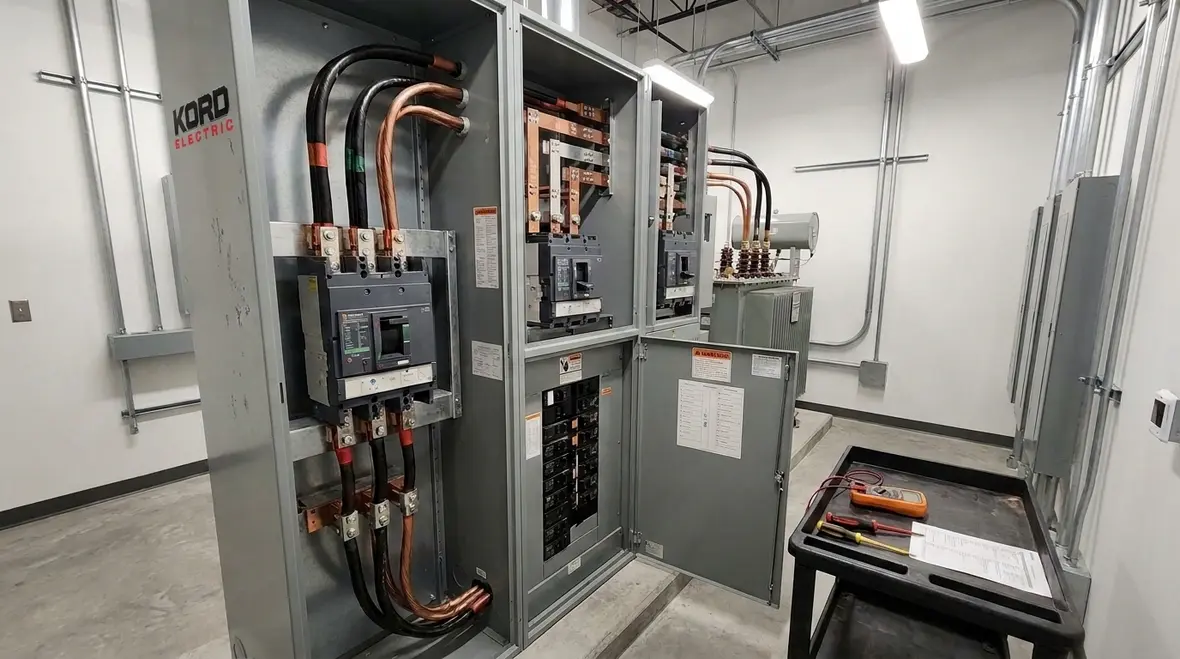
In a typical commercial or industrial facility, electricity does not magically travel from one outlet to everything you need. Instead, it moves through a structured path that starts at the utility connection, then travels through switchgear, transformers, panels, and feeders before it finally reaches the loads that keep your building running. At Kord Electric, we explain this as a commercial electrical distribution system explained in a clear, step by step way so facility managers and owners can make smart decisions.
Here is the calm truth: when distribution gets designed and maintained well, the building stays stable, power quality improves, and downtime becomes less frequent. And yes, it also means fewer “why did the lights do that” moments. Other systems do not do that. They just do. Like a good professional narrating a boring documentary, but at least that documentary keeps the air conditioning alive.
For facility teams that want to go deeper into how infrastructure choices affect uptime, our commercial electrical systems for modern buildings guide shows how distribution, controls, and compliance come together in real projects.
How Power Travels Through a Building
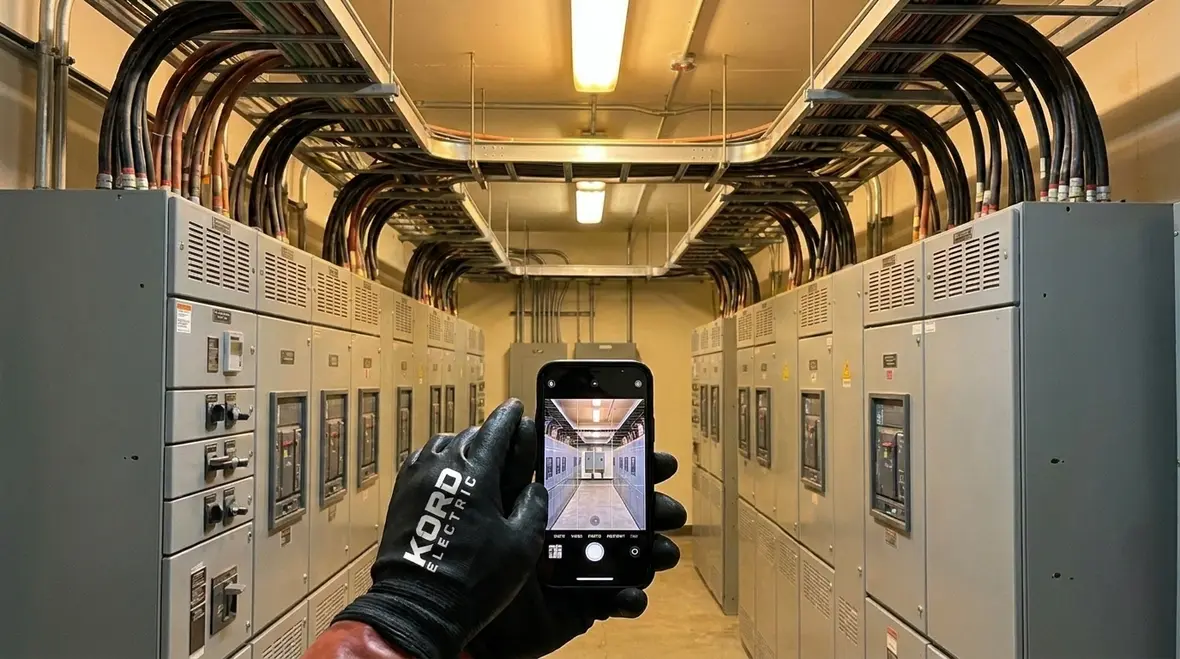
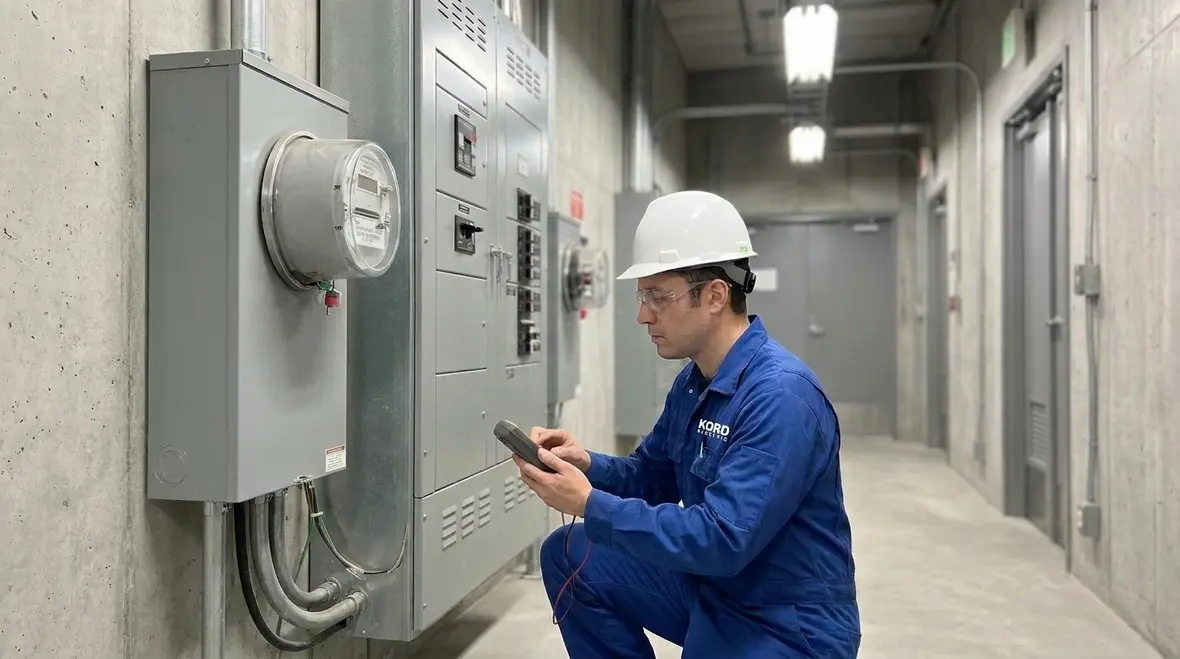
Most facilities follow a layered path for power distribution, and we see the same essentials across offices, factories, data centers, schools, and major property buildings. First, incoming utility power arrives at a service entrance where metering and protective devices monitor and guard the system.
Next, switchgear or switchboards take over. These assemblies route power safely and allow sections of the system to be isolated during maintenance. Then transformers step voltages up or down based on how the building needs to use electricity. After that, the facility uses busways, feeders, and branch circuits to bring power closer to equipment.
Finally, panels and distribution boards break power into usable circuits for lighting, HVAC controls, motors, receptacles, life safety loads, and process equipment. In other words, each level has a job, and each job affects reliability. When our Kord Electric technicians and expert service staff explain this to clients, they do not just name parts. They connect the parts to performance, cost, and risk.
And because people love surprises almost as much as they love ignoring labels, we also emphasize coordination of protective devices. When the wrong device trips, the wrong area goes dark. That is not “just inconvenient,” it is a business interruption.
Key Components That Affect Reliability
A strong commercial electrical distribution system explained needs dependable components. In the field, reliability usually rises or falls based on how these components handle heat, faults, and load changes over time.
Switchgear and breakers: These protect the system during faults and help operators isolate problems. Breaker ratings, settings, and maintenance matter, and the wrong coordination can create cascading failures.
Transformers: Transformers handle voltage conversion and carry a large portion of system load. Proper sizing, cooling method selection, and temperature monitoring support steady performance.
Busbars and feeders: These move power efficiently through the building. The key is correct sizing for current and voltage drop, plus proper termination and insulation quality.
Panels and distribution boards: These distribute power to final loads. Circuit labeling, load grouping, and proper grounding keep troubleshooting realistic instead of turning it into a scavenger hunt.
Grounding and bonding: A solid grounding design helps protect people, supports protective device operation, and improves power quality. When this is weak, noise, nuisance trips, and equipment stress can show up later like a late bill.
Our service teams often find that clients do not need “more power.” They need correct power flow, correct protection, and the documentation to prove it.
Planning for Load, Growth, and Peak Demand
Commercial and industrial facilities rarely stay the same. They add equipment, expand floors, reconfigure spaces, and upgrade processes. Therefore, distribution planning must anticipate both normal growth and peak demand events.
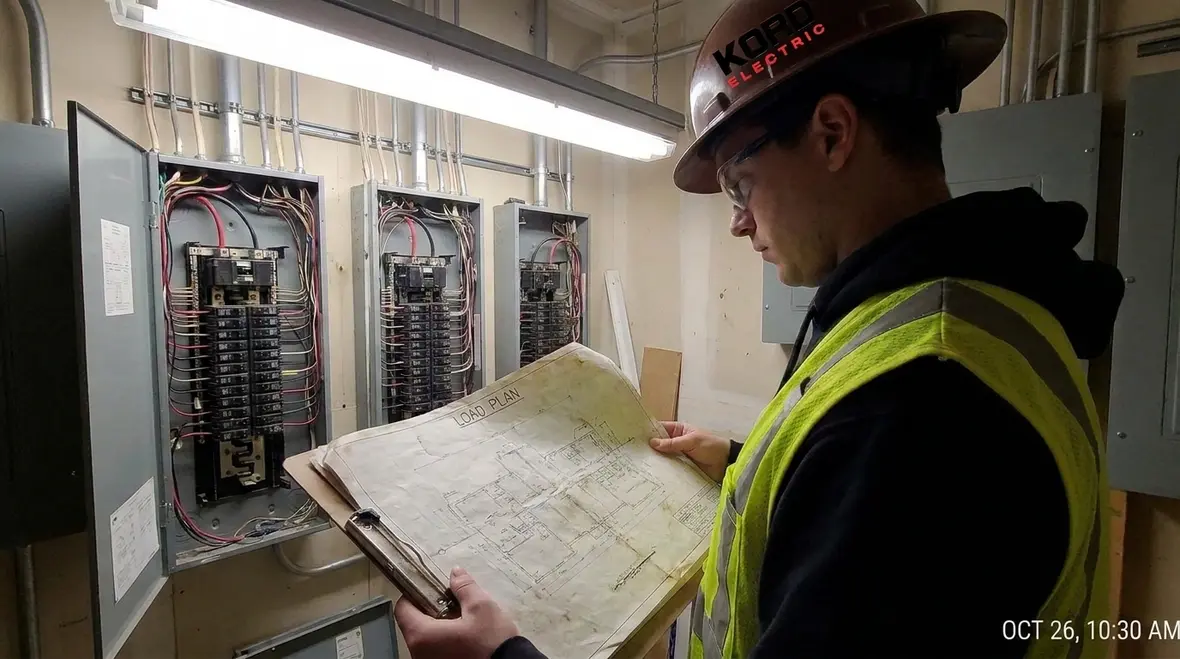
We recommend starting with a load profile that reflects actual equipment, not just nameplate values. HVAC cycles, motor start profiles, elevator loads, kitchen equipment, and process loads can shift demand dramatically. Then teams should plan for diversity and future addition, using spare capacity where practical. For detailed help on this front, our commercial electrical load capacity assessment guide walks through how to match real-world demand with safe, scalable infrastructure.
Additionally, the facility should consider how loads behave during simultaneous events. For example, if several motors start at once during a production ramp, demand spikes can strain equipment and disturb voltage. When Kord Electric helps design or evaluate a distribution approach, we focus on load behavior, not just static numbers.
Here is the practical part. If the distribution system explained is built for the present but not the future, expansion becomes costly and disruptive. On the other hand, if the system is planned with growth in mind, upgrades fit into the schedule with fewer emergencies and fewer “we have to shut down everything” conversations.
And yes, facility teams will still have meetings. But at least the meetings will be about budgets and timelines, not about why the lights decided to rebel.

Power Quality and Safety: The Two Priorities We Treat as Non Negotiable
Power quality impacts equipment life, comfort, and uptime. Safety impacts people and compliance. In the commercial and industrial space, these two topics cannot be separated.
We look at common issues such as voltage drop, harmonic distortion, and transient events. Voltage drop affects lighting performance, motor torque, and HVAC control stability. Harmonics can overheat neutral conductors, stress transformers, and cause nuisance trips. Transients can harm sensitive electronics and control boards.
On the safety side, we emphasize proper protective device coordination, correct conductor sizing, and reliable grounding. We also stress clear labeling and access paths so electricians and operators can work safely and quickly. When our expert service staff explains electrical distribution system behavior, they also explain the “why” behind inspection points, testing steps, and maintenance schedules.
Because safety is not a checklist item, it is a system outcome. The building should fail safely, and protective devices should interrupt faults quickly without dragging half the facility down with them.
In our experience, clients do not ask for power quality until it becomes expensive. By the time the equipment shows symptoms, the cost has already started. So we encourage earlier assessments during planned downtime, before the alarms become the main event.
If you are planning a broader reliability strategy, our in-depth guide to optimizing commercial electrical distribution uptime shows how power quality, maintenance, and system design work together to keep operations stable.
Maintenance Practices That Reduce Downtime
Even a well designed system needs care. Commercial and industrial environments run hard, and heat, vibration, moisture, dust, and cycling loads take their toll. Therefore, maintenance should follow a structured approach.
At Kord Electric, our technicians focus on inspections that match the real wear patterns of the facility. We recommend checking breaker operation and torque where appropriate, verifying insulation health, monitoring transformer temperatures, and reviewing thermal imaging results for hot spots. We also test protective relays when applicable and confirm that settings still align with the current load conditions.
Another key step is documenting changes. When teams replace equipment, modify panels, or reroute feeders, they must update drawings and circuit schedules. Otherwise, the next maintenance event becomes a mystery novel. And nobody wants to read that at 2 a.m.
Smart maintenance also reduces emergency repairs. For example, if a feeder shows early signs of insulation stress, planned replacement costs less than reactive troubleshooting and shutdown. Meanwhile, better coordination and clean labeling speed up troubleshooting during real faults.
Our team explains these practices in plain language, and we offer clear recommendations that fit commercial timelines and industrial constraints. For a deeper checklist-style approach, the commercial electrical preventative maintenance checklist article lays out what facility managers should track across panels, feeders, and key equipment.
How to Choose the Right Distribution Strategy for Your Facility
Different facilities call for different distribution strategies. A warehouse with mostly lighting and receptacle loads needs a different approach than a manufacturing line with motors and variable frequency drives. A multi tenant building also has its own complexity around shared services and load management.
We help clients evaluate the distribution goals, including reliability level, operational flexibility, and service continuity requirements. Some properties need higher resilience with more selective protection and redundancy in critical areas. Others need a practical balance between performance and first cost, especially when budgets are tight and upgrades must occur in phases. If you want a broader overview, our commercial electrical systems guide puts distribution strategy in the context of the entire building system.
We also guide clients on feasibility. Sometimes the best design is limited by existing space, electrical room access, or shutdown windows. In these cases, we plan phasing so the facility can continue operating during upgrades.
Throughout the process, Kord Electric treats the project like a business decision. We explain what each option changes in reliability, maintenance effort, and risk. That is how clients avoid expensive “value engineering” that removes the very features that prevent outages.
Because when power distribution fails, it does not fail politely. It fails when you cannot afford it.
If your facility is in Southern California, our Los Angeles County commercial electrical services page outlines how we support office buildings, industrial sites, and major properties with design, upgrades, and emergency response.
FAQ
Final Word From Kord Electric
When a commercial and industrial facility runs on steady power, teams move faster, equipment lasts longer, and customers feel the difference. Kord Electric supports owners and property managers with distribution design guidance, expert service, and practical maintenance steps that protect uptime. If your building is growing, aging, or experiencing power issues, we will assess the electrical distribution system and recommend a clear plan you can schedule. Contact Kord Electric today, and let our technicians bring calm, reliable power to your next phase.
If you are ready to take the next step toward safer, more reliable infrastructure, our comprehensive Commercial Electrical Systems Guide shows how distribution design, maintenance, and upgrades fit into a single long term plan for your properties.
For building owners who want local, hands-on support, Kord Electric’s Los Angeles County electrical services team delivers assessments, upgrades, and emergency response across offices, industrial facilities, and major properties.


