
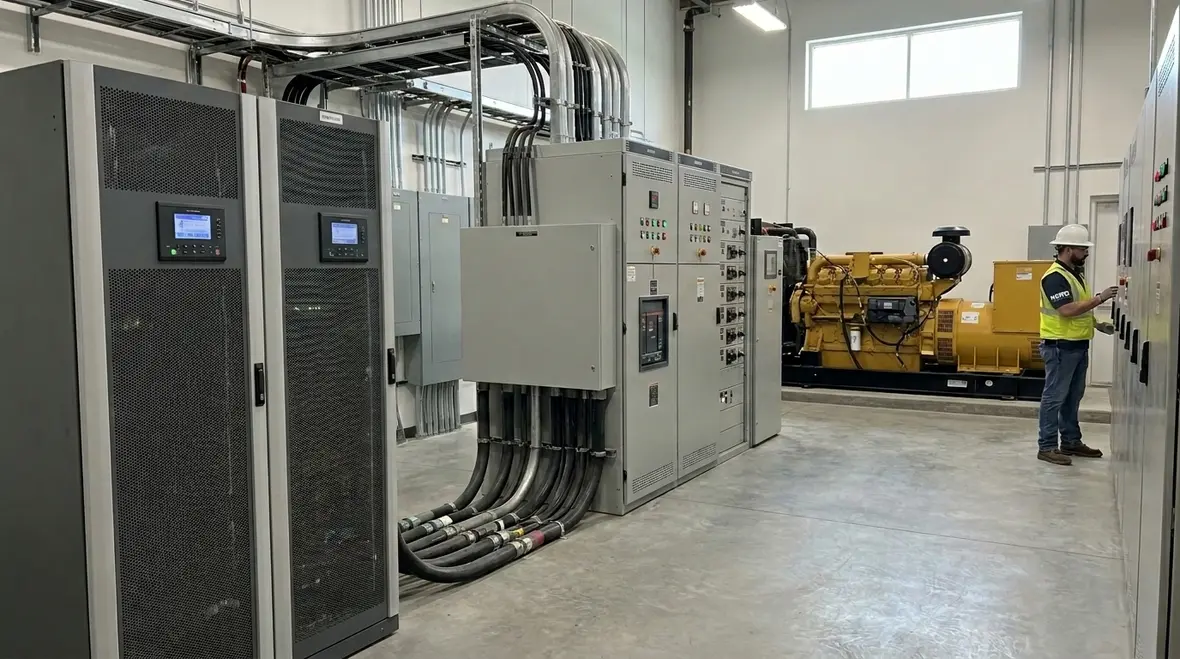
Mission Critical Power Continuity Solutions
At Kord Electric, we help commercial and industrial facilities protect operations with mission critical power continuity when it matters most. Because when power slips, processes stall, safety systems hesitate, and teams scramble like it is the last scene of a disaster movie. And nobody wants that plot twist. Instead, we design and service advanced, mission critical power systems that keep lights on, controls alive, and critical equipment running.
In this article, third person expert guidance will explain how we ensure business continuity with smarter power design, careful upgrades, and expert service support. Meanwhile, our technicians will break down real-world choices, so you can plan maintenance and modernization without guessing.
What does mission critical power continuity actually protect?
Mission critical power continuity is not a marketing phrase. It is the difference between “we stayed online” and “we rebooted everything after hours.” Kord Electric focuses on commercial and industrial facilities and major property buildings such as hospitals, data-heavy campuses, manufacturing sites, and large multi tenant properties where outages trigger direct losses.
To protect continuity, we plan for the power path end to end. First, we reduce the chance of interruptions. Then, we limit the impact when something fails. Finally, we keep critical loads stable long enough for systems to ride through disturbances.
In practice, our teams consider voltage sags, brief interruptions, harmonics, and overload conditions. For example, a short dip can shut down sensitive drives or servers even if the utility power “came back fast.” Therefore, our approach aims for reliability under both normal load and stressed conditions.
Advanced power systems that keep operations steady
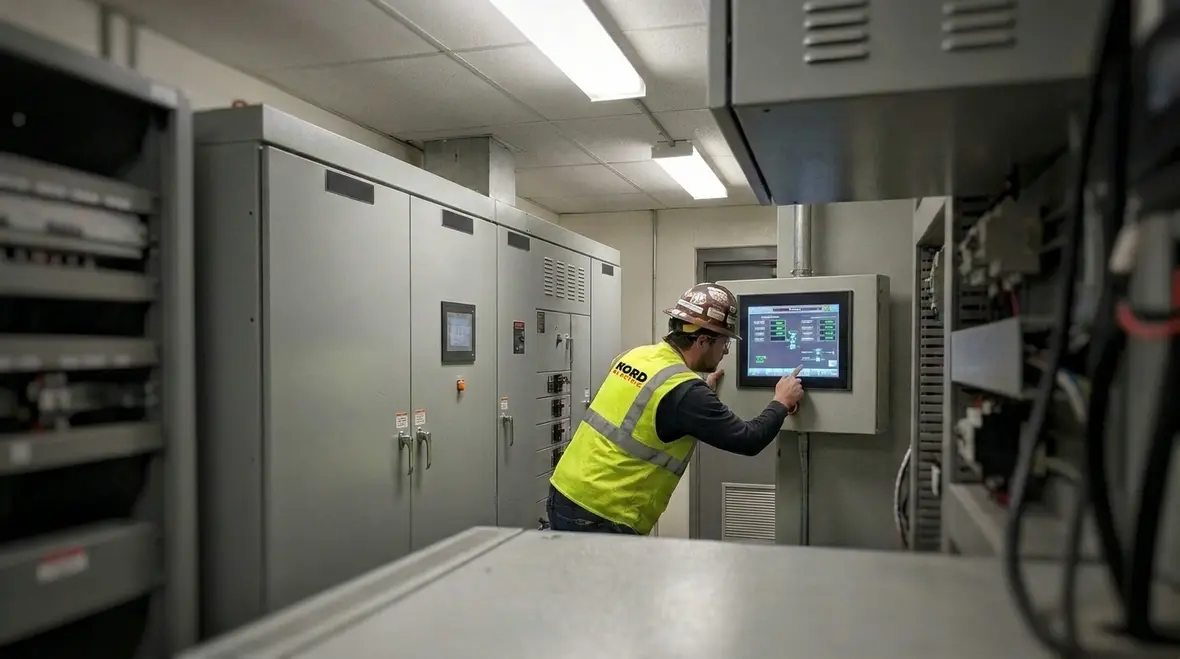
When our service team evaluates your facility, they look for solutions that match the load risk and the tolerance of your equipment. Not every building needs the same level of backup, yet many do need a more deliberate architecture.
Typically, we help clients implement a layered strategy. The goal is simple: keep critical loads energized through disturbances, switch events, and generator transitions.
- UPS systems for stable output to servers, controls, and communication gear
- Emergency and standby generators for longer ride through during utility loss
- Automatic transfer and switching to move power with controlled timing and reduced downtime
- Power distribution upgrades to improve protection, segregation, and load management
- Surge and harmonic mitigation to protect equipment from repeated stress
Our technicians also plan for how these systems interact. For example, improper coordination between breakers and transfer equipment can create unwanted delays. So, we verify settings, sequence behavior, and protective device coordination before anything goes live. Otherwise, the system works in theory and fails in real life, which is the electrical version of “it should fit, right?”
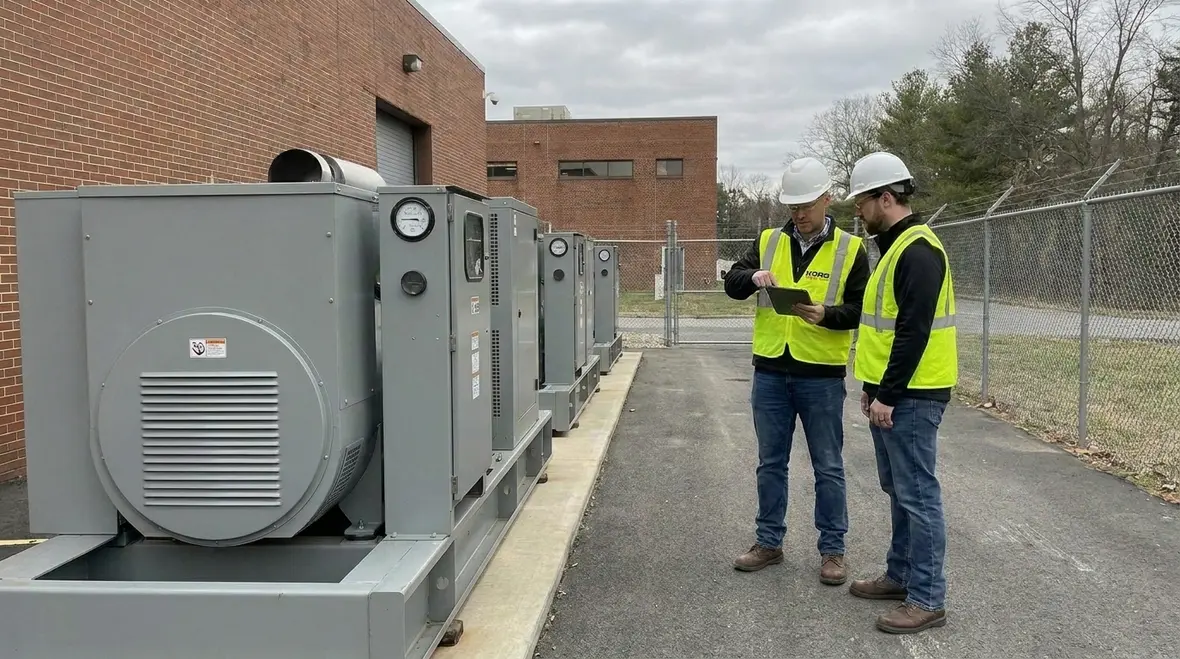
Reliability starts with load mapping and risk planning
Before a single cable gets touched, we define what must stay alive and why. As a result, our process starts with load mapping. This means identifying critical circuits, understanding run time needs, and documenting startup behavior of key equipment.
Our team then ranks loads by consequence. Some loads can restart without major risk. Others need continuous power because restarting causes downtime, product loss, or safety issues. Therefore, we treat continuity like a design requirement, not a last minute patch.
Next, we examine operating patterns. Facilities do not draw power the same way every hour, and they rarely behave like the nameplate ratings. Moreover, expansion and seasonal peaks add complexity. Kord Electric helps clients plan for future growth so upgrades do not become a never ending series of stopgap solutions.
Additionally, we coordinate with operations staff and facilities managers. Because if the building runs production through shift changes, continuity solutions must match that rhythm. We explain options in plain language so stakeholders can approve changes with confidence, not with hope.
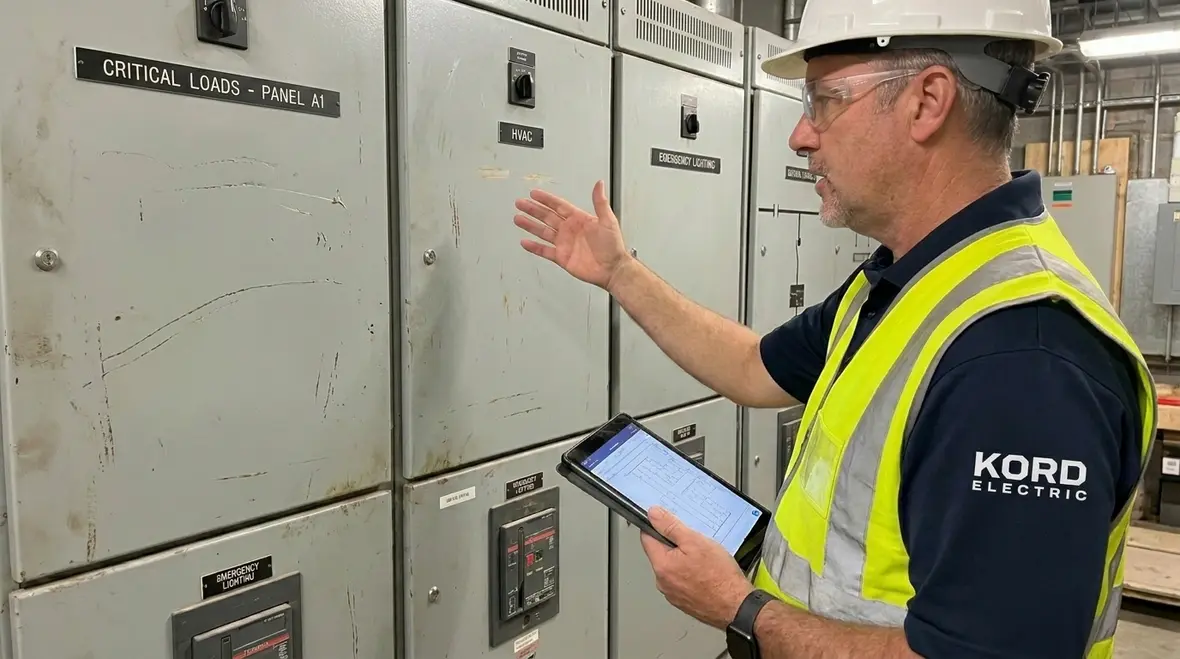
Modernization and rewiring planning that reduces downtime
Many continuity issues trace back to aging wiring, overloaded panels, or outdated protective devices. When upgrades become necessary, our technicians help clients plan rewiring and modernization to preserve uptime.
In our blog guide, “Rewiring Cost Guide for Commercial Electrical Systems,” Kord Electric lays out how scope, equipment condition, access, and scheduling shape pricing and downtime planning. We use similar logic in continuity projects. First, we assess existing conductors and terminations. Then, we evaluate panel capacity, circuit labeling accuracy, and protection coordination. Finally, we plan work windows and isolation methods that keep critical areas running.
For instance, we can stage changes circuit by circuit and keep essential systems on their existing feed until the new path proves stable. Meanwhile, we maintain safe work practices and verify load health during transitions. If you have ever watched a busy kitchen try to rewire while people keep ordering appetizers, you know why staging matters. Electrical work should not create a new emergency.
We also plan documentation. Clear labeling and as-built drawings help future service teams troubleshoot faster. Therefore, continuity does not end when the installation ends. It continues when information stays accurate.
Service, testing, and expert support you can rely on
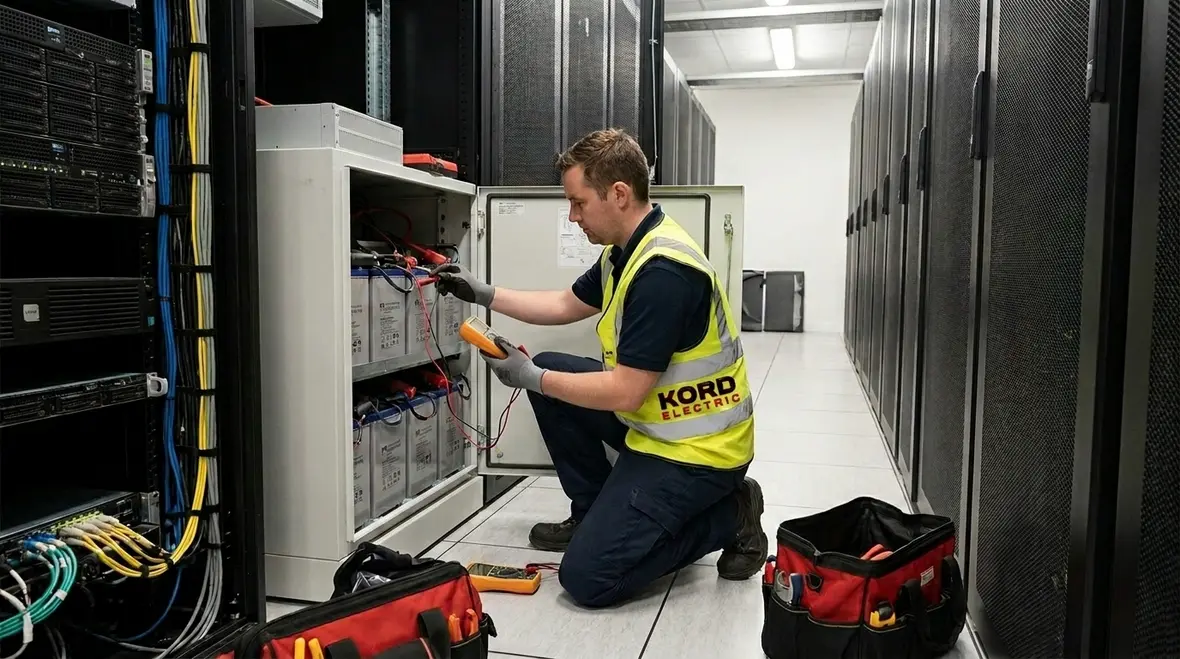
Advanced mission critical power systems only perform as well as the maintenance behind them. That is why Kord Electric puts expert service at the center of continuity planning. Our technicians do not just swap parts. They inspect, test, and verify that protective devices and switching equipment behave as designed.
During maintenance, we check operational integrity of key components such as UPS batteries and chargers, generator health, transfer switching sequences, and switchgear settings. We also verify load distribution so the system carries what it should carry, not what it accidentally carries.
Our team also focuses on battery care and replacement schedules because battery performance can degrade quietly. Additionally, we review alarms and historical event logs. When technicians explain findings, they use practical terms: what changed, what it could cause, and what action should happen next.
Because no one wants a surprise failure on a Tuesday night, we help clients build a test cadence that matches their risk level and operating schedule. If the building is mission dependent, testing needs to be more frequent and more controlled. We help coordinate these activities so the facility keeps running.
And yes, we occasionally get asked if preventative work is “really necessary.” The answer is simple: if you only act after a failure, you are not managing continuity. You are auditioning for the role of “why did this happen?”
How we design continuity for commercial and industrial facilities
Kord Electric uses an approach built for the reality of large properties. We concentrate on commercial and industrial facilities and major property buildings because these sites have complex loads, regulated safety needs, and timelines tied to operations.
In design and upgrade work, we aim for reliability, safety, and maintainability. Reliability means the system supports ride through during utility issues and transitions. Safety means protective coordination and proper isolation reduce hazards. Maintainability means future service does not require guesswork.
Our professionals also consider how the facility operates during disruptions. For example, if a production line cannot stop without loss, we help define the ride through required for controlled shutdown or continued operation. Meanwhile, for buildings that support critical tenant services, we help segregate loads so one tenant issue does not cascade into broader outages.
Then we plan training. Our technicians explain how building staff should respond to alarms and what steps to take immediately. When people know what to do, mission critical power continuity becomes a process, not a gamble.
For properties that want a deeper dive into structured electrical reliability, Kord Electric also shares related guidance such as their rewiring cost guide for commercial electrical systems, which helps facility teams connect modernization planning with long term uptime goals.
Aligned services that support mission critical power continuity
Mission critical power continuity is strongest when it ties directly into a broader service strategy. That includes preventive maintenance, emergency response, and targeted upgrades for panels, distribution, and lighting. Kord Electric supports facilities across Los Angeles County with programs that align inspections, testing, and project work with operating schedules, so reliability planning does not sit on a shelf. For organizations coordinating multiple sites or complex tenant mixes, this kind of unified approach helps keep mission critical power continuity and everyday electrical safety moving in the same direction.
When facilities in and around Los Angeles need a single partner to help coordinate design, upgrades, and ongoing support, they often start by reviewing Kord Electric’s broader Los Angeles County electrical services, then tailoring a program around their most important loads and timelines.
From data-heavy environments and production lines to large multi tenant properties, the same principle applies: the more clearly the electrical plan supports mission critical power continuity, the fewer surprises appear during storms, utility events, or internal faults. By combining structured maintenance, thoughtful modernization, and real-world testing, Kord Electric helps facilities turn “mission critical” from an aspiration into a measurable standard.
FAQ
Final word: protect uptime with Kord Electric
If your facility cannot afford electrical disruption, do not wait for the next outage to write the plan. Kord Electric helps commercial and industrial buildings build and maintain advanced mission critical power continuity through smart design, careful modernization, and expert service verification. Contact us to discuss your current system, critical loads, and service schedule. Then we will outline a practical path forward that keeps operations steady, protects equipment, and reduces downtime. Schedule a consultation today and move continuity from “maybe” to “measured.”
For facilities that want to connect mission critical power continuity with broader reliability goals, Kord Electric can also align continuity planning with services such as lighting installation improvements, electrical preventive maintenance programs, and targeted troubleshooting, building a long term roadmap instead of a one-time repair list.


