
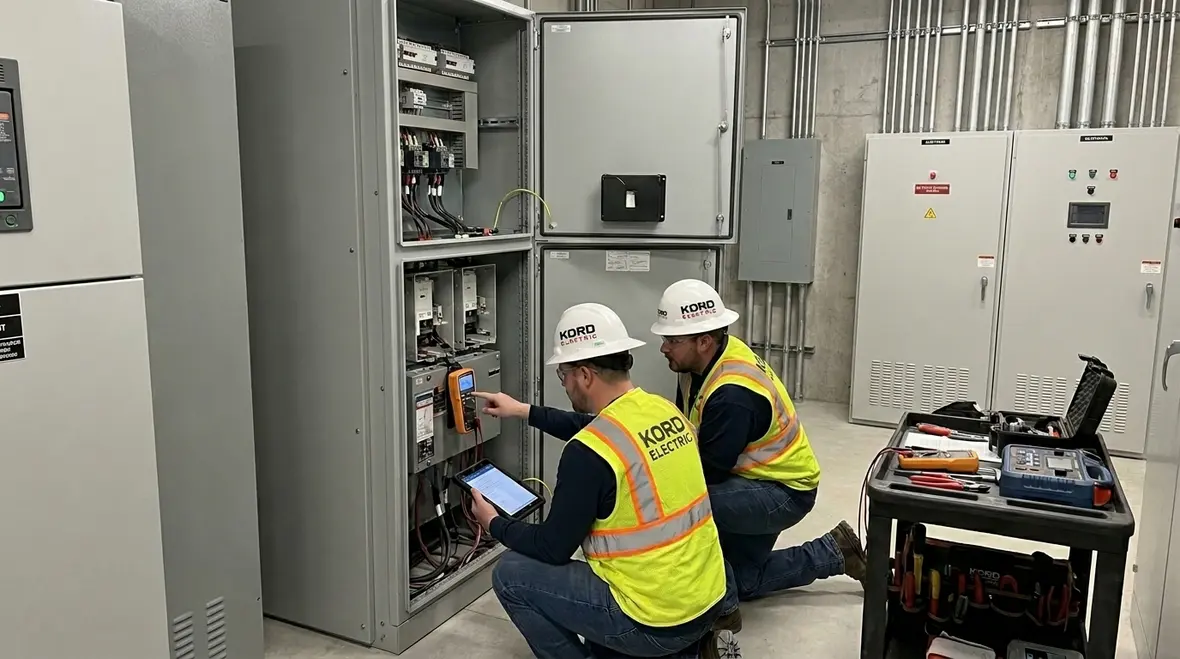
Modern Industrial Switchgear Installation Guide
When commercial and industrial facilities upgrade power distribution, they cannot treat switchgear like a late-night software update. In the first 100 to 150 words, we make sure our approach lines up with modern industrial switchgear installation requirements, including correct clearances, verified busbar alignment, proper grounding paths, and commissioning that confirms performance under real operating conditions. At Kord Electric, we plan the upgrade so the building keeps running, we document every test, and we coordinate with site rules so the work fits the facility, not the other way around. Our technicians and expert service staff explain each step in plain language, because nobody should have to decode electrical jargon like it is a secret menu. And yes, we keep the jokes light, mostly because the gear does not respond well to slapstick.
Why a Switchgear Upgrade Matters More Than a New Paint Job
Third person perspective helps a facility owner see the real goal: reliability. Switchgear sits at the heart of power distribution, and it protects equipment, people, and processes by controlling and isolating electrical flow. Over time, components age, insulation can weaken, connections can loosen, and parts that once met standards may no longer match the current load profile or fault levels on site. As a result, the system can become slower to respond, harder to troubleshoot, and more expensive to maintain.
Modern power distribution expects clean operation, faster fault clearing, and better monitoring. Therefore, an upgrade can reduce nuisance trips, improve arc flash safety, and support tighter energy management. Additionally, it helps facilities plan for future load, such as new manufacturing lines, expanded data loads, or added HVAC capacity. If the building is a major property asset, the stakes grow even higher.
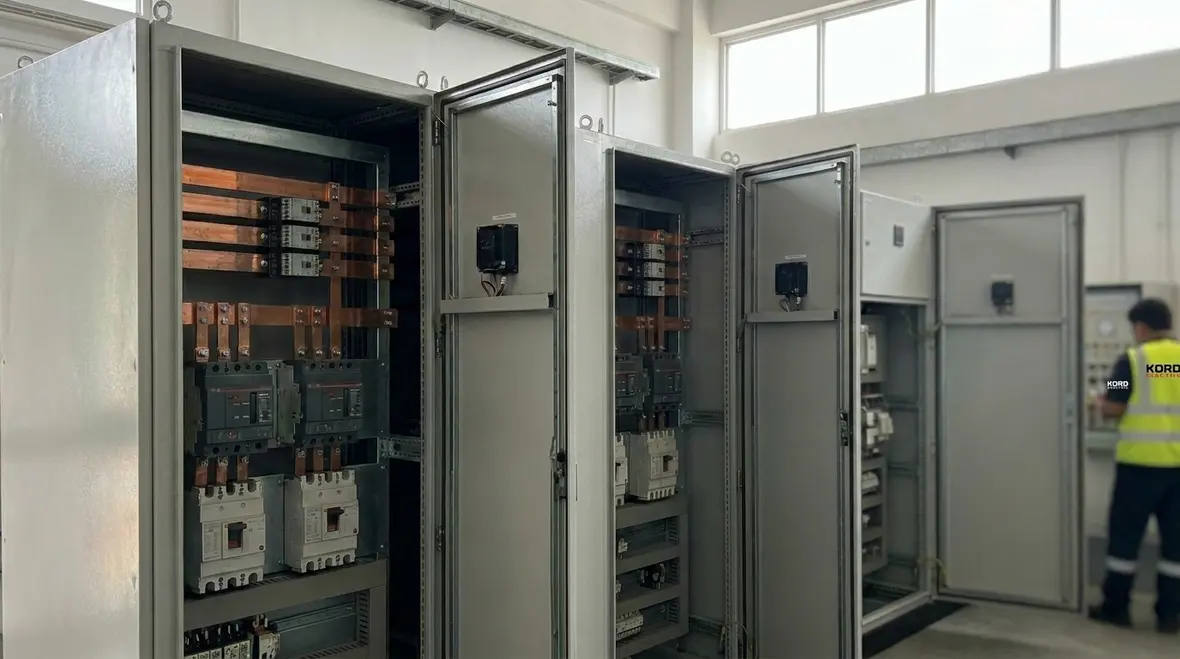
In many commercial and industrial buildings, a switchgear upgrade also aligns closely with structured electrical preventive maintenance and power quality corrections. For example, facilities already working through a voltage fluctuation assessment or a broader electrical preventive maintenance plan can use upgrade timing to eliminate recurring trouble spots instead of just resetting breakers and hoping for a better week.
When owners see the upgrade as part of long-term asset care, they treat it less like a cosmetic refresh and more like rebuilding the backbone of the facility. That shift in mindset helps budgets land in the right place and keeps the focus on reliability, safety, and clear documentation.
What We Inspect First Before Any Modernization Begins
Before Kord Electric schedules hardware work, we focus on the facts. Our expert service staff starts by reviewing one line diagrams, protective device settings, and historical maintenance notes. Then we inspect the existing gear condition, including bolted joints, thermal wear patterns, contact erosion, and insulation health. After that, we verify grounding and bonding, because a weak path can turn a protective design into a backup plan.
Next, we study operating conditions, since load cycles matter. The facility may run with a steady demand, or it may swing sharply between shifts. Furthermore, the upgrade plan must account for fault current levels, upstream transformer behavior, and generator interactions where applicable. If the site uses power quality tools or has harmonic issues, we incorporate those findings into the design basis. Finally, we confirm the space, access, ventilation, and routing needs so the installation stays safe and efficient.
Our technicians also check records and labels for accuracy, because mismatched identification can lead to confusion during testing or future work. In short, we do not chase shiny upgrades; we chase dependable performance.

Those early inspections also create a bridge to other reliability work around the building. For instance, if we uncover recurring thermal stress, nuisance trips, or suspicious loading, that data can feed straight into a broader electrical preventive maintenance program. Combining switchgear upgrades with structured maintenance makes it easier for facilities to move from reactive repairs to documented, proactive care across panels, feeders, and distribution equipment.
By the time modernization starts, the facility team should feel like they have already walked through the project on paper: they know the risk points, the priorities, and the expected improvements in protection, selectivity, and maintenance access.
Switchgear Selection: Matching Design to Real Site Needs
A correct upgrade starts with the right selection. Kord Electric evaluates equipment options based on voltage class, bus type, short circuit rating, and the facility’s operating requirements. We also pay attention to how protective devices coordinate with downstream loads. This coordination controls selectivity, meaning the system isolates the correct area instead of turning off the entire plant.
In addition, we look at enclosure type, operational ratings, and the level of arc flash protection the facility needs. For many commercial and industrial properties, modern designs include advanced sensing, improved insulation systems, and better compartmentalization. Yet the best gear choice also depends on workflow constraints, such as shutdown windows and the physical layout of the electrical room.
Then there is monitoring. Newer switchgear can support metering and communications, which helps facility staff track load trends, detect early issues, and plan maintenance before failures occur. Consequently, owners benefit from better visibility, and operators spend less time guessing.
And because every project needs a little honesty, we tell clients this: buying better gear without matching it to protective settings is like putting a racing spoiler on a shopping cart. It looks fast, but it does not stop the right problems.
Selection is also a perfect time to align switchgear capabilities with other building upgrades. Facilities that already plan lighting retrofits, commercial lighting code compliance improvements, or voltage stabilization projects can specify gear that supports those priorities. That might mean better metering for lighting energy profiles, improved fault interrupting capacity for new machinery, or modular sections that make future expansions easier to integrate without rewriting the entire one line diagram.

When switchgear design, installation methods, and long-term maintenance plans all line up, facilities get more than new equipment. They get a coordinated electrical backbone that plays nicely with title 24 lighting requirements, voltage fluctuation mitigation, and day-to-day operations.
How Kord Electric Manages Installation Requirements Without Surprises
During installation, details decide the outcome. Kord Electric follows modern industrial switchgear installation requirements through careful site preparation and controlled work methods. We verify mounting surfaces, ensure correct clearances, and confirm cable entry methods that meet the equipment specifications. Moreover, we handle torque procedures, connection inspection, and phase identification with a precision that protects both performance and safety.
We also manage the commissioning path. Testing does not happen “sometime after,” because that is how issues hide. Instead, our technicians perform stepwise checks, including insulation resistance tests, contact resistance checks, functional interlocks verification, and protective relay verification. After that, we validate operation under simulated conditions where the project allows. Therefore, the facility does not just receive equipment; it receives proof.
Where construction schedules press tight, we coordinate material delivery, staging, and access routes so the electrical room stays organized. Transition planning includes labeling, as built documentation, and alignment with operations staff so the facility can train personnel with confidence. If a building has a maintenance team and an on-call schedule, we integrate our handoff plan into their workflow.
To keep the process calm, our expert service staff explains what will happen before each test. That way, facility operators know what sounds they might hear, what signals they should expect, and how to respond if anything looks off.
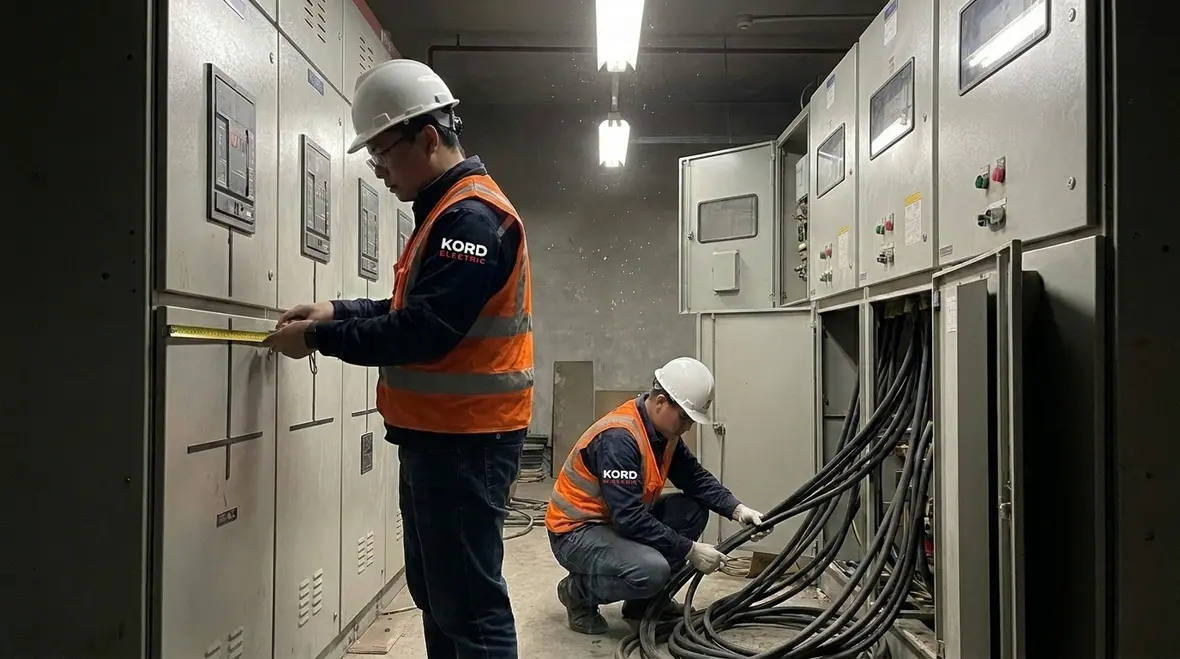
This is also where good project communication protects uptime. Facilities that already work with Kord Electric on commercial lighting installation services, voltage fluctuation repairs, or electrical preventive maintenance plans can fold switchgear work into a single coordinated schedule. That reduces duplicated shutdowns, makes inspections more efficient, and keeps all as built documentation aligned under one set of drawings instead of scattered reports.
The end result is simple: when installation requirements are managed with this level of care, no one has to wonder what was tightened, what was tested, or what “we will check that later” was supposed to mean.
Testing, Commissioning, and Safety Checks That Hold Up Later
Testing and commissioning protect the investment. Kord Electric approaches commissioning as a performance standard, not a paperwork exercise. Protective devices must trip at the right levels and coordinate correctly across zones. Insulation systems must meet acceptance criteria. Busbar and connection integrity must confirm stable electrical conductance under load expectations.
We also review safety outcomes. Arc flash risk assessment supports safer maintenance practices, and we verify that labeling and operating procedures match the actual configuration. Transition words like therefore and meanwhile guide the sequence of work so teams can follow the plan without rushing. At each phase, our technicians confirm results, then document them clearly.
Finally, we connect the commissioning results to the maintenance plan. A switchgear upgrade should not vanish into a binder. Instead, it should help staff predict service needs, schedule inspections, and understand what to check during routine rounds. That keeps downtime lower and reduces emergency callouts, which nobody enjoys unless they are auditioning for a disaster movie.
Once the new gear has passed commissioning, facilities often fold it into ongoing programs such as electrical preventive maintenance. That way, thermal scans, torque checks, and functional testing become part of normal operations instead of a once-and-done event. Documentation from the commissioning phase then becomes the baseline for future inspections.
Upgrading Without Shutting Down the Business: Planning for Continuity
Most commercial and industrial facilities cannot afford long outages, and major property buildings often operate across many tenants. So Kord Electric builds a phased plan that protects critical systems. Depending on site design, we may plan tie in steps, temporary configurations, or staged replacement methods that reduce downtime.
We coordinate with stakeholders so everyone knows the timeline, the work boundaries, and the responsibility handoffs. In practice, that means the facility team handles safe access and operations decisions, while our technicians handle the electrical work and verification. Moreover, we schedule work windows with realistic lead times for testing and approvals.
Communication keeps the upgrade steady. Our expert service staff explains what each shutdown will affect, what systems remain in service, and how the team will verify restored operation. Then, after energized checks, we confirm operational status before the project moves to the next phase. As a result, the upgrade becomes a managed event rather than an emergency.
This approach to continuity also pairs well with other capital improvements. For example, a facility already planning a commercial rewiring project or a major lighting upgrade can bundle outages so that switchgear work, panel replacements, and lighting control updates happen under a single, predictable schedule.
The more coordination that happens up front, the less the work feels like juggling chainsaws and the more it feels like a normal operational improvement with clear milestones and calm status updates.
FAQ: Modern Industrial Switchgear Installation and Upgrades
Conclusion: Let Kord Electric Upgrade the Power, Not the Stress
Switchgear upgrades should make facilities safer, steadier, and easier to maintain, not louder, slower, or uncertain. Kord Electric brings a disciplined process that starts with inspection, then moves through correct selection, careful installation, and commissioning with proof. Our technicians and expert service staff explain what happens, when it happens, and why it matters, so operations teams stay confident. If a commercial or industrial site needs an upgrade, contact Kord Electric today for an assessment and a practical plan that respects your uptime requirements.
For facilities that want switchgear work to align with broader system reliability, our team can integrate upgrades with electrical preventive maintenance services so panels, feeders, transformers, and new gear all receive the same level of ongoing care. That way, the project improves not just today’s capacity, but tomorrow’s confidence in every breaker, relay, and bus connection supporting critical operations.
If your facility is planning modernization, expansion, or resolving recurring electrical issues, Kord Electric can help design and execute a switchgear upgrade that fits your schedule, your safety goals, and your long-term capital plans.


