Smart Lighting Controls ROI for Commercial Buildings
In commercial and industrial spaces, lighting rarely behaves like a simple switch anymore. With smart controls, we help facilities gain commercial building lighting automation benefits that touch comfort, safety, and cost. That matters because a warehouse, a school, a hospital wing, or a mixed use property does not run on vibes and luck. It runs on schedules, occupancy, and accountability. And while others may treat lighting as a “set it and forget it” item, Kord Electric treats it as a controllable system that quietly pays back over time. If this sounds like financial planning for lights, that is not wrong. Lights just happen to be the most visible part of your energy story.
What ROI do smart lighting controls deliver for commercial sites?
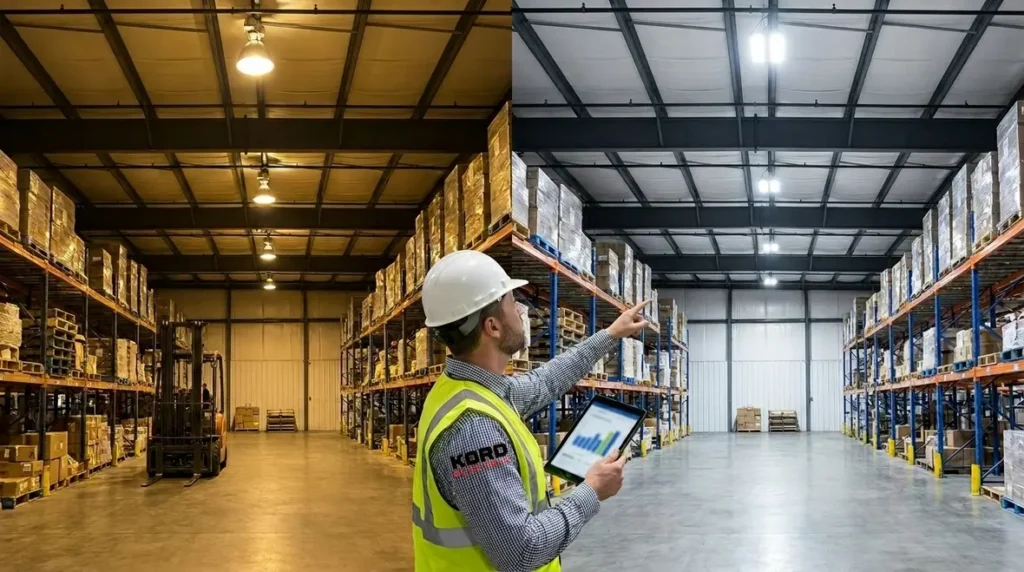
When we talk ROI, we look at the whole bill, not just one line item. Smart lighting controls reduce energy use, stabilize operating costs, and lower maintenance. Also, they improve how well the building uses power across the day and across zones. In practice, our team often sees payback come faster in facilities with variable occupancy, long operating hours, or areas that sit unused during parts of the day. For example, motion based dimming in corridors and parking areas typically cuts wasted run time. Meanwhile, daylight harvesting helps offices and production spaces that receive strong natural light.
Next, we include reduction in “soft costs.” Staff members spend less time manually adjusting lighting and fewer work orders get created because people stop reporting lights that stay on by accident. Then there is the value of better consistency. When lighting output matches task needs and plant schedules, it supports productivity and reduces complaints. In commercial buildings, that can mean fewer disruptions, quicker onboarding for new spaces, and fewer ad hoc fixes during business hours.
Our technicians also explain that ROI depends on design, not just hardware. Therefore, we assess lighting layouts, fixture types, control zones, local codes, and how the facility actually operates. If a system gets installed without thinking through usage patterns, the ROI can get delayed. We prefer to be the group that thinks first, installs second, and then lets the numbers do the talking.

For property managers comparing smart controls to a traditional “on/off” approach, ROI is not just about lower kilowatt hours. It is about turning lighting into a predictable, trackable system. That system can align with your capital planning, your Title 24 obligations, and your long term goals for operating cost stability. If you are already thinking about LED upgrades, pairing them with controls is often where the long term return really accelerates. Kord Electric helps you evaluate those combined opportunities so you can decide whether phased work or a single project makes more sense for your portfolio.
How we measure savings and payback in real facilities
Others may toss out generic projections like they came from a fortune cookie. We do not. Kord Electric measures savings in a way facility managers can defend. First, we gather utility data, operating schedules, and occupancy patterns. Then we map control strategies to specific areas, such as dimming at night, step levels for training rooms, and automatic shutoff for low use corridors.
To estimate savings, our service staff uses expected behavior from control logic. For example, occupancy sensors do not simply turn lights on and off; they manage dim levels over time. That creates smoother energy use. Likewise, daylight sensors adjust output based on actual sunlight conditions. As a result, savings are tied to how the building performs rather than how someone hopes it performs.
Additionally, we include maintenance impacts. Smart controls can reduce lamp and driver cycling because dimming and scheduling avoid harsh on off behavior. Then we consider commissioning. When we tune the system carefully, the controls match the way people move through the space. Consequently, the facility avoids “nuisance overrides,” which can erode savings.
Finally, we talk about payback in practical terms. We show stakeholders what changes, when it changes, and why it saves. Our technicians explain everything in plain language, so your decision makers do not need a decoder ring to approve the project. Unless they want one. We have seen enough meetings to know that sometimes people do.
Because many commercial properties plan projects years in advance, we also help align smart lighting controls with other upgrades. For example, if a facility is already considering a lighting retrofit, our team can show how control strategies affect the overall commercial lighting upgrade cost picture over time. Pairing efficient fixtures with smart logic can turn a basic project into a strategic investment that keeps paying back with every billing cycle.
Where commercial building lighting automation benefits show up first
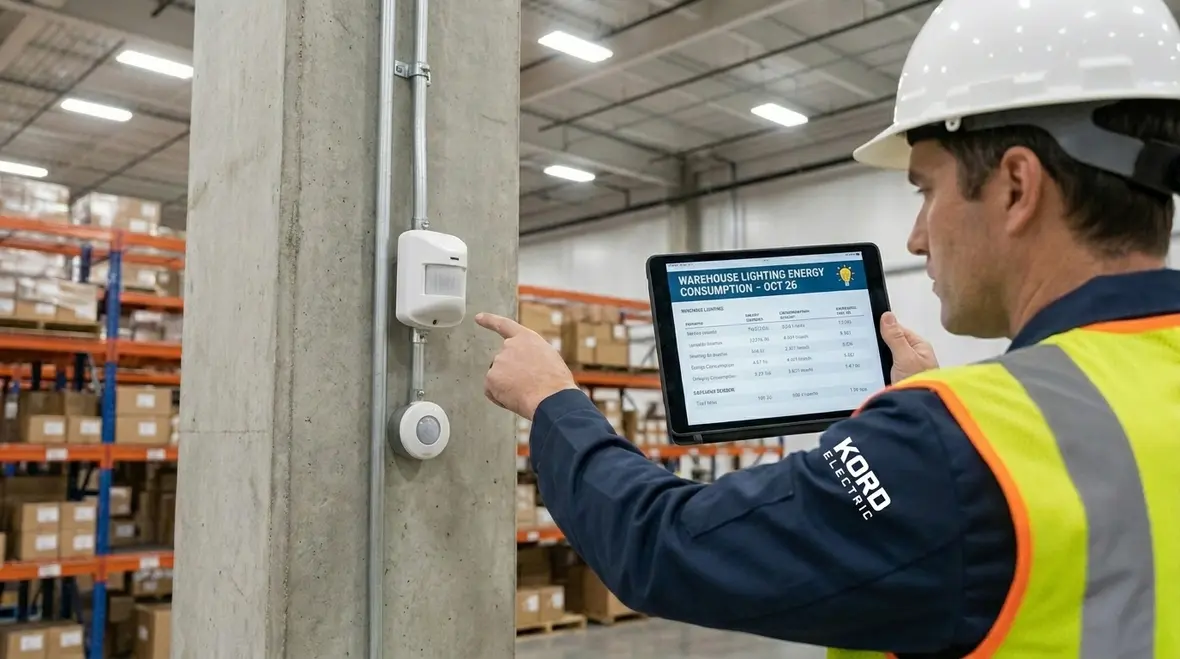
Smart lighting controls pay attention to zones. That means benefits often show up where zones change behavior throughout the day. In warehouses, that can be dock areas, packing bays, and aisles with intermittent activity. In offices, it is open work areas, conference rooms, and break spaces. In major property buildings, it often starts in parking lots, lobbies, stairwells, and common hallways.
Most commonly, we see early wins in these locations:
- After hours and weekends: Scheduling reduces wasted runtime without waiting for staff to remember a manual routine
- Spaces with daylight: Daylight harvesting dims artificial lighting to match sunlight, which cuts energy without changing the visual experience
- Low occupancy zones: Occupancy sensors prevent lights from running in areas that sit empty
- Multi tenant buildings: Central oversight supports consistent operation across floors and common areas
- Safety critical zones: Control logic supports reliable illumination patterns, which improves confidence during emergencies
Moreover, these systems help facilities avoid the classic problem of lights staying on “just in case.” Smart controls replace guesswork with measured behavior. And yes, “just in case” is a strategy humans use for everything from jackets to meetings, but it is not a great lighting plan.
For large properties in California and other regions with strict codes, these commercial building lighting automation benefits also tie directly to compliance. Automation supports required shutoff, demand response, and multi-level control rules without adding more work to a facility team that is already stretched thin. When combined with code-conscious installation practices, smart controls can help buildings stay aligned with lighting compliance requirements instead of scrambling to catch up during inspections.

If your facility is already planning a lighting installation upgrade or retrofit, identifying these high impact zones early can shape your project phasing. Many property leaders start with parking, common areas, and key production or collaboration zones before expanding automation to the rest of the building. That way, they see visible results quickly while building internal support for broader smart control adoption.
Energy efficiency and comfort: dimming that actually feels right
Energy savings matter. Comfort matters too, because a dimmed space that feels wrong will trigger overrides and complaints. Kord Electric designs lighting automation to keep the experience steady for occupants. That means we focus on smooth dimming, sensible time delays, and appropriate minimum light levels for work areas. When the lights behave predictably, people stop treating the controls like a stubborn thermostat.
In commercial and industrial settings, we also consider task requirements. A warehouse needs different brightness than an office corridor. A production line can need stable illumination to support quality checks. Therefore, we map lighting scenes to actual tasks and schedules. Then we tune the system so that when occupancy changes, the lighting responds without feeling abrupt.
Furthermore, smart controls can improve glare and reduce harsh contrast near windows. Daylight harvesting and zone adjustments help maintain a balanced visual environment. Even in facilities that operate at odd hours, control logic supports stable lighting during shifts. As a result, we help facilities reduce energy use while keeping performance consistent.
And because we do not just install and vanish, our technicians walk the building team through adjustments. We teach them what to expect, how to handle special events, and when manual overrides are useful. That guidance prevents the usual cycle: “We turned it on, we do not know why, now we are mad.” Nobody wants that, and neither do we.
For teams considering a full lighting installation or retrofit, our specialists can also align comfort-focused settings with your broader lighting design. That includes fixture selection, layout decisions, and code-compliant control strategies that support comfort, safety, and long term efficiency all at once.

Integration and controls that scale across floors, tenants, and shifts
ROI gets stronger when the system can grow with the building. Kord Electric supports scalable control design for commercial and industrial facilities and major property buildings. That means the control approach can handle multiple zones, changing schedules, and new areas coming online later.
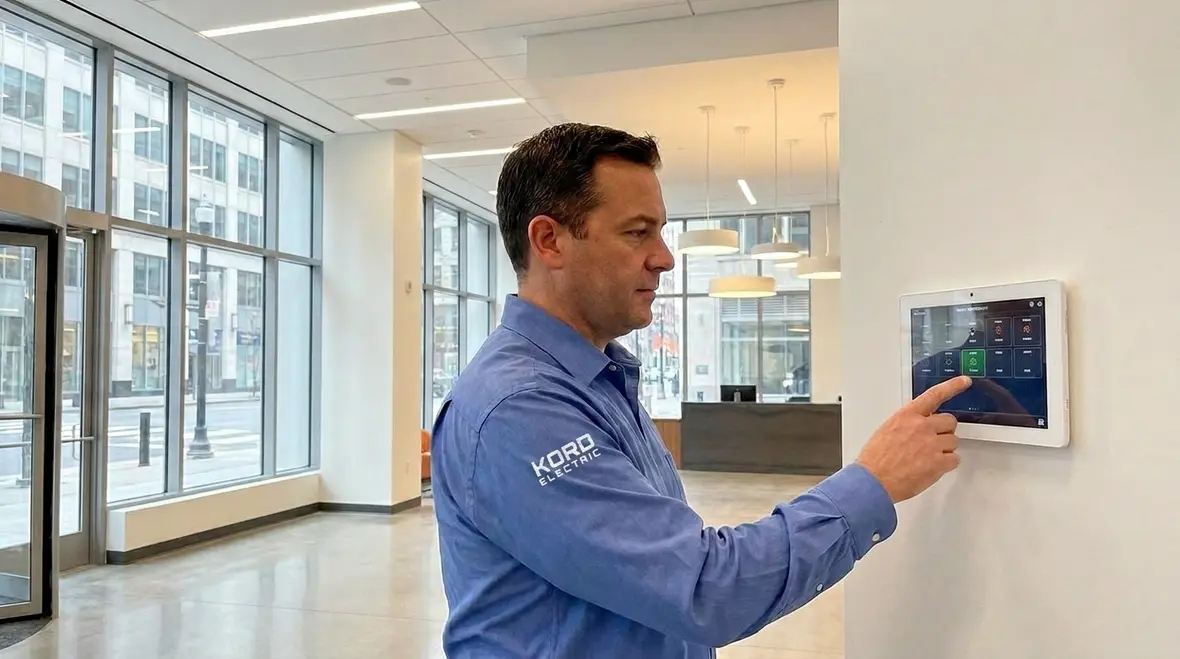
We also plan for integration so the lighting system works alongside other building systems. When lighting controls connect with a building management approach, facilities can centralize schedules, monitor performance, and manage seasonal changes. Then, if maintenance teams need to find issues quickly, the control system supports faster troubleshooting. This reduces downtime in spaces where lighting is essential for safety and operations.
In addition, scalable systems help property managers during tenant turnover. If a tenant changes how a space gets used, the lighting behavior can get updated through programming rather than replacing everything. Consequently, the building does not start over each time someone moves in. It adapts.
Most importantly, our expert service staff explains integration in a way that teams can act on. They clarify what will and will not change, how permissions work, and how operators can adjust scenes without breaking anything. In other words, they protect you from “feature creep.” The kind that turns a lighting project into a year long mystery novel.
For multi-site portfolios, we can also discuss how standards for lighting installation, controls, and maintenance tie together. Establishing a consistent playbook for zoning, sensor placement, and automation rules makes it easier to replicate wins across campuses rather than reinventing the wheel in every building.
When integration is planned well, commercial teams gain more than energy savings. They gain visibility. Dashboards and reports can highlight which areas are performing well, which need tuning, and where additional upgrades such as LED retrofits or targeted electrical preventive maintenance might unlock even more value.
Common ROI mistakes we help commercial teams avoid
Smart lighting projects can underperform when teams rush decisions. Kord Electric helps clients avoid these common traps, especially in commercial and industrial facilities where operations cannot pause for long.
- Wrong zoning: When zones do not match occupancy patterns, sensors trigger too often or not enough
- Overcomplicated scenes: If operators cannot understand the system, they override it
- Missing daylight strategy: Daylight harvesting without proper layout planning can lead to unstable brightness
- Poor commissioning: Systems need tuning so controls match real schedules and local lighting behavior
- Ignoring maintenance workflows: If staff cannot quickly troubleshoot, small issues become expensive
- Installing without a training plan: When no one learns how to operate the system, the ROI drops
To prevent this, our technicians test sequences, confirm coverage, and verify settings with the facility team. Then we walk through daily operation. We also document what matters: what each zone does and how to adjust lighting behavior for shifts, seasonal changes, and special events.
We also help property leaders connect their smart lighting strategy to other work they are already planning. For example, when our team designs a lighting installation project for a warehouse, we account for code compliance, future expansion, and how controls will support long term maintenance. That way, you are not revisiting the same areas repeatedly because earlier decisions did not account for tomorrow’s loads, tenants, or schedules.
Avoiding these mistakes is not about perfection. It is about being honest about how people actually use buildings. When commercial teams have a realistic, well-communicated plan for lighting automation, they are far more likely to see the ROI they expected when they first approved the project.
FAQ
Ready to turn lighting into a measurable advantage?
Commercial teams deserve lighting that performs like a system, not like a guess. Kord Electric helps facilities plan, install, and tune smart lighting controls that support commercial building lighting automation benefits, reduce waste, and improve daily comfort. If your building runs on shifts, varying occupancy, or multiple zones, we can build a control strategy that fits how you actually operate. Contact us for an on site assessment and a clear ROI-focused plan, explained by our expert service staff, step by step.
If you are exploring broader upgrades, our lighting installation services support everything from new construction to LED retrofits and advanced control integration. We design for performance, safety, and long term efficiency so your smart controls and fixtures work together as a single, reliable system.
For facilities that depend on uptime, pairing smart lighting controls with structured electrical preventive maintenance can further protect operations, extend equipment life, and keep your energy and repair budgets predictable. Together, these strategies help transform lighting from a simple utility expense into a measurable advantage for your building portfolio.