Title 24 Warehouse Lighting Compliance 2026 Guide
Introduction: How We Plan for Title 24 Warehouse Lighting Compliance 2026
When a facility team asks about Title 24 warehouse lighting compliance 2026, we hear the same concern every year. It is not just “will it pass.” It is “will it run right, save energy, and stay reliable.” At Kord Electric, we guide commercial and industrial facilities, plus major property buildings, through the real-world steps that keep lighting projects smooth from design to closeout. And yes, we still joke about how paperwork can feel like a second shift, because it can. Still, our goal stays simple: we help others meet the rules with practical upgrades, clear commissioning, and technicians who know how the equipment behaves after the site is turned on.
Start With the Lighting Goal, Not the Spreadsheet

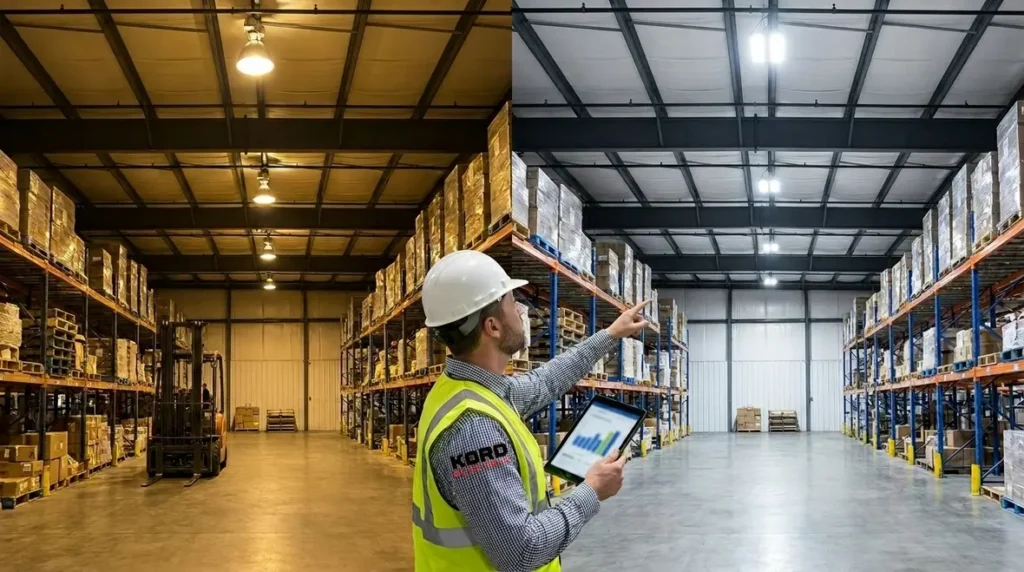
Before anyone touches a fixture schedule, we define what the warehouse must do on a normal day and during peak operations. Then we map that to the lighting system choices that Title 24 requires. In practice, this means we look at layout, work task zones, ceiling heights, rack rows, skylight effects, and how lift traffic moves through aisles. After that, we select controls that match how people actually work, not how a model assumes they work.
Here is the part others often miss. When we tune a plan to real workflow, the energy savings usually follow. If we choose dimming and controls only because “the code wants it,” the system may still meet a minimum and still feel wrong for the staff. However, when our technicians align controls to motion, time schedules, and daylight zones where they truly exist, the lighting behaves in a way that supports safety and productivity.
To keep the site calm and consistent, we also confirm the baseline conditions that the compliance path depends on. We verify which spaces get what light levels and where. Then we reduce surprises later in the project, because surprise is fun for birthdays and awful for inspections.
Use Control Strategy That Fits Warehouses and Loading Areas
Warehouses are not office floors. Therefore, we avoid cookie cutter control plans. We build a control strategy around occupancy patterns, door activity, dock operations, and long corridor travel paths. In most large facilities, the most effective approach blends several elements, such as time-based schedules, occupancy or motion sensing where it makes sense, and dimming for high bay and aisle lighting where permitted.
For loading docks and transition zones, we check the behavior during partial use. Many crews do not need full output all night, but they may need enough light for safe movement when a forklift or pickup arrives. Next, we confirm that controls respond in a predictable way. If the light ramps too slowly, people complain. If it turns off too aggressively, people complain louder. Our experienced service staff helps explain these tradeoffs in plain terms, so the operations manager knows what will happen before the system is installed.
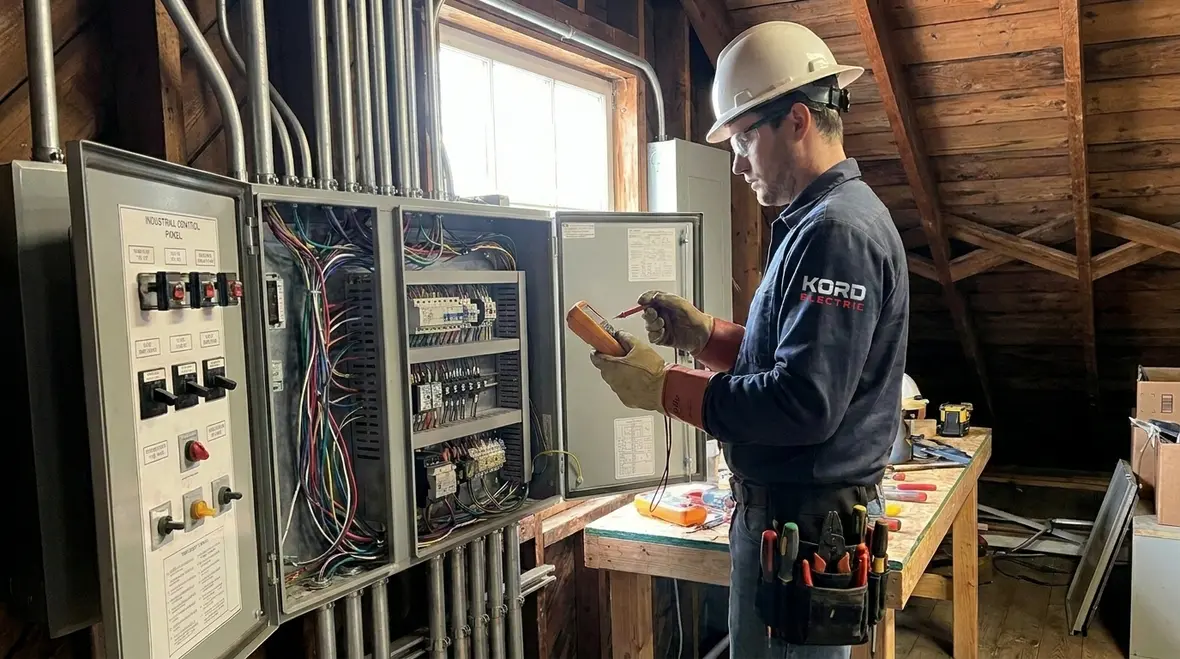
To support that work, we also follow best practices for power distribution and system coordination. In our experience, the lighting controls perform better when the electrical infrastructure is designed with stability in mind, meaning proper paneling, proper grounding, and thoughtful load grouping. For context, our data center electrical infrastructure essentials article covers how we think about system planning and reliability in complex environments. The same discipline applies to warehouse control and distribution planning.
High Bay and Aisle Design: Keep Light Where It Matters
In warehouses, “bright” is not the same as “useful.” So we focus on distribution and uniformity. We consider how fixtures mount, how beam angles spread across racked space, and how glare shows up at operator eye level. Then we refine the layout to avoid dark zones behind racks and over long aisle spans.
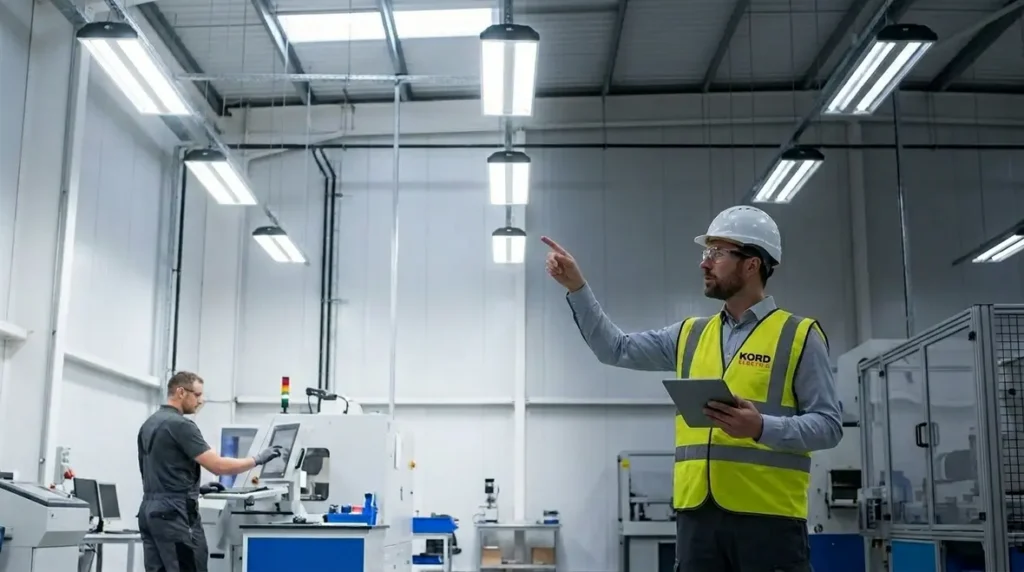
When we design for 2026 compliance outcomes, we also evaluate fixture efficacy, lamp or LED selection where applicable, and the effective control of output. Because the code cares about energy use and performance, we ensure that the proposed system is not only efficient on day one, but also stable in typical operating conditions. For example, we verify that the control settings align with expected dimming ranges and that drivers and sensors will maintain consistent behavior across temperature swings common in industrial buildings.
Next, we review how the lighting levels change during dimming and how that supports safety. We do not want a system that meets a requirement but makes staff feel like they are working under a dim film. And yes, that is a joke. But it is also a real complaint we have heard.
Electrical Infrastructure and Commissioning That Makes Compliance Stick
Compliance does not end when the last fixture mounts. It sticks when the system is built right, wired right, and verified in real conditions. Therefore, we plan commissioning early. We coordinate electrical panels, control circuits, wiring methods, and sensor placement so the system works as designed.
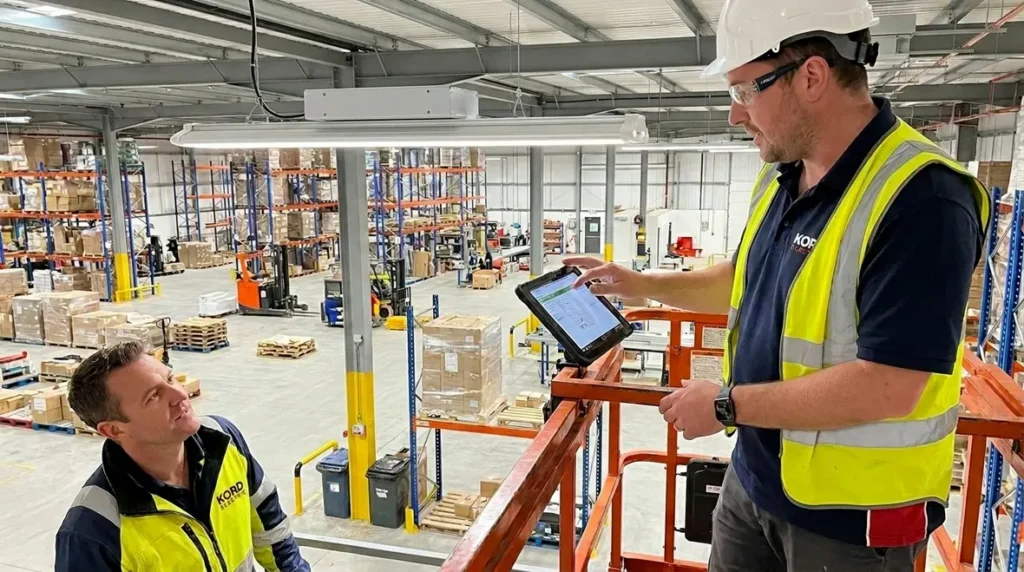
Our technicians handle more than installation. They validate that occupancy or switching devices actually cover the intended areas and that time schedules behave correctly. Then they confirm that dimming responds smoothly without flicker or strange transitions. If a system has intermittent issues, it can create operational headaches and lead to costly rework. So we test before final handoff.
We also encourage teams to gather as built documentation. That includes control sequences, device schedules, and panel labeling. In large facilities, this detail reduces confusion later, especially when another contractor, internal maintenance staff, or a future remodel touches the area. In short, we treat documentation like a safety tool, not a formality.
How We Help Teams Meet the 2026 Requirements Without Disrupting Operations
Many property managers worry that compliance upgrades will shut down operations. We plan around that reality. We schedule work to reduce downtime, we stage materials, and we coordinate with the facility team on access routes for trucks, forklifts, and crews. Then we keep safety controls in place while work continues in active zones.
Our service staff explains the process step by step. We do not hide behind technical jargon. Instead, we lay out what changes, why it changes, and what the facility team will notice during commissioning. That approach helps prevent misunderstandings that can slow projects down. And if someone asks a question that sounds like it came from a late night movie plot, we answer it anyway.
For example, some teams ask whether changes to controls can affect other systems. We review the electrical design, the load behavior, and the control wiring. We then confirm that the system integrates cleanly. When the facility team sees that we think ahead, trust builds fast.
Additionally, we support long-term performance by recommending maintenance practices that match warehouse realities. Sensors need to stay clean and unobstructed. Dimming components need to keep stable settings. Therefore, we help others plan routine checks that protect both comfort and compliance goals.
Dual Column Guidance: Common Pitfalls We Avoid
Pitfall
Designing without a clear layout of work zones
Choosing controls that do not match traffic patterns
Skipping commissioning and real-world testing
Not coordinating electrical distribution with controls
What We Do Instead
We map rack rows, aisles, and task areas to fixture and control zones
We build schedules and sensing to match shift activity and door traffic
We verify output, uniformity, dimming behavior, and sensor coverage on site
We confirm paneling, wiring paths, grounding, and load grouping for stability
FAQ for Title 24 Warehouse Lighting Compliance 2026
Conclusion: Let Kord Electric Handle the Details
If your team wants a clean path to Title 24 warehouse lighting compliance 2026, we can help you build a system that performs, saves energy, and passes review with fewer surprises. At Kord Electric, our technicians and expert service staff explain each step in plain language, then verify performance on site through commissioning. Reach out to schedule a walkthrough for your commercial and industrial facility or major property building. Let’s make the lighting upgrade feel like progress, not like a long night shift.
When you are ready to move from planning into action, our dedicated commercial lighting compliance in California guidance and our broader commercial and industrial lighting installation services help align warehouse projects with Title 24 while protecting everyday operations.
For facilities looking beyond lighting alone, Kord Electric also supports large properties with integrated electrical planning and maintenance, so that warehouse lighting compliance ties into a stable, resilient power system instead of existing in a silo.
If your warehouse is preparing for system upgrades, tenant improvements, or new construction, our commercial and industrial electrical services are built to support Title 24 lighting, distribution upgrades, and preventive maintenance in one coordinated plan that keeps your operations on schedule.