Planned Electrical Maintenance ROI for Commercial Buildings
Planned Electrical Maintenance ROI: Why Kord Electric Pushes It Now
At Kord Electric, we recommend preventative electrical maintenance plans for commercial buildings because the return is not theoretical. It is measurable, and it usually shows up faster than most property teams expect. When our technicians build a planned schedule, they reduce failures, protect uptime, and help you avoid the kind of “surprise outage” that turns a calm workday into a fire drill. In other words, we help you invest in prevention instead of paying for chaos later.
Commercial facilities and industrial operations live on electricity. Therefore, the ROI becomes a direct story about fewer shutdowns, fewer emergency callouts, and steadier power quality. And yes, we have seen it all. The breaker that keeps tripping like it is auditioning for a reality show. The overheated connection that quietly worsens until it becomes a problem. Planned maintenance stops those plot twists before they hit the building.
What “ROI” Actually Means for Commercial Power
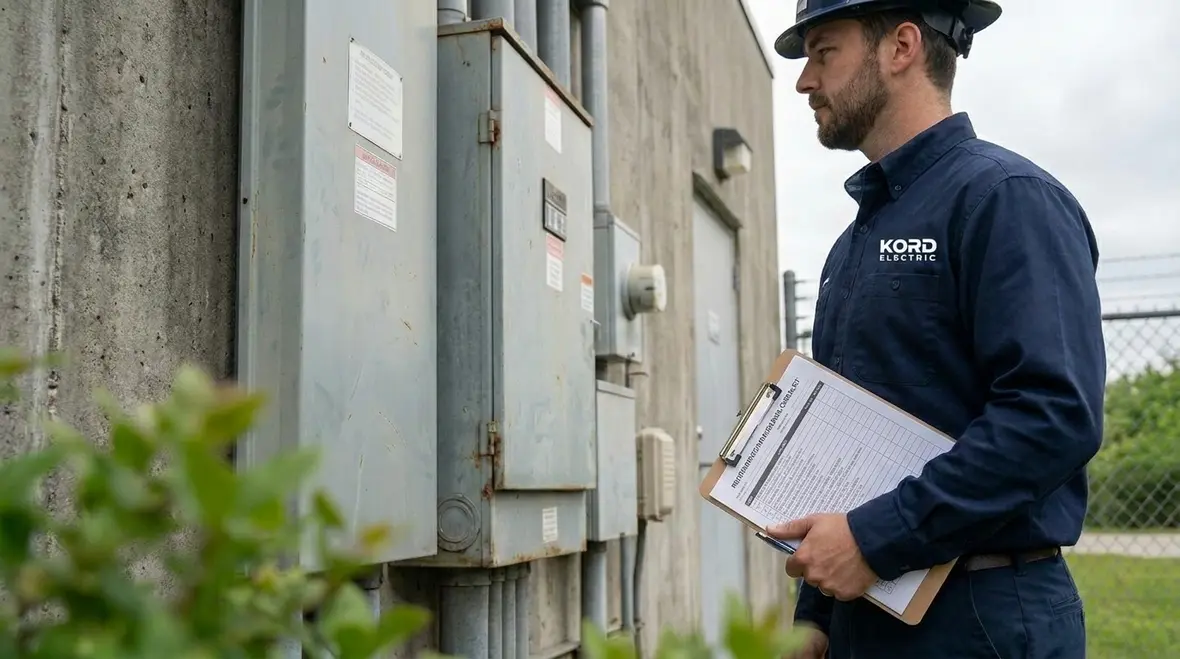
Some teams hear “maintenance” and think it is just cost. However, ROI in electrical planning works like this: you spend a predictable amount to prevent expensive failures. Then you protect productivity, keep critical systems running, and extend component life.
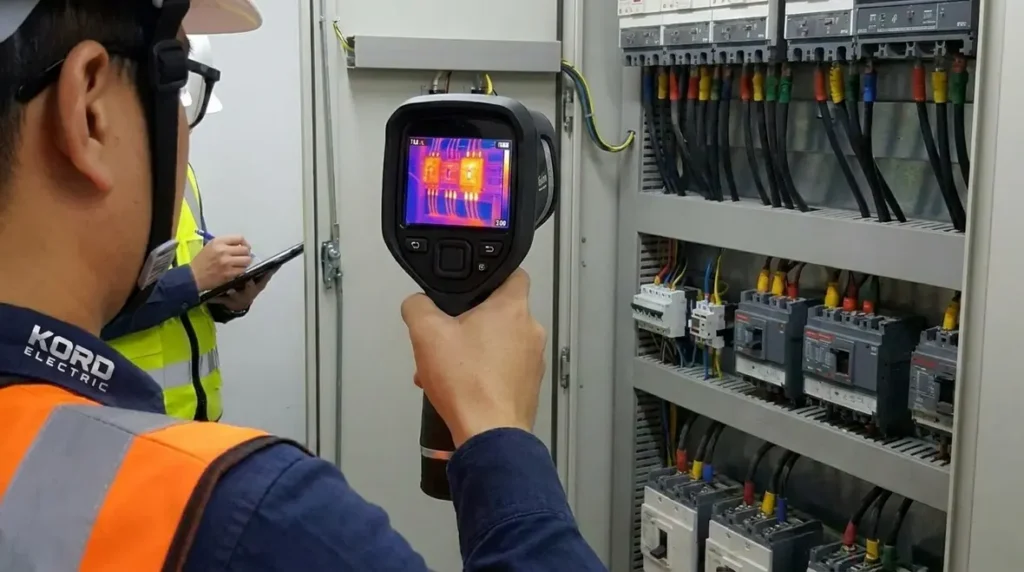
Typically, our clients in commercial and industrial facilities measure ROI in categories such as downtime reduction, avoided damage, reduced labor waste, and improved power reliability. We also explain how each test and inspection links to real risk. For example, thermal scanning finds hot spots early, which can stop insulation breakdown and connector failure. Meanwhile, load balancing and panel evaluations reduce stress on bus bars and breakers.
As we walk through the math with a building manager, we focus on what changes the bottom line. Utility costs may not drop dramatically overnight, yet efficiency and operating stability improve over time. Most importantly, fewer unexpected events mean fewer costly interruptions to operations, tenant schedules, and safety plans.
Planned ROI is also about risk posture. When you shift from a “run it until it fails” mindset to a proactive maintenance strategy, you trade uncontrolled, high-impact events for controlled, low-impact work. That shift shows up on spreadsheets, but it also shows up in calmer conversations between property teams, executives, and tenants who care deeply about uptime.
How Preventive Maintenance Cuts Failure Costs Before They Hit

Every electrical system has a lifespan, but heat, vibration, moisture, and inconsistent loads shorten it. Consequently, planned work protects components from the slow damage that “waits” to become visible. Our expert service staff often describe it as catching a leak while it is still a drip. Fix it then, and the damage stays small. Ignore it, and suddenly you are dealing with water and electrical risk together. That is when costs multiply.
We commonly find issues such as loose terminations, signs of corrosion, aging insulation, and deteriorating connections in panels, switchgear, and distribution equipment. Even small problems can snowball because electrical faults can affect upstream equipment. So, by maintaining the system proactively, you lower the chance that one component failure cascades into a broader outage.
In addition, planned maintenance supports safer work conditions. When our technicians document conditions, they can recommend upgrades that reduce risk for staff, tenants, and contractors. This matters in major property buildings and industrial sites where safety and compliance do not get “paused” for the next month.
There is also a quieter benefit: predictability. When you know when equipment will be de-energized, when inspections will occur, and when recommendations will be reviewed, you can coordinate with operations, security, and tenants instead of surprising them. That coordination keeps everyone safer, calmer, and far less likely to be standing in a dark hallway wondering what just happened.
For a deeper dive into how structured programs protect long-term performance, you can pair this article with the dedicated overview of commercial and industrial electrical maintenance plans, which unpacks the discipline behind proactive care in large properties.
Uptime, Safety, and Power Quality: The Business Benefits
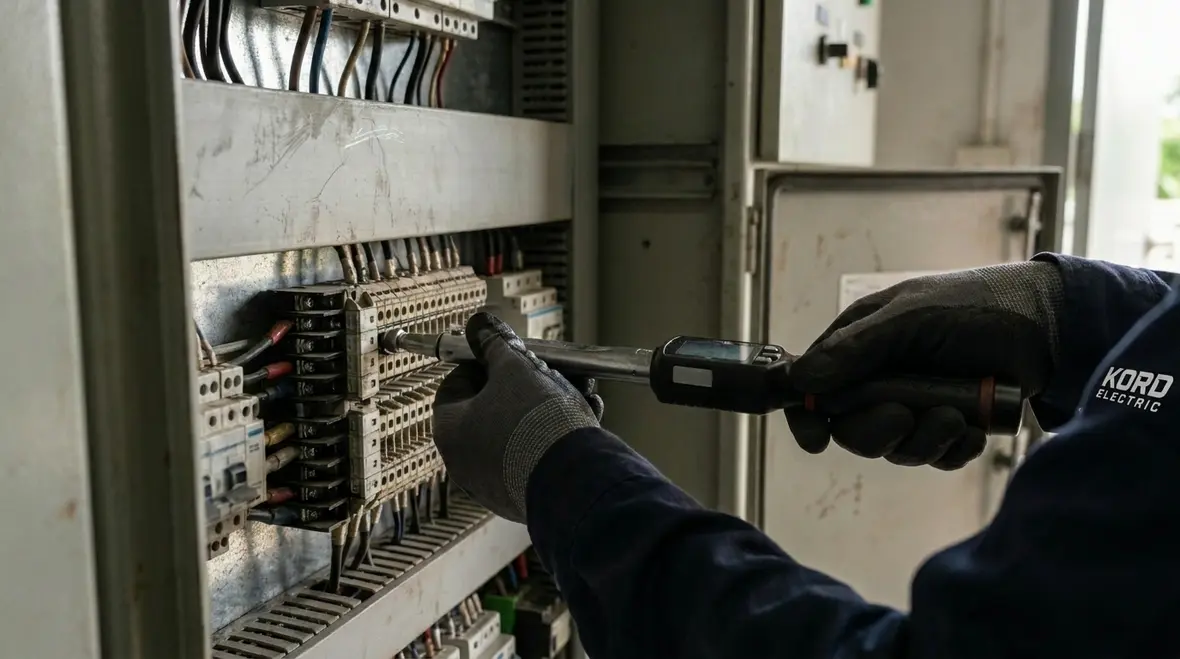
Commercial and industrial buildings rely on steady electricity for HVAC controls, elevators, lighting systems, refrigeration, process equipment, and data networks. When power becomes unstable, operations slow down. Therefore, the ROI shows up as fewer interruptions and fewer system resets.
We also help teams protect power quality. That includes reviewing conditions that contribute to voltage imbalance, harmonics, and stray heating. These issues can degrade motors, shorten the life of transformers, and cause nuisance trips that frustrate maintenance crews. In turn, planned work reduces “mystery downtime.” And yes, the “mystery” usually ends up being a connection that decided to loosen itself. Electrical systems do not negotiate.
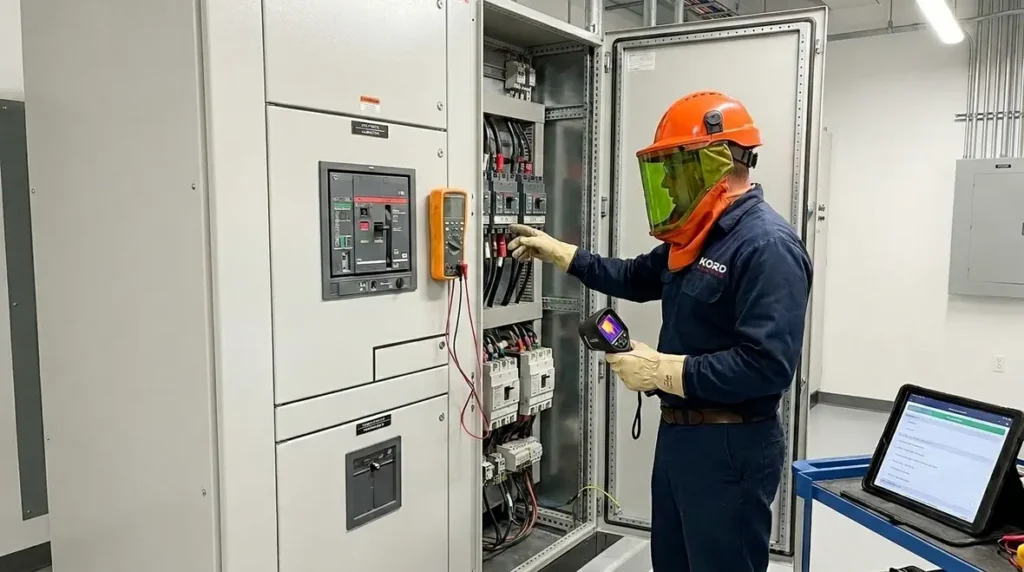
Safety benefits also carry financial weight. When our technicians perform inspections and verify torque, testing, and protective device performance, they reduce the likelihood of arc events and overheating. Additionally, documented maintenance can support internal audits and property insurance discussions. It does not replace your risk management program, but it strengthens it.
If your facility is already seeing flickering lighting, unexplained equipment shutdowns, or nuisance trips, pairing preventative electrical maintenance plans for commercial buildings with a targeted voltage fluctuation assessment can uncover deeper power quality issues before they become chronic headaches.
What Our Maintenance Process Looks Like for Major Properties
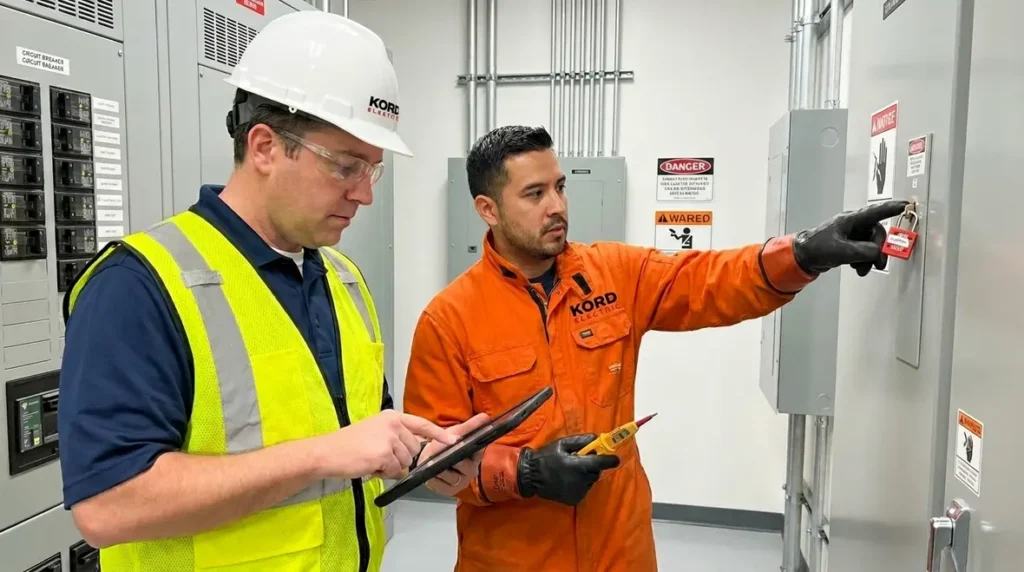
Kord Electric delivers planned electrical service with structure. First, we evaluate your building’s electrical layout, usage patterns, and critical loads. Then we plan inspections and testing around operations so we do not disrupt the schedule any more than we have to.
Next, our technicians prioritize the work that prevents the highest-risk failures. For example, we focus on panels, switchgear, and distribution equipment that feed critical systems. We also account for environments that accelerate wear such as industrial production areas, loading docks, and spaces with moisture exposure.
Finally, we document findings clearly. Our expert service staff explains what we see, why it matters, and what steps reduce risk. In many cases, our clients appreciate that the recommendations sound practical rather than dramatic. We tell the truth, but we do it in a calm voice. The goal is simple: keep your building stable, keep your people safe, and prevent emergency spending from becoming your main budget line.
If you need a reminder of what emergency looks like, you can review our emergency electrical services. Planned maintenance helps reduce how often you reach that point.
For major properties that are also planning future upgrades such as EV infrastructure, lighting retrofits, or panel replacements, building preventative electrical maintenance plans for commercial buildings around those priorities helps you avoid rework and align capital projects with daily reliability.
Planning Saves Money When Budgets Tighten
When budgets tighten, teams often cut maintenance first. That is understandable. Unfortunately, cutting planned electrical work often increases emergency costs later. Emergency response usually costs more due to urgency, after-hours labor, limited options, and the risk of needing temporary solutions to keep operations going.
Planned maintenance also improves scheduling. Instead of hunting for parts during a crisis, we can confirm equipment needs ahead of time. Additionally, we can coordinate with other trades because we already know when work affects uptime. Transition planning matters in commercial and industrial facilities, especially in major property buildings with multiple tenants or complex floor access.
And here is the practical joke side of it. In emergency mode, everything becomes a “rush job.” Even your patience. Planned maintenance lets you keep your work calm and your costs predictable, which is a rare luxury in building operations.
Our clients often discover that preventative work reduces repeat issues. That is because we treat root causes, not only symptoms. We tighten connections, address overheating sources, verify protective device performance, and follow up so the same problem does not show up again like an uninvited guest.
Over the long term, that stability supports better forecasting. Instead of budgeting around wishful thinking, you can build numbers on real maintenance intervals, realistic replacement timelines, and a clear sense of which systems are strong and which are quietly asking for help.
Dual Reality: Emergencies Happen, But Planning Changes the Outcome
Even with strong planning, electrical systems can still face unexpected events. Equipment can fail, circuits can get overloaded, and construction changes can introduce new variables. Therefore, the best strategy blends prevention with readiness.
To explain it simply, planned maintenance reduces the odds of a major failure. Then, when an issue does occur, you respond faster because you already understand your system. Our team can interpret conditions from prior reports and target troubleshooting more accurately. In emergency situations, speed and clarity matter.
Here is the “dual reality” we help our clients manage:
| With planned maintenance | Without planned maintenance |
| Fewer failures and fewer surprise outages | More emergency repairs and reactive spending |
| Clear documentation from inspections and testing | More guesswork during troubleshooting |
| Better parts planning and coordinated scheduling | Higher costs for expedited labor and components |
We still support emergency electrical services when needed. However, the best ROI comes from avoiding the emergency in the first place. That is the business truth.
Even in a worst case scenario, a facility that already has preventative electrical maintenance plans for commercial buildings in place starts from a stronger position: updated one-lines, documented load profiles, known weak points, and familiar infrastructure. That history turns “Where do we even begin?” into “Here is where we focus first.”
FAQ: Planned Electrical Maintenance ROI for Commercial Buildings
Next Steps: Get an Electrical Maintenance Plan Built for Your Facility
ROI follows a simple path: prevent problems, protect uptime, and reduce costly surprises. If you manage commercial or industrial operations, now is the time to align your electrical strategy with reality. At Kord Electric, our expert service staff and technicians review your system, explain findings in plain business terms, and build preventative electrical maintenance plans for commercial buildings that fit your risk and schedule. Reach out today, and we will help you move from reactive spending to controlled, reliable performance.
If your facility is planning infrastructure upgrades alongside maintenance, our dedicated services for commercial EV charger installation and other capital improvements can fit into the same roadmap, so you are not just maintaining your system but steadily modernizing it for the future.
Planned electrical maintenance is not about perfection. It is about stacking the odds in your favor. Every inspection, torque check, and thermal scan moves your building one step further away from the next emergency invoice and one step closer to a calm, predictable, well-run operation.
If you are ready to stop waiting for the next surprise outage to make your case, this is the moment to turn preventative electrical maintenance plans for commercial buildings into a standing part of your operating strategy.
Kord Electric is here to help you run that play with structure, clarity, and a realistic eye on both risk and ROI.