
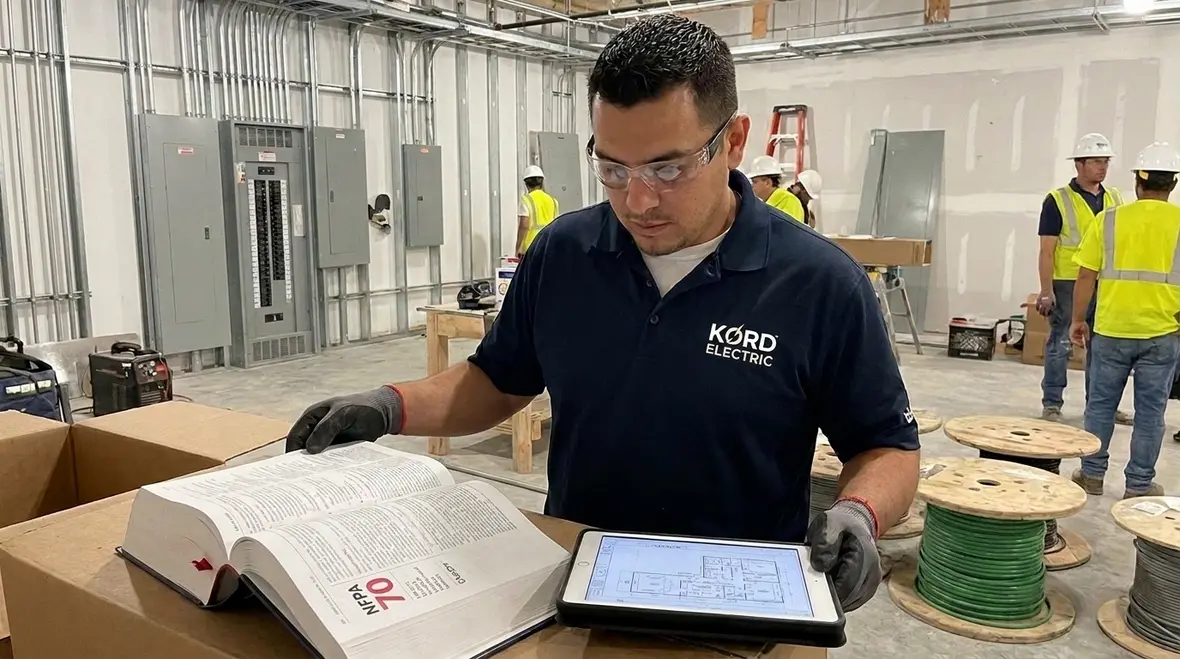
NEC 2026 Code Scope Explained From NFPA 70 90.1
When teams ask about electrical rules, they usually start with the same question: what does the NEC actually cover, and who does it apply to? In this article, Kord Electric addresses the NFPA 70 Section 90.1 focus with the NEC 2026 code scope explained in mind. Early on, our expert team outlines how the NEC scope sets the boundaries for what the code covers, while the later sections walk through the practical meaning for commercial and industrial facilities and major property buildings. Then our technicians take the information from “written in ink” to “usable on site,” because reading code is one thing and installing safely is another. And yes, we have watched grown adults treat section numbers like they are haunted. We handle it calmly anyway.
NFPA 70 Section 90.1 and the NEC scope in plain business language

NFPA 70, also known as the National Electrical Code, exists to reduce hazards and guide safe electrical design, installation, and inspection. Meanwhile, Section 90.1 acts like the front door sign. It tells people what falls within the NEC’s scope and what the code intends to regulate. In practice, the NEC scope explained in the NEC 2026 context clarifies that the code focuses on electrical installations and equipment in buildings and other structures, with specific coverage limits. For a deeper code overview tied to the 2026 cycle, you can also review our companion article on Understanding NFPA 70: The National Electrical Code Explained for 2026, which connects high level NEC concepts to real project decisions.
At Kord Electric, we serve commercial and industrial facilities and major property buildings. Therefore, when we talk about NEC scope, we talk about what matters to businesses: wiring methods, equipment installation rules, labeling expectations, grounding and bonding basics, and how jurisdictions enforce adoption. Furthermore, we make sure our clients understand that the NEC does not cover every possible electrical situation ever invented. Instead, it focuses on mainstream installations where standard safety rules apply.
Our technicians and expert service staff explain things in a straightforward way. We do not hide behind buzzwords. Also, we do not let project teams assume that “the code says it, so it must apply to everything.” Section 90.1 helps teams avoid that kind of misunderstanding before it becomes a costly change later. When needed, we pair this article with our practical reading guide on how to read NFPA 70 so stakeholders can move from code text to site action without getting lost in structure or definitions.
Why the “scope” matters before design and before procurement
People often treat code scope like homework they do not plan to grade. However, scope decisions affect real outcomes. For instance, if a team applies NEC rules outside the areas intended for NEC coverage, they may overspec materials, delay procurement, or create installation confusion. On the other hand, if someone assumes the NEC covers a situation when it does not, then hazards can slip through.
That is why the NEC 2026 code scope explained becomes more than an academic exercise. When we support facilities teams, we align electrical design and installation planning to the NEC’s intended application. Consequently, project managers can set expectations for inspectors and coordinate documentation. In addition, procurement teams can order the right components for the right usage without playing guessing games.
As a practical check, our team treats Section 90.1 as a gatekeeper. We ask what the installation involves, where it sits, and how the jurisdiction will likely interpret adoption language. Then we confirm whether NEC rules apply directly, through referenced standards, or through local amendments.
And if that sounds like a lot, remember this: the only thing more expensive than fixing wiring is fixing timelines. Scope clarity protects both.
Where NEC coverage typically applies to commercial and industrial buildings
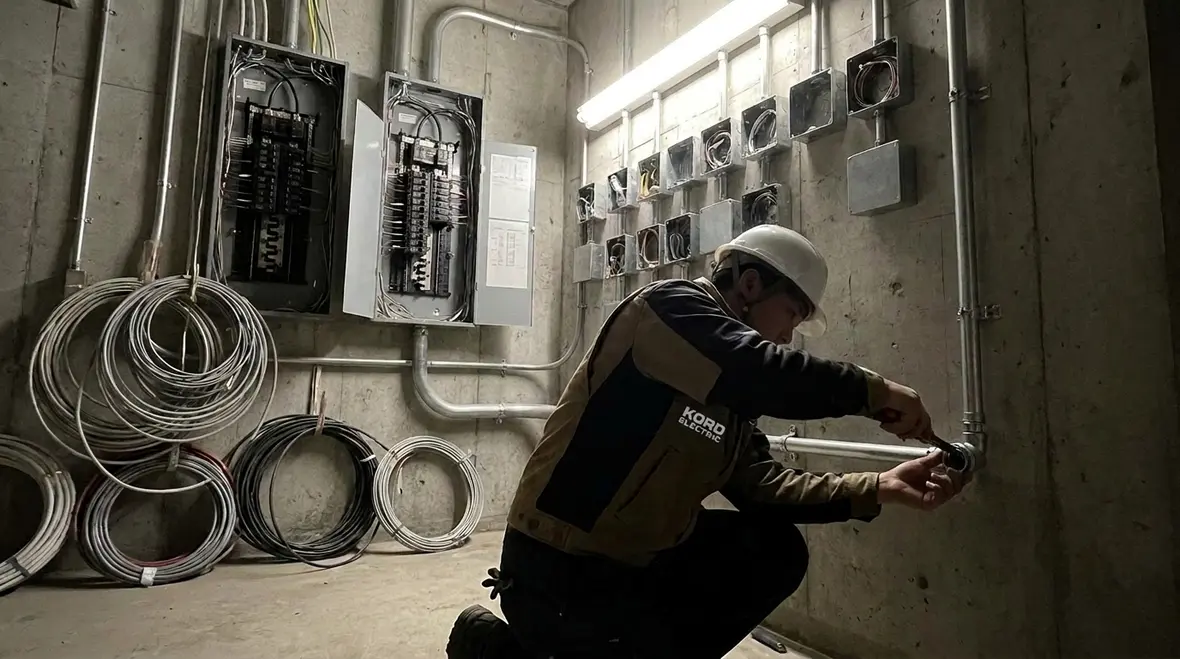
In most commercial and industrial settings, NEC rules guide how electrical systems are designed and installed. For example, building services like feeders, branch circuits, panelboards, raceways, conductors, grounding, and bonding generally fall within the NEC’s intended regulation. Additionally, the code addresses requirements that support safe operation in normal use and during faults, because a system must survive real-world conditions.
For major property buildings, we also consider how the installation environment interacts with code intent. Moisture, heat, corrosive atmospheres, physical damage risk, and accessibility affect what methods and protective measures make sense. Even when the facility uses modern equipment, the code’s safety logic still drives installation details. Our other guides on building electrical system design and data-driven electrical design expand on these themes for complex sites that balance uptime and safety.
Our approach keeps it steady. First, we map the facility’s major electrical systems. Then we compare what the NEC covers with the facility’s specific installation plan. Finally, our technicians document how the design and installation comply with the NEC scope for the NEC 2026 cycle.
We also collaborate with stakeholders like owners, property managers, and building engineers, because commercial work never happens in a vacuum. Moreover, we help teams avoid surprises during inspection by translating scope rules into project-ready actions that align with the broader National Electrical Code basics described in our NFPA 70 overview content.

Where the NEC scope can stop and other rules take over
Section 90.1 also helps teams understand when the NEC stops being the main reference point. Some electrical systems or operating contexts may fall outside the NEC’s direct scope, or they may rely on other standards and referenced regulations. When that happens, the best approach is not to panic. Instead, it is to identify what rules apply and then align the project accordingly.
For example, certain equipment, specialized installations, or unique operational conditions may lead to referenced standards in the NEC. Also, jurisdictions may adopt the NEC with amendments that change enforcement and interpretation. That means your local authority having jurisdiction can influence how scope gets applied in the real world.
Our expert service staff often sees the same scenario. Teams plan around a familiar assumption, then an inspector asks about the basis for the installation rules used. When we support a project early, we reduce that friction. We confirm the scope boundaries up front, and then we help the team build the correct compliance plan.
In short, the NEC does not act like a universal spell. You still need the right incantation, which is why we stay methodical and, when it helps, point stakeholders to background reading like our “What Is NFPA 70? Understanding the National Electrical Code” article to anchor expectations.
NEC 2026 code scope explained in an inspection driven workflow
Inspection success usually depends on clarity. Therefore, Kord Electric builds compliance workflows that move from scope understanding to install documentation to final verification. First, our technicians review the intended installation and confirm coverage boundaries using the NEC 2026 code scope explained approach. Then we plan how to document compliance items that inspectors expect to see.
Next, we translate code requirements into practical installation steps: how we route conductors, how we terminate them, how we secure raceways, how we handle grounding and bonding connections, and how we label or identify equipment where required. After that, our team verifies work quality against the planned compliance path, because the best documentation in the world does not help if the field work fails basic checks.
Scope first
- Identify the installation type and location
- Confirm NEC coverage boundaries
- Account for jurisdiction and amendments
Field ready later
- Plan wiring and equipment installation steps
- Document compliance items for inspection
- Verify workmanship and testing
As we do this, we also keep safety and reliability at the center. Then we keep the process calm, because commercial sites do not pause operations for code debates. If it helps, we think of it like project choreography. You can dance without knowing the music, but you will not like the results.
How our technicians explain NEC scope to facility stakeholders
Commercial and industrial teams have deadlines, budgets, and operational constraints. Therefore, they want explanations that connect directly to their work. At Kord Electric, our technicians and expert service staff break down NEC scope concepts into decisions a team can make quickly: what to include in the plan set, what to verify during rough-in, what to check for labeling, and what to confirm before final closeout.
We also address the “interpretation gap” that often shows up between design documents and field installation. For example, two people can read the same scope statement and end up with different expectations about what counts as covered. To prevent that, we align language early and then we confirm it with practical site steps. Additionally, we keep the message business friendly, so owners and property managers can participate without needing a law degree or an electrical thesaurus.
And yes, sometimes someone makes a joke about code being like a choose your own adventure book. We smile, because then we get to the real point: if the scope boundaries are clear, the adventure ends with safe and inspected electrical work, not a surprise correction.
NEC scope compliance and risk management for major property buildings
Major property buildings carry responsibilities that extend beyond day to day power distribution. They also involve life safety priorities, uptime expectations, and strict compliance oversight. Consequently, scope clarity supports risk management. When teams understand the NEC’s intended application, they can prioritize the rules that directly affect hazards and system performance.
Risk management also includes planning for upgrades. Building electrical systems age, tenant needs change, and new equipment arrives. When scope boundaries get treated as stable guidelines, teams can evaluate proposed upgrades with better confidence. Then they can avoid mismatched equipment practices that can create failures under stress.
Kord Electric supports clients across commercial and industrial environments because we know the stakes. We help teams connect NEC scope understanding to safe, repeatable installation practices and documentation that supports inspection outcomes. Furthermore, we coordinate with facility goals, so compliance does not wreck operations. In Los Angeles County and nearby areas, these practices tie directly into our broader Los Angeles County electrical services support for complex commercial portfolios.
If a facility owner wants “less surprises,” scope discipline is one of the simplest ways to get it.
FAQ
Ready for a calmer, clearer path to electrical compliance
Kord Electric helps commercial and industrial teams apply the NEC scope with confidence, starting from NFPA 70 Section 90.1 understanding and moving into field ready execution. Our technicians and expert service staff explain the NEC 2026 code scope explained approach in plain language, then connect it to real installation steps that inspectors recognize. If your team is planning a project, upgrading systems, or trying to reduce inspection surprises, contact Kord Electric today. We will map the scope, protect safety, and keep your schedule steady. For readers who want to build even more context, our article on Understanding NFPA 70: The National Electrical Code Explained for 2026 offers a natural next step after this scope focused overview.


