
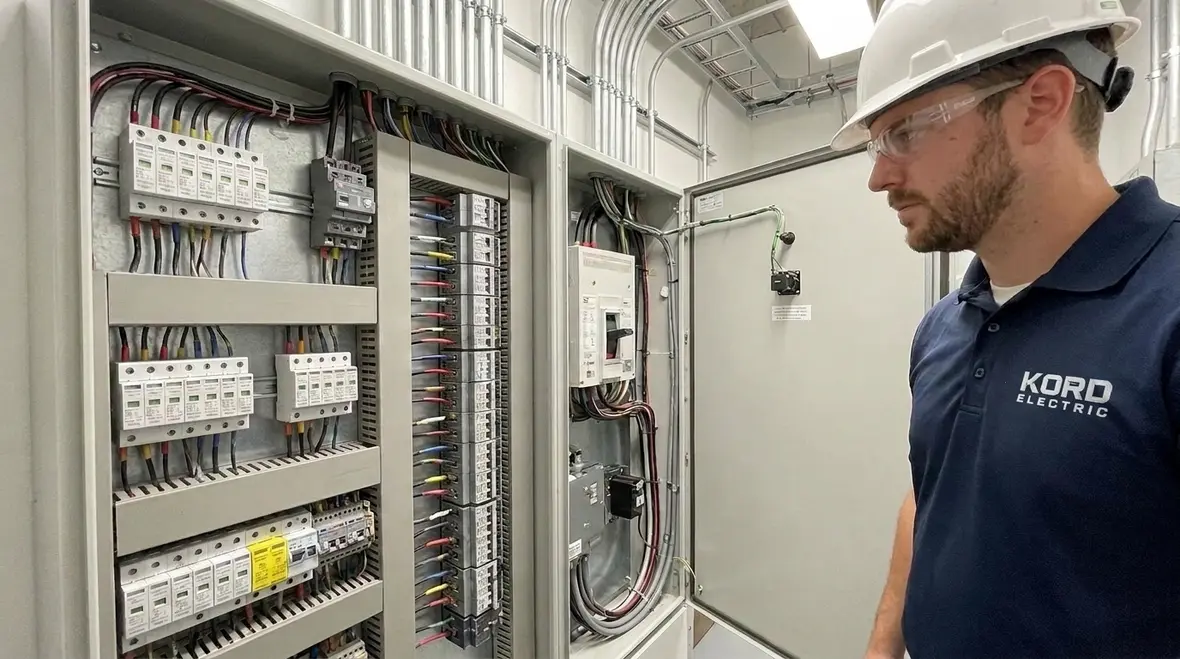
NEC 242.20 SPD Requirements for Commercial Surge Protection
At many commercial and industrial sites, lightning and electrical surges show up like uninvited guests at a company cookout. They arrive quietly, cause damage slowly, and then act like they were never there. That is why Kord Electric focuses on one practical starting point: the NEC SPD number required for many facilities is 250.20, Section 242.20, and we build our surge protection plan around the right selection and coordination. In the pages ahead, we explain how many SPDs you need, what Section 242.20 expects, and how our expert service team walks others through it without the usual “trust us, bro” energy.
Third person note for clarity: Kord Electric and its technicians approach these requirements with a calm, methodical process. Meanwhile, facility owners get the peace of mind they want, and the electrical system gets what it needs.
What NFPA 70 Section 242.20 expects for surge protection
NFPA 70 is the National Electrical Code, and Section 242.20 addresses how surge protective devices, or SPDs, get installed and applied across an electrical system. To put it simply, the code does not treat surge protection like a single plug-in accessory. Instead, it asks for a setup that matches how surges can enter and how they can move through conductors.
So, when others ask, “How many SPDs do we need,” the correct answer usually starts with system realities. First, SPDs must handle the surge pathways at the service equipment. Next, they must address downstream equipment and branch circuits where surges may be likely to harm sensitive loads. Then, coordination matters, because multiple SPDs work best when each one has a job and does not step on the other one’s toes.
In practice, Kord Electric technicians review design and operations together. They look at service voltage, grounding methods, the length and routing of feeders, and the presence of equipment that does not like surprises. After that, they translate code intent into a practical layout for commercial and industrial facilities and major property buildings.
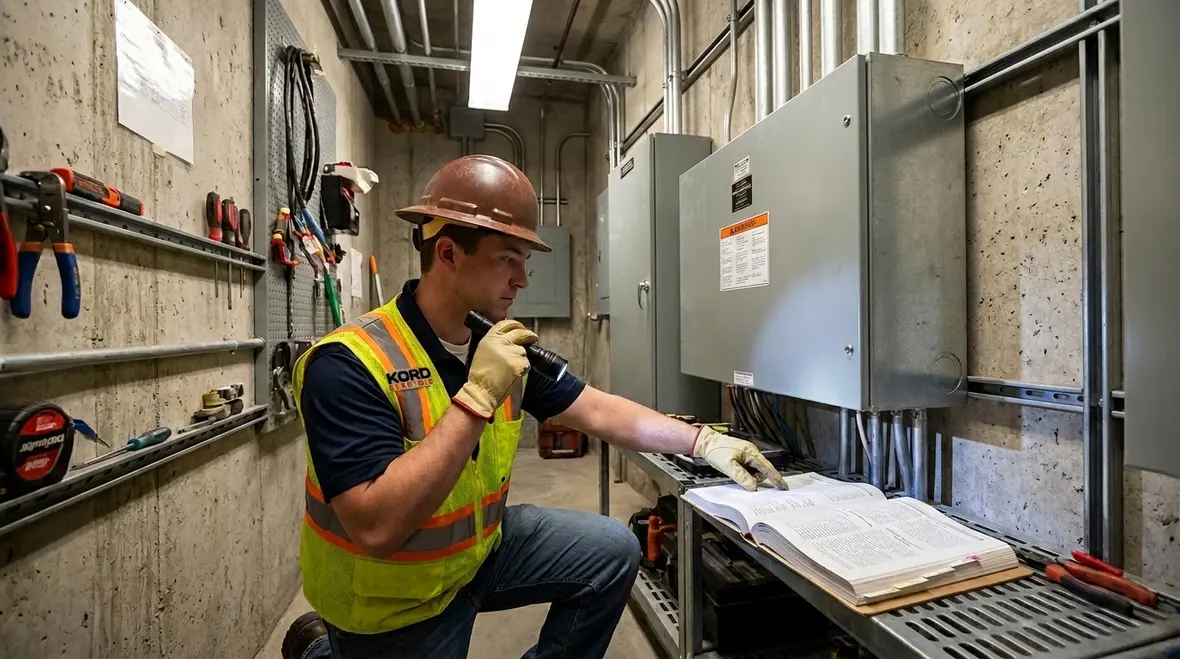
Connecting NEC 242.20 to broader NFPA 70 planning
Section 242.20 does not exist in a vacuum. It connects to the broader NEC expectations that facilities already navigate when they upgrade distribution equipment, add new loads, or plan renovations. Many facility teams pair their surge protection planning with a general code review using resources such as Kord Electric’s guide Understanding NFPA 70: The National Electrical Code Explained for 2026. That way, surge protection is not a bolt-on afterthought; it becomes part of a coordinated code strategy.
How we decide SPD count for a service entrance and beyond
Section 242.20 pushes facilities toward a layered strategy. Therefore, the SPD count often depends on where surges enter and where they can cause harm. A simple building with simple wiring may need fewer devices. However, large properties often need more coverage because electrical paths spread out and equipment becomes more sensitive.
Kord Electric takes a structured approach. First, we identify the main service where the incoming supply enters the building. Then, we evaluate whether a single SPD at the service can provide adequate protection for equipment farther downstream. After that, we examine whether additional SPDs are needed at distribution boards or panels that feed sensitive systems.
To keep it readable, our technicians explain it like this: one SPD at the “front door” helps, but surges can still wander through the “hallways.” So, the second layer may sit where the electrical system branches into areas such as control panels, HVAC systems, medical or process equipment areas, communications racks, or other critical loads.
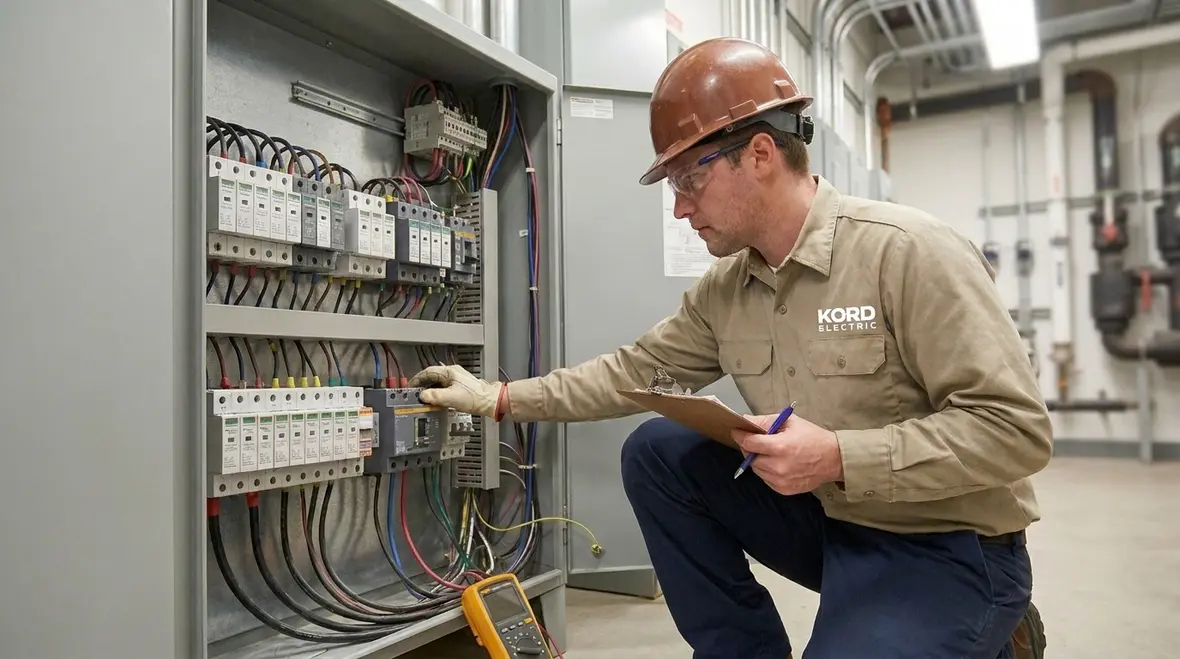
Why SPD quantity and placement go together
The NEC SPD number required for a given facility only makes sense when you tie it to where those devices actually sit. An impressive device count scattered in the wrong locations will not guard the real targets. Kord Electric’s technicians map each SPD to a function: service entrance shielding, distribution-level damping, or close-to-load protection for especially sensitive circuits. That way, every installed device has a defined job in the surge control story.
SPD locations in commercial and industrial power systems
In a commercial and industrial facility, electrical distribution usually follows predictable routes. Utility supply arrives at a service disconnect or service switchboard. From there, feeder circuits deliver power to distribution panels. Those panels then send power to branch circuits and equipment.
Because surges can ride those routes, many projects require SPDs at key nodes. Kord Electric typically considers SPD placement at the service entrance and at one or more downstream distribution locations. However, the number of SPDs does not come from guesswork. It comes from the electrical design and the risk profile of connected loads.
Our expert service staff also coordinates with design teams and facility managers. As a result, they prevent two common problems. The first problem is using too few devices, which leaves sensitive equipment exposed. The second problem is using too many devices without coordination, which can reduce performance and cause nuisance behavior during transient events. Nobody wants their power to act like a reality TV contestant, panicking for attention.

Linking surge protection to broader electrical code work
Surge protection planning rarely happens alone. Many facility owners pair their SPD projects with other NEC-focused work such as Los Angeles County commercial and industrial electrical services, where distribution upgrades, new equipment, or code-driven changes create an ideal moment to add or improve SPDs. When those projects align, you end up with better surge control and a cleaner inspection path at the same time.
Coordination and performance: why the count is not enough
Facilities often treat the question of “how many” like it ends the conversation. Yet, Section 242.20 and good engineering practice focus on performance and coordination. That means the SPDs must work together, both electrically and practically.
Kord Electric technicians coordinate SPD ratings, placement, and expected surge current pathways. Moreover, they consider how SPDs clamp voltage, how quickly they respond, and how they handle repeated events. In addition, they check that protective components align with the system’s design so the SPD system does not interfere with other protective devices.
Here is a calm truth, delivered with a wink: SPDs do not magically fix a bad system layout. If wiring lengths run wild, grounding is inconsistent, or panels are fed in ways that create long surge paths, then even the right SPD count may not deliver the best results. Therefore, our team looks beyond the number and improves the overall surge control plan.
How SPD coordination supports NEC goals
When coordination follows NEC 242.20 and related guidance, SPDs support the broader safety objectives outlined across NFPA 70. That includes keeping equipment within acceptable voltage limits during surges, preserving insulation life, and avoiding chain reactions that might trip critical loads offline. Kord Electric’s service staff often uses real facility examples during planning meetings, showing how one well-placed SPD can back up another without trying to do the same job twice.
Risk factors that change how many SPDs are needed
Surge exposure varies widely between properties. For that reason, Kord Electric applies risk factors to determine the right SPD strategy. In commercial and industrial buildings, these factors may include:
1) Lightning exposure and overhead service characteristics
Facilities with specific site exposure face higher surge risk. If surges travel through incoming conductors, more targeted SPD placement can become necessary.
2) Sensitive electronics and controls
Modern systems use controls, drives, PLCs, building automation, and communications equipment. These devices can fail from voltage spikes that a simpler load might shrug off.
3) Equipment density and operational downtime cost
When shutdown is expensive, the design must protect what keeps operations running. Therefore, additional SPDs at strategic distribution points may be justified.
4) Cable routing and feeder lengths
Long runs can let surges develop and propagate. Consequently, SPDs closer to the equipment help reduce the energy reaching the load.
5) Prior transient events or known issues
If a facility has experienced nuisance alarms, intermittent faults, or repeated damage events, then the surge protection plan may need adjustment.
As the Kord Electric service staff explains to others, risk does not mean fear. It means clarity. When the team maps the electrical reality, the SPD count stops feeling mysterious and starts acting like a designed system feature.
Common mistakes Kord Electric helps facilities avoid
When others request surge protection, a few patterns show up again and again. Kord Electric and its technicians help remove the confusion and the costly errors.
Mistake 1: Treating Section 242.20 like it allows one-size-fits-all
Some facilities install one SPD and call it a day. However, that approach often leaves parts of the system less protected, especially at distribution panels feeding sensitive loads.
Mistake 2: Ignoring coordination between SPDs
If multiple SPDs share the same pathways without proper coordination, performance can suffer. Therefore, the SPD system needs a planned hierarchy.
Mistake 3: Installing SPDs without aligning to the grounded system design
Surge protection relies on safe and controlled paths for current. If grounding and bonding do not match the plan, surges can take detours through places they should not.
Mistake 4: Focusing on the device name instead of the application
Kord Electric reminds others: the “best SPD” depends on where it sits and what it protects. The device must match the system, not just the sales brochure.
For facility owners, these mistakes can look like paperwork problems. Yet, the real cost shows up when sensitive equipment fails. And nothing tests patience like a compressor controller that quits right when the summer heat gets rude.
Featured snippet FAQ about SPD quantity and Section 242.20
Call Kord Electric for a surge protection plan that fits the building
Kord Electric helps commercial and industrial facilities and major property buildings answer the real question behind SPD count: which SPDs, where they go, and how they work together. Our technicians and expert service staff review the electrical system, consider risk factors, and recommend a coordinated plan that supports NEC goals without wasting money or leaving sensitive equipment exposed. If others want protection that lasts longer than a bad password, they should contact Kord Electric for a site-focused assessment and practical next steps.
For facilities that want to connect NEC 242.20 surge protection decisions with broader code planning, pairing this work with resources such as Understanding NFPA 70: The National Electrical Code Explained for 2026 helps keep both the big-picture rulebook and the fine-grain SPD details aligned.
If your site is in Southern California and you are reviewing surge protection, distribution upgrades, or new code-driven projects, Kord Electric’s Los Angeles County electrical services team can coordinate NEC 242.20 surge requirements with panel work, new circuits, and future expansion so your electrical system stays ready for both inspections and real-world stress.


